
vip@mingyuforklift.com
+86-0535-2090977

Introduction: The Fundamental Architectural Divide
The choice between electric and internal combustion (IC) stackers represents more than a power source decision—it defines an entirely different maintenance philosophy, skill set, inventory strategy, and cost structure. While both categories perform identical material handling functions, their underlying engineering architectures diverge so significantly that maintenance teams cannot simply transfer protocols from one fleet to the other without retraining, retooling, and reconceptualizing failure modes.
IC stackers—powered by liquefied petroleum gas (LPG), diesel, or gasoline—are fundamentally thermal-mechanical systems. Their maintenance revolves around combustion chemistry, lubrication film integrity, exhaust after-treatment, and thermal management. Electric stackers, whether lead-acid or lithium-ion powered, are electromechanical systems where maintenance centers on electron management, electrochemical stability, thermal runaway prevention, and solid-state power electronics. Understanding these architectural differences is essential for fleet managers evaluating total cost of ownership, maintenance technician specialization, and operational uptime strategies.
This article provides a comprehensive technical analysis of maintenance differences across every major system category, offering actionable guidance for operations managing mixed fleets or contemplating electrification transitions.
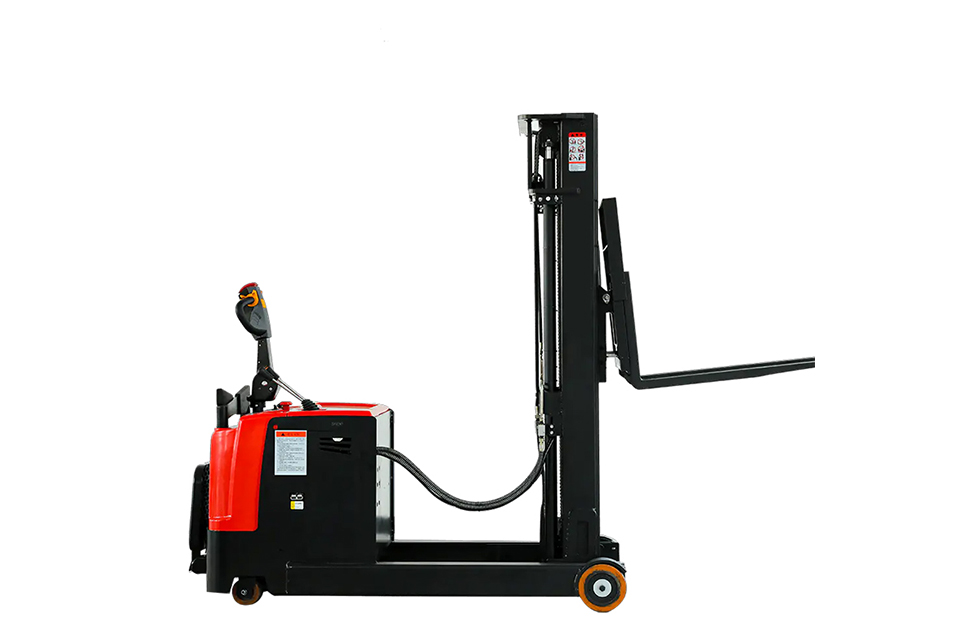
Powertrain Maintenance: Combustion vs Electromechanical
IC Engine Systems
The internal combustion engine is the most maintenance-intensive component in any IC stacker. Maintenance requirements include:
Oil and filter changes. Conventional wisdom suggests every 250 to 500 operating hours, though severe-duty applications—dusty environments, cold starts, continuous high-load operation—may compress this to 150 hours. Oil analysis should monitor soot loading, fuel dilution, and oxidation. Unlike automotive engines that operate at relatively stable RPMs, stacker engines endure constant idle-to-full-throttle cycling, accelerating oil degradation.
Air filtration. IC stackers in warehouse environments ingest concrete dust, pallet debris, and chemical particulates. Dry paper filters require replacement every 250 to 1,000 hours depending on environment; neglected air filters cause abrasive cylinder wear and turbocharger damage. Many operations employ pre-cleaners or cyclonic separators to extend filter life.
Fuel system maintenance. LPG vaporizers and regulators require periodic diaphragm inspection and pressure calibration. Diesel systems demand water separator draining, fuel filter replacement, and injector cleaning. Fuel quality directly impacts combustion efficiency and emissions compliance.
Valve train and timing. Overhead valve adjustments, timing chain or belt inspection, and spark plug replacement (gasoline/LPG) add labor hours unavailable to electric counterparts. Valve recession and seat wear are progressive failure modes requiring top-end rebuilds at 6,000 to 10,000 hours.
Exhaust after-treatment. Modern Tier 4 Final diesel stackers incorporate diesel oxidation catalysts (DOC), diesel particulate filters (DPF), and selective catalytic reduction (SCR) systems. DPF regeneration cycles—passive, active, or manual—require monitoring. Ash accumulation necessitates periodic filter cleaning or replacement. SCR systems demand DEF (diesel exhaust fluid) reservoir maintenance and injector nozzle inspection.
Electric Drive Systems
Electric stackers replace the engine with an AC or DC drive motor and controller, fundamentally altering the maintenance landscape:
Motor maintenance. AC induction motors are essentially maintenance-free for their operational lifespan, typically 10,000 to 15,000 hours. Brushless designs eliminate commutator wear entirely. DC motors with brushes require brush inspection every 500 to 1,000 hours and replacement when worn to minimum length—typically every 2,000 to 4,000 hours. Commutator resurfacing may be required if arcing has caused bar damage.
Controller and power electronics. The motor controller is the brain of the electric powertrain. Maintenance is largely diagnostic rather than physical: checking for fault codes, thermal overload events, and CAN-bus communication integrity. Controllers are sealed units; physical intervention is limited to cooling fan inspection and connection torque verification. Unlike engines, controllers do not experience mechanical wear, though capacitor aging and IGBT thermal cycling may cause failure after 8 to 12 years.
Reduced lubrication points. Electric motors have sealed bearings requiring no routine greasing. The reduction gearbox between motor and drive axle may require oil changes every 2,000 to 5,000 hours—far less frequent than engine oil changes.
Energy Storage and Delivery: Battery vs Fuel System
Battery Systems (Electric)
The battery represents the most significant maintenance differentiation in electric stackers:
Lead-acid battery maintenance. Flooded lead-acid batteries require weekly watering with demineralized water, specific gravity testing, and equalization charging. Terminal cleaning and anti-corrosion treatment are ongoing necessities. Battery room ventilation must manage hydrogen off-gassing. Improper watering—either under-filling, which exposes plates, or over-filling, which causes electrolyte spillage and frame corrosion—is a leading cause of premature battery failure.
Lithium-ion battery maintenance. Li-ion systems eliminate watering and equalization but introduce battery management system (BMS) monitoring requirements. Cell balancing, thermal management, and state-of-health diagnostics require specialized software tools. While physical maintenance is minimal, BMS firmware updates and thermal sensor calibration may be necessary.
Charging infrastructure. Electric stackers require charger maintenance: cable and connector inspection, cooling fan cleaning, and output calibration. Opportunity charging and fast-charging protocols must align with battery chemistry. A charger failure immobilizes the stacker regardless of battery condition.
Battery replacement. Lead-acid batteries typically last 1,500 to 2,000 cycles (4 to 6 years in single-shift operations). Lithium-ion batteries may last 3,000 to 5,000 cycles. Replacement is a capital event requiring lifting equipment and electrical safety protocols.
Fuel Systems (IC)
IC stackers eliminate battery maintenance but introduce fuel system complexities:
Fuel storage and handling. LPG requires pressurized tank inspection, valve maintenance, and hydrostatic testing every 10 years. Diesel requires storage tank contamination monitoring and algae treatment. Fuel spills create immediate safety and environmental hazards.
Refueling logistics. IC stackers refuel in minutes, but fueling stations require fire suppression systems, ventilation, and hazardous material compliance. The maintenance of fueling infrastructure—pumps, meters, hoses, and vapor recovery systems—adds overhead absent from electric charging.
Cooling System Differences
IC Cooling Systems
Combustion engines generate tremendous waste heat requiring active cooling:
Radiator and coolant. Engine coolant requires testing for freeze protection, boil-over point, and corrosion inhibitor concentration. Coolant replacement every 2 to 4 years prevents electrolysis and water pump cavitation. Radiator fins must be kept free of debris; restricted airflow causes overheating, head gasket failure, and cylinder head warping.
Belts and hoses. Water pump drive belts require tension inspection and replacement. Rubber coolant hoses degrade from heat cycling and must be inspected for ballooning, cracking, and seepage.
Fan clutches and thermostats. These mechanical components wear and require periodic replacement. A stuck thermostat causes either overheating or excessive warm-up time, both of which accelerate engine wear.
Electric Cooling Systems
Electric stackers have minimal cooling requirements:
Motor and controller cooling. Most electric stackers rely on passive air cooling or low-pressure forced air. Maintenance is limited to cooling fan inspection and heatsink cleaning. Some high-performance AC motors use liquid cooling; these systems are sealed and require only occasional coolant level checks.
Battery thermal management. Li-ion batteries with active thermal management use small cooling circuits, but these are far simpler than engine cooling systems. Lead-acid batteries generally require only ambient ventilation.
Brake System Considerations
Both electric and IC stackers use similar foundation brake hardware—drum or disc brakes with hydraulic or mechanical actuation. However, electric stackers often incorporate regenerative braking, which reduces service brake wear by using the drive motor as a generator to decelerate the truck. This can extend brake pad or shoe life by 30 to 50 percent compared to IC equivalents. Regenerative braking systems do require controller calibration and occasional software parameter adjustment, but these are diagnostic rather than mechanical tasks.
IC stackers rely entirely on friction braking, subjecting brake components to higher thermal and mechanical loads. In heavy-duty applications, brake fade and fluid boiling become concerns absent from electric fleets with robust regenerative systems.
Hydraulic System Parallels and Divergences
The hydraulic lifting, tilting, and steering systems are largely identical between electric and IC stackers, with one critical exception: power source. IC stackers drive hydraulic pumps via engine-mounted PTO (power take-off) belts or direct shaft drives. These belts require tension inspection and replacement. Engine speed governs pump flow, meaning hydraulic performance varies with RPM.
Electric stackers use electrically driven hydraulic pumps, typically AC motor-pump units. These eliminate belt maintenance and provide consistent flow regardless of drive motor status. Pump motor maintenance is minimal—essentially bearing inspection at major intervals.
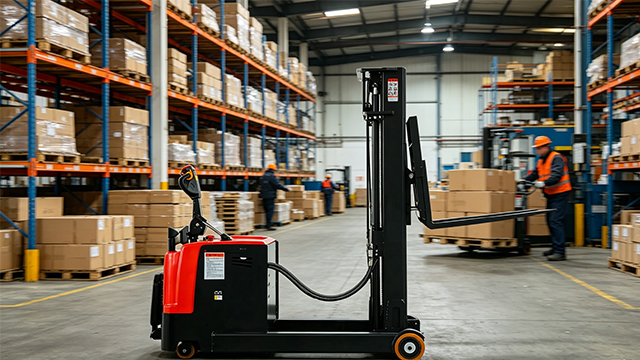
Both systems share hydraulic fluid, filter, cylinder, hose, and valve maintenance requirements. However, IC stackers may experience higher hydraulic fluid temperatures due to engine bay heat soak, potentially accelerating fluid oxidation and requiring more frequent fluid analysis.
Transmission and Drivetrain
IC stackers traditionally use torque converter automatic transmissions or hydrostatic drives. Torque converters require fluid changes every 1,000 to 2,000 hours and band adjustment. Hydrostatic drives need fluid and filter maintenance similar to hydraulic systems.
Electric stackers predominantly use direct-drive or single-reduction gear configurations. The elimination of multi-speed transmissions removes clutch packs, shift solenoids, and valve bodies from the maintenance equation. Gearbox oil changes occur at 2,000 to 5,000 hours. The simplicity of electric drivetrains is a primary maintenance advantage.
Emissions and Environmental Compliance Maintenance
IC stackers face increasingly stringent emissions regulations. Maintenance of catalytic converters, DPFs, oxygen sensors, and EGR (exhaust gas recirculation) valves is mandatory for compliance. Failed emissions tests can ground equipment. Exhaust leaks in indoor applications create carbon monoxide hazards requiring continuous atmospheric monitoring.
Electric stackers produce zero direct emissions, eliminating exhaust system maintenance entirely. However, they introduce electrical safety requirements: arc flash protection, high-voltage training for technicians, and insulated tool protocols. Battery recycling and disposal must comply with environmental regulations—particularly for lead-acid batteries, which are classified as hazardous waste.
Maintenance Interval and Labor Hour Comparison
Quantifying maintenance differences reveals the operational impact:
Daily/Pre-shift inspections. Both types require similar checks: tires, forks, hydraulics, lights, and safety systems. Electric stackers add battery charge verification; IC stackers add engine oil level, coolant level, and fuel level checks.
250-hour service. IC stackers require engine oil and filter change, air filter inspection, and comprehensive lubrication. Electric stackers require only lubrication and inspection—no fluid changes.
1,000-hour service. IC stackers need transmission service, valve adjustment, fuel system inspection, and coolant testing. Electric stackers require hydraulic filter replacement, brake inspection, and possibly DC brush inspection.
Annual/biennial maintenance. IC stackers face radiator service, belt replacement, exhaust after-treatment inspection, and tune-up components. Electric stackers require battery testing, charger calibration, and connection torque verification.
Industry data suggests electric stackers require 30 to 40 percent fewer maintenance labor hours annually than equivalent IC units. The gap widens as IC emissions after-treatment systems age and require more frequent attention.
Technician Skill Set and Tooling
IC stacker maintenance demands technicians trained in combustion engine theory, fuel system diagnostics, exhaust after-treatment, and mechanical systems. Tools include compression testers, fuel pressure gauges, exhaust gas analyzers, and timing equipment.
Electric stacker maintenance requires electrical troubleshooting skills, high-voltage safety certification, battery testing equipment, and diagnostic software proficiency. Technicians must understand electrochemistry, power electronics, and CAN-bus diagnostics. The skill sets overlap in hydraulics and mechanical systems but diverge significantly in powertrain expertise.
Operations running mixed fleets face training and tooling duplication. A technician qualified on IC engines may require substantial retraining to safely service lithium-ion battery systems, and vice versa.
Total Cost of Ownership Implications
Maintenance cost analysis must extend beyond labor hours to parts inventory, facility requirements, and downtime costs:
Parts inventory. IC fleets require stocking engine components, filters, belts, hoses, exhaust parts, and tune-up items. Electric fleets require battery components, electrical connectors, motor brushes, and controller modules. The capital tied up in parts inventory differs but is roughly equivalent in value.
Facility requirements. IC maintenance bays require ventilation, fire suppression, and oil containment systems. Battery maintenance areas need eyewash stations, acid spill kits, and hydrogen gas detection. Li-ion servicing may require thermal runaway containment cabinets.
Downtime profiles. IC stackers experience more frequent but shorter maintenance events—oil changes take 30 minutes. Electric stackers have fewer routine interruptions but may face longer diagnostic times when electrical faults occur. Battery replacement is a multi-hour event compared to a 10-minute refueling.
Reliability and Failure Mode Differences
IC stackers exhibit gradual, often audible degradation: engine knock, exhaust smoke, power loss. These warning signs allow predictive intervention. Electric stackers may operate silently until abrupt controller or motor failure, though BMS diagnostics and thermal monitoring provide electronic early warning.
Battery failure in electric units is predictable through capacity testing, allowing scheduled replacement. Engine failure in IC units can be catastrophic and sudden, particularly if coolant loss or oil starvation occurs.
Cold Weather and Extreme Environment Maintenance
IC diesel stackers face cold-start challenges requiring block heaters, winter fuel additives, and extended warm-up periods. Batteries in electric stackers suffer capacity reduction in cold environments—lead-acid units may lose 30 to 40 percent capacity at -20°C. However, electric motors start instantly regardless of temperature, while IC engines may fail to start entirely.
In dusty or dirty environments, IC air filtration maintenance intensifies. Electric stackers, with sealed motors and no air intake, are less vulnerable to particulate ingestion—though battery and controller enclosures require cleaning to prevent overheating.
Conclusion: Selecting Maintenance Architecture to Match Operational Strategy
The maintenance differences between electric and IC stackers are profound and systematic. IC stackers demand ongoing attention to combustion systems, lubrication, exhaust after-treatment, and thermal management. The maintenance is mechanical, frequent, and familiar to traditional technicians. Electric stackers shift the burden to electrochemical and electronic systems—batteries, controllers, and power management—where maintenance is less frequent but requires different expertise and diagnostic tooling.
For single-shift, indoor operations with predictable duty cycles, electric stackers offer demonstrably lower maintenance burdens and costs. For outdoor, multi-shift, or high-throughput applications requiring rapid refueling, IC stackers maintain operational advantages despite higher maintenance overhead.
The critical insight is that maintenance strategy must align with fleet composition. A warehouse transitioning to electric stackers cannot simply apply IC maintenance schedules and expect optimal results. Conversely, operations retaining IC equipment must invest in emissions compliance expertise and after-treatment maintenance capabilities that did not exist a decade ago.
Neither technology is maintenance-free. Both demand disciplined inspection, qualified technicians, and systematic record-keeping. The difference lies in what fails, how it fails, and what skills are required to prevent failure. Understanding these distinctions allows fleet managers to staff appropriately, stock intelligently, and schedule proactively—turning maintenance from a reactive cost center into a strategic operational advantage.
Name: selena
Mobile:+86-13176910558
Tel:+86-0535-2090977
Whatsapp:8613181602336
Email:vip@mingyuforklift.com
Add:Xiaqiu Town, Laizhou, Yantai City, Shandong Province, China