
vip@mingyuforklift.com
+86-0535-2090977

Published: September 6, 2026
APEC customs authorities and businesses are accelerating paperless trade, AI-enabled inspection and data-driven border processes in 2026. Faster digital clearance changes the rhythm of physical staging yards: cargo can be released in shorter waves, while inspection holds still require precise repositioning on imperfect outdoor surfaces. Rear-swing rough-terrain forklifts can support these mixed flows when turning envelopes and exclusion zones are engineered into the yard.
A reliable equipment decision starts with a route and task survey. Record the narrowest aisle and turn, doorway and gate width, overhead clearance, maximum gradient, dock or pavement edges and the worst surface condition. Measure real loads at their actual load centers, including long, offset or irregular items. Rated capacity is only a starting point; residual capacity at the required height and with the selected attachment determines application fit.
Smart customs does not remove physical handling constraints. Containers, inspection pallets and infrastructure materials still move through narrow lanes beside scanners, barriers and temporary shelters. The rear counterweight swing can help a compact truck turn, but it also demands a clearly marked clearance zone and a route plan that reflects peak release waves.
Review the B29 off-road forklift as the first product reference, then confirm current technical data with the manufacturer.
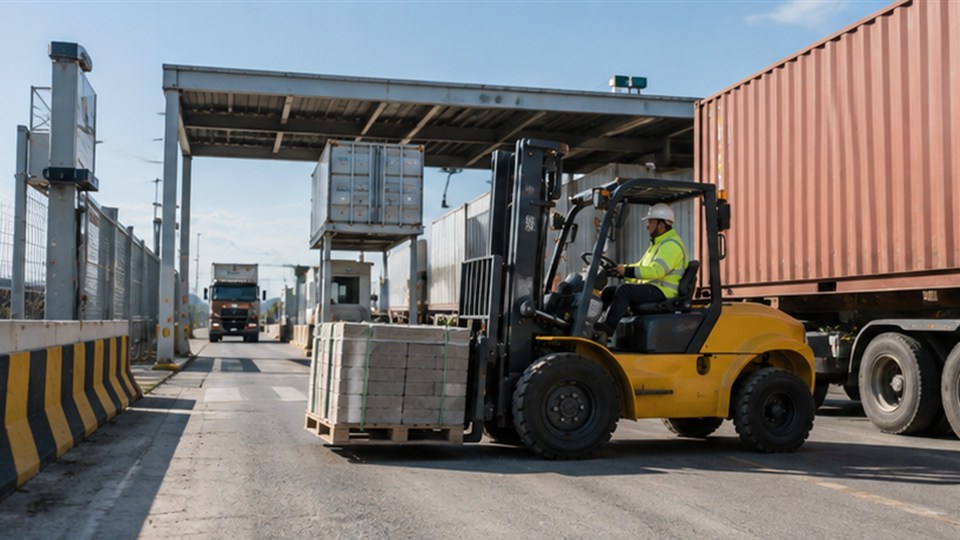
Evaluate four-wheel drive, ground clearance, tyre pattern, cooling reserve and mast visibility for the worst border-yard surface. Map the full rear-swing arc beside barriers and parked trailers. Select fork length, carriage width and attachments from actual inspection loads rather than nominal pallet assumptions.
Visibility and control deserve the same attention as capacity. Review the mast, carriage, tyres, lighting, mirrors or cameras, restraint, warning devices and speed management as one system. Dust, cold, heat, moisture and corrosion may require additional protection and shorter inspection intervals. Operators must be able to see the intended travel path and place the load without leaning outside the protective zone.
Compare the B28 off-road forklift for a second view of capacity, manoeuvrability, energy and service access.
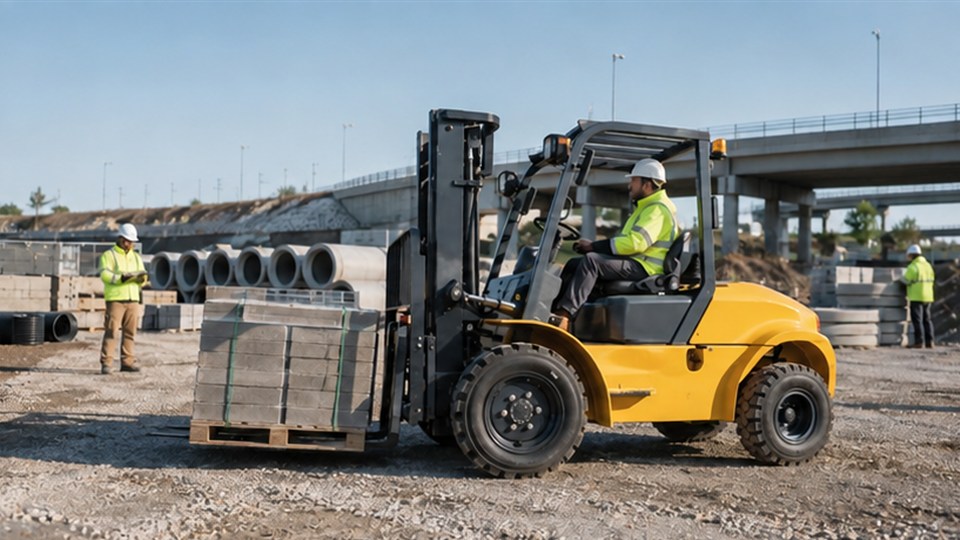
Separate inspection staff, drivers and pedestrians from the complete tail-swing area. Use a spotter where cameras or mirrors cannot provide a full view. Keep loads low during travel, approach pavement edges squarely and stop operations when dust, rain or congestion invalidates the approved route.
Create a written operating envelope for every route: maximum load and lift height, approved travel direction, pedestrian exclusion points, slope rules and stop-work conditions. Complete a pre-shift inspection of tyres, forks, chains, hoses, brakes, steering, alarms and the energy or fuel system. Isolate defects that affect stability, braking or visibility until they are corrected.
Supervisors should observe real work, record near misses, harsh braking, overload attempts, impacts and recurring service issues, then use those findings to improve layout, traffic separation, signage and coaching. Build the business case around productive hours rather than purchase price alone. Include operator time, maintenance, tyres, energy or fuel, infrastructure, transport between sites, downtime risk and resale value.
The 7-ton off-road forklift is the third internal product reference for application comparison.
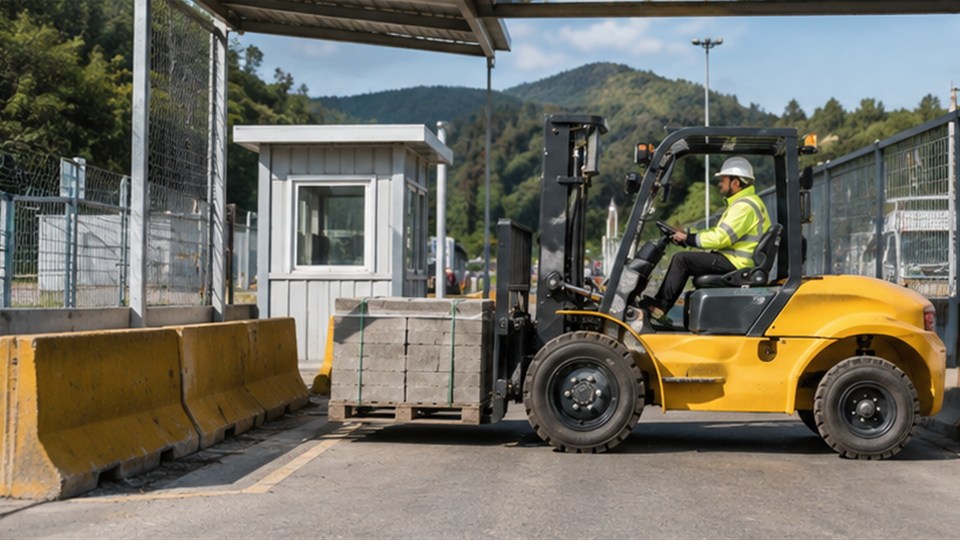
Measure idle time around inspection holds, tyre wear, field-service response and relocation between border facilities. Telematics can identify queue patterns, but the operating plan must also define who releases a machine into each controlled zone.
A staged trial is the strongest way to validate a configuration. Select a representative route, define success measures, brief operators and compare throughput, energy use, handling accuracy and maintenance observations. Review the results with operations, safety and finance before fleet-wide deployment. This evidence turns a current headline into a defensible material-handling plan.
ZGFORKLIFT and MYZG can tailor the final specification after reviewing the application. Product availability varies by market; confirm the latest technical data and comply with local regulations before purchase or operation.
Contact Shandong Zhuogong Machinery equipment Co.,Ltd. Email: vip@mingyuforklift.com. Tel: +86-0535-2090977. WhatsApp: +86 131 8160 2336. Address: Xiaqiu Town, Laizhou, Yantai City, Shandong Province, China.
Send the maximum load, load-center distance, aisle width, gradient, surface condition, daily duty hours and climate so MYZG engineers can recommend a practical configuration instead of a generic catalogue answer.
Name: selena
Mobile:+86-13176910558
Tel:+86-0535-2090977
Whatsapp:8613181602336
Email:vip@mingyuforklift.com
Add:Xiaqiu Town, Laizhou, Yantai City, Shandong Province, China
