vip@mingyuforklift.com
+86-0535-2090977

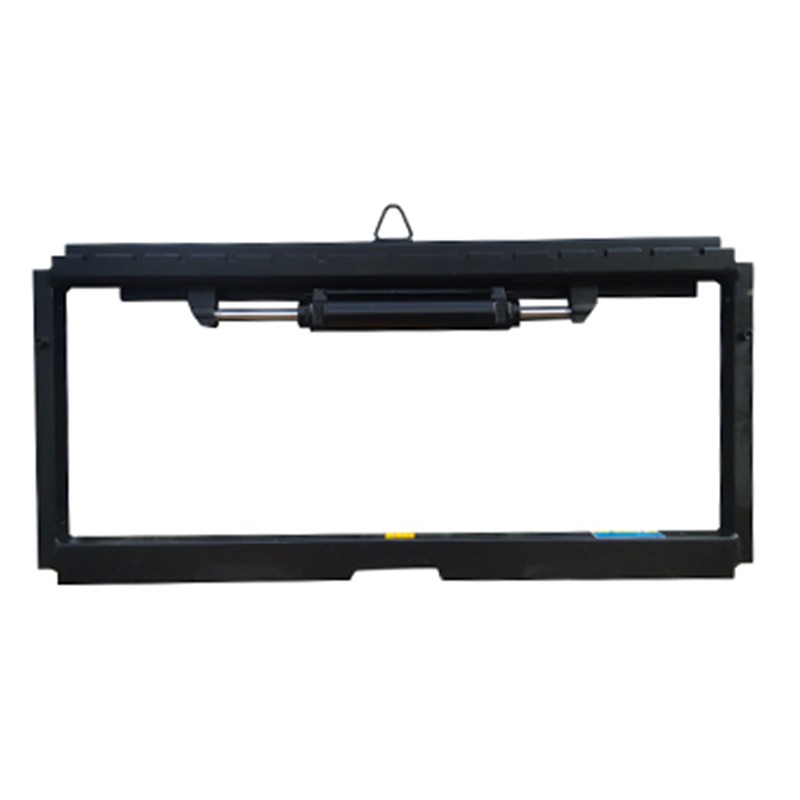
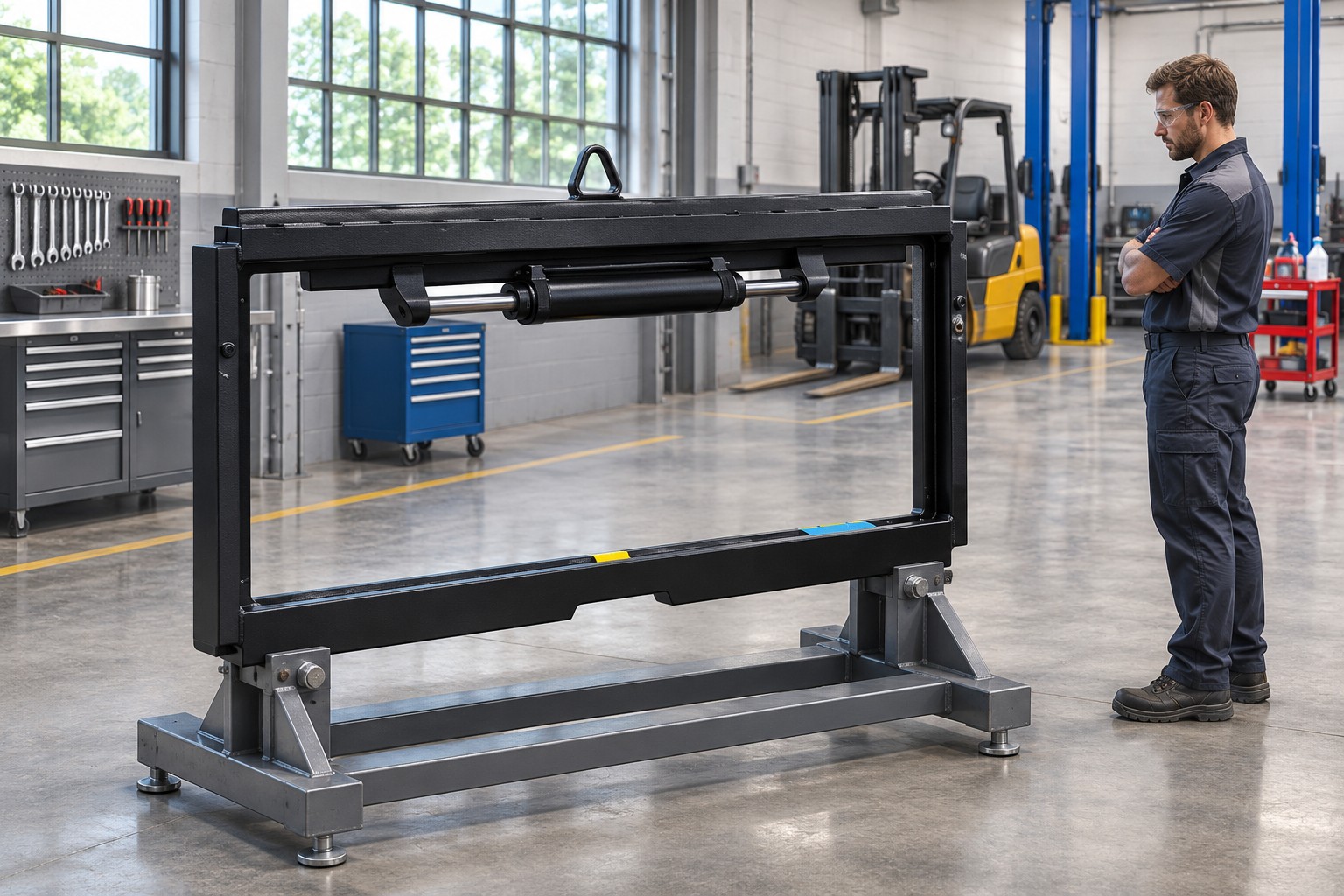
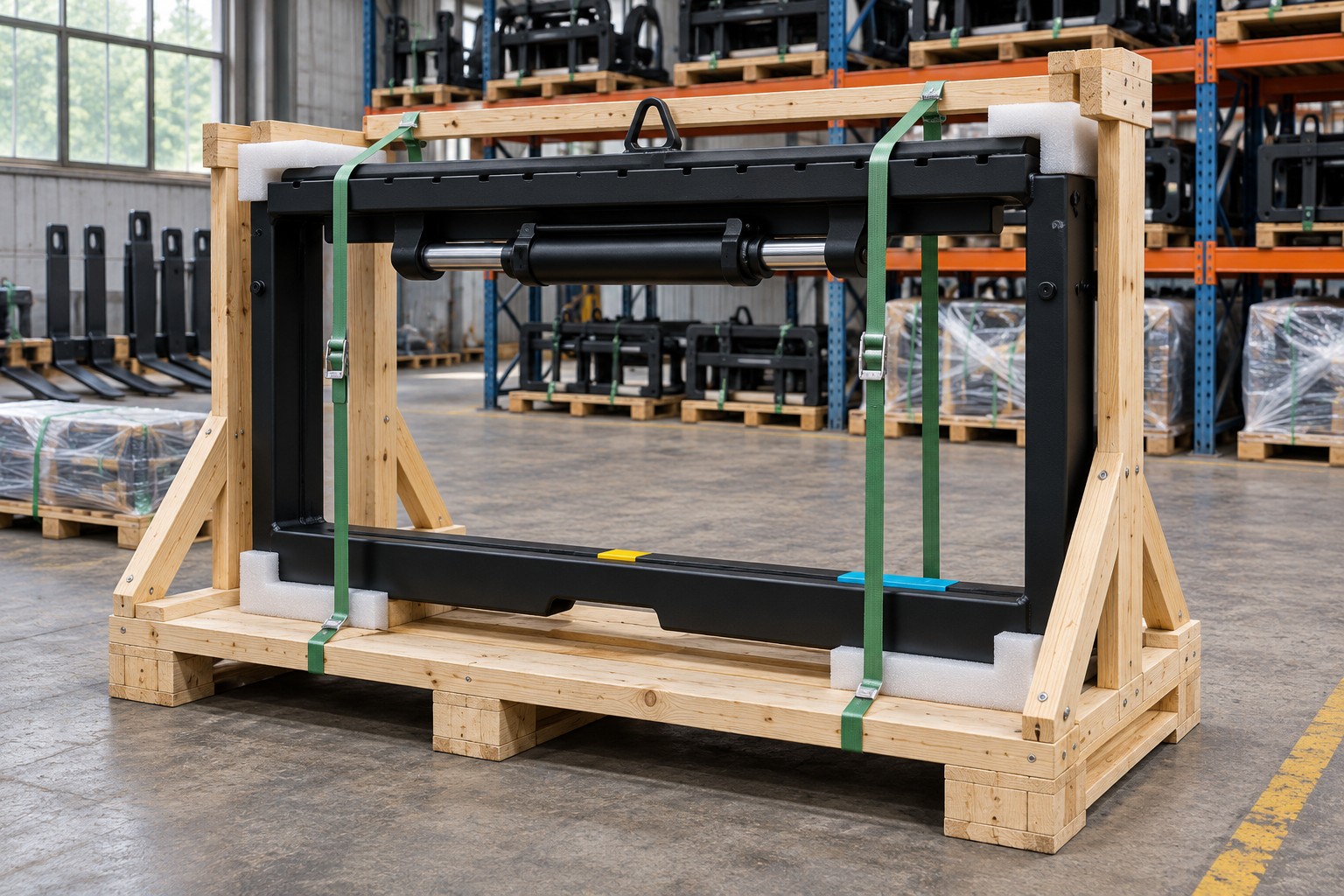
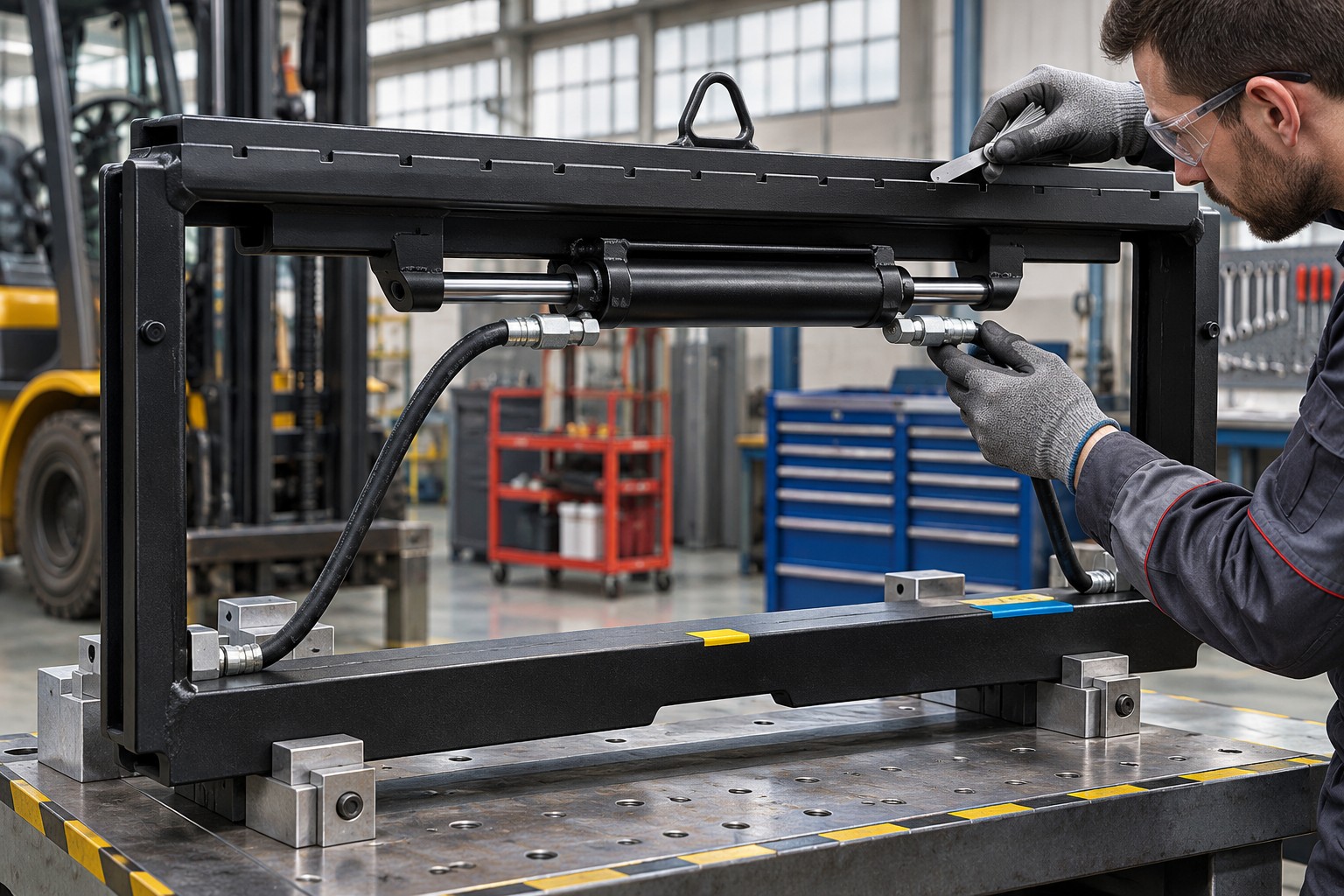
The ZGFORKLIFT / MYZG forklift side-shifter is a black steel carriage attachment shown in the company's existing accessory listing. A side-shift function can help an operator align forks with a pallet or rack opening by moving the fork carriage laterally within its approved range. It is useful only when the attachment is correctly matched to the host forklift, fitted by qualified personnel and included in the truck's revised capacity documentation. The original listing provides a product identity and photo but no confirmed dimensions, travel stroke or rated capacity. Buyers should request those values for the exact unit offered instead of assuming a universal fit.
In a warehouse with closely spaced pallets, an operator may need small corrections after approaching a load. A compatible side-shifter can reduce repeated whole-truck repositioning when the aisle and load permit it. Potential settings include packaged-goods distribution, appliance-parts storage, building-material depots and dock staging. These are applications to evaluate, not claims about completed customer installations. The attachment does not make a narrow aisle wider, fix poor pallet quality or increase a forklift's load rating. The host truck still needs a safe approach, adequate clearance and a capacity plate reflecting the installed attachment.
Start with a route survey. Measure aisle clearance, pallet-entry spacing, rack-beam position and floor condition. Record the typical load weight and load center, mast height, fork length and any other attachment already installed. If operators often need to correct lateral alignment, document where and why. A side-shifter may help at a dock or racking face, but the operating method should keep people away from the carriage and load while any hydraulic function moves. The original side-shifter listing provides the pictured design for an initial inquiry.
Send the supplier the host forklift model, serial number, existing carriage class, fork specifications, hydraulic circuit information, mast configuration and intended load. Ask for a dimensioned drawing, mounting interface, side-shift stroke, attachment mass, rated capacity, hydraulic requirements and installation instructions for the proposed unit. The exact fork interface and controls must be checked by a qualified technician. Request a written compatibility statement and revised residual-capacity information before use. The site's attachment category is a useful way to compare accessories, but each option changes the truck differently.
A buying decision should include more than the purchase price. Consider the cost of fitting, hoses and controls if needed, commissioning, operator instruction, periodic inspection, wear parts and potential changes to capacity. Ask whether the quotation includes fork carriage components or only the side-shift frame, and confirm packing for transport. A fork positioner serves a different purpose by adjusting spacing between forks; the fork-positioner page can help buyers separate these requirements. Do not substitute one attachment for another based only on a photograph.
Before a shift, the operator should check the host forklift and attachment under the delivered manuals. Confirm the frame is secured, hoses are protected, controls respond as intended and no leak or deformation is visible. Approach the pallet squarely where possible. Use lateral adjustment only within the manufacturer's instructions, with the load stable and forks appropriately positioned. Keep the mast, forks and load clear of rack uprights, doors and neighboring pallets. Side shift is a fine positioning aid, not a method for dragging a pallet sideways or pushing freight into a tight space.
At receiving, a side-shifter can be evaluated for placing a pallet onto a marked staging lane. At storage, it may help center the load in a racking bay after the truck has reached a safe position. At dispatch, it may simplify alignment with a transport pallet when there is enough space around the vehicle. Each operation must stay within the revised capacity chart. If a site has mixed truck types, maintain a register of which attachment fits which machine and prevent casual transfers between trucks. The complete product range lets a fleet manager review host equipment and attachment options together.
Maintenance should follow the delivered attachment manual and host-forklift schedule. A technician should inspect the carriage, sliding surfaces, retaining hardware, cylinder, hydraulic connections and any visible wear or damage at the specified interval. Clean accumulated debris before it interferes with travel. Hydraulic work requires appropriate isolation and pressure relief by trained staff; operators should report leaks rather than tightening fittings while the system is live. Record installation date, inspections, repairs and replacement parts against the attachment and host serial numbers. If the frame is bent or mounting security is uncertain, remove it from service until assessed.
Ask for a parts list covering wear surfaces, seals, hoses and mounting hardware for the exact version supplied. Confirm whether service can be performed locally and which items a dealer should stock. If a fleet handles scrap material, the scrap-fork product page illustrates a separate attachment task; its service parts and fitment must be assessed independently. A dealer can improve uptime by pairing a compatible attachment with a clear inspection routine and a straightforward support channel. Avoid making service-time promises without a written arrangement.
For an export order, ask how the attachment will be packed, protected and identified for installation. Request operating and installation instructions, inspection information, component list and any conformity documents required for the exact combination and destination. CE documentation, where applicable, should be checked against the offered attachment and host-truck integration. EPA engine-emissions approval is not a claim to attach to this hydraulic accessory; relevant requirements depend on the full machine and destination. Export experience or a cooperation case should only be described with evidence supplied for the inquiry. The site's service FAQ can help shape the technical questions.
A distributor should qualify prospects by host truck, loading task and installation capability before quoting. Keep a fitment checklist, ask for photos of the existing carriage and hydraulic connections, and arrange technician review of the final drawing. Train sales staff to discuss the revised capacity plate and the distinction between side shift and fork positioning. Shandong Zhuogong Machinery Equipment Co., Ltd. can discuss the product and support scope in writing. The company page provides background, while the actual contract should define supplied parts, documentation, warranty and after-sales contact.
Send the forklift model and serial number, carriage and fork dimensions, typical load, required lateral adjustment and destination market. ZGFORKLIFT / MYZG can then discuss a side-shifter proposal and the documentation needed to check safe fitment. Contact Shandong Zhuogong Machinery Equipment Co., Ltd. through the contact page, email vip@mingyuforklift.com, or call +86-0535-2090977. Confirm the drawing, host-truck compatibility and revised capacity information before installation.
Name: selena
Mobile:+86-13176910558
Tel:+86-0535-2090977
Whatsapp:8613181602336
Email:vip@mingyuforklift.com
Add:Xiaqiu Town, Laizhou, Yantai City, Shandong Province, China