
vip@mingyuforklift.com
+86-0535-2090977

Published: 2026-11-10 (Asia/Shanghai)
HTML Meta Description: A practical rear-steer rough-terrain forklift plan for inland transload yards preparing alternate cargo routes during renewed port labor uncertainty.
Keywords: port labor contingency, rear-steer rough-terrain forklift, inland transload yard, alternate cargo route, container delay planning, export crate handling, rail-linked depot, ZGFORKLIFT, MYZG, yard recovery drill
The current signal is that renewed labor uncertainty around major container gateways has encouraged shippers to map inland transload capacity and alternate release points before queues grow. For rail-linked inland depots receiving sealed export crates, machinery pallets and time-sensitive industrial cargo, this is not merely a market headline. It changes the number of touches, the order of release, the value of a clear exception lane and the evidence required before a load can move.
ZGFORKLIFT and MYZG recommend translating the signal into a site-specific operating control. Shandong Zhuogong Machinery equipment Co.,Ltd reviews the actual cargo, route, surface, gradient, lift height, traffic mix, energy source, shift length and recovery plan. A model name alone cannot establish residual capacity, safe clearance, emissions suitability, charging or fuel conditions, attachment effects or destination compliance.
The primary exposure is that a diversion can add unfamiliar turning areas, soft shoulders, temporary lanes and mixed contractor traffic just when teams are under pressure to recover delayed freight. Write that failure in the shift plan and identify the person with authority to stop, quarantine, reroute or reject the task. The fastest route is never acceptable when the load identity, physical condition or release authority is uncertain.
Use the CPC30SY off-road forklift as one product-page reference. Confirm the offered machine against the real load center, rated and residual capacity, fork or platform dimensions, mast or boom configuration, tires, brakes, steering, visibility, energy system and the environment in which it will work.
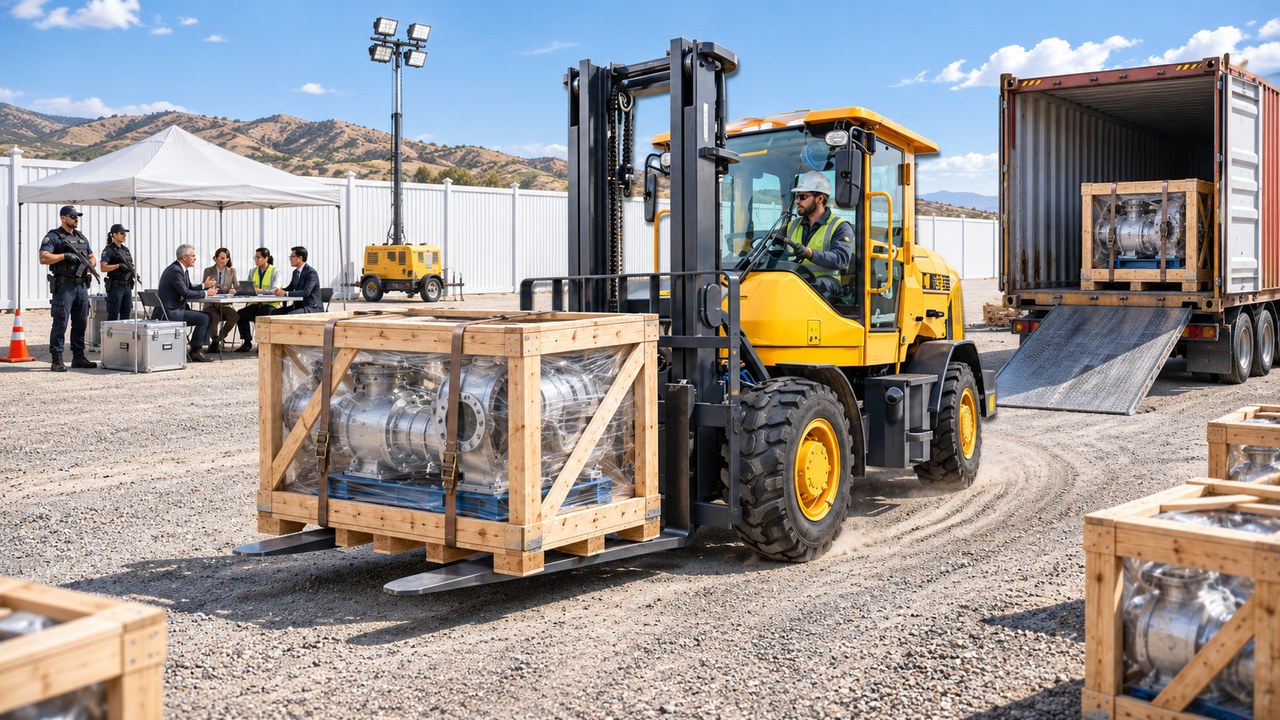
A practical sequence is to confirm the release document and seal; photograph the load; inspect the alternate lane; measure the tightest turn; mark the rear sweep; assign a banksman; test one representative crate; then release the route in controlled waves. Each step needs an owner, a visible status and a stop condition. If the physical label, package, seal, battery condition, route, signal or destination does not match the record, the task returns to the controlled holding area instead of continuing on assumption.
Rehearse one credible exception during commissioning. Examples include a blocked lane, unavailable dock, loss of remote signal, damaged package, temperature alarm, wrong route order, missing passport event or equipment fault. The recovery method must place both machine and load in a stable state without drawing a worker into an exclusion zone.
Useful evidence includes gate-release time, route deviations, soft-ground stops, banksman interventions, damaged packaging, rejected loads and time to restore the normal lane. Review results at the busiest interval and by exception type, not only as a daily average. A quick transfer with an unresolved identity or missing handoff is not a successful transfer; it is delayed risk.
Compare that workflow with the 5T off-road forklift. Productive hours, route width, overhead clearance, gradients, load dimensions, operator position, service access and local support matter as much as nominal capacity. Ask for updated stability and capacity information whenever an attachment, mast, battery, tire or counterweight differs from the standard configuration.
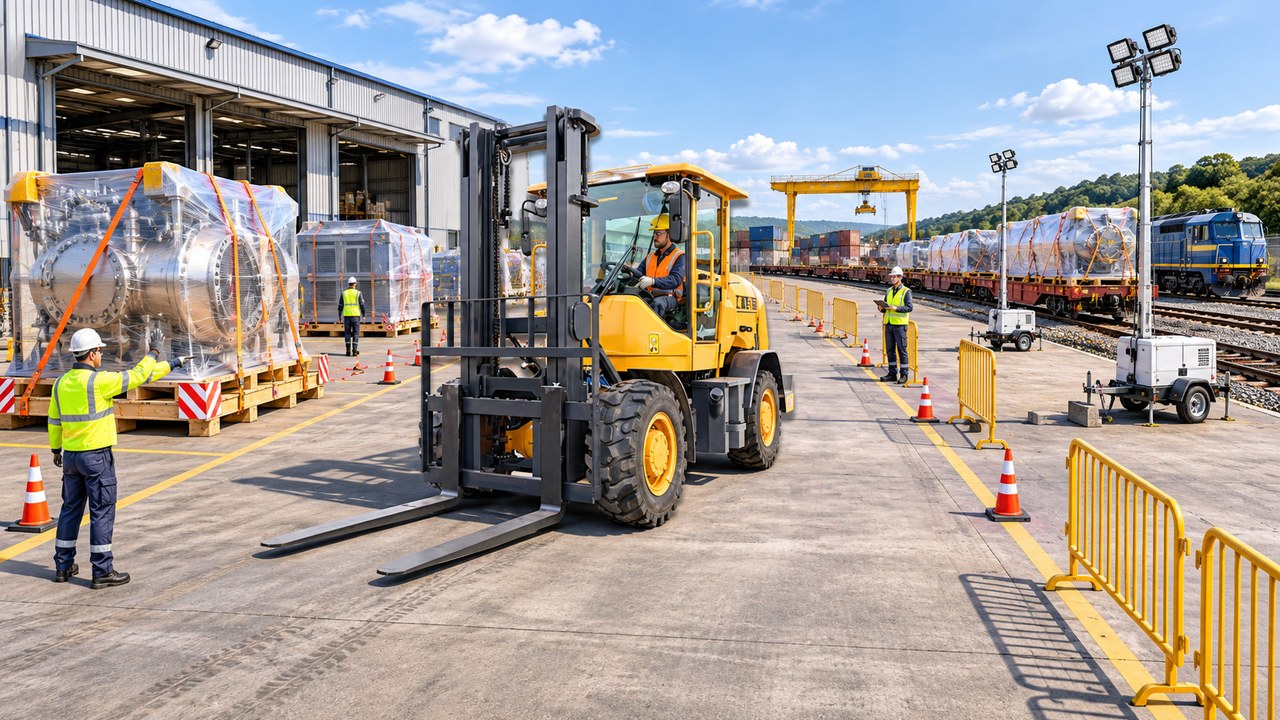
Before every shift, inspect the items specified by the manufacturer and site procedure. Typical checks include forks or platform, mast or boom, chains, hoses, wheels, tires, steering, service and parking brakes, guards, warning devices, emergency controls, data plate, battery or fuel system, visible leaks and structural damage. Remove the equipment from service when a defect affects control, stability, containment or safe access.
Keep pedestrians and adjacent automation outside the operating envelope with barriers, route markings and an agreed right of way. A spotter supplements visibility but does not increase capacity or permit blind travel. Remote operation still requires an accountable person who can see the hazard, understand the stop logic and prevent unauthorized entry.
Request a written configuration covering the selected model, rated and residual capacity, load center, lift or working height, dimensions, service weight, power or engine arrangement, charger or fuel interface, tire and brake type, standard and optional equipment, manuals, parts information, warranty, shipping method and destination documentation. CE, EPA, battery transport, LPG cylinder and workplace obligations depend on the actual specification and market.
The ZG-CPC30SY 4x4 rough-terrain forklift provides a third internal comparison. These links support early selection; the binding decision should use the final quotation, data sheet and approved application review. Photographs on different pages may show options that are not included in every order.
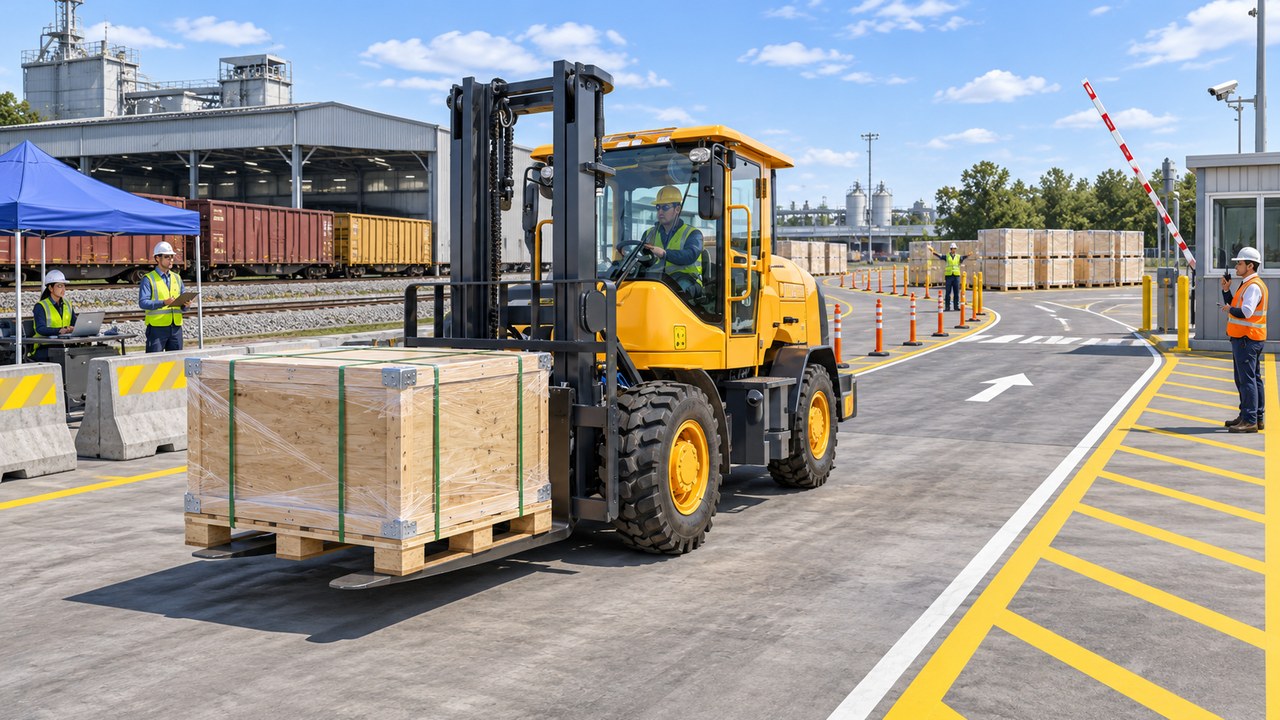
Begin with an empty route, then a representative load, then the expected peak condition. Record operator, maintenance and area-owner observations. Approve routine use only after the route, equipment condition, release evidence and recovery behavior remain consistent through the full cycle.
Repeat the review after a layout change, new software or customer promise, different packaging, a new attachment, changed battery or cylinder, weather shift, revised service provider or modified emergency plan. Good material handling is a repeatable physical process whose documents, scans and real-world load all tell the same story.
ZGFORKLIFT and MYZG are associated with Shandong Zhuogong Machinery equipment Co.,Ltd. Send the destination country, cargo description, load weight and center, route, lift height, operating hours, energy preference and service expectations for an order-specific review.
Contact Information:
Email: vip@mingyuforklift.com
Tel: +86-0535-2090977
WhatsApp: +86 131 8160 2336
Address: Xiaqiu Town, Laizhou, Yantai City, Shandong Province, China
Name: selena
Mobile:+86-13176910558
Tel:+86-0535-2090977
Whatsapp:8613181602336
Email:vip@mingyuforklift.com
Add:Xiaqiu Town, Laizhou, Yantai City, Shandong Province, China