vip@mingyuforklift.com
+86-0535-2090977

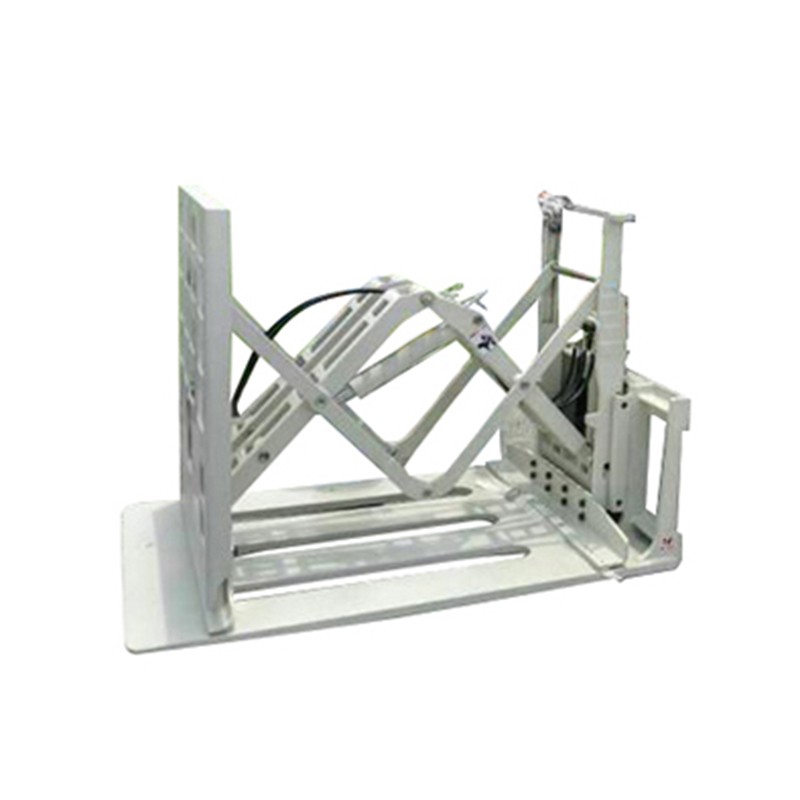
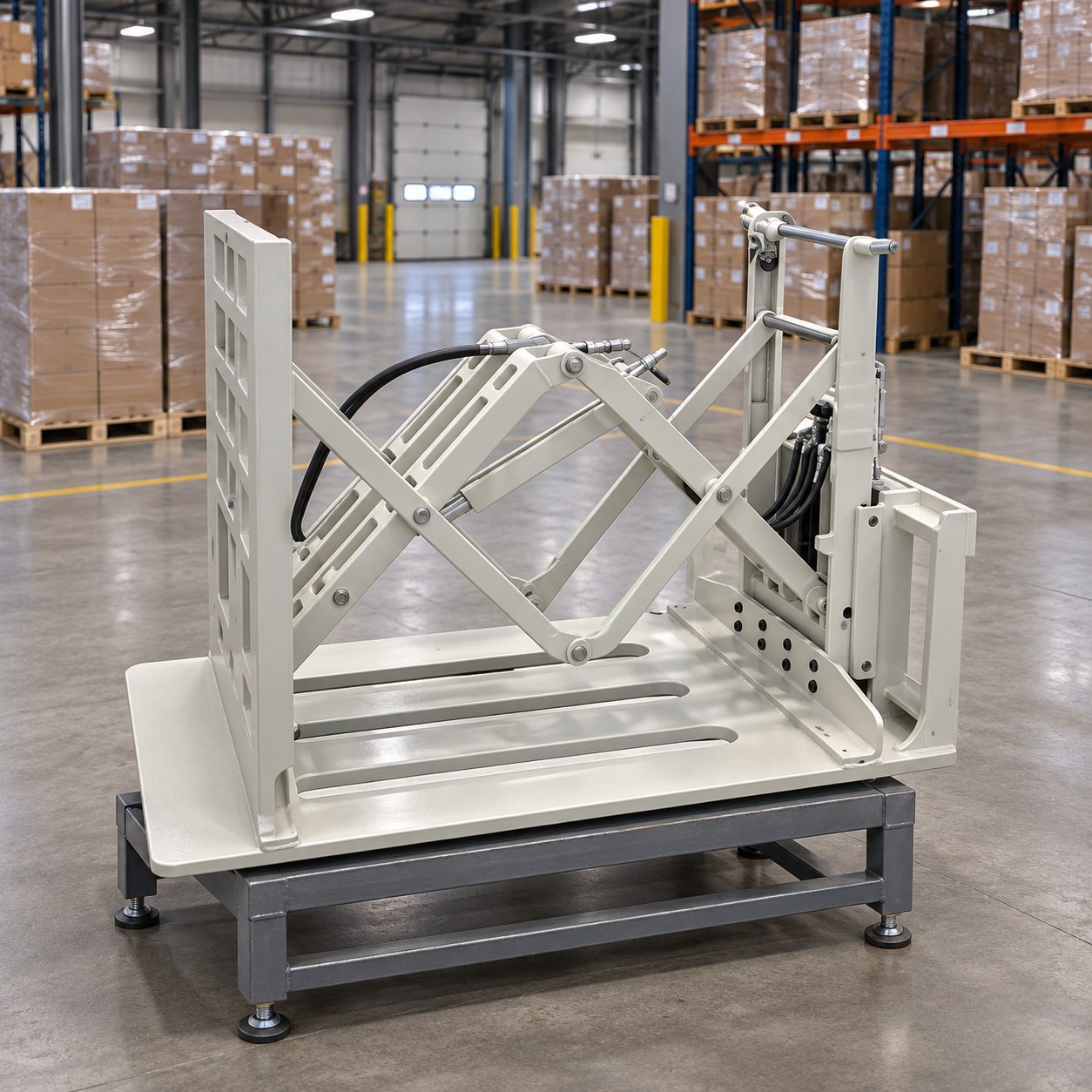
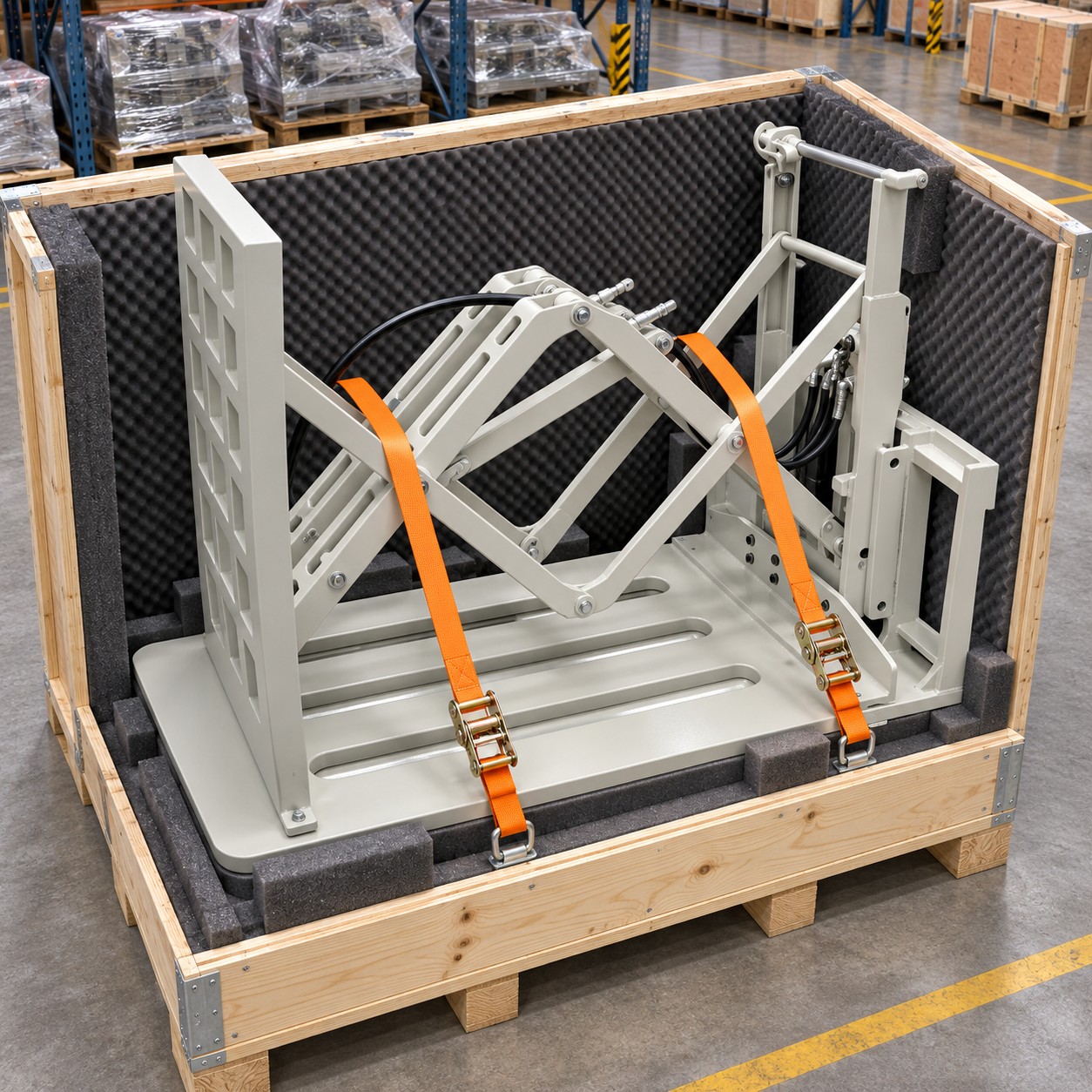
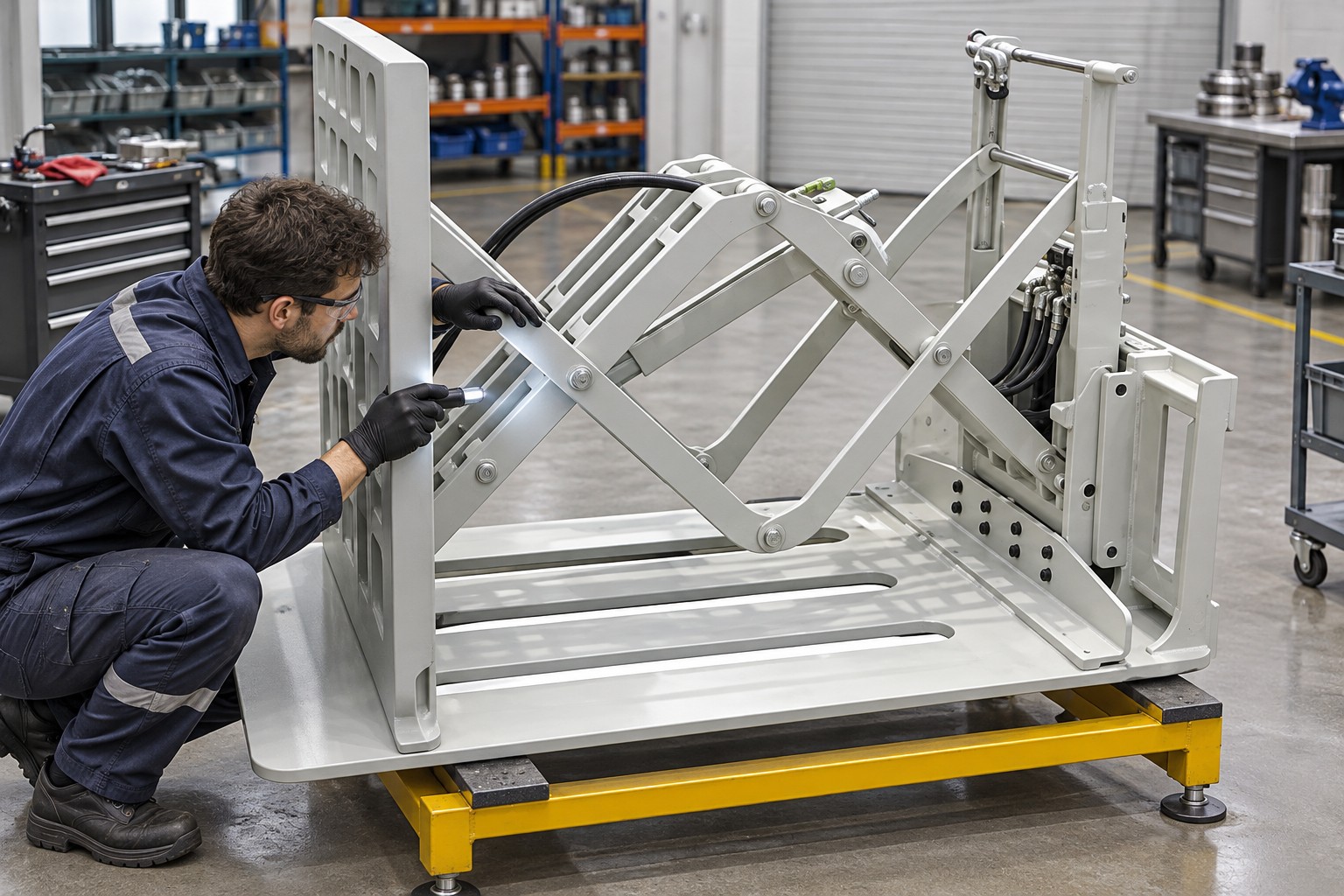
A distributor considering pallet-free transport may ask whether a push-pull attachment can handle a particular load on a slip sheet. The ZGFORKLIFT / MYZG website lists a push-pull device. Its original photograph shows a light-colored low support platform with parallel grooves, an upright movable plate, a rear mounting frame, a scissor linkage and hydraulic hoses. These visible features distinguish it from a simple fork-positioning attachment. The image does not prove a rated load, reach stroke, sheet-grip design, hydraulic specification or compatibility with any given forklift. Shandong Zhuogong Machinery Equipment Co., Ltd. should provide current documents for the exact quoted configuration before a buyer approves it.
The first step is to document the goods and packaging. Record the load footprint, gross mass, height, center of gravity, carton strength, wrap pattern and the type and condition of any slip sheet. Check whether the sheet has the required tab or edge for the delivered gripping method; do not assume every sheet can be pulled. Note whether the load can tolerate movement against the front plate without crushing or sliding. Map the full route from receiving to storage and onward to dispatch, including floor joints, dock plates, rack clearances and the receiving surface. A supervised trial with representative loads should precede production use. Poorly restrained or damaged goods should use another approved handling route.
Compare the attachment with the site's original push-pull device reference. Ask the supplier for the actual support-platen dimensions, mass, center of gravity, travel stroke, load limit, sheet engagement method, hydraulic flow and pressure, carriage class and mounting requirements. The web photo alone cannot answer these questions. Provide the host forklift model and serial number plus images of its carriage and auxiliary hydraulic controls. Moving a load forward changes its effective load center, and the added attachment mass reduces residual capacity. Have the complete combination checked by a qualified person at the required lift height.
A purchase brief should include the minimum and maximum load dimensions, slip-sheet material and tab geometry, daily cycle count, lift height, target placement surface and required travel distance. Request a drawing showing retracted and extended dimensions, platen position and service access. Confirm what the quote includes: hydraulic hoses, valve kit, mounting parts, operator manual, training, spare parts and installation may be separate. Before acceptance, test the moving plate without a load in a clear area and then pull and push a representative load at a controlled height. Inspect the sheet, cartons and receiving surface after each step. If the load tears the sheet, shifts or deforms, stop and revise the packaging or process.
The attachments category helps compare different handling methods. A carton clamp contacts the carton sides and requires a separate package-pressure assessment. A forward fork rack addresses reach rather than pulling a suitable slip-sheet load. These products cannot be substituted solely because they mount to a forklift. Choose according to packaging, load restraint, host capacity and the actual placement task.
Potential applications include packaged-goods distribution, export loading and production supply where a suitably designed slip sheet can be used. Each proposed load and sheet must pass a trial with the delivered equipment. Mark the work zone and keep people clear of the platen, moving plate and pinch points. Operators should center the load, follow the approved sequence for gripping, pulling, carrying and pushing, and keep it low during travel. Never use the mechanism to drag a load across an unsuitable floor or pull from an unsecured stack. Check that the destination surface can receive the load without causing it to topple. A supervisor should document approved load patterns, operator training and a fallback for goods that cannot pass the trial.
Review the All Products catalog when choosing the host truck and use the site's frequently asked questions to frame technical inquiries. The business case should compare slip-sheet material and disposal, pallet cost, loading time, product damage, training and service. A process that saves pallet space may still be unsuitable if the cartons cannot withstand movement or if the receiving point has no reliable support. Site-specific risk controls and the delivered manual take precedence over a generic product description.
Inspect the support platform, moving plate, linkage, pins, mounting devices, hoses, couplings and hydraulic components before each shift. Look for cracks, bent steel, leaks, loose fasteners, unusual noise and uneven motion. Keep the platen surface clean so a load does not snag on debris. Test functions without a load according to the supplied manual. Remove a damaged unit from service until qualified personnel assess it. Record sheet failures, carton damage and any unplanned movement during pulling or pushing. Ask for the exact unit's lubrication schedule and replacement-part list; do not infer service intervals or spare-part compatibility from an image.
For export orders, request an itemized packing list, installation and operator instructions, service contacts and current supporting documents. The company background page can support initial due diligence. Ask what CE-related documentation applies to the actual delivered product and destination. EPA rules may concern a selected combustion-engine host forklift in certain markets; they should not be presented as certification of this attachment. If a supplier cites prior export experience or a cooperation case, request verifiable records relevant to the customer's industry. This page makes no unverified approval, capacity, case or service-network claim.
A dealer should qualify the load, sheet and host truck before recommending a push-pull device. Show the customer what is included in the equipment price and what requires local installation or commissioning. Keep the approved load trials, capacity review, operator sequence and maintenance plan in the handover file. Compare alternatives on the same basis: equipment, packaging, freight, installation, training and after-sales support. Where the slip sheet or carton strength is uncertain, arrange a controlled demonstration before a fleet-wide order. The recommendation should address a verified workflow rather than a promise that every pallet can be eliminated.
Send load and slip-sheet dimensions, packaging photographs, required placement height, daily throughput and host forklift identification to Shandong Zhuogong Machinery Equipment Co., Ltd. Request current ZGFORKLIFT / MYZG push-pull drawings, ratings, hydraulic requirements, delivery scope and service guidance. Email vip@mingyuforklift.com, call +86-0535-2090977 or use the contact page. Final use limits should follow the delivered attachment, the compatible truck and a supervised trial with the customer's representative goods.
Name: selena
Mobile:+86-13176910558
Tel:+86-0535-2090977
Whatsapp:8613181602336
Email:vip@mingyuforklift.com
Add:Xiaqiu Town, Laizhou, Yantai City, Shandong Province, China