vip@mingyuforklift.com
+86-0535-2090977

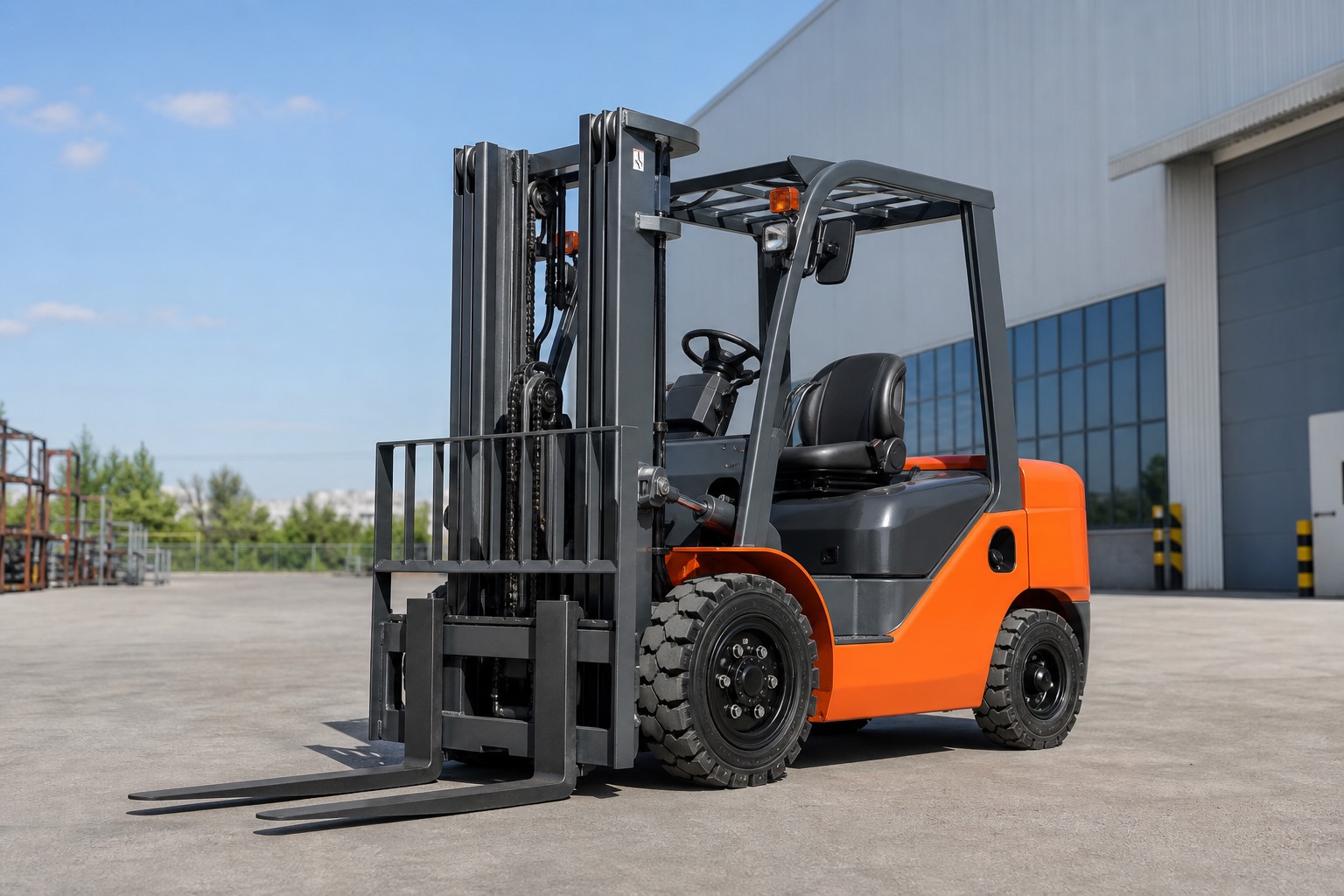
The ZG-D30X 3.0 ton diesel forklift from ZGFORKLIFT / MYZG is developed for customers who need dependable lifting power, outdoor mobility and practical serviceability across long working shifts. Instead of treating a forklift as a list of engine, mast and tire specifications, Shandong Zhuogong Machinery Equipment Co., Ltd. starts with the buyer's real operating problem: what loads must be moved, where the truck will travel, how many hours it will run, which attachments are needed, what emission or documentation rules apply, and how the fleet will be maintained after delivery.
For container yards, building-material distributors, factories, logistics centers, agricultural warehouses and rental fleets, the best diesel forklift is the model that balances rated capacity, load center, residual capacity, mast height, turning space, ground conditions, fuel efficiency and lifetime service cost. The ZG-D30X is positioned as a versatile counterbalance forklift solution for general heavy-duty handling, with configuration support for different markets and applications.
A request for a “3 ton diesel forklift” is only the beginning. The purchasing team should record the maximum load weight, pallet dimensions, load center, load shape and the height at which the load must be placed. A long, uneven or offset load can reduce the usable capacity even when its total weight is below the nominal rating. High lift heights, side shifters, fork positioners, clamps and other attachments can also change residual capacity. A responsible supplier therefore needs the working data before confirming a configuration.
Measure the narrowest aisle, door, trailer opening, ramp and turning point on the route. Confirm whether the truck will operate on smooth concrete, broken pavement, compacted soil, gravel or mixed surfaces. These details influence tire choice, ground clearance and transmission expectations. Buyers comparing several equipment families can review the complete ZGFORKLIFT product range and the All Products equipment index when planning a coordinated material-handling fleet.
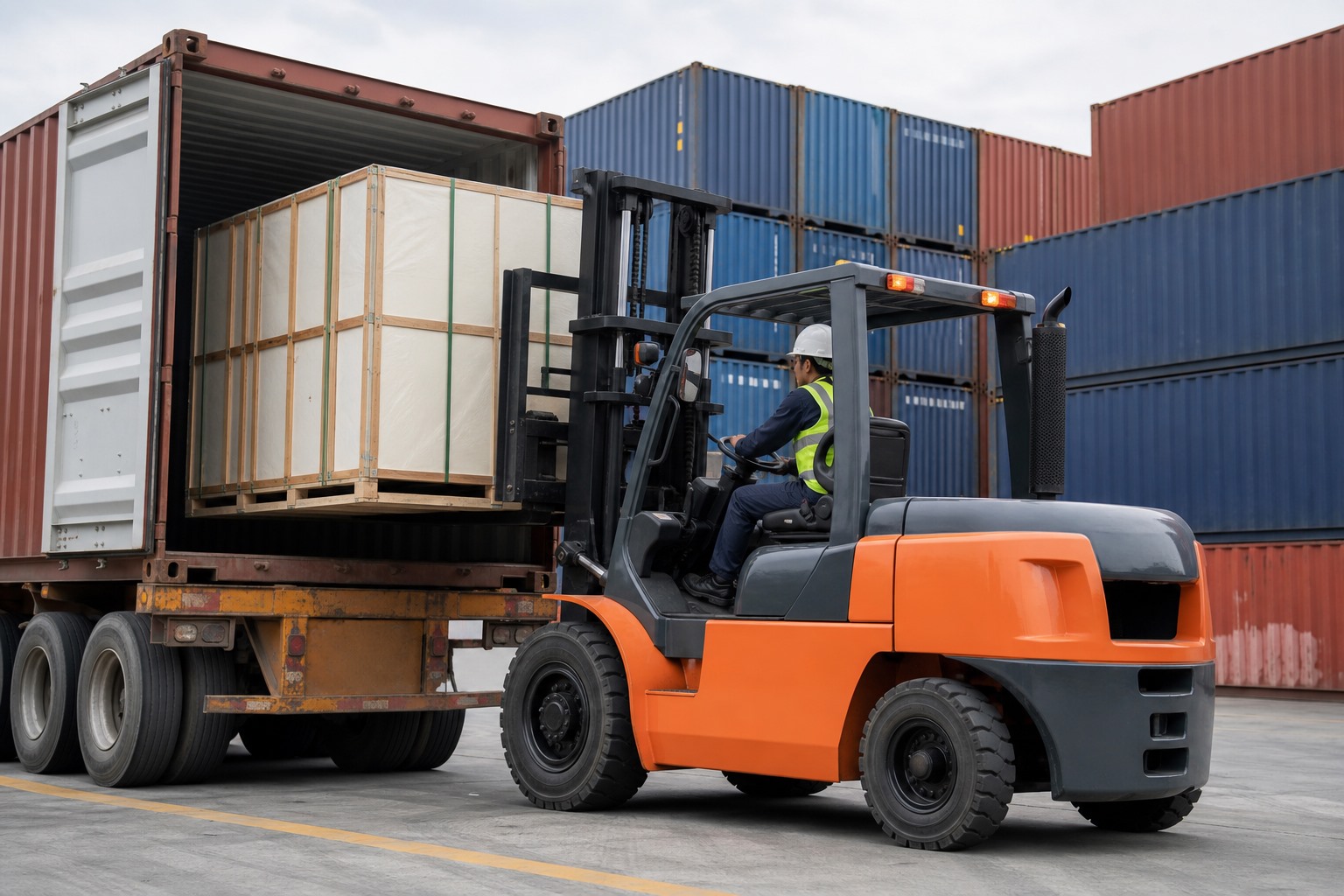
Container depots and export warehouses need a forklift that can move packaged machinery, wooden cases, palletized components and project cargo between storage areas, loading platforms and trucks. Customers usually care about cycle time, ramp performance, visibility around large loads, pneumatic-tire durability and easy refueling during long shifts. The solution is not simply more power. The forklift must also have a mast and carriage that fit the container door, a turning radius suited to the loading lane and forks long enough to support the specified pallet safely.
The ZG-D30X diesel counterbalance forklift can be configured for general container-side handling where its rated capacity and dimensions match the task. A trained operator, marked traffic routes, stable pallets and correct load positioning remain essential. For an importer, pre-shipment planning should include forklift dimensions, packing method, container-loading plan, manuals, spare-parts kit and destination-market documentation.

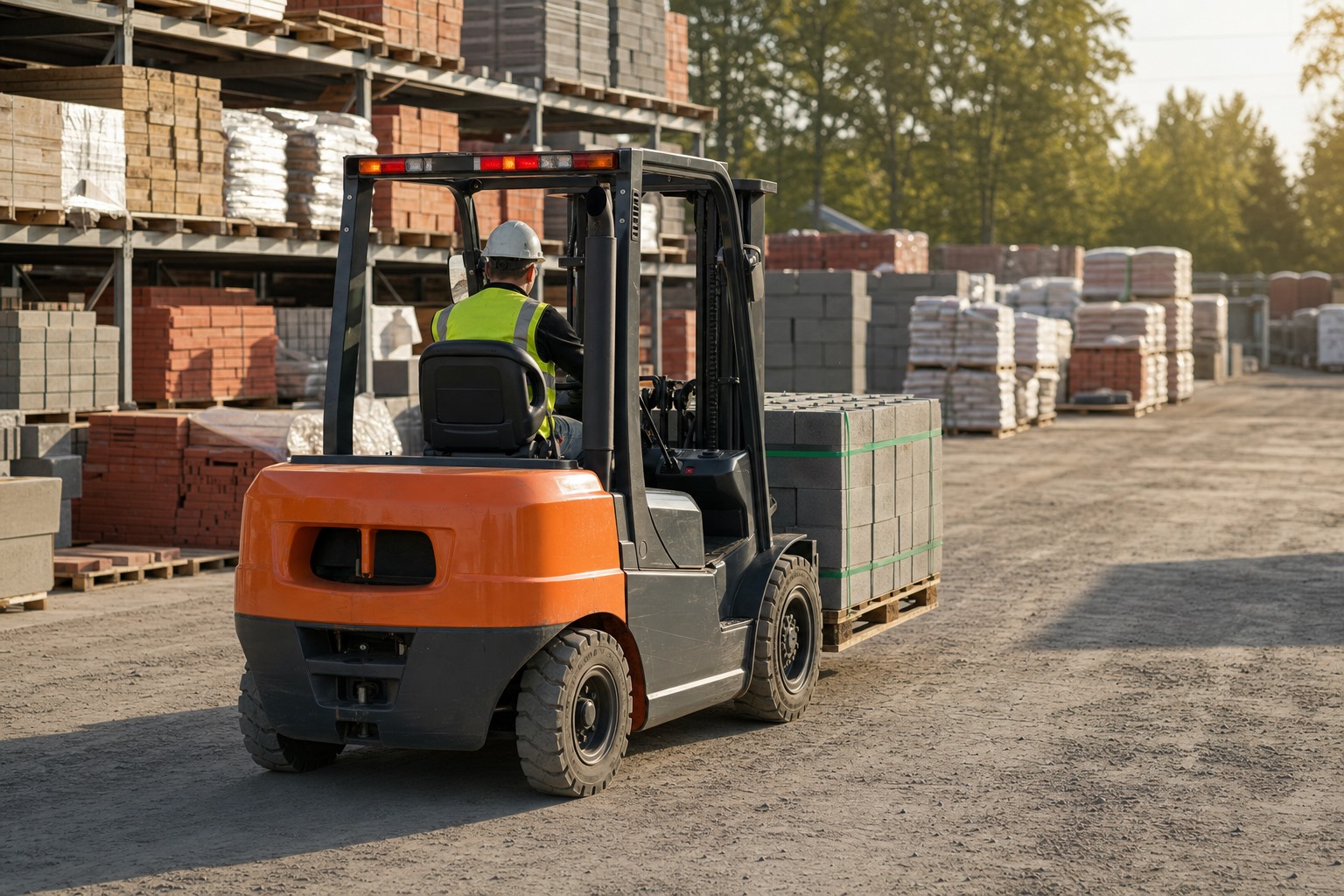
Brick, block, timber, steel, stone and bagged-material businesses often operate on dusty or uneven yards. Their customers need a forklift with suitable pneumatic tires, useful ground clearance, strong cooling performance and a chassis that can tolerate frequent outdoor travel. Load stability is especially important because construction materials may be dense, uneven or exposed to weather. The correct fork length, carriage width and attachment must be confirmed for the pallet or bundle.
A diesel forklift may be a practical choice when work is outdoors, shifts are long and rapid refueling matters. The site should still evaluate noise, exhaust management, pedestrian segregation, surface condition and weather exposure. The truck must travel with the load at the approved low position and at a speed appropriate to the surface. Buyers who need special load handling can review our forklift attachments and parts business while confirming capacity changes caused by an attachment.

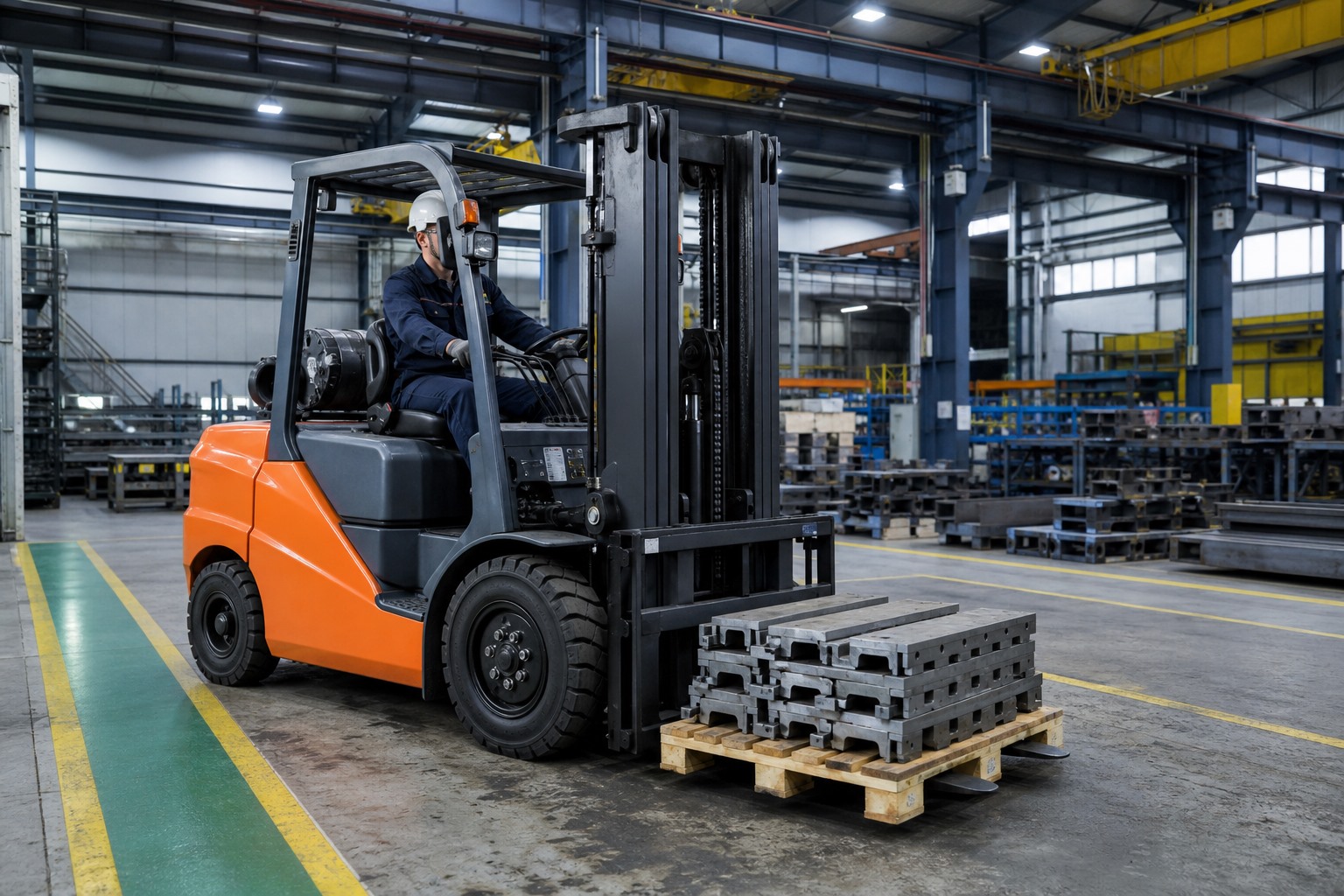
Metal fabrication, machinery production and industrial assembly plants use forklifts to move castings, steel parts, tooling, finished products and maintenance supplies. Customer requirements commonly include precise low-speed control, good forward and rear visibility, dependable braking, protection for hydraulic lines and a maintenance schedule that fits production shutdowns. If the forklift sometimes enters a building, the buyer must assess ventilation, emissions, noise and local workplace rules before choosing diesel power.
For mixed indoor-outdoor duty, Shandong Zhuogong Machinery Equipment Co., Ltd. can compare diesel and electric alternatives rather than forcing one power type into every application. The decision should consider shift length, available charging infrastructure, outdoor gradients, temperature, ventilation, refueling logistics and total operating cost. Our equipment solution and FAQ resources help buyers organize these questions before requesting a final quotation.

1. Rated capacity and load center: State both the heaviest load and its center of gravity. Do not assume that a 3.0 ton nameplate guarantees 3.0 tons at every lift height, attachment combination or extended load center. Ask for a capacity assessment for the actual configuration.
2. Mast and free lift: Specify maximum fork height, collapsed mast height, ceiling restrictions and whether full free lift is required. Duplex and triplex masts serve different stacking and access needs. Container work may require a configuration that stays below the door height while lifting inside the container.
3. Forks, carriage and attachments: Provide pallet entry dimensions, load width and any need for side shifting or fork positioning. Attachments improve productivity only when correctly matched to the truck's hydraulic circuits and residual capacity.
4. Tires and ground conditions: Pneumatic tires suit many outdoor applications, while solid tires may reduce puncture downtime in waste, recycling or metal yards. Tire selection affects ride, traction, stability, maintenance and operator comfort. The surface condition should be described honestly during selection.
5. Transmission, gradients and duty cycle: Report maximum ramp, travel distance, starts per hour and typical shift duration. A suitable drivetrain and cooling package should be selected for the real workload, not only for occasional peak demand.
6. Operator environment: Consider seat ergonomics, step height, control layout, mirrors, lighting, warning devices, overhead guard, weather protection and optional cabin requirements. A comfortable operator is better able to maintain consistent and safe productivity across a long shift.
7. Destination rules: Tell the supplier the destination country and intended use before confirming the order. CE-related conformity requirements, EPA engine requirements and other emissions or safety obligations vary by market, engine and model year. Documentation must be confirmed for the exact ordered configuration; a generic claim should never replace destination-specific verification.
International buyers need evidence that the supplied machine matches the commercial agreement. Depending on the destination, the documentation package may include a conformity declaration, engine information, operating and maintenance manuals, identification plates, warning labels, packing list, commercial invoice and inspection records. CE and EPA are not decorative marketing terms. Their applicability depends on the machine, engine, destination and current regulation. ZGFORKLIFT / MYZG therefore confirms compliance scope during technical and commercial review.
Shandong Zhuogong Machinery Equipment Co., Ltd. has experience coordinating overseas orders, production updates, inspection photos, packing dimensions, container-loading plans and spare-parts preparation. Export service is designed to reduce surprises between quotation, shipment, customs clearance and commissioning. Buyers can learn more about Shandong Zhuogong Machinery Equipment Co., Ltd. and request documentation details for their destination market.
Daily inspection should cover forks, fork locking, carriage, chains, mast rollers, hydraulic hoses, visible leaks, tires, wheel fasteners, brakes, steering, lights, horn, alarms, seat belt, overhead guard and fluid levels. The operator should record defects and remove unsafe equipment from service. A short daily check is not a substitute for scheduled maintenance by qualified personnel.
Preventive maintenance for a diesel forklift should follow the model manual and typically includes engine oil and filter service, fuel filter and water separator checks, air-filter care, cooling-system inspection, belt tension, battery terminals, transmission oil, drive axle, brake system, hydraulic oil and filter, mast chains and lubrication points. Dusty yards may require shorter air-filter inspection intervals. Correct fluids and clean service practices protect the engine, transmission and hydraulic system.
Fleet owners should track operating hours, fuel use, fault history, tire condition and recurring damage. A planned spare-parts package can include filters, seals, common electrical components, lamps and other locally relevant service items. Reliable parts identification is part of after-sales support, especially for dealers and customers operating far from the factory.
Dealers need a product range that is easy to explain and support. Rental companies need utilization, predictable maintenance, operator-friendly controls and fast parts response. ZGFORKLIFT / MYZG can help partners structure diesel forklift offerings by capacity, mast, tire, attachment and market segment. Keeping several repeatable configurations can simplify quotations, inventory and technician training while optional packages address local industries.
Distributor cooperation may include application review, quotation support, product information, inspection coordination, English manuals, loading guidance and parts communication. For customer projects in logistics, construction materials, manufacturing and agricultural supply, the sales conversation should begin with the work cycle and operating environment. Cooperation cases and references can be discussed when commercially available and permitted by the customer.
Send the maximum load weight, load dimensions, load center, required lift height, lowest doorway, aisle width, ground condition, maximum gradient, daily working hours, tire preference, attachment requirement, destination country, certification expectations, quantity and delivery schedule. Photos of the load and worksite are useful. With this information, the ZGFORKLIFT team can compare mast, tire, fork, hydraulic and export options and explain the trade-offs.
Contact Shandong Zhuogong Machinery Equipment Co., Ltd.
Email: vip@mingyuforklift.com
Telephone: +86-0535-2090977
For a tailored ZG-D30X diesel forklift proposal, include your load and site data. You may also submit requirements through our official contact page.
Safety note: Forklifts must be selected, inspected, maintained and operated by trained personnel in accordance with the supplied manual, capacity plate, site risk assessment and applicable local regulations. Specifications, options, certification scope and performance are confirmed in the final quotation and technical agreement.
Name: selena
Mobile:+86-13176910558
Tel:+86-0535-2090977
Whatsapp:8613181602336
Email:vip@mingyuforklift.com
Add:Xiaqiu Town, Laizhou, Yantai City, Shandong Province, China