
vip@mingyuforklift.com
+86-0535-2090977

In 2026, one of the most discussed material-handling themes is not a simple contest between internal-combustion and electric equipment. The more useful question is how a warehouse can build a resilient, lower-carbon fleet without creating charging bottlenecks, refuelling delays or unnecessary capital cost. Renewed attention around renewable propane, commonly called BioLPG, has brought the LPG forklift back into the conversation. For compact pallet work, a properly specified 1.5T LPG forklift can still be a practical bridge between indoor handling, covered docks and outdoor transfer routes.
This guide explains how procurement teams should evaluate a 1.5-ton LPG forklift for mixed-use operations. It does not claim that one power source is universally best. Instead, it shows how ZGFORKLIFT / MYZG buyers can compare duty cycle, ventilation, fuel availability, emissions strategy, operator workflow, service support and total cost before confirming an exact configuration with Shandong Zhuogong Machinery equipment Co.,Ltd.
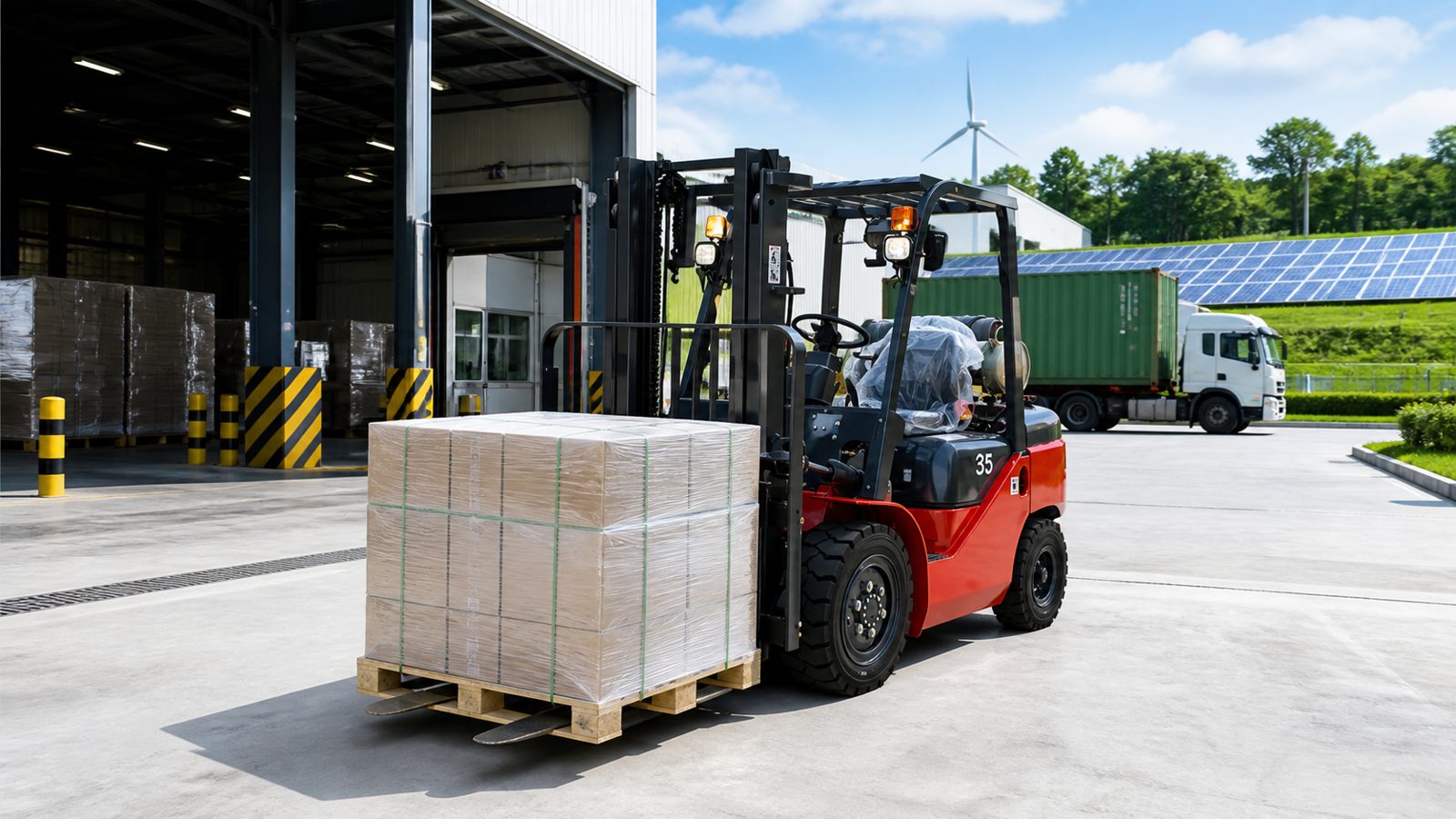
Recent warehouse case studies and logistics announcements have increased interest in renewable propane because it can support decarbonisation plans while retaining familiar LPG operating practices. That interest matters to fleet managers who cannot electrify every route immediately. A distribution centre may have limited grid capacity, rented buildings, seasonal peaks, long shifts or outdoor work where a single-energy strategy creates operational risk. In that situation, the discussion moves from “Which fuel is fashionable?” to “Which combination protects throughput, safety and lifecycle cost?”
A compact 1.5T LPG forklift can fit this mixed-fleet approach when loads, lift height, load centre and site conditions remain within the truck's confirmed rating. Rapid cylinder exchange may reduce long charging interruptions, while the counterbalance layout supports pallet collection, staging and vehicle loading. However, LPG is still a combustible fuel and an internal-combustion forklift still produces exhaust. Indoor use therefore requires suitable ventilation, emissions control, monitoring, maintenance and compliance with local rules. Renewable fuel availability and sustainability claims must also be verified with the local supplier rather than assumed.
The rated capacity is only a starting point. Record the maximum actual load, pallet dimensions, load centre, lift height, attachment weight and required forward reach. A long or offset load changes the stability calculation even when the scale reading is below 1,500 kg. A high mast, side shifter, fork positioner or clamp can reduce residual capacity. Buyers should request the applicable capacity plate and configuration data for the exact ordered truck.
Measure the narrowest aisle, doorway, trailer entrance and turning point. Document ramps, floor joints, dock plates, drains, outdoor pavement and areas exposed to rain. The route survey should include overhead clearance, pedestrian crossings, blind corners, fire exits and cylinder storage. If a buyer needs a larger LPG comparison for heavier pallets, the CPY35 Gasoline/LPG Forklift Truck product page provides a useful reference for understanding how capacity, dimensions and performance change across the range.
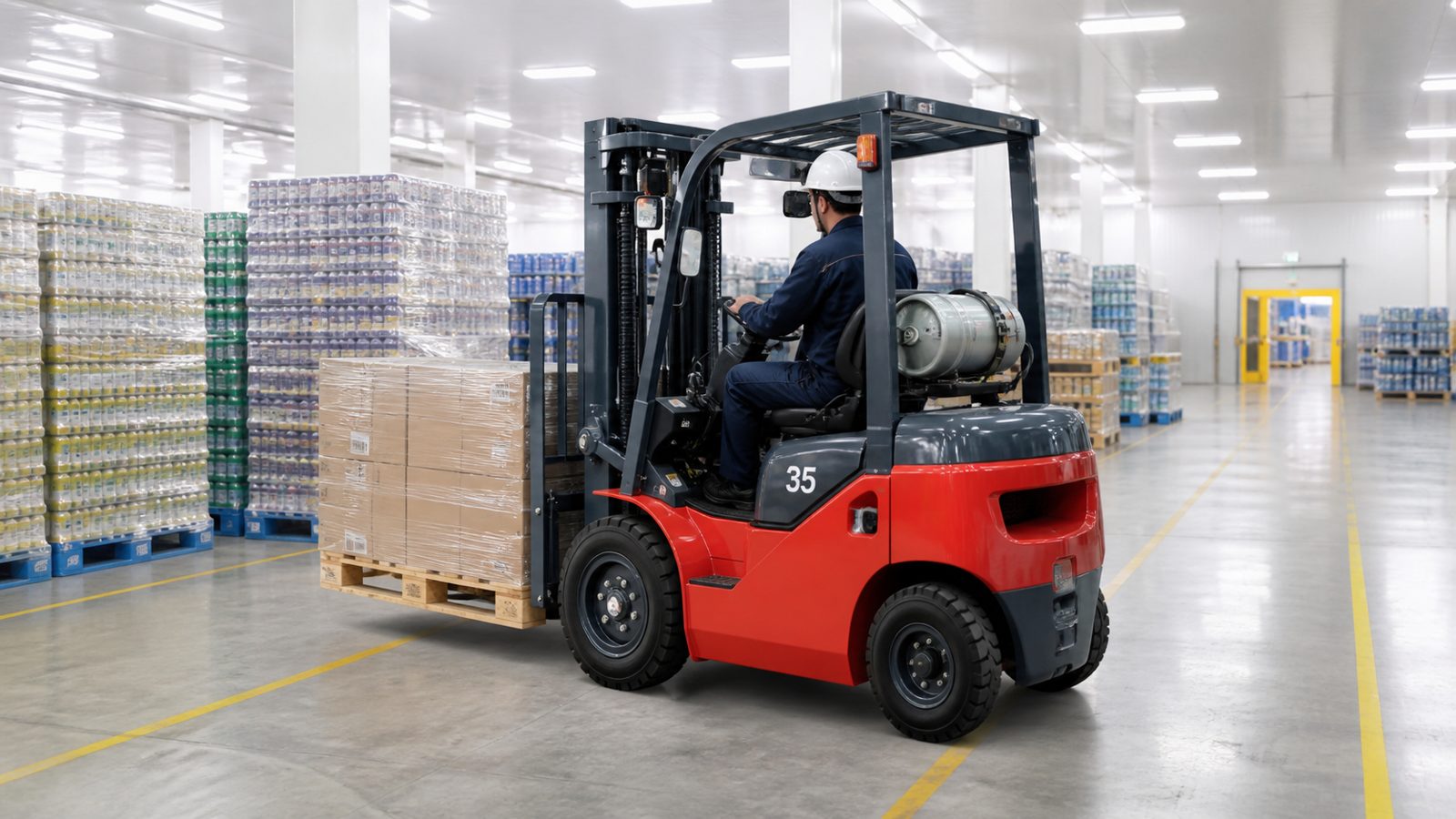
A 1.5T LPG forklift is often considered for beverage distribution, packaging, light manufacturing, building-service warehouses, agricultural product staging, retail replenishment and rental fleets. Its compact footprint can support tighter travel lanes than a larger counterbalance truck, while the LPG powertrain can maintain consistent output through a shift when refuelling logistics are well organised.
Mixed indoor and outdoor routes are a common reason to consider LPG. One truck may unload at a covered dock, move through a ventilated warehouse and stage pallets in an outdoor dispatch area. The application must still be assessed: tyre selection, weather exposure, floor condition, gradients and ventilation all influence suitability. For rough or undeveloped ground, a standard compact counterbalance forklift should not be treated as a rough-terrain machine. Buyers with construction, agricultural or broken-surface routes should compare the purpose-built ZG-CPC30SY 3.0 Ton 4x4 Diesel Rough-Terrain Forklift and discuss the trade-offs with the supplier.
Electric forklifts can be excellent for clean indoor work, low noise and zero tailpipe emissions, especially where charging infrastructure and shift patterns align. LPG can be attractive where quick refuelling, long operating windows and indoor-to-outdoor flexibility are important. BioLPG may offer a pathway to lower lifecycle carbon intensity where certified supply is genuinely available. None of these advantages removes the need to calculate the complete operating system.
Build a 12-month duty profile. Include operating hours, travel distance, lifts per hour, idle time, peak-season demand, energy or fuel cost, cylinder logistics, battery and charger cost, grid upgrades, planned service, tyre wear, operator training, downtime exposure and resale expectations. Compare like with like: the same load, route, shift and required availability. A mixed fleet may be more resilient than forcing every task onto one energy source.
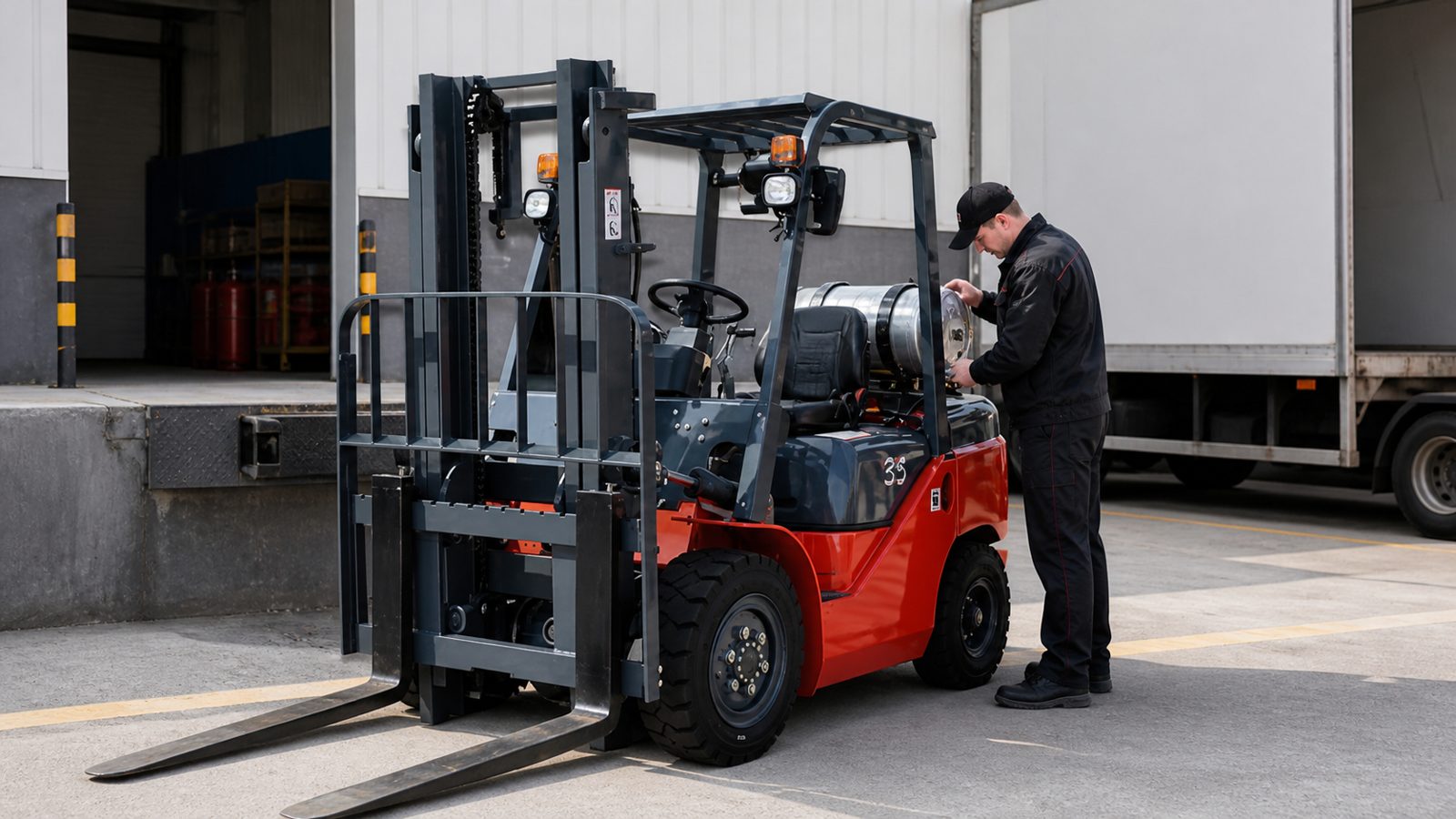
Cylinder exchange must follow the forklift manual, fuel-supplier requirements, site risk assessment and local law. Use a designated, well-ventilated area away from ignition sources. Park on level ground, lower the forks, apply the parking brake and shut down correctly before handling the cylinder. Trained personnel should inspect the cylinder, valve, hose, connector and mounting system. Damaged, corroded, leaking or out-of-date cylinders must be isolated according to the approved procedure.
Do not improvise fittings, seals or hoses. LPG components must be compatible with the specified fuel and pressure. After connection, perform the manufacturer-approved leak check and confirm correct mounting before returning the truck to service. Operators should know the emergency response for suspected leaks, unusual odour, poor engine running or damaged fuel equipment. Fuel storage quantity, separation, signage, ventilation and fire protection need review by qualified local personnel.
LPG combustion can produce carbon monoxide, nitrogen oxides, hydrocarbons and carbon dioxide. A “cleaner than diesel” statement does not mean emission-free or automatically safe indoors. Ventilation must suit the building volume, operating hours, number of trucks and local requirements. Maintenance condition matters because incorrect air-fuel ratio, ignition problems or degraded after-treatment can raise emissions.
A responsible indoor plan combines preventive maintenance, exhaust testing where required, ventilation verification, carbon-monoxide monitoring, traffic control and limits on unnecessary idling. Never operate an internal-combustion forklift in a confined or poorly ventilated area without an approved assessment. Food, pharmaceutical and other sensitive environments may require stricter controls or an electric alternative. For buyers comparing a high-capacity zero-tailpipe-emission option, the CPD160 Electric Forklift product page illustrates how electric equipment serves a very different capacity and infrastructure profile.
Daily inspection should cover forks, carriage, mast, chains, hoses, tyres, wheels, brakes, steering, warning devices, overhead guard, seat restraint, fluid leaks and the LPG installation. Confirm that the data plate is legible and matches fitted attachments. Defects affecting safe operation require the truck to be removed from service and assessed by qualified personnel.
Scheduled service should consider engine oil, filtration, ignition, cooling, regulator or vaporiser condition, fuel hoses, connectors and emission-control components. Dust, heat, cold, moisture, short cycles and extended idling can justify shorter inspection intervals. Record operating hours, faults, parts used and repeat failures. A maintenance history allows the fleet manager to distinguish random repairs from a systematic duty-cycle or configuration problem.
Compact dimensions do not eliminate collision risk. Review sightlines through the mast, rear visibility, mirror or camera options, lighting, horn placement, pedal layout, seat adjustment and entry steps. Operators need training for the specific truck, attachment, loads and site. Travel routes should separate pedestrians, control speed and define stop points at doors, intersections and dock edges.
The safe travel position, maximum permitted load, stacking method and slope procedure must follow the manual and capacity plate. Loads need stable packaging and correct fork support. When visibility is blocked, use the approved travel method and site controls. Production targets must never override stop-work authority.
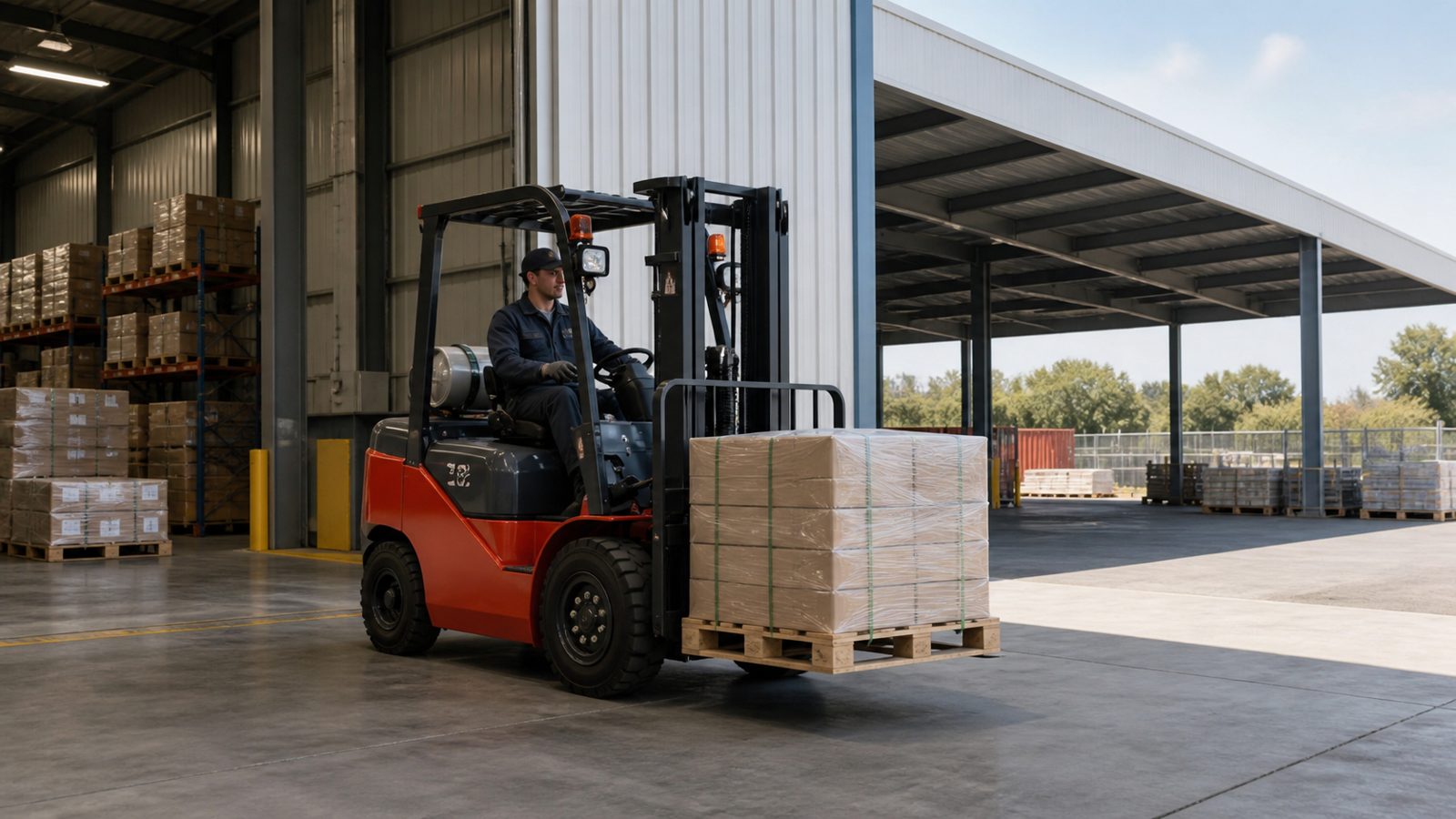
To receive an accurate recommendation, send the maximum load weight and dimensions, load centre, required lift height, mast requirements, fork length, aisle width, lowest doorway, turning points, maximum gradient, floor and yard condition, daily hours, shifts per day, indoor and outdoor percentages, ambient temperature, tyre preference, attachments, destination country, compliance expectations, required documents, quantity and delivery schedule. Photos or drawings of the load and route are especially useful.
Ask the supplier to confirm the exact model, rated and residual capacity, mast, lowered height, turning radius, overall dimensions, tyre type, engine and fuel system, cylinder interface, emission configuration, warranty, recommended spare parts, service intervals, packing plan and destination-market documentation. Do not rely on a generic web page to replace the final technical confirmation.
Shandong Zhuogong Machinery equipment Co.,Ltd supports international buyers, distributors and fleet operators with application discussion, forklift selection, export coordination, parts identification and lifecycle communication. The goal is to match the truck to the real route and load, rather than promoting a nominal capacity without context. ZGFORKLIFT / MYZG can discuss compact LPG, larger dual-fuel, electric, diesel and rough-terrain alternatives so the buyer can build a balanced fleet.
For a 1.5T LPG forklift proposal, provide your application data and ask for written confirmation of the ordered configuration, available fuel compatibility and relevant destination documentation. BioLPG suitability depends on the engine, fuel specification, local availability and supplier approval; verify these points before procurement.
Shandong Zhuogong Machinery equipment Co.,Ltd
Website: https://www.vavforklift.com/
Email: vip@mingyuforklift.com
Tel: +86-0535-2090977
WhatsApp: +86 131 8160 2336
Address: Xiaqiu Town, Laizhou, Yantai City, Shandong Province, China
Name: selena
Mobile:+86-13176910558
Tel:+86-0535-2090977
Whatsapp:8613181602336
Email:vip@mingyuforklift.com
Add:Xiaqiu Town, Laizhou, Yantai City, Shandong Province, China
