
vip@mingyuforklift.com
+86-0535-2090977

Introduction
For operations managers, fleet supervisors, and procurement professionals, understanding the refueling cadence of diesel forklifts is not merely an operational detail—it is a critical planning variable that affects shift scheduling, labor allocation, fuel budgeting, and total cost of ownership (TCO). The question "How often do you need to refuel a diesel forklift?" does not have a single answer. Instead, it depends on a matrix of interrelated factors: fuel tank capacity, engine displacement and load rating, duty cycle intensity, operating environment, and maintenance discipline. This article provides a detailed technical analysis of these variables, offering practical formulas, real-world benchmarks, and strategic recommendations for optimizing refueling intervals across diverse operational contexts.
Section 1: Fundamentals of Diesel Forklift Fuel Consumption
1.1 Fuel Consumption Rates by Capacity Class
Diesel forklift fuel consumption is primarily governed by engine size and rated lifting capacity. Under standard VDI 2198 test conditions (a standardized 60-cycle duty test), consumption rates cluster into three broad categories :
Compact Class (1.5–2.5 tonne capacity): 2.5–3.8 liters per hour (0.66–1.0 gallons/hour). These machines are optimized for light-duty warehouse and retail applications where fuel efficiency takes precedence over raw power.
Mid-Range Class (3.0–3.5 tonne capacity): 2.5–3.9 liters per hour (0.66–1.03 gallons/hour), with an industry average around 3.2 L/h for a 3-ton model. This is the most common class in commercial logistics and general manufacturing .
Heavy-Duty Class (5–7 tonne capacity): 4.5–8.0 liters per hour (1.19–2.11 gallons/hour). These units serve lumber yards, steel fabrication, and shipping terminals where torque and durability outweigh fuel economy concerns.
Industrial Heavyweights (10+ tonne capacity): 10–15+ liters per hour (2.64–3.96+ gallons/hour), reflecting the immense power required for container handling and heavy materials transport .
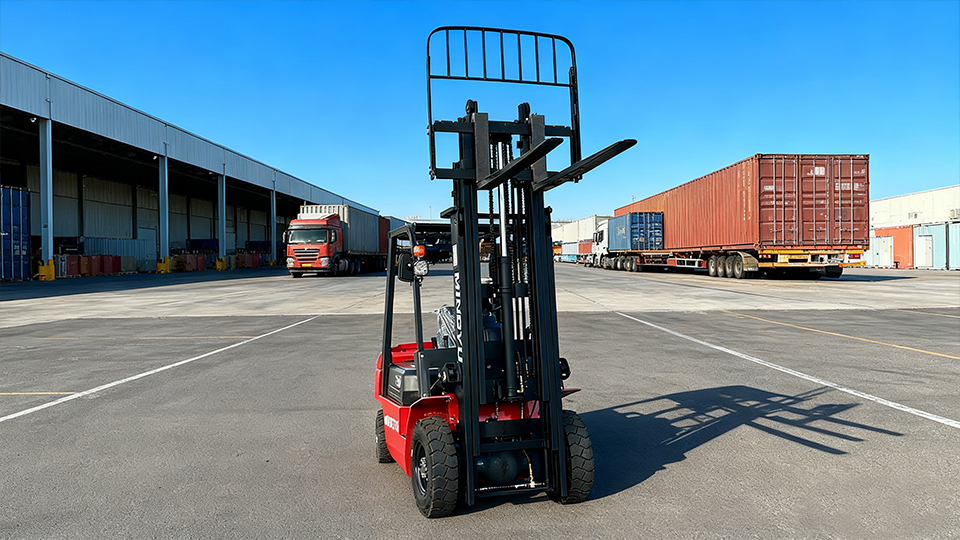
In imperial units, the general range for most diesel forklifts falls between 1.5 and 3.0 gallons per hour under typical operating conditions . This wide band underscores why generic estimates can be misleading—actual consumption must be calibrated to specific equipment and application profiles.
1.2 The Duty Cycle Factor
The VDI 60 test provides a standardized baseline, but real-world duty cycles deviate substantially. A forklift operating in a high-throughput distribution center with continuous loading/unloading cycles will consume fuel at rates 20–40% above the standard test figure. Conversely, a unit used intermittently for stock replenishment in a low-velocity warehouse may operate 15–25% below the rated consumption. Fleet managers should therefore treat manufacturer fuel specifications as starting points rather than precise forecasts.
Section 2: Fuel Tank Capacity and Runtime Calculations
2.1 Typical Tank Capacities by Model Class
Fuel tank sizing is an engineering trade-off between runtime autonomy, vehicle weight distribution, and packaging constraints. Manufacturers size tanks to provide approximately one full shift of operation under nominal conditions, with modest reserve :
表格
Forklift Class Typical Tank Capacity (Liters) Typical Tank Capacity (Gallons)
3-ton compact/mid-range 50–60 L 13–16 gal
5-ton heavy-duty 70–100 L 18–26 gal
10-ton+ industrial 140–200+ L 37–53+ gal
Specific manufacturer examples illustrate this scaling: Toyota's 8FDU compact series holds approximately 18–20 gallons, while their heavy-duty 8FDN series accommodates 25–30 gallons. Caterpillar's DP70-120 industrial range extends to 30–35 gallons or more . Hyster's XT series, a popular versatile line, consumes 2.7–3.6 L/h depending on configuration .
2.2 The Safe-Fill Principle
A critical but often overlooked engineering consideration is the safe-fill limit. Diesel expands with temperature, and tanks are rarely filled to 100% of geometric capacity. Industry practice uses approximately 95% of total tank volume as the usable fuel quantity to prevent overflow, reduce spill risk, and accommodate thermal expansion . This means a 60-liter geometric tank provides only ~57 liters of usable fuel.
2.3 Runtime Formulas
The fundamental runtime equation is:
Runtime (hours) = Usable Fuel Capacity (L) ÷ Fuel Consumption Rate (L/h)
Applying this with practical examples:
Example 1: Single-Shift Operation (3-ton forklift)
Tank capacity: 55 L (geometric)
Safe-fill usable capacity: 55 × 0.95 = 52.25 L
Consumption rate: 3.2 L/h (mid-range for 3-ton class)
Runtime: 52.25 ÷ 3.2 ≈ 16.3 hours
At 8 hours per shift, this forklift would require refueling approximately every 2 shifts (every 2 days in a single-shift operation).
Example 2: Heavy-Duty Two-Shift Operation (5-ton forklift)
Tank capacity: 80 L (geometric)
Safe-fill usable capacity: 80 × 0.95 = 76 L
Consumption rate: 5.0 L/h (mid-range for 5-ton class under heavy load)
Runtime: 76 ÷ 5.0 = 15.2 hours
At 16 hours per day (two shifts), this unit would require refueling approximately every day, or slightly more frequently if operating at maximum load continuously.
Example 3: Design Tank Sizing for 8-Hour Autonomy
Required runtime: 8 hours
Consumption rate: 2.5 L/h
Safety factor: 1.1 (10% reserve for peak loads)
Safe-fill factor: 0.95
Tank size = (2.5 × 8 × 1.1) ÷ 0.95 ≈ 23.2 L → rounded up to 25 L minimum .
Section 3: Operational Variables That Alter Refueling Frequency
3.1 Load Weight and Lifting Intensity
Load weight is the single most significant operational variable affecting fuel consumption. Operating at maximum rated capacity can increase fuel usage by 20–40% compared to handling loads at 50–60% of capacity . This is because the engine must generate substantially more torque to lift, transport, and lower heavy materials, particularly when lifting to maximum height. A 3-ton forklift handling 2.5-ton pallets continuously may consume 3.8–4.2 L/h rather than the nominal 3.2 L/h, reducing runtime from ~16 hours to ~12–13 hours per tank.
3.2 Terrain and Environmental Conditions
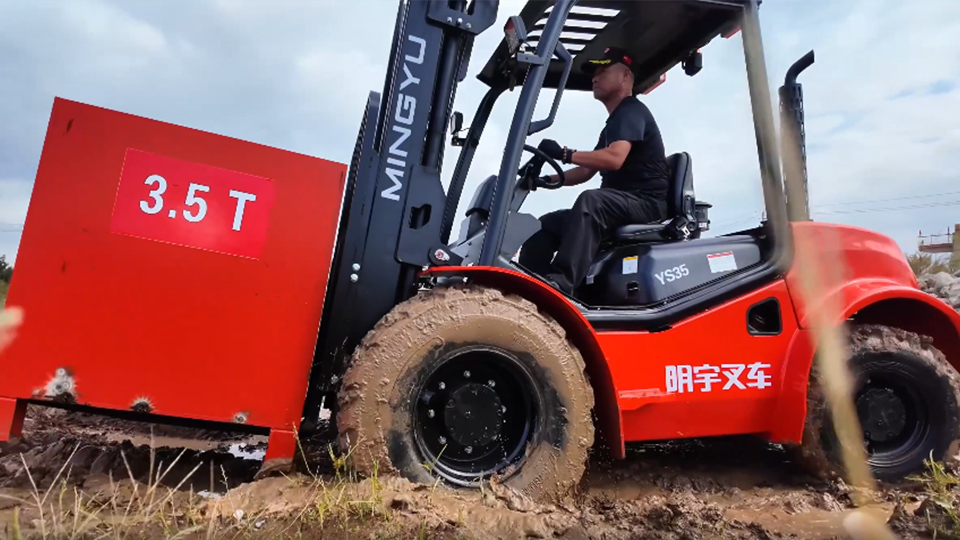
Operating surface dramatically affects consumption patterns. Smooth, level warehouse floors minimize rolling resistance and allow steady-state engine operation. In contrast, rough terrain, inclines, soft ground, or uneven yards can increase fuel consumption by 30–50% . Outdoor lumber yards, construction sites, and unpaved storage areas therefore demand more frequent refueling than equivalent-capacity units in paved indoor environments.
3.3 Operator Behavior and Idling
Operator technique is a controllable variable with outsized impact. Aggressive acceleration, hard braking, excessive travel speed, and prolonged idling all degrade fuel efficiency. A "no-idle" policy can yield measurable savings—even brief shutdowns during loading pauses accumulate to significant fuel conservation over a shift. Training programs emphasizing smooth throttle control, optimal travel paths, and minimal idle time can reduce consumption by 10–15% without any equipment modification .
3.4 Maintenance Discipline
Maintenance condition directly influences fuel economy through several mechanisms:
Air filtration: Clogged air filters restrict intake airflow, forcing richer fuel mixtures and increasing consumption by 10–15% .
Engine oil: Degraded oil increases internal friction, reducing mechanical efficiency and raising fuel demand.
Hydraulic system: Worn pumps, leaking cylinders, or contaminated hydraulic fluid require more engine power to achieve the same lifting performance.
Fuel system: Dirty injectors or compromised fuel filters disrupt atomization and combustion efficiency.
Regular maintenance intervals—typically every 250–500 operating hours for oil changes, filter replacements, and system inspections—are essential for maintaining rated fuel efficiency .
Section 4: Refueling Schedules in Practice
4.1 Single-Shift Operations
For a standard 8-hour single-shift operation, a typical 3-ton diesel forklift with a 55-liter tank and 3.2 L/h consumption rate provides approximately 16 hours of runtime. This translates to refueling every 1.5–2 shifts, or roughly every 1.5–2 days. Best practice is to refuel at the end of each shift to ensure the next shift starts with a full tank, preventing mid-shift interruptions .
4.2 Multi-Shift and Continuous Operations
In two-shift (16-hour) or three-shift (24-hour) environments, refueling strategy becomes more critical:
Two-shift with 5-ton forklift (80 L tank, 5.0 L/h): Runtime of ~15 hours means daily refueling is required. If refueling windows are constrained (e.g., only during shift changes), a larger tank (100–110 L) extending runtime to ~19–20 hours allows refueling every 1.5 days, reducing annual refuel events and associated labor costs .
Three-shift continuous operation: With no extended downtime, refueling must occur during shift changes or be staggered across the fleet. Quick refueling—taking only 5–10 minutes—is a key advantage of diesel over electric alternatives, which require 6–12 hours for full recharge .
4.3 Remote and Rough-Terrain Applications
For operations in remote yards, mines, or construction sites where fuel points are not immediately adjacent to work areas, tank autonomy becomes a strategic cost driver. Travel time to a fuel station represents lost productivity. In these scenarios, upsizing tanks or deploying mobile refueling trailers can extend intervals to 2–3 days, justifying the additional capital expenditure through reduced downtime .
Section 5: Comparative Context—Diesel vs. Electric vs. LPG
Understanding diesel refueling frequency is sharpened by comparison with alternative powertrains:
表格
Parameter Diesel Electric (Li-ion) LPG
Runtime per fill/charge 8–12 hours 10–16 hours (with opportunity charging) 6–8 hours
Refuel/recharge time 5–10 minutes 1–2 hours (fast charge to 80%) 2–5 minutes (tank swap)
Refueling infrastructure Existing diesel pumps Charging stations/battery swap Cylinder exchange program
Emissions profile High (CO₂, NOₓ, particulates) Zero tailpipe Moderate
Best application Outdoor, heavy-duty, continuous Indoor, clean environments Mixed indoor/outdoor, quick swap
Diesel maintains a decisive advantage in runtime autonomy per refueling event and refueling speed, making it the default choice for heavy-duty outdoor applications where electric infrastructure is impractical and LPG capacity is insufficient .
Section 6: Cost Implications and Budgeting
6.1 Fuel Cost per Hour
At prevailing diesel prices, fuel costs represent a substantial portion of operating expenditure. In the Australian market as of April 2026, with diesel at approximately $3.29 AUD per liter, a 2-ton diesel forklift consuming 2–2.5 L/h generates annual fuel costs of $13,000–$16,500 for single-shift, 250-day operation . In markets with lower fuel prices, these figures scale proportionally, but the underlying consumption physics remain constant.
6.2 Calculating Refueling Costs
To budget accurately:
Daily fuel cost = Operating hours × Consumption rate (L/h) × Diesel price ($/L)
For a 3-ton forklift operating 8 hours at 3.2 L/h with diesel at $1.20/L:
Daily cost = 8 × 3.2 × $1.20 = $30.72
Monthly cost (22 working days) = $675.84
Fleet managers should multiply this by the number of units and apply seasonal price volatility buffers, particularly in 2026's elevated oil price environment where geopolitical disruptions have driven Brent crude above $100 per barrel and local diesel prices up by 40% in some markets .
Section 7: Optimization Strategies
7.1 Right-Sizing Equipment
Deploying a 5-ton forklift for tasks that a 2.5-ton unit could handle is a common source of excess fuel consumption. Oversized equipment burns more fuel per hour and often per task, as operators may not fully load the larger machine, resulting in poor capacity utilization. Matching forklift capacity to typical load profiles is foundational to fuel efficiency .
7.2 Telematics and Fuel Monitoring
Modern telematics systems enable real-time tracking of fuel consumption per machine, per operator, and per shift. Anomalies—such as a unit consuming 4.5 L/h when the fleet average is 3.2 L/h—signal maintenance needs, operator retraining requirements, or route inefficiencies. Data-driven fuel management can reduce fleet-wide consumption by 8–12% .
7.3 Site Layout Optimization
Minimizing travel distance through strategic placement of receiving docks, staging areas, and storage racks reduces both cycle time and fuel burn. Every unnecessary meter of travel consumes fuel without adding value. Warehouse design should prioritize direct travel paths and minimize congestion points that cause stop-start driving.
7.4 Preventive Maintenance Programs
Strict adherence to manufacturer maintenance schedules preserves fuel efficiency over the equipment lifecycle. A well-maintained diesel forklift can retain near-original fuel economy for 8,000–12,000 hours, whereas neglected units may see 20–30% degradation within 3,000 hours .
Section 8: Safety and Regulatory Considerations
8.1 Refueling Procedures
Safe refueling is non-negotiable. Key protocols include:
Park in designated refueling areas away from ignition sources.
Shut down the engine and engage parking brake.
Do not fill to the absolute top of the tank—leave expansion headspace.
Use appropriate PPE and spill containment equipment.
Prohibit smoking within the refueling zone .
8.2 Environmental Compliance
Diesel forklifts produce emissions that restrict indoor use without substantial ventilation. Stage V and Tier 4 Final engines have reduced particulate matter and NOₓ emissions, but zero-emission electric forklifts remain the regulatory default for enclosed spaces. Operations using diesel indoors must verify compliance with local air quality standards and occupational exposure limits.
Conclusion
The refueling frequency of a diesel forklift is a function of tank capacity, fuel consumption rate, and operational intensity—variables that can be quantified, monitored, and optimized. A typical 3-ton diesel forklift with a 55-liter tank operating at 3.2 liters per hour will run for approximately 16 hours on a safe-fill tank, requiring refueling every 1.5–2 days in single-shift operations and daily in heavy-duty two-shift environments. Larger 5-ton units with 80-liter tanks may achieve 15 hours of runtime under demanding conditions, while compact 2-ton machines can stretch beyond 20 hours per fill under light loads.
The strategic imperative for fleet managers is not merely to know these numbers, but to actively manage the variables that influence them. Through right-sizing equipment, training operators, maintaining rigorous service schedules, and leveraging telematics for consumption monitoring, organizations can extend refueling intervals, reduce fuel costs, and maximize productive uptime. In an era of volatile fuel prices and intensifying operational cost pressures, such disciplined fuel management is not optional—it is a competitive necessity.
Name: selena
Mobile:+86-13176910558
Tel:+86-0535-2090977
Whatsapp:8613181602336
Email:vip@mingyuforklift.com
Add:Xiaqiu Town, Laizhou, Yantai City, Shandong Province, China