
vip@mingyuforklift.com
+86-0535-2090977

Introduction
For operations managers, procurement officers, and fleet supervisors, diesel fuel budgeting is one of the most consequential yet frequently miscalculated line items in material handling operations. The question "How much diesel should I budget for a forklift running 8 hours a day?" appears deceptively simple, but arriving at an accurate answer requires navigating a matrix of technical variables: engine displacement, load factor, duty cycle intensity, terrain characteristics, operator behavior, maintenance discipline, and prevailing fuel pricing. A budget that under-estimates by even 10% can cascade into operational disruptions, unplanned downtime, and strained vendor relationships. Conversely, over-budgeting ties up working capital that could be deployed elsewhere.
This article provides a rigorous, data-driven framework for calculating daily, monthly, and annual diesel consumption for forklifts operating standard 8-hour shifts. We examine consumption rates across capacity classes, model the impact of operational variables, incorporate real-world fuel pricing scenarios, and present actionable strategies for cost optimization. Whether you are budgeting for a single unit or a multi-fleet operation, this guide offers the analytical tools to produce defensible, accurate fuel forecasts.
Section 1: Establishing Baseline Fuel Consumption Rates
1.1 The VDI 2198 Standard and Its Limitations
Manufacturer fuel consumption figures are typically derived from the VDI 2198 test cycle—a standardized 60-cycle duty test that simulates typical forklift operations including lifting, traveling, and lowering sequences. Under this protocol, diesel forklifts exhibit the following consumption ranges:
Compact Class (1.5–2.5 tonne): 2.5–3.8 liters per hour (L/h)
Mid-Range Class (3.0–3.5 tonne): 2.5–3.9 L/h, with a fleet average near 3.2 L/h
Heavy-Duty Class (5–7 tonne): 4.5–8.0 L/h
Industrial Heavyweights (10+ tonne): 10–15+ L/h
In imperial units, the general band for most diesel forklifts falls between 1.5 and 3.0 gallons per hour (gph), with compact models at the lower end and heavy-duty units at the upper extreme. These figures provide a necessary starting point, but they represent idealized laboratory conditions rather than the messy reality of warehouse floors, lumber yards, and shipping terminals.
1.2 The Load Factor: The Primary Multiplier
The VDI test assumes a moderate load factor—typically handling loads at 60–70% of rated capacity. In practice, load factor is the single most powerful determinant of actual fuel consumption. Operating consistently at maximum rated capacity can increase fuel usage by 20–40% above the standard test figure. This is not merely a matter of lifting heavier weights; it encompasses the increased engine torque required for acceleration under load, the higher hydraulic pump demands during lifting cycles, and the greater rolling resistance when transporting maximum payloads.
Conversely, operations handling predominantly light loads (40–50% of capacity) may observe consumption 10–15% below the rated figure. The practical implication is that a 3-ton forklift with a nominal 3.2 L/h rating may actually consume anywhere from 2.7 L/h (light duty) to 4.5 L/h (heavy duty) depending on load profile.
1.3 Terrain and Surface Conditions
Operating surface dramatically affects fuel economy through rolling resistance and engine load variation. Smooth, sealed concrete warehouse floors minimize resistance and allow steady-state engine operation. In contrast:
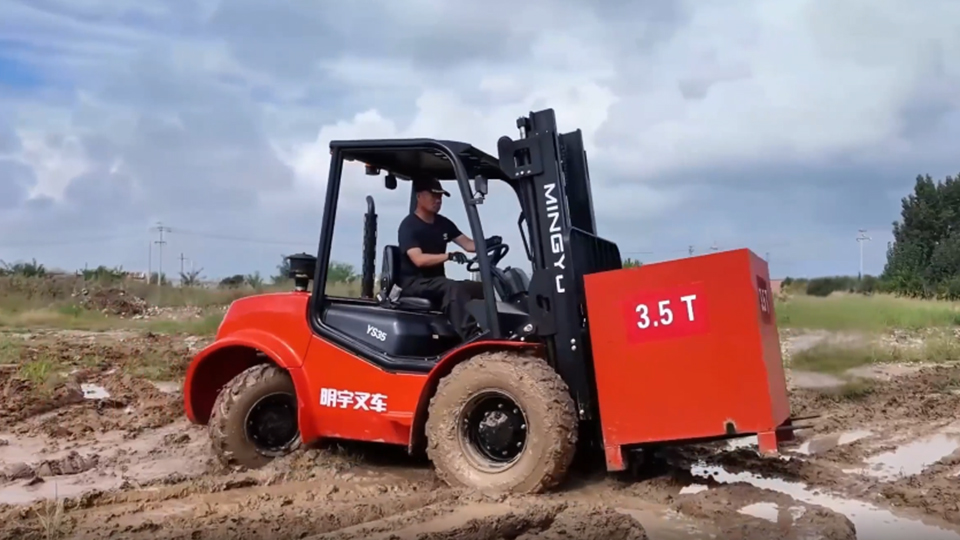
Rough or uneven surfaces (gravel yards, unpaved construction sites) can increase consumption by 30–50%
Frequent inclines require sustained high-torque operation, raising fuel demand proportionally
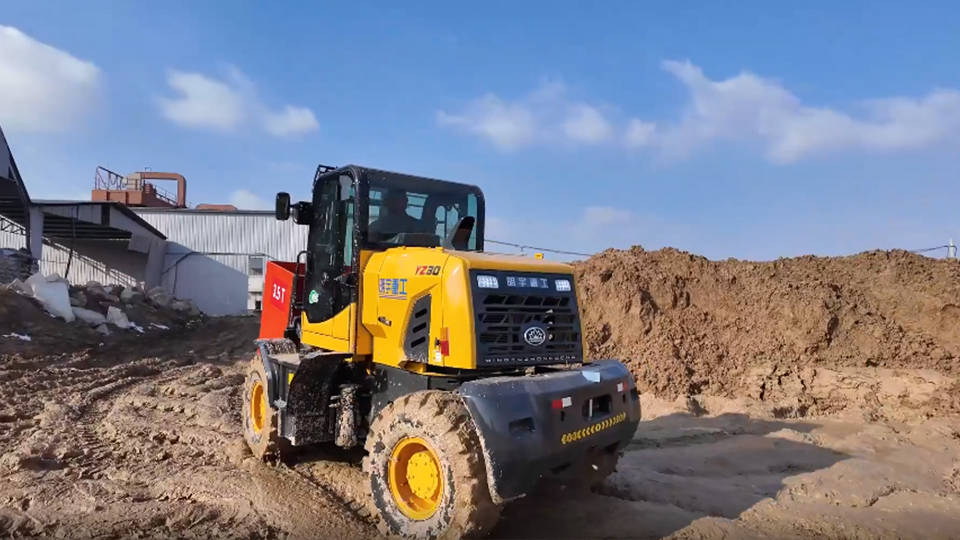
Soft ground conditions (mud, sand) create additional drag that the engine must overcome
A forklift operating in a lumber yard with unpaved surfaces may consume 4.5–5.5 L/h despite having the same nominal rating as an identical unit in a paved distribution center consuming 3.2 L/h.
Section 2: The 8-Hour Daily Consumption Model
2.1 Core Calculation Framework
The fundamental daily consumption equation is straightforward:
Daily Diesel Consumption (L) = Operating Hours × Hourly Consumption Rate (L/h)
For an 8-hour shift, applying this across capacity classes:
表格
Forklift Class Nominal Rate (L/h) Light Duty (L/h) Heavy Duty (L/h) Daily Consumption Range (L)
2-ton compact 2.5–3.0 2.2–2.5 3.5–4.2 17.6–33.6
3-ton mid-range 3.0–3.5 2.7–3.0 4.2–4.9 21.6–39.2
5-ton heavy-duty 4.5–6.0 4.0–4.5 6.5–8.0 32.0–64.0
7-ton industrial 6.0–8.0 5.5–6.0 8.5–10.0 44.0–80.0
This range illustrates why generic budgeting is perilous. A 3-ton forklift operating light duty in a warehouse may consume as little as 21.6 liters per day, while the same model under heavy-duty conditions in a rough yard could approach 40 liters—a variance of nearly 100%.
2.2 Practical Example: The Standard 3-Ton Warehouse Forklift
Consider the most common scenario in commercial logistics: a 3-ton diesel forklift operating 8 hours daily in a paved warehouse with moderate load factors (60–70% of capacity).
Nominal consumption rate: 3.2 L/h
Operating hours: 8 hours/day
Daily consumption: 3.2 × 8 = 25.6 liters/day
Weekly consumption (5 days): 25.6 × 5 = 128 liters/week
Monthly consumption (22 working days): 25.6 × 22 = 563.2 liters/month
Annual consumption (250 working days): 25.6 × 250 = 6,400 liters/year
This baseline of approximately 25–26 liters per day for a standard 3-ton unit is a useful rule of thumb, but it must be adjusted for the specific operational context.
2.3 Practical Example: Heavy-Duty 5-Ton Outdoor Application
Now consider a 5-ton diesel forklift in a lumber yard, operating at high load factors on rough terrain:
Adjusted consumption rate: 6.5 L/h (reflecting heavy loads and rough surfaces)
Operating hours: 8 hours/day
Daily consumption: 6.5 × 8 = 52 liters/day
Weekly consumption: 52 × 5 = 260 liters/week
Monthly consumption: 52 × 22 = 1,144 liters/month
Annual consumption: 52 × 250 = 13,000 liters/year
The same 8-hour operating window produces dramatically different fuel demand depending on application intensity.
Section 3: Incorporating Fuel Pricing for Budget Development
3.1 Global and Regional Price Variability
Diesel pricing is subject to crude oil market fluctuations, refining capacity, taxation policy, and local distribution economics. As of early 2026, diesel prices exhibit significant regional dispersion:
United States: Approximately $0.90–$1.10 per liter ($3.40–$4.16 per gallon)
European Union: Approximately €1.40–€1.70 per liter ($1.50–$1.82 per liter)
Australia: Approximately AUD $3.20–$3.50 per liter ($2.10–$2.30 per liter)
Southeast Asia: Approximately $0.80–$1.20 per liter depending on subsidies
These figures are volatile and should be tracked against local indices. For budgeting purposes, procurement teams should apply a 10–15% contingency buffer above current spot prices to accommodate market fluctuations over the budget period.
3.2 Cost Calculations by Scenario
Applying the consumption models to pricing yields the following daily, monthly, and annual cost frameworks:
Scenario A: 3-Ton Warehouse Forklift (25.6 L/day) at $1.20/L
表格
Period Consumption Cost
Daily 25.6 L $30.72
Weekly (5 days) 128 L $153.60
Monthly (22 days) 563.2 L $675.84
Annual (250 days) 6,400 L $7,680.00
Scenario B: 5-Ton Heavy-Duty Outdoor Forklift (52 L/day) at $1.20/L
表格
Period Consumption Cost
Daily 52 L $62.40
Weekly (5 days) 260 L $312.00
Monthly (22 days) 1,144 L $1,372.80
Annual (250 days) 13,000 L $15,600.00
Scenario C: 3-Ton Warehouse Forklift (25.6 L/day) at $3.30/L (Australian Market)
表格
Period Consumption Cost
Daily 25.6 L $84.48
Weekly (5 days) 128 L $422.40
Monthly (22 days) 563.2 L $1,858.56
Annual (250 days) 6,400 L $21,120.00
These calculations demonstrate that fuel budgeting is simultaneously a technical exercise (determining consumption) and a financial exercise (applying appropriate pricing). The same machine can cost $7,680 annually in one market and $21,120 in another—nearly a threefold difference driven entirely by fuel pricing.
3.3 The Hidden Cost: Idle Time
A frequently overlooked budget factor is idle time. Forklifts that remain running during loading pauses, operator breaks, or shift transitions consume fuel without producing value. At typical idle consumption of 0.8–1.2 L/h, a unit idling for 1.5 hours per 8-hour shift adds 1.2–1.8 liters to daily consumption—an effective 5–7% increase in fuel costs. For a fleet of 10 forklifts, this idle-time penalty can amount to $1,500–$3,000 annually in excess fuel expenditure.
Section 4: Operational Variables and Adjustment Factors
4.1 Duty Cycle Intensity
The intensity of the duty cycle—defined as the ratio of productive lifting/transporting time to total operating time—directly impacts fuel consumption. A forklift in continuous high-velocity operation (e.g., cross-docking in a distribution center) may achieve only 70–75% productive time due to unavoidable waiting, positioning, and maneuvering. Conversely, a unit in intermittent use (e.g., stock replenishment in a low-velocity warehouse) may have 40–50% productive time with the remainder spent idling or parked.
For budgeting, the critical metric is engine runtime hours, not clock hours. A forklift that operates 8 clock hours but only accumulates 5 engine hours due to frequent shutdowns will consume proportionally less fuel than one running continuously for 8 engine hours.
4.2 Seasonal Variations
Ambient temperature affects diesel fuel density and engine efficiency. Cold weather increases fuel viscosity, requiring longer warm-up periods and richer fuel mixtures during startup. In climates with significant seasonal temperature variation, winter consumption can be 5–10% higher than summer consumption for the same operational profile. Budgets should incorporate seasonal adjustment factors where applicable.
4.3 Fleet Age and Maintenance Condition
As forklifts age, mechanical efficiency degrades through wear in piston rings, cylinder bores, fuel injectors, and hydraulic pumps. A well-maintained unit may retain 95% of its original fuel efficiency at 5,000 hours, while a neglected unit may degrade to 75–80% efficiency by the same hour count. Fleet managers should apply age-based consumption escalators to long-term budgets—typically 2–3% annual increase in consumption rate for units beyond 3,000 operating hours without major overhaul.
4.4 Operator Behavior
Individual operator technique is a significant but difficult-to-quantify variable. Aggressive acceleration, hard braking, excessive travel speed, and failure to match engine speed to hydraulic demand all increase fuel consumption. Structured operator training programs emphasizing smooth throttle control, optimal routing, and minimal idle time can reduce fleet-wide consumption by 10–15%. Budgets should assume average operator behavior unless specific training investments have been made.
Section 5: Advanced Budgeting Methodologies
5.1 The Three-Scenario Approach
Rather than producing a single-point estimate, sophisticated budgets employ three scenarios to capture uncertainty:
Conservative (High Consumption): Applies maximum load factors, rough terrain, and elevated idle time. Represents a worst-case but plausible outcome.
Base Case (Moderate Consumption): Uses nominal manufacturer ratings with modest operational adjustments. Represents the most likely outcome.
Optimistic (Low Consumption): Assumes light loads, smooth surfaces, trained operators, and minimal idle time. Represents best-case efficiency.
For a 3-ton forklift operating 8 hours daily:
表格
Scenario Rate (L/h) Daily (L) Monthly (L) Annual (L) Annual Cost @ $1.20/L
Optimistic 2.7 21.6 475.2 5,400 $6,480
Base Case 3.2 25.6 563.2 6,400 $7,680
Conservative 4.2 33.6 739.2 8,400 $10,080
This range ($6,480–$10,080) provides decision-makers with a clear understanding of budget risk and enables contingency planning.
5.2 Telematics-Driven Budgeting
Modern forklift telematics systems capture actual fuel consumption data in real time, enabling data-driven budget refinement. By analyzing historical consumption patterns, fleet managers can:
Identify units with anomalously high consumption signaling maintenance needs
Compare operator-specific consumption rates to identify training opportunities
Track consumption trends over time to forecast maintenance-triggered efficiency degradation
Validate manufacturer consumption claims against actual field performance
Organizations with telematics infrastructure should prioritize actual historical data over theoretical estimates, using the latter only for new equipment acquisitions or fleet expansions.
5.3 Total Cost of Ownership Integration
Fuel budgeting should not exist in isolation. Diesel fuel represents one component of the total cost of ownership (TCO), which includes acquisition/lease costs, maintenance, insurance, operator wages, and facility costs. For diesel forklifts, fuel typically constitutes 15–25% of TCO over a 10,000-hour lifecycle. When evaluating alternatives such as electric or LPG forklifts, the fuel budget must be compared against electricity costs, battery replacement schedules, or propane cylinder expenses on an equivalent operational basis.
Section 6: Cost Optimization Strategies
6.1 Right-Sizing Equipment
Deploying a 5-ton forklift for tasks manageable by a 2.5-ton unit is a common source of excess fuel consumption. The larger engine burns more fuel per hour, and operators may not fully utilize the machine's capacity, resulting in poor efficiency. Conducting a thorough load profile analysis to match forklift capacity to actual requirements can reduce fuel costs by 20–30% in mis-specified fleets.
6.2 Operator Training and Incentive Programs
Structured training programs focusing on fuel-efficient operating techniques—smooth acceleration, optimal travel paths, minimal idle time, and appropriate gear selection—can deliver measurable savings. Some organizations implement fuel consumption KPIs tied to operator performance reviews or incentive bonuses, creating accountability for efficient operation.
6.3 Preventive Maintenance Discipline
Rigorous adherence to manufacturer maintenance schedules preserves fuel efficiency. Key maintenance items with direct fuel impact include:
Air filter replacement: Clogged filters can increase consumption by 10–15%
Fuel injector cleaning/replacement: Poor atomization reduces combustion efficiency
Engine oil changes: Degraded oil increases internal friction
Hydraulic system maintenance: Worn pumps and contaminated fluid increase power demand
6.4 Site Layout and Process Optimization
Minimizing travel distance through strategic warehouse design—optimizing rack placement, staging area locations, and travel routes—reduces both cycle time and fuel consumption. Every unnecessary meter of travel represents fuel burned without value creation. Value stream mapping and lean material flow principles can identify and eliminate transport waste.
6.5 Idle Reduction Policies
Implementing and enforcing no-idle policies—requiring engine shutdown during breaks, loading pauses exceeding 5 minutes, and shift transitions—can reduce daily consumption by 5–10%. Modern diesel engines restart reliably and do not require extended warm-up in moderate climates, making shutdown policies operationally feasible.
Section 7: Regulatory and Environmental Considerations
7.1 Emissions Compliance Costs
Modern diesel forklifts must comply with stringent emissions standards (EPA Tier 4 Final, EU Stage V). Compliance technologies—including diesel particulate filters (DPFs), selective catalytic reduction (SCR), and exhaust gas recirculation (EGR)—add capital cost and may marginally increase fuel consumption due to backpressure and thermal management requirements. Budgets should account for any efficiency penalties associated with emissions-compliant engines.
7.2 Carbon Pricing and Environmental Levies
In jurisdictions with carbon pricing mechanisms, diesel fuel carries an additional cost component. As of 2026, the EU Emissions Trading System (ETS) and various national carbon taxes add €0.05–€0.15 per liter to diesel costs in affected markets. Organizations should verify whether their jurisdiction applies such levies and incorporate them into fuel budgets.
7.3 Indoor Use Restrictions
Diesel forklifts face increasing restrictions for indoor use due to emissions concerns. Operations currently using diesel indoors should evaluate transition timelines to electric alternatives, as regulatory changes may force equipment replacement before the end of the natural depreciation cycle. Fuel budgets for indoor diesel use should be treated as potentially temporary.
Conclusion
Budgeting diesel fuel for an 8-hour daily forklift operation is a multi-variable exercise requiring technical precision and financial realism. For the most common scenario—a 3-ton diesel forklift operating in a paved warehouse with moderate loads—the baseline budget is approximately 25–26 liters per day, translating to $30–$32 daily at $1.20 per liter, or roughly $7,700 annually over 250 working days. However, this figure can range from $6,500 (light-duty, optimized operations) to $10,000+ (heavy-duty, rough terrain, poor maintenance) for the same capacity class.
Heavy-duty applications with 5-ton forklifts in demanding environments may require 50–65 liters per day, pushing annual costs to $15,000–$20,000 at moderate fuel prices and significantly higher in premium markets like Australia.
The key to accurate budgeting lies in moving beyond generic estimates to context-specific calculations that account for load factors, terrain, operator behavior, maintenance condition, and local fuel pricing. Organizations that invest in telematics monitoring, operator training, preventive maintenance, and site optimization can achieve consumption reductions of 10–20%—translating directly to bottom-line savings without compromising operational output.
In an era of volatile energy markets and intensifying cost pressures, disciplined fuel budgeting is not merely an accounting exercise. It is a strategic capability that separates efficient, competitive operations from those burdened by unmanaged variable costs. The frameworks presented in this article provide the analytical foundation for building that capability—one liter, one shift, and one budget cycle at a time.
Name: selena
Mobile:+86-13176910558
Tel:+86-0535-2090977
Whatsapp:8613181602336
Email:vip@mingyuforklift.com
Add:Xiaqiu Town, Laizhou, Yantai City, Shandong Province, China
