
vip@mingyuforklift.com
+86-0535-2090977

Introduction
Material handling operations in ports and mining facilities represent some of the most challenging applications for industrial forklifts. Unlike the controlled environments of warehouses and distribution centers, ports and mines expose equipment to extreme conditions including corrosive salt air, abrasive dust, uneven terrain, heavy loads, and continuous operation cycles that push machinery to its absolute limits. These harsh environments demand specialized forklift designs, rigorous maintenance protocols, and operational strategies that differ fundamentally from standard material handling practices. Understanding how forklifts are adapted and deployed in these demanding settings is critical for equipment selection, fleet management, and operational safety in industries where downtime can cost thousands of dollars per hour.
The Port Environment: Corrosion, Congestion, and Continuous Operations
Port operations present a unique convergence of environmental stressors that rapidly degrade standard material handling equipment. The maritime environment subjects forklifts to salt-laden air that accelerates corrosion of metal components, electrical systems, and hydraulic assemblies. Container terminals operate around the clock, with forklifts frequently handling loads approaching or exceeding their rated capacity. The operational space is congested, with container stacks creating narrow corridors, limited sightlines, and tight maneuvering requirements that test both equipment agility and operator skill.
Container handling represents the primary forklift application in port environments. Reach stackers and heavy-duty forklifts with capacities ranging from 10 to 45 tons move loaded containers between vessels, storage yards, and intermodal transfer points. These machines operate on paved but often uneven surfaces, with container weight distribution creating dynamic loading conditions that stress structural components. The constant exposure to salt spray requires comprehensive corrosion protection measures, including specialized coatings, sealed electrical enclosures, and enhanced drainage systems that prevent salt accumulation in structural cavities.
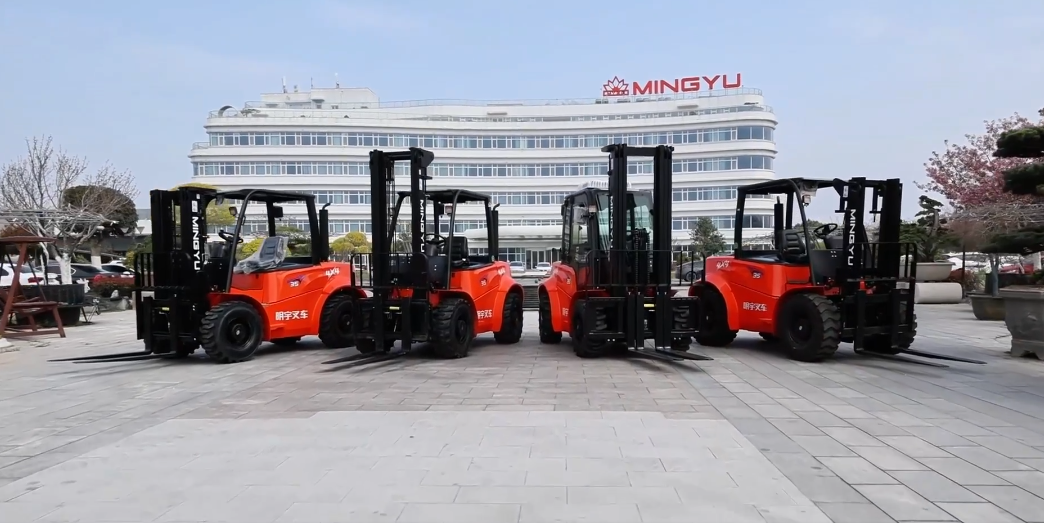
The power requirements for port forklifts are substantial. Heavy-duty operations demand high-voltage systems, with configurations such as 72V setups handling continuous currents between 200A and 600A. Lithium iron phosphate (LiFePO4) batteries have emerged as the preferred power source for these applications, offering thermal stability and safety under the intense power demands of container handling. The battery management systems for port applications require sophisticated configurations to monitor large battery packs safely, with custom circuit designs and firmware managing packs ranging from 16S to 200S configurations.
Mining Operations: Dust, Vibration, and Extreme Loads
Mining environments subject forklifts to conditions that exceed virtually any other industrial application. Underground mines present confined spaces with limited ventilation, requiring equipment that operates reliably in dusty, potentially explosive atmospheres. Surface mining operations expose forklifts to extreme temperature variations, from scorching heat in open-pit operations to freezing conditions in high-altitude or northern latitude mines. The terrain is inherently unstable, with loose rock, mud, and steep grades that challenge traction and stability.
Heavy-duty mining forklifts support loads up to 15 tons, with some specialized applications requiring even greater capacity. These machines must transport power generators, conveyor system components, basket loadings, and relocate equipment and tools across mine sites. The robust vehicle designs incorporate high-quality components with compact dimensions, all-wheel drive capability, and climbing abilities reaching 40 percent grades. Roll-over protective structures (ROPS) and falling-object protective structures (FOPS) are mandatory, protecting operators from the hazards inherent in mining operations.
Underground mining presents additional challenges that influence forklift specification. Equipment must be capable of disassembly to dimensions that fit through mine shafts, then reassembly underground. This modular design requirement influences frame construction, hydraulic routing, and electrical system architecture. The confined underground environment demands compact turning radii and enhanced maneuverability, often achieved through articulated chassis designs or specialized steering configurations.
Rough Terrain Design Philosophy
Rough terrain forklifts represent the engineering response to the fundamental incompatibility between standard warehouse equipment and harsh outdoor environments. These machines combine the lifting capability of industrial forklifts with the off-road mobility of construction equipment, creating a hybrid category purpose-built for demanding applications.
The defining characteristic of rough terrain forklifts is their tire and suspension configuration. Large pneumatic tires with aggressive tread patterns provide traction on dirt, gravel, sand, and mud surfaces where standard solid or cushion tires would sink, slip, or fail entirely. The deep grooves and lugs of rough terrain tires prevent slippage and maintain control on loose surfaces, while reinforced sidewalls withstand impacts from rocks and debris that would destroy standard tires. Wide tread widths distribute weight over larger surface areas, reducing ground pressure and minimizing the risk of sinking into soft terrain.
High ground clearance prevents undercarriage damage when navigating over rocks, ruts, and uneven surfaces. This clearance, combined with reinforced suspension systems, absorbs shocks from rough terrain, maintaining operator comfort and load stability during transport. The suspension travel must accommodate significant vertical displacement while maintaining mast stability, requiring sophisticated linkage designs and hydraulic damping systems.
Powertrain specifications for rough terrain forklifts emphasize torque and reliability over speed. Diesel engines dominate these applications due to their high torque output at low RPM, fuel availability in remote locations, and operational reliability in extreme conditions. Full hydraulic transmission control with electric shift mechanisms ensures smooth operation and precise control, reducing operator fatigue during long shifts in demanding environments. The wheel-side reducer design of drive axles enhances traction and stability, distributing torque effectively across uneven surfaces.
Structural Engineering for Extreme Conditions
The chassis and structural components of harsh environment forklifts undergo fundamental redesign compared to standard industrial models. Heavy-duty frames with reinforced cross-members withstand the torsional loads generated by uneven terrain and heavy lifting. Mast structures receive enhanced plating thickness and bracing to resist the dynamic forces encountered when lifting on slopes or unstable ground.
Corrosion protection extends beyond surface coatings to include material selection and design geometry. Stainless steel fasteners, zinc-nickel plated hydraulic fittings, and aluminum components replace standard steel parts where feasible. Drainage channels and weep holes prevent water and debris accumulation in structural cavities. Electrical enclosures achieve IP ratings sufficient to exclude dust and moisture, with sealed connectors and potted electronics that resist the ingress of contaminants.
The cooling systems in harsh environment forklifts require enhancement to handle the dual challenges of high ambient temperatures and dust contamination. Specially designed cooling systems improve heat dissipation, with oversized radiators, reversible fans for debris purging, and pre-cleaners that remove particulates before air reaches filtration systems. In mining applications, where dust concentrations can overwhelm standard filtration, cyclonic pre-cleaners and automatic filter cleaning systems extend maintenance intervals and protect engine longevity.
Hydraulic System Resilience
Hydraulic systems in harsh environment forklifts face contamination risks from dust infiltration, thermal stress from high ambient temperatures, and mechanical stress from vibration and shock loading. System designs incorporate enhanced filtration with bypass indicators that alert operators to filter saturation before contamination damages pumps and valves. Hydraulic reservoirs feature breathers with desiccant elements that prevent moisture ingress during temperature cycling, critical in maritime environments where humidity remains consistently high.
Cylinder specifications include heavy-duty rod coatings, such as plasma-transferred arc welding overlays or advanced chrome plating, that resist scoring and corrosion from abrasive dust and salt exposure. Seal materials selected for broad temperature ranges and chemical resistance maintain performance across the environmental extremes encountered in port and mining operations. Hose assemblies use abrasion-resistant covers and fittings with O-ring face seals that eliminate leak paths associated with tapered thread connections.
Operator Environment and Safety Systems
The operator cabin in harsh environment forklifts serves as both a control station and a protective enclosure. Panoramic cabs with wide-view frames provide the visibility essential for safe operation in congested port terminals or confined mine shafts. The structural integrity of cabins must meet ROPS and FOPS standards, withstanding rollover forces and falling object impacts without compromising the survival space within.
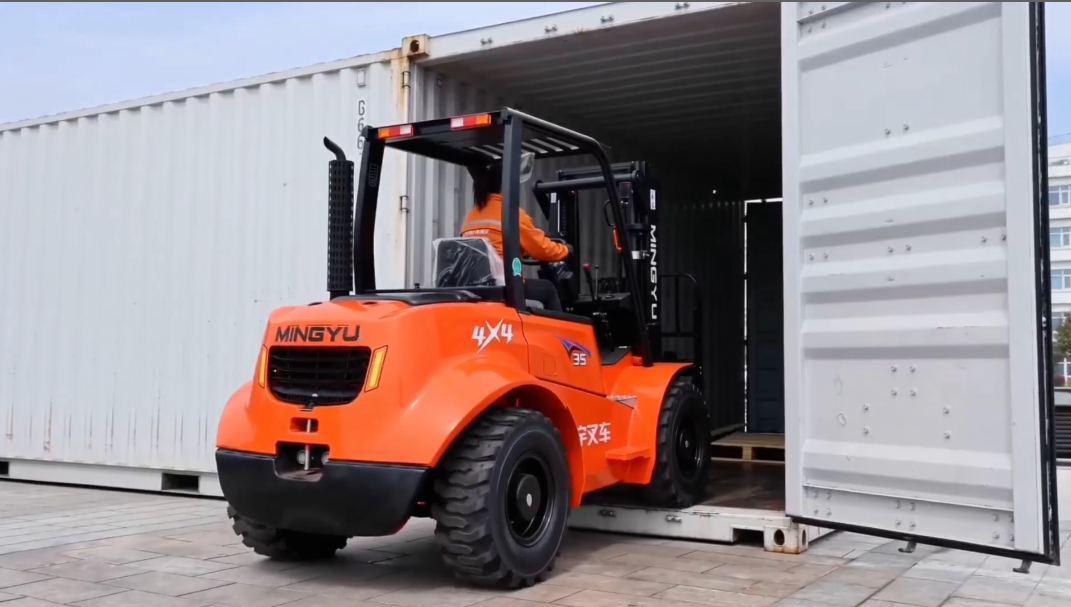
Ergonomics in harsh environment applications address the extended shift durations and physical demands of operating in extreme conditions. Suspension seats with multi-adjustment capabilities reduce transmitted vibration and shock, while climate control systems maintain comfortable interior temperatures regardless of external conditions. In dusty environments, positive-pressure cabin ventilation with high-efficiency filtration prevents dust infiltration, protecting both operator health and control system reliability.
Safety systems in harsh environment forklifts extend beyond standard features to address application-specific hazards. Load moment indicators prevent tipping by calculating the stability margin based on load weight, boom angle, and extension. Slope sensors disable lifting operations when the machine exceeds safe operating angles. Proximity detection systems alert operators to personnel or obstacles in blind spots, particularly critical in the congested environment of container terminals.
Maintenance Strategies for Maximum Uptime
Maintenance programs for harsh environment forklifts require intensification compared to standard industrial applications. The abrasive, corrosive, and contaminating nature of port and mining environments accelerates wear on virtually every system component. Daily inspections must verify tire condition, hydraulic system integrity, cooling system cleanliness, and structural integrity before operation begins.
Preventive maintenance intervals compress proportionally to environmental severity. In salt air environments, weekly washing with fresh water and corrosion inhibitor application extends component life. Dusty mining operations require more frequent air filter replacement, hydraulic fluid sampling, and undercarriage cleaning to prevent abrasive wear. The maintenance schedule must account for the continuous operation patterns common in these industries, with service windows planned during shift changes or operational lulls.
Condition monitoring technologies increasingly support maintenance optimization in harsh environments. Oil analysis detects wear particle generation and contamination before mechanical failure occurs. Vibration monitoring identifies bearing degradation in pumps, motors, and drive components. Thermal imaging reveals electrical connection degradation and hydraulic system inefficiencies. These predictive maintenance approaches maximize equipment availability while minimizing catastrophic failure risk in operations where spare equipment may not be immediately available.
Technological Innovations and Future Directions
Automation technologies are beginning to penetrate harsh environment forklift applications, though adoption lags behind controlled warehouse environments. Autonomous guided vehicles (AGVs) in port container yards operate on predefined routes with reduced human exposure to hazardous conditions. Mining operations increasingly employ tele-remote and autonomous hauling systems, though forklift automation remains limited by the unstructured nature of loading and unloading tasks.
Electrification represents another technological trajectory with significant implications for harsh environment forklifts. While diesel power currently dominates rough terrain applications, advances in battery technology and charging infrastructure are enabling electric alternatives for select applications. The elimination of exhaust emissions benefits underground mining operations where ventilation is limited and costly. However, the energy density requirements and charging infrastructure challenges of remote mining sites continue to favor diesel for the foreseeable future in many applications.
Telematics and fleet management systems provide operational visibility that was previously unavailable in harsh environment settings. Real-time location tracking, utilization monitoring, and fault code transmission enable centralized fleet management across dispersed port terminals or vast mining complexes. This connectivity supports operational optimization, maintenance scheduling, and safety compliance monitoring in environments where direct supervision is impractical.
Conclusion
Forklift applications in ports and mines demand equipment that transcends the capabilities of standard industrial material handlers. The convergence of corrosive atmospheres, abrasive contamination, extreme loads, uneven terrain, and continuous operation cycles creates an environment where every design decision impacts reliability, safety, and total cost of ownership. Rough terrain forklifts with enhanced structural designs, specialized tire and suspension systems, robust powertrains, and comprehensive corrosion protection represent the current state of adaptation to these demanding applications.
As global trade volumes expand and mining operations pursue deeper, more remote deposits, the material handling equipment serving these industries will continue evolving. The integration of automation, electrification, and predictive maintenance technologies promises to enhance both safety and efficiency in harsh environment operations. Organizations that invest appropriately in specialized equipment and maintenance infrastructure will achieve the operational reliability necessary to compete in industries where equipment failure carries consequences far beyond the immediate repair cost.
Name: selena
Mobile:+86-13176910558
Tel:+86-0535-2090977
Whatsapp:8613181602336
Email:vip@mingyuforklift.com
Add:Xiaqiu Town, Laizhou, Yantai City, Shandong Province, China
