
vip@mingyuforklift.com
+86-0535-2090977

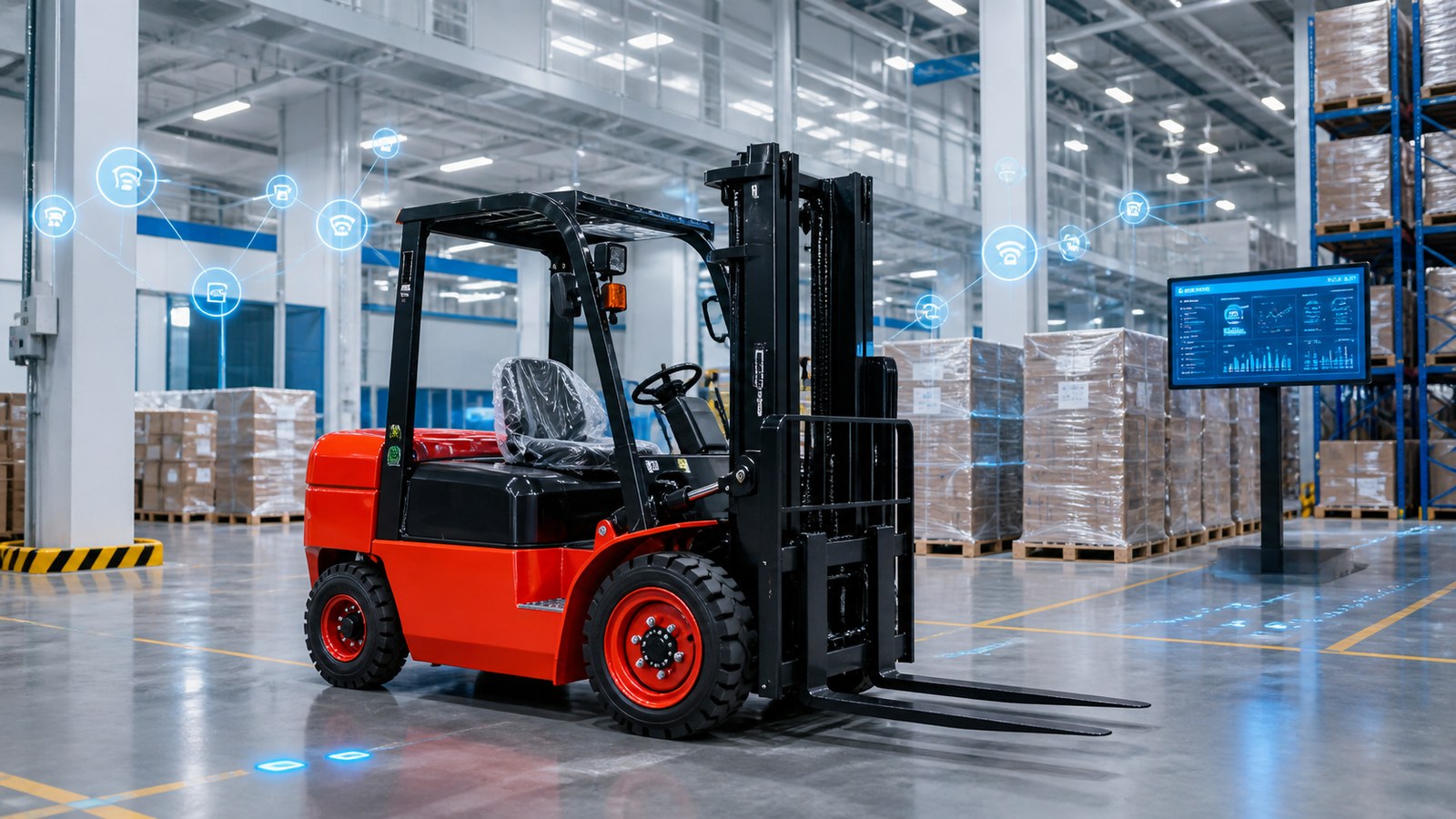
In 2026, the most important forklift conversation is no longer limited to rated capacity, mast height or purchase price. Warehouse leaders are asking how every lift truck can become a reliable source of operational intelligence. AI-driven and hyperconnected supply-chain technology is moving from pilot projects into daily decision making, while connected fleet platforms are translating utilization, service, safety and route data into actions. For buyers, this creates a practical question: how should a conventional forklift fleet be selected today so that it remains productive in a more adaptive warehouse tomorrow?
A connected forklift can report operating hours, idle time, impact events, maintenance intervals and energy or fuel consumption. That information is valuable only when it supports a clear workflow. Managers should begin with a small set of decisions: which trucks are underused, where congestion repeatedly appears, which shifts generate abnormal impacts, and which components are approaching service limits. The objective is not to collect the largest possible data set. It is to shorten the distance between an event and a useful response. ZGFORKLIFT / MYZG recommends defining these questions before choosing telematics options, access-control devices or integration requirements.
For demanding general material handling, buyers can review the CPC35 diesel forklift. The product page provides a useful starting point for discussing capacity, duty cycle, mast configuration, attachments, tires and local operating conditions. A truck should be configured around the heaviest verified load, the real load center and the narrowest aisle rather than around an optimistic average.
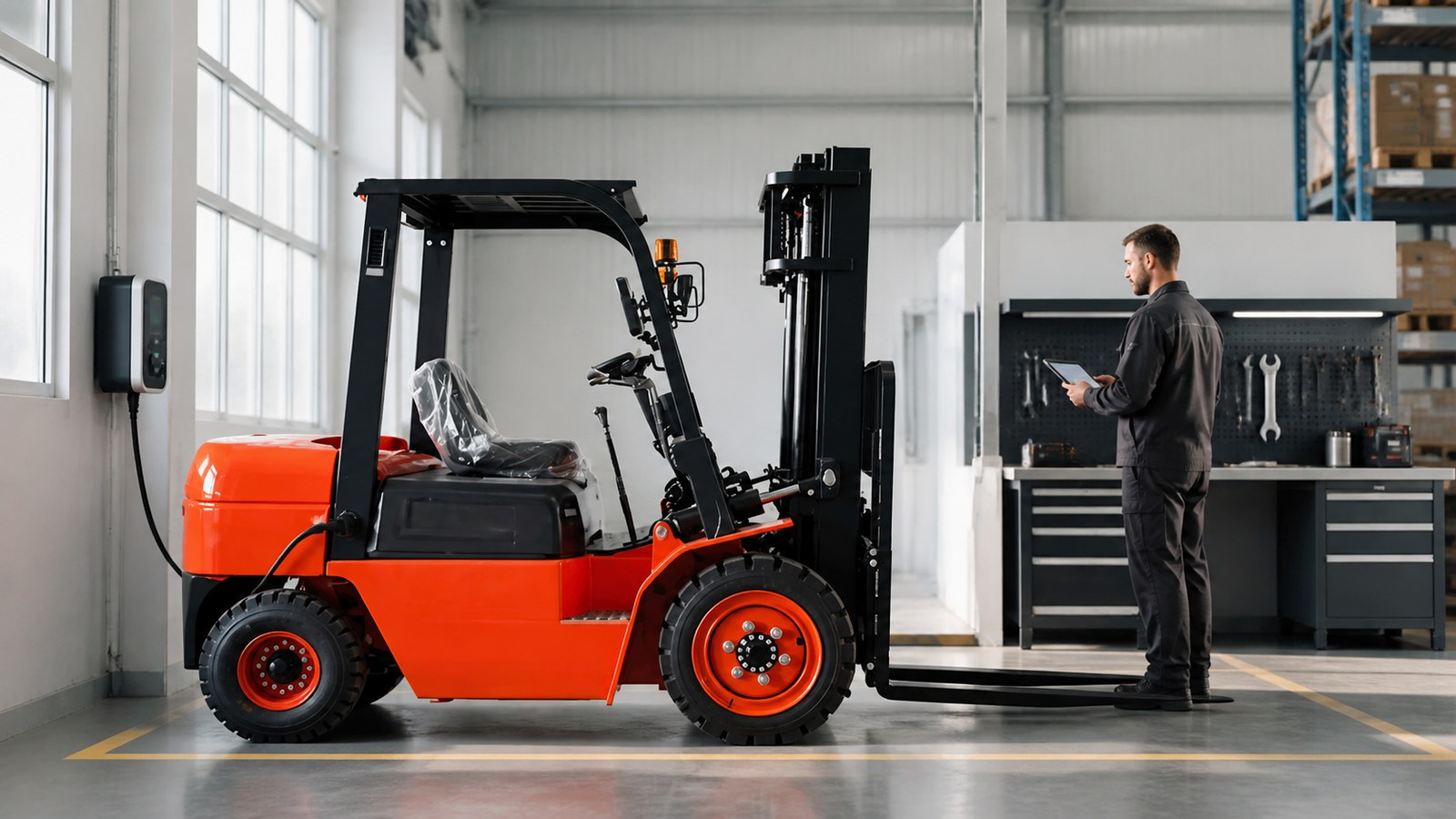
Predictive maintenance is one of the strongest business cases for connected fleets. A timestamped service record helps a maintenance team separate recurring faults from isolated operator reports. Hour-based tasks can be scheduled before a peak period, while abnormal temperature, vibration or impact patterns can trigger inspection before a failure stops a loading lane. The data still needs human interpretation: tires, chains, forks, hydraulic hoses, brakes, steering, warning devices and restraint systems require disciplined physical inspection. Connectivity improves visibility; it does not replace daily checks or trained technicians.
Fleet standardization also matters. The CPC30 diesel forklift can be evaluated alongside larger models to create a capacity ladder without unnecessary variation in controls, parts and maintenance procedures. A well-designed fleet uses the smallest suitable truck for each route while reserving higher-capacity equipment for genuine demand. This reduces aisle pressure, tire wear and unnecessary fuel consumption.
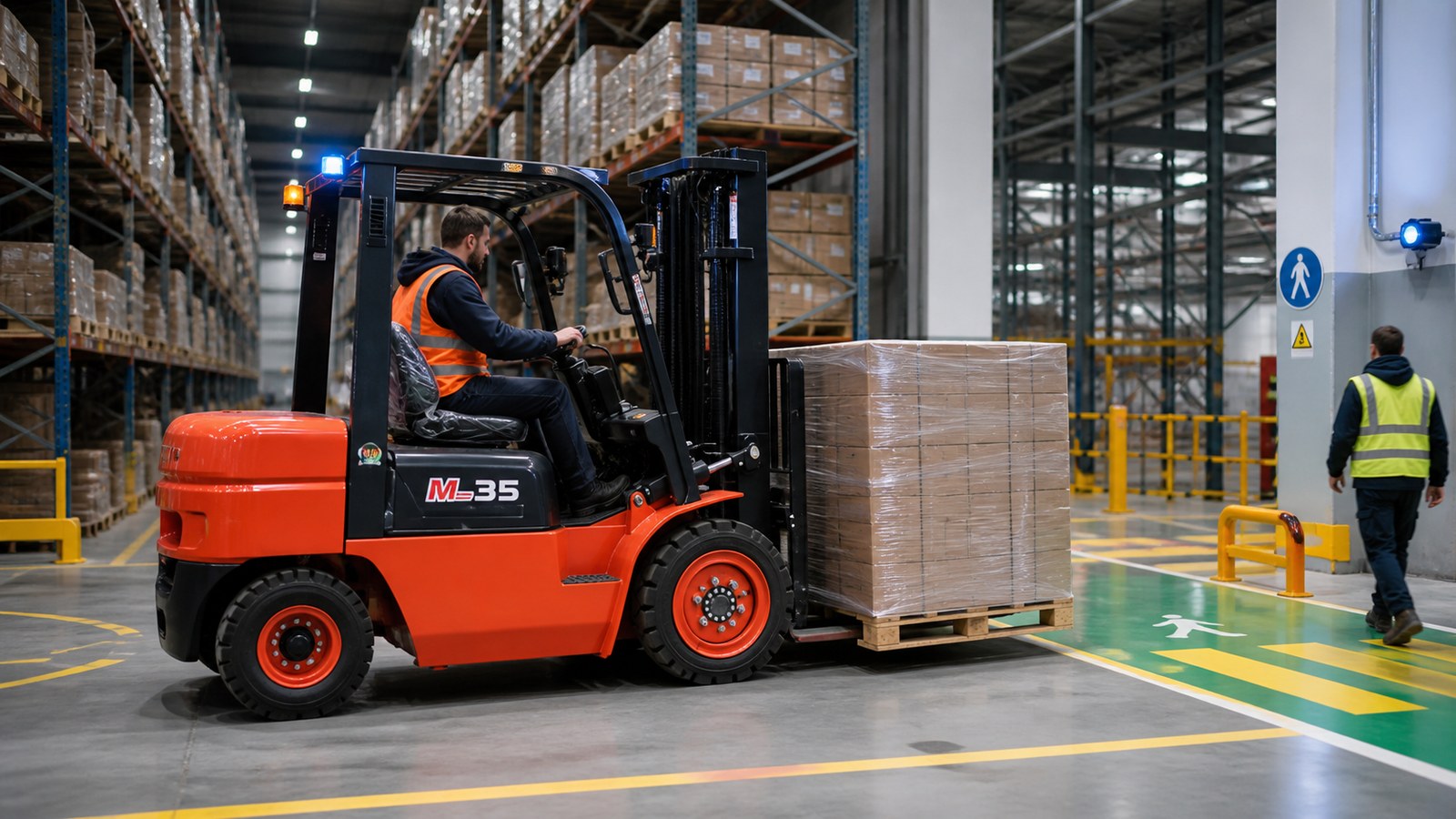
Connected safety systems work best when the physical site is already clear. Separate pedestrian paths, protected crossings, speed zones, mirrors, lighting, rack-end protection and consistent right-of-way rules remain fundamental. Telematics can then identify repeated harsh braking near a blind corner or excessive travel through a congested zone. Managers should review trends by area and time instead of using isolated events to punish operators. A learning culture turns data into layout improvements, coaching and realistic shift planning.
Cybersecurity must be included in the specification. Connected trucks should have controlled user accounts, secure update procedures, documented data ownership and a defined method for removing access when staff or service providers change. Network segmentation can prevent a fleet device from becoming an unnecessary route into business systems. Buyers should ask what data is stored, where it is transmitted, how long it is retained and how the system functions when connectivity is unavailable.
Start with the operating profile: pallet weight, load center, lift height, attachment, aisle width, floor condition, gradients, doors, trailers, ambient temperature and hours per shift. Next define visibility and safety requirements. Then specify the information needed for maintenance, utilization and access control. Finally, test the truck with representative loads. Buyers considering a slightly different balance of capacity and maneuverability can also examine the CPC38 diesel forklift and request an application-matched proposal.
Shandong Zhuogong Machinery equipment Co.,Ltd supports distributors and end users with configuration review, export preparation, spare-parts planning and service guidance. ZGFORKLIFT / MYZG does not treat connectivity as decoration. The useful outcome is measurable uptime, safer traffic, clearer maintenance priorities and a fleet that can adapt as warehouse software and operating models evolve.
Website: www.vavforklift.com
Email: vip@mingyuforklift.com
Tel: +86-0535-2090977
WhatsApp: +86 131 8160 2336
Address: Xiaqiu Town, Laizhou, Yantai City, Shandong Province, China
Name: selena
Mobile:+86-13176910558
Tel:+86-0535-2090977
Whatsapp:8613181602336
Email:vip@mingyuforklift.com
Add:Xiaqiu Town, Laizhou, Yantai City, Shandong Province, China
