
vip@mingyuforklift.com
+86-0535-2090977

Published: September 5, 2026
Arctic shipping uncertainty and expanding northern infrastructure are keeping polar logistics in focus during 2026. Ports, mines, energy sites and emergency depots often combine ice, loose aggregate, high winds and restricted visibility. A remote-controlled rough-terrain forklift can let a trained operator work from a safer observation point during selected lifts, but remote control is a task-specific safety tool rather than permission to operate without supervision.
For procurement teams, the question is not only whether a machine can lift a rated load. The equipment must fit the route, load center, surface, energy plan, operator environment and maintenance capability. ZGFORKLIFT / MYZG recommends a site-based evaluation that converts current logistics pressure into measurable operating requirements.
Polar projects face short working windows and long resupply cycles. Remote operation may reduce exposure near unstable loads, cold zones or noisy equipment, yet radio reliability, camera coverage and emergency-stop design must be validated in the exact environment. Human oversight remains essential.
Start with a documented route survey. Record the narrowest turn, doorway and gate, overhead clearance, maximum gradient, pavement edge, drainage channel and the worst surface after rain or frost. Measure real loads at their actual load centers, including long, offset or irregular items. Residual capacity at working height matters more than a headline capacity.
Review the 936 3-ton off-road forklift as the first internal reference, then confirm the current specification with the manufacturer.
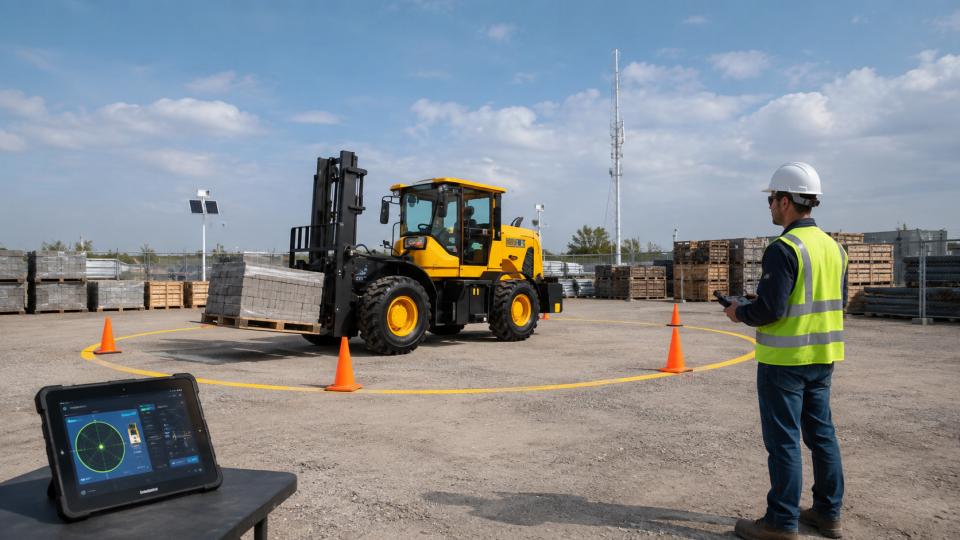
Specify cold-rated fluids, batteries, seals, wiring and displays. Evaluate winter tyres under an approved engineering plan. Test control latency, signal-loss behavior, redundant emergency stops and direct-line visibility. Provide heated storage or warm-up procedures where required.
Visibility and control deserve the same attention as capacity. Review the mast, carriage, tyres, lighting, mirrors or cameras, restraint, warnings and speed management as one system. Dust, cold, heat, moisture and corrosion may require additional protection and shorter inspection intervals. Operators must see the intended path and place loads without leaving the protective zone.
Compare the DY26 3-ton off-road forklift for a second view of manoeuvrability, traction, energy source, lift height and service access.
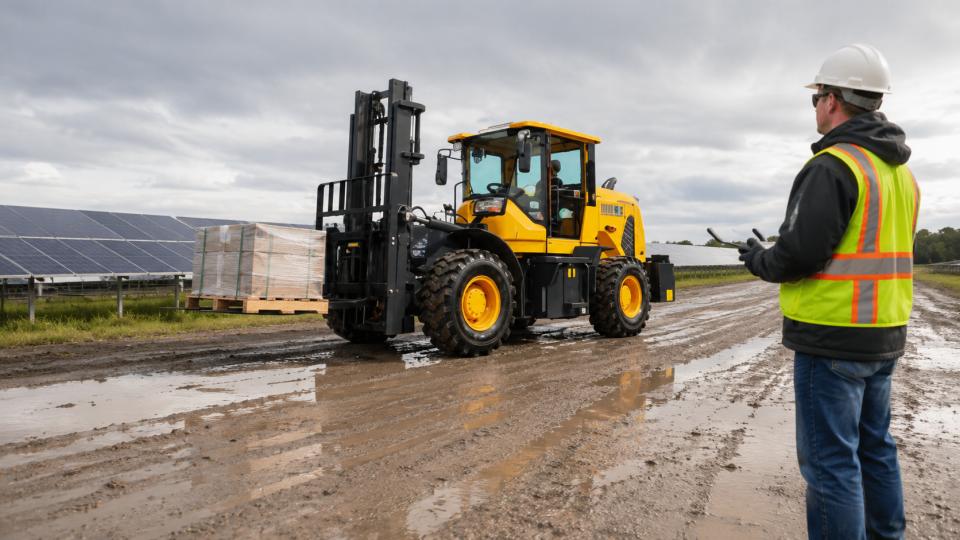
Establish a controlled remote-operation zone with one designated operator. Test fail-safe stopping before each shift. Never allow remote control to hide pedestrians, unstable ground or overhead hazards; cameras are aids, not replacements for a complete view.
Create a written operating envelope for each route: maximum load and height, travel direction, pedestrian exclusion points, slope rules and stop-work conditions. Complete a pre-shift inspection of tyres, forks, chains, hoses, brakes, steering, warning devices and the energy or fuel system. Isolate defects that affect stability, braking or visibility.
Supervisors should observe real work and record near misses, harsh braking, overload attempts, impacts and recurring maintenance issues. Use the findings to improve layout, traffic separation, signage and coaching. Equipment cannot compensate for an uncontrolled work area, and a good layout still depends on disciplined operators.
The 7-ton off-road forklift is the third product reference for application comparison.
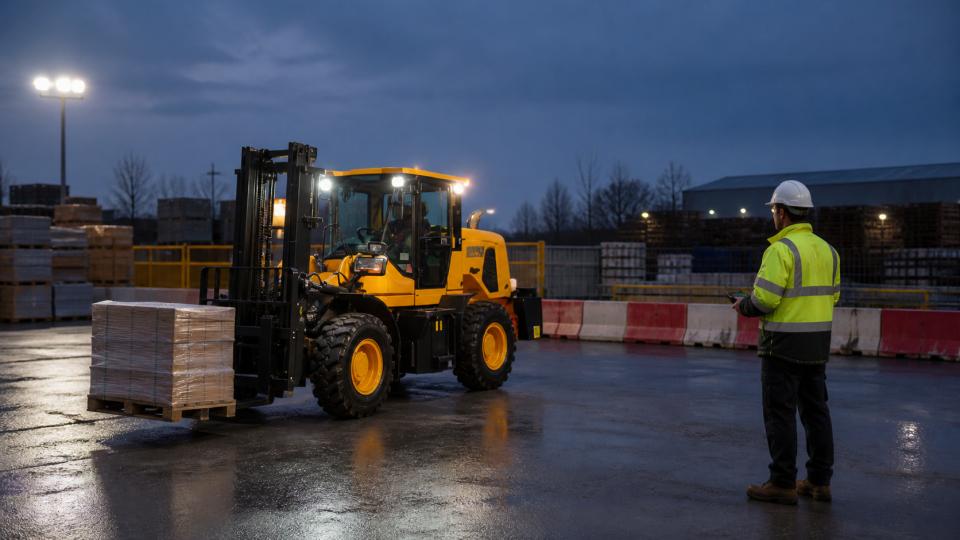
Include spare controllers, protected charging, cold-weather consumables and technician travel in lifecycle cost. Compare remote mode on tasks where reduced exposure creates measurable value.
Build the business case around productive hours rather than purchase price alone. Include operator time, planned maintenance, tyres, energy or fuel, charging or storage infrastructure, transport between sites, downtime risk and resale value. Standardising common parts can reduce inventory, while forcing one specification onto every task may create inefficient compromises.
A staged trial is often the strongest decision method. Select a representative route, define success measures, brief operators, and compare throughput, energy use, handling accuracy and maintenance observations. Review results with operations, safety and finance before fleet-wide deployment.
ZGFORKLIFT and MYZG can tailor the final specification after reviewing the application. Product availability varies by market; confirm the latest technical data and comply with local rules before purchase or operation.
Contact Shandong Zhuogong Machinery equipment Co.,Ltd. Email: vip@mingyuforklift.com. Tel: +86-0535-2090977. WhatsApp: +86 131 8160 2336. Address: Xiaqiu Town, Laizhou, Yantai City, Shandong Province, China.
Send the maximum load, load-center distance, aisle width, gradient, surface condition, daily duty hours and climate so MYZG engineers can recommend a practical configuration instead of a generic catalogue answer.
Name: selena
Mobile:+86-13176910558
Tel:+86-0535-2090977
Whatsapp:8613181602336
Email:vip@mingyuforklift.com
Add:Xiaqiu Town, Laizhou, Yantai City, Shandong Province, China
