
vip@mingyuforklift.com
+86-0535-2090977

HTML Meta Description: How electric stackers support circular factories in 2026 through controlled reverse logistics, reusable containers, inspection flow and safe remanufacturing material handling.
Keywords: circular factory,electric stacker,reverse logistics,remanufacturing,2026 manufacturing,reusable containers,material recovery,ZGFORKLIFT,MYZG,industrial recycling
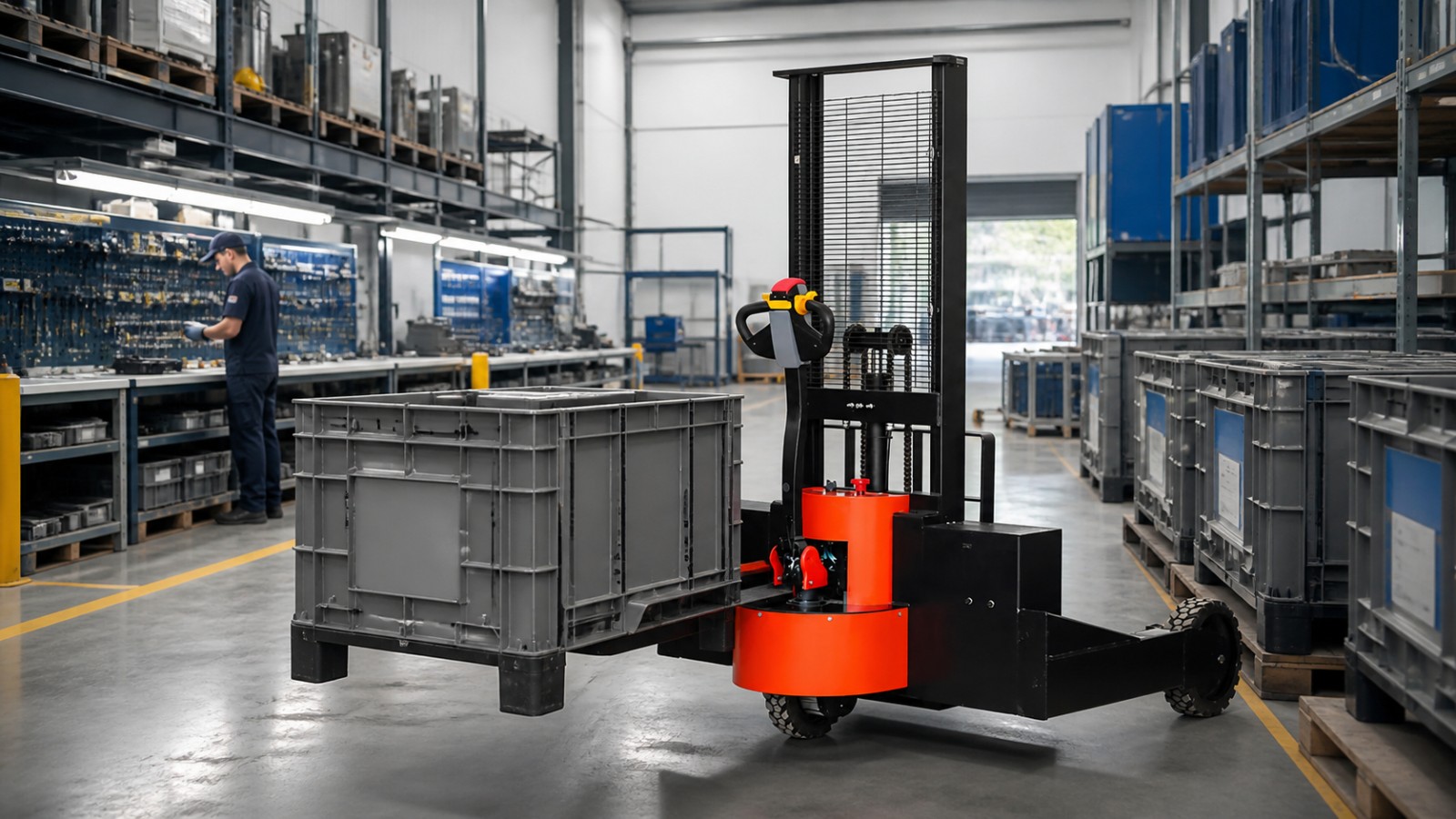
Circular manufacturing is shifting from broad sustainability language toward practical reuse, repair, refurbishment and material recovery. That makes reverse logistics a significant 2026 operating challenge. Returned products and reusable containers arrive with uncertain condition, mixed documentation and irregular volume. Compact electric stackers help separate, stage and feed these flows without occupying the space demanded by larger equipment.
Compare the MYCBDY electric pallet truck against the documented application. Confirm the final configuration, capacity and local requirements before purchase.
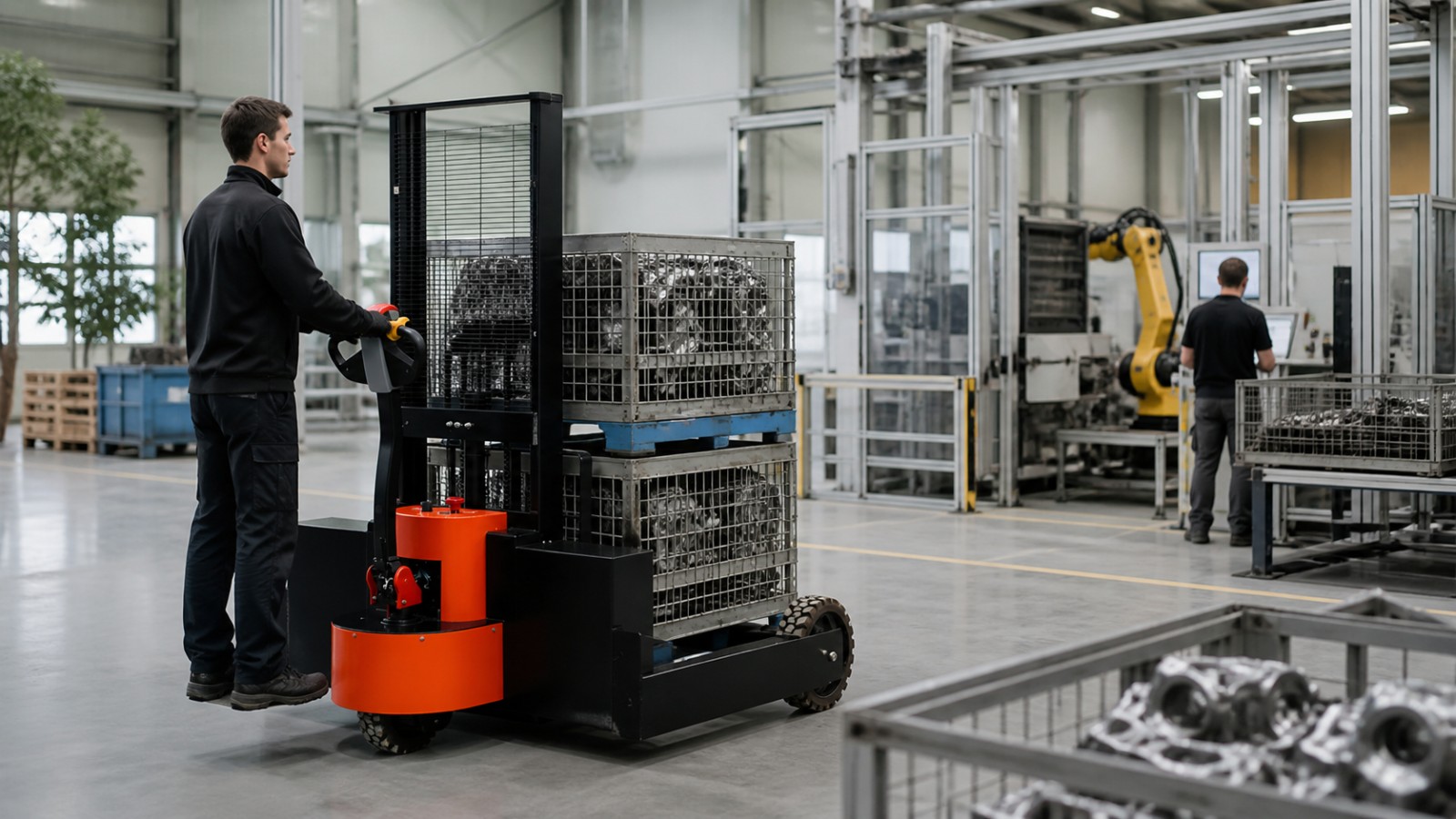
Design the flow from receipt to inspection, quarantine, disassembly, repair and outbound reuse. Each zone needs a clear load status and maximum quantity. Use standardized containers where possible and prevent damaged components from entering normal production. A ZGFORKLIFT or MYZG unit should be selected for container entry, aisle width, load center, lift height, turning space and the frequency of short moves.
Compare the 600-800 kg remote-control forklift against the documented application. Confirm the final configuration, capacity and local requirements before purchase.
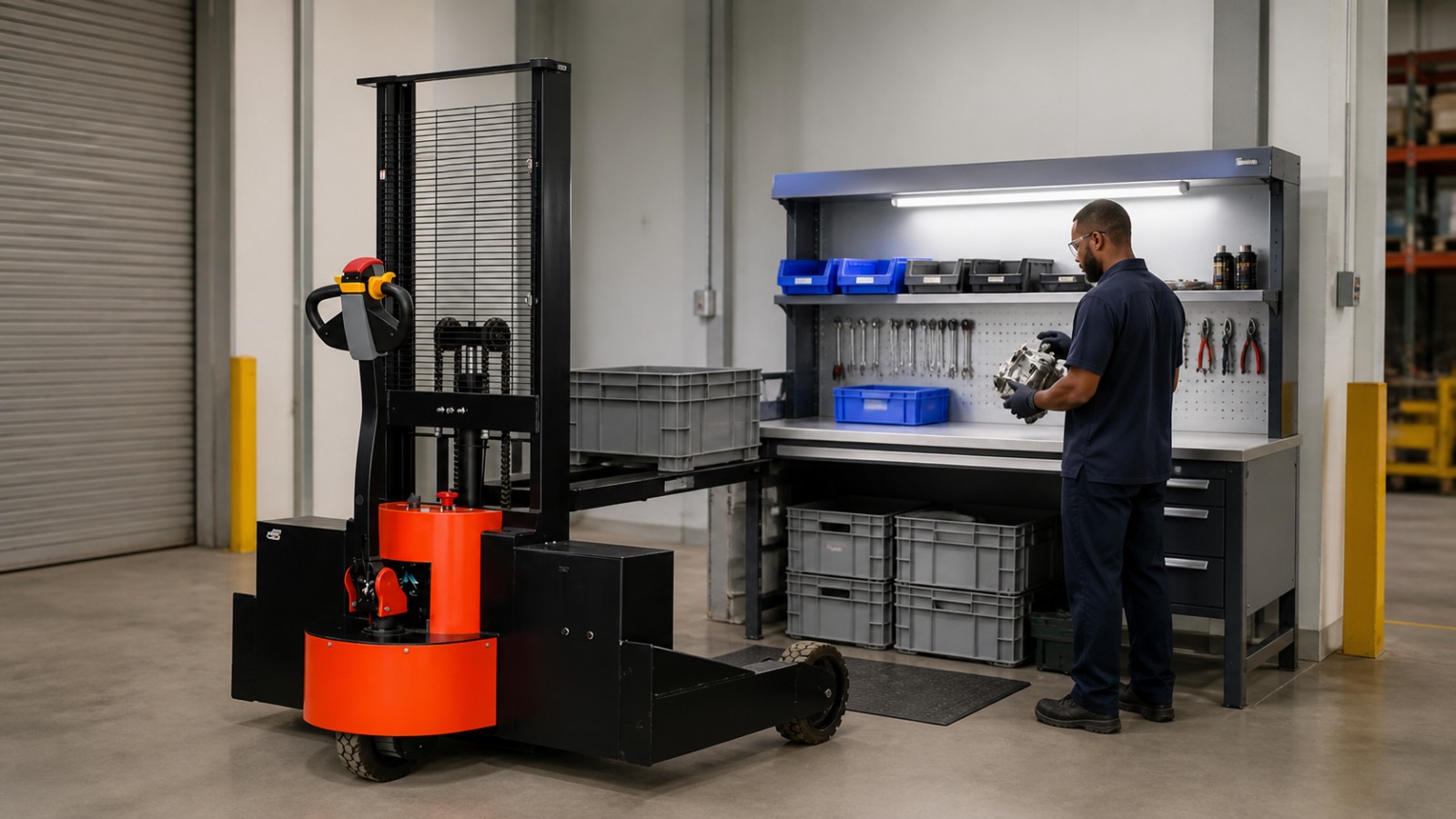
Reverse logistics can hide sharp edges, leaking fluids, unstable packaging and unknown weight. Operators need rules for refusing a load, isolating batteries or hazardous items and requesting specialist handling. Do not use forks to push loose scrap. Floors must remain clear of small metal parts that can damage wheels. Charging locations should be protected from the inspection and dismantling areas.
Compare the CPD10 electric forklift against the documented application. Confirm the final configuration, capacity and local requirements before purchase.
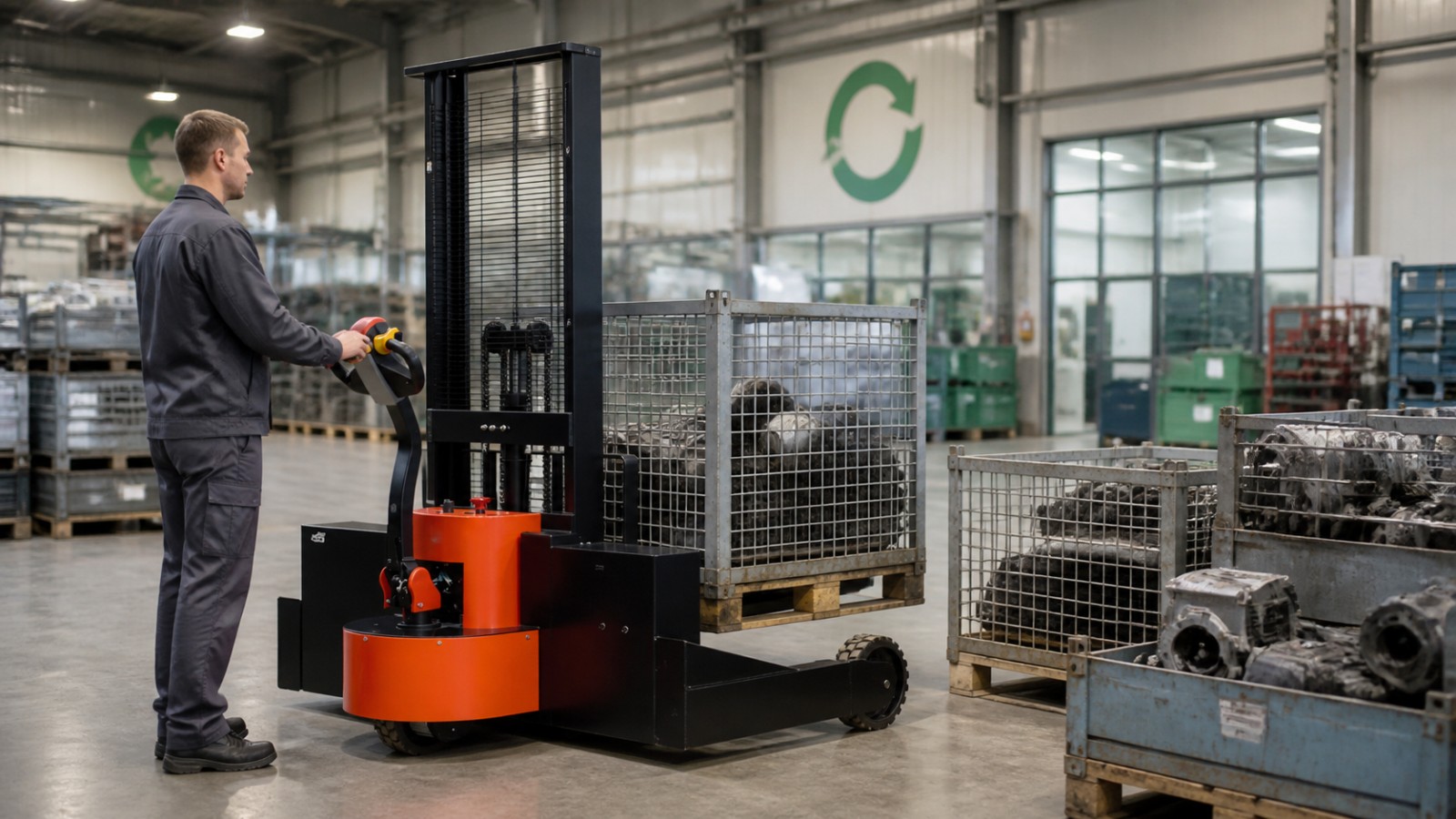
Track value recovered, touches per unit, dwell time, damage, contamination and the percentage of containers returned to service. A pilot should test the busiest return category before the layout is fixed. Electric stackers add value when they support a visible, disciplined process; they cannot compensate for unclear ownership or uncontrolled accumulation of returned material.
Equipment selection must begin with the real duty profile. Record load weight and dimensions, load center, lift height, aisle or route width, surface condition, gradients, daily hours and destination-market requirements. Separate mandatory safety and capacity requirements from optional cameras, telematics or attachments. Shandong Zhuogong Machinery equipment Co.,Ltd can use this information to compare configurations without hiding basic operating needs behind a technology feature.
Total cost includes energy or fuel, planned service, batteries where applicable, tires, wear parts, operator time and downtime. Confirm inspection access, documentation, parts support and warranty arrangements before commissioning. A machine that fits the application and can be maintained predictably generally creates more value than a lower-priced truck that is unavailable during a critical shift. ZGFORKLIFT and MYZG buyers should establish the maintenance calendar before daily operation begins.
Commissioning should use representative loads and routes. Verify fork entry, clearance, braking, visibility, stability, parking and charging or refueling procedures. Record the baseline condition and serial information. Operators require model-specific familiarization and site authorization, while supervisors must define traffic rules, key control, defect reporting and the exact conditions that remove equipment from service.
After launch, review utilization, delays, impacts, maintenance findings and operator feedback at a consistent interval. Investigate layout, pallet quality, congestion and scheduling around every recurring problem. Data should support conversations among operators, technicians and planners. Small changes to slotting, staging and standard work can often improve safety and throughput without adding another truck.
Website: www.vavforklift.com
Email: vip@mingyuforklift.com
Tel: +86-0535-2090977 WhatsApp: +86 131 8160 2336
Address: Xiaqiu Town, Laizhou, Yantai City, Shandong Province, China.
Published: September 2, 2026. Follow the supplied manual, site assessment and applicable local regulations.
Name: selena
Mobile:+86-13176910558
Tel:+86-0535-2090977
Whatsapp:8613181602336
Email:vip@mingyuforklift.com
Add:Xiaqiu Town, Laizhou, Yantai City, Shandong Province, China
