
vip@mingyuforklift.com
+86-0535-2090977

HTML Meta Description: Rough-terrain forklift readiness for wet, freezing and uneven yards supporting November regional replenishment.
Keywords: rain and frost,rough terrain forklift,regional replenishment,yard readiness,traction,visibility,ground assessment,ZGFORKLIFT,MYZG,winter logistics
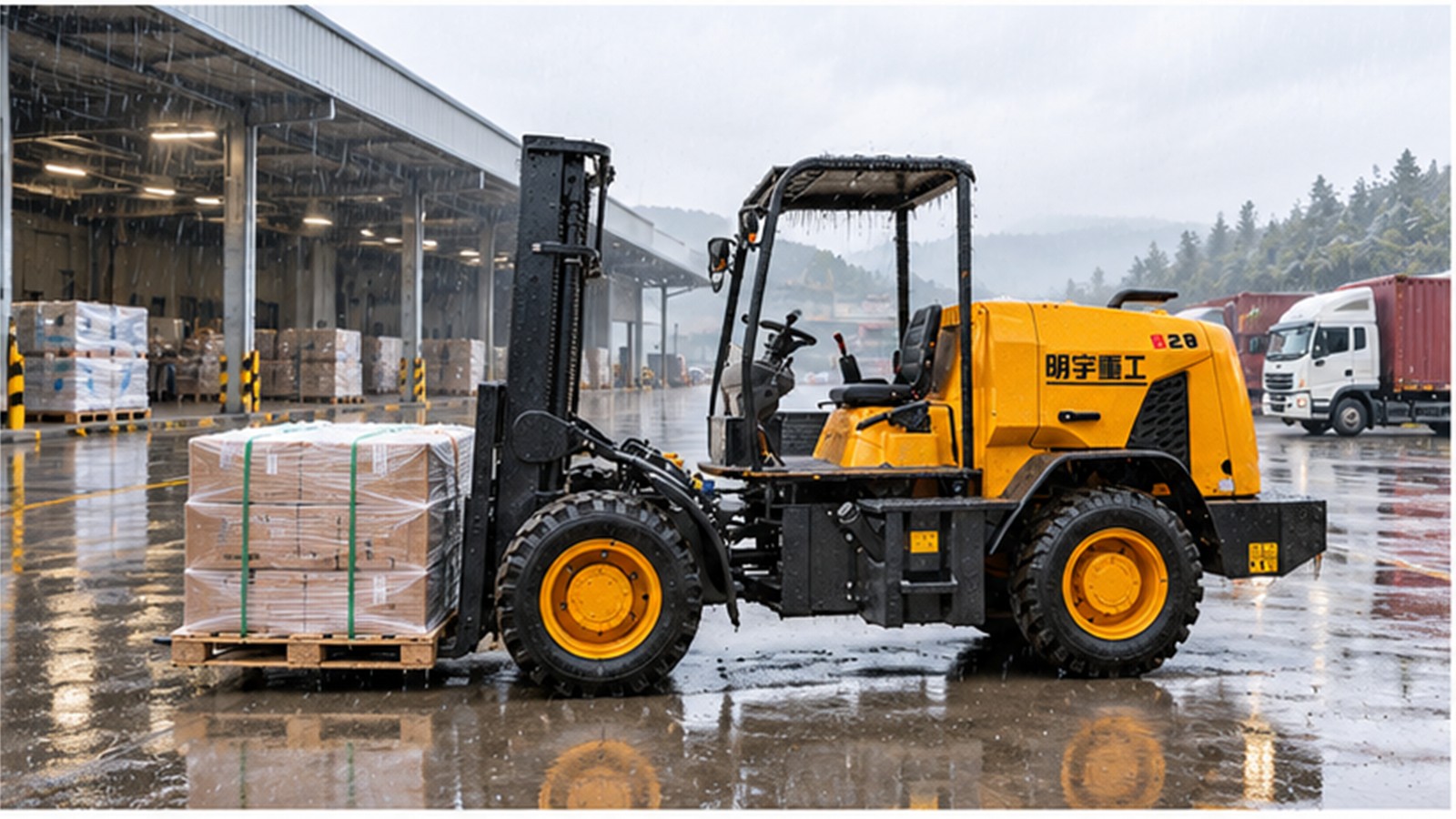
Regional replenishment increases outdoor movements just as rain, frost and shorter daylight reduce traction and visibility
Use this product page as a configuration reference and verify the final specification for the actual site.
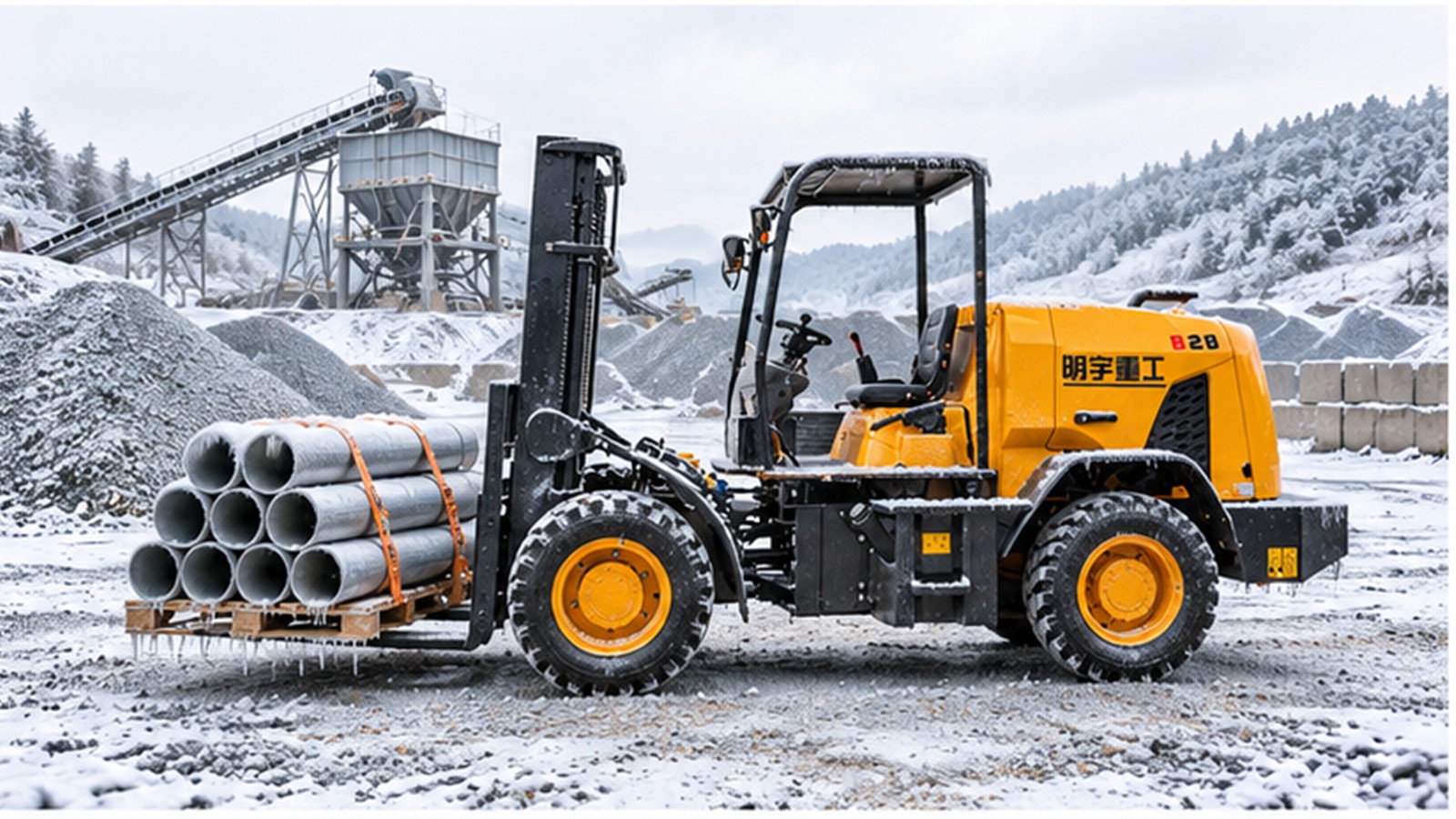
Inspect routes, edges, slopes and drains before release
Use this product page as a configuration reference and verify the final specification for the actual site.
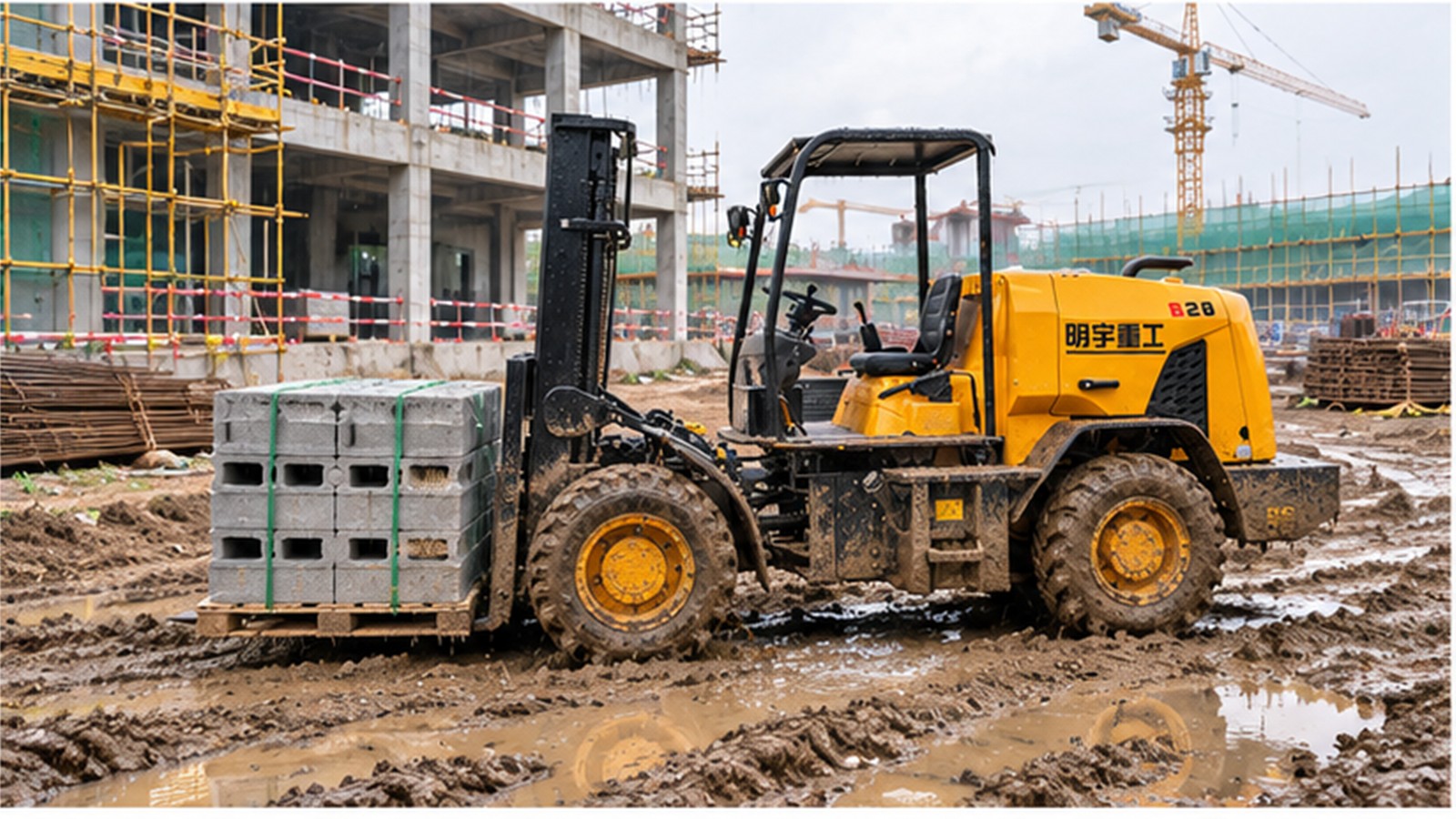
Set weather stop triggers, load limits and repeat inspection intervals
Use this product page as a configuration reference and verify the final specification for the actual site.
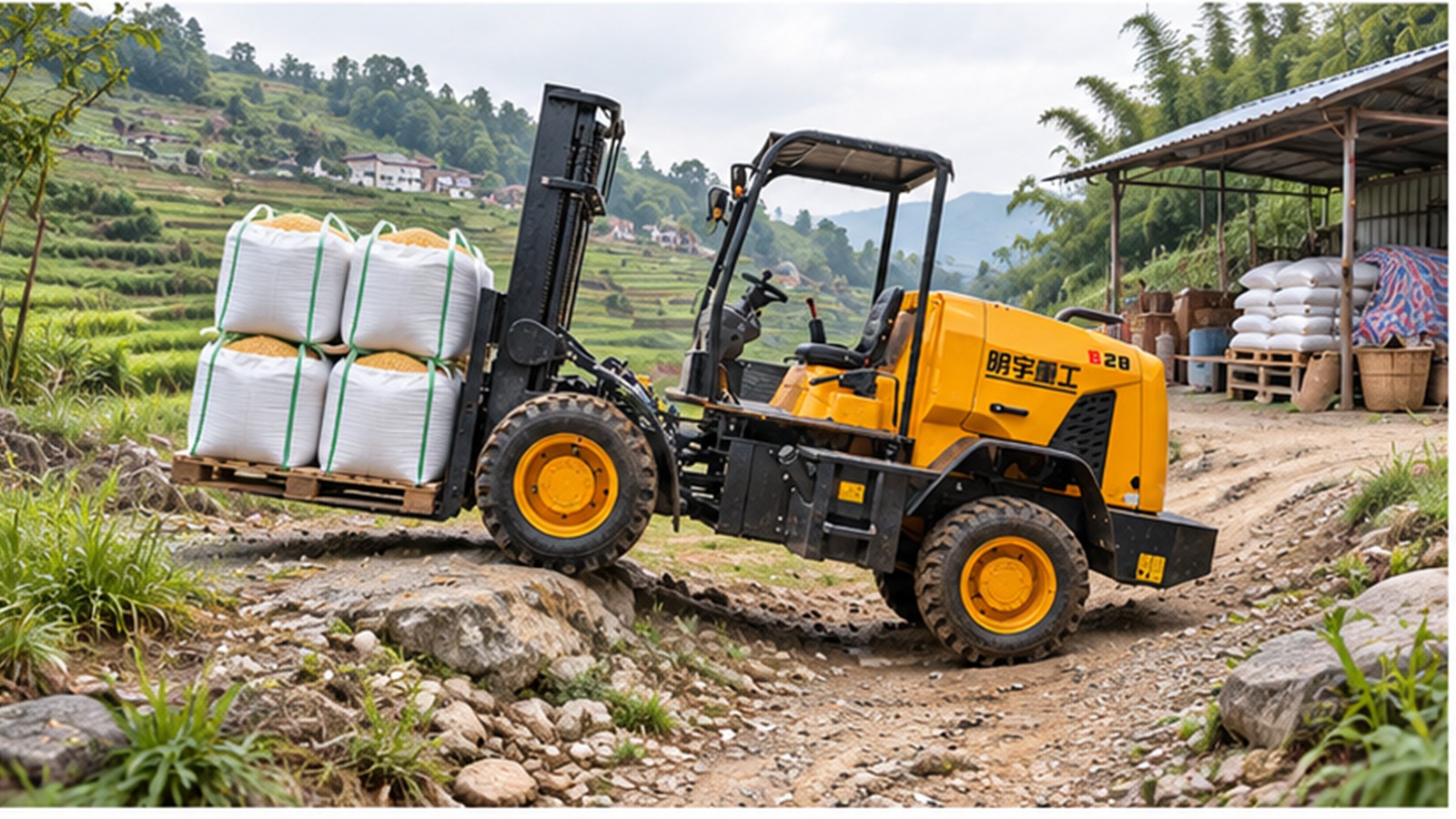
Track wheel slip, standing water, route closures, rejected loads, lighting defects and ground deterioration.
Equipment selection starts with the actual duty profile. Record load weight and dimensions, load center, lift height, aisle or route width, surface, gradients, daily hours, peak windows and destination-market requirements. Shandong Zhuogong Machinery equipment Co.,Ltd can compare ZGFORKLIFT / MYZG configurations using this application data. A current trend never overrides rated capacity, stability, the supplied manual or a competent site assessment.
Commissioning should use representative loads and real routes. Verify fork entry, mast or platform clearance, visibility, steering, braking, stability, parking and charging or refueling procedures. Record baseline condition, serial information and maintenance intervals. Operators require model-specific familiarization and site authorization. Supervisors must define traffic rules, defect reporting and the exact conditions that remove equipment from service.
A strong plan separates people and equipment wherever practical. Mark crossings, blind corners, one-way routes, waiting points, speed zones and no-go areas. Reassess the arrangement when temporary stock, contractors, weather or construction changes visibility and available space. High-visibility clothing and alarms support the system, but they do not replace physical separation and disciplined supervision.
Total cost includes energy or fuel, planned service, batteries where applicable, tires, wear parts, operator time, transport and downtime. Confirm inspection access, documentation, parts support and warranty arrangements before commissioning. A machine that fits the application and can be maintained predictably usually creates more value than a lower-priced unit that becomes unavailable during a critical shift.
Maintenance planning should distinguish daily operator checks, scheduled preventive work and qualified technical repair. Keep faults traceable from discovery through isolation, diagnosis, parts, test and return to service. Repeated alarms or damage deserve root-cause review rather than routine reset. Only competent people should service energy systems, structural parts, brakes, steering or safety devices.
After launch, review utilization, delays, impacts, maintenance findings and operator feedback at a fixed interval. Investigate layout, pallet quality, congestion and scheduling behind every recurring problem. Data should support conversations among operators, technicians and planners. Small changes to slotting, staging and standard work can improve safety and throughput without adding another machine.
Resilience also depends on clear escalation. Define who can pause work, reassign a route, approve an alternative fuel or charging window, quarantine a load and declare normal service restored. Run a tabletop exercise and a practical drill before peak demand. Record lessons, owners and completion dates so the continuity plan becomes an operating capability rather than a document.
Request a written technical agreement covering configuration, rated and residual capacity, mast or platform, attachment, tires, power system, charger or fuel arrangement, manuals, spare parts and service expectations. Final selection and operation must follow the supplied instructions, site risk assessment and applicable local regulations. Trained people retain authority to stop work whenever conditions change.
Website: www.vavforklift.com
Email: vip@mingyuforklift.com
Tel: +86-0535-2090977 WhatsApp: +86 131 8160 2336
Address: Xiaqiu Town, Laizhou, Yantai City, Shandong Province, China.
Published: November 5, 2026.
Name: selena
Mobile:+86-13176910558
Tel:+86-0535-2090977
Whatsapp:8613181602336
Email:vip@mingyuforklift.com
Add:Xiaqiu Town, Laizhou, Yantai City, Shandong Province, China