
vip@mingyuforklift.com
+86-0535-2090977

1. Pre-Operational Inspection: The "Circle Check"
Before touching the handle, an operator must perform a visual and functional inspection. Never assume a machine is safe just because it was used in the previous shift.
Visual Checklist:
Forks: Check for cracks in the welds, bends, or unevenness. Ensure there is no debris lodged in the fork adjustment spaces.
Wheels: Inspect the load rollers (front) and the steer wheels (back). Look for "flat spots," embedded metal shards, or tangled plastic wrap that could seize the bearings.
Hydraulics: Look for oil spots on the floor which indicate a leaking cylinder or seal.
Capacity Plate: Ensure the load rating is legible. Never guess the capacity of a machine.
Functional Checklist (Manual):
Pump Test: Pump the handle 3–5 times. The forks should rise smoothly and hold their position.
Release Test: Squeeze the trigger. The forks should lower at a controlled, even speed.
Functional Checklist (Electric):
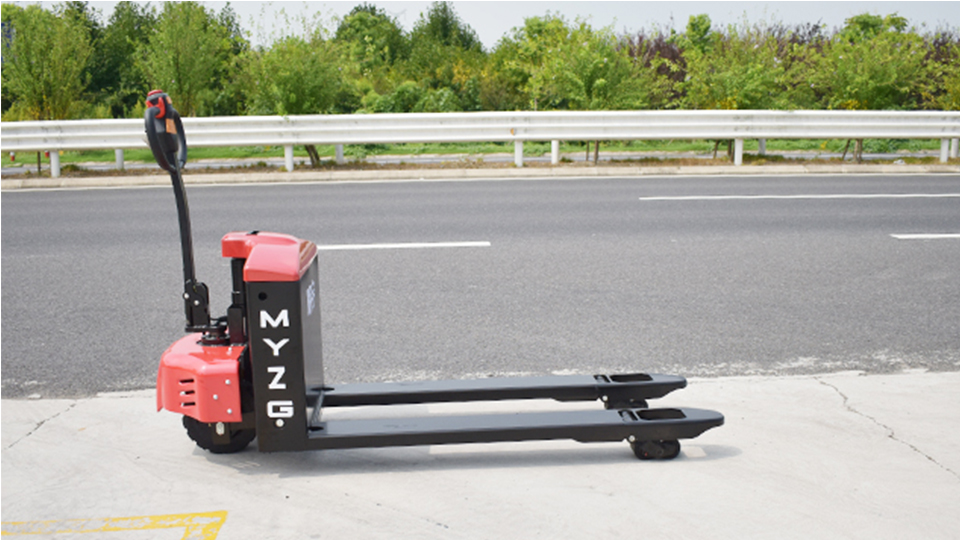
Emergency Reverse (Belly Button): Press the red button on the tiller head to ensure the drive motor reverses instantly.
Braking System: Test the "dead-man" brake by raising/lowering the tiller arm.
Horn & Indicators: Verify all audible and visual warnings are operational.
2. Safe Loading and Stability Physics
The stability of a pallet truck is governed by the Center of Gravity (CG). Unlike a car, a pallet truck's CG shifts significantly once a load is added.
The Load Center
Most pallet trucks are designed for a load center of 24 inches (600mm). To maintain stability:
Full Insertion: Push the forks entirely under the pallet until the frame contacts the load.
Centering: Ensure the load is centered laterally across both forks. An off-center load exerts "torsional stress" on the hydraulic ram, which can lead to mechanical failure or tipping.
Low Profile: Lift the pallet only 1 inch (25mm) off the floor during transport. This keeps the CG as low as possible.
Technical Note: If the load is too high and blocks your line of sight, the operator must travel in reverse (pulling the truck) while looking over their shoulder, or utilize a spotter.
3. Operational Techniques: Pushing vs. Pulling
There is a frequent debate regarding whether to push or pull a manual pallet truck. From an ergonomic and safety standpoint, the answer depends on the scenario:
Pushing (Preferred): Pushing allows the operator to use their body weight and leg muscles (the strongest muscles) to initiate movement. It provides a better field of vision and prevents the truck from running over the operator's heels if a sudden stop is required.
Pulling (Tactical): Pulling is often necessary for maneuvering in tight spaces or when entering a narrow elevator. However, pulling heavy loads for long distances can cause significant shoulder and lower-back strain.
Negotiating Inclines
Gravity is the primary hazard on ramps. Follow these strict rules:
Uphill: The load should be in front of the operator (Pushing).
Downhill: The load should be behind the operator (Leading).
The "No-Go" Zone: Never attempt to turn a pallet truck sideways on a ramp. This shifts the CG outside the wheelbase, causing an immediate tip-over.
4. Electric Pallet Truck Specifics (Class III PIT)
Electric pallet trucks (EPTs) are classified by OSHA as Powered Industrial Trucks. This means they require formal training and certification (unlike manual jacks).
Tiller Management
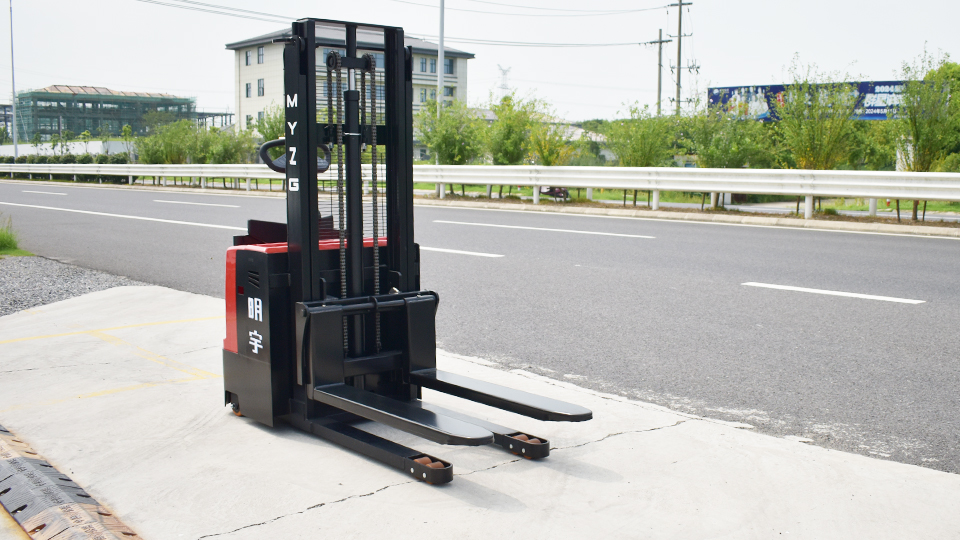
The tiller arm is the command center. Operators must master the "Neutral" position. Engaging the drive while the tiller is in a vertical or horizontal "braking zone" will trigger the automatic brake.
Avoid "Jackknifing": When turning with an EPT, reduce speed. The motor's torque can cause the drive unit to swing faster than a manual truck, potentially pinning the operator against a rack or wall.
5. Termination of Shift and Parking
Safety does not end when the task is finished. Improperly parked trucks are major tripping hazards.
Designated Area: Always return the truck to a designated parking zone, away from fire exits, extinguishers, and high-traffic aisles.
Neutralize Hydraulics: Always lower the forks completely to the floor. This prevents the hydraulic seals from remaining under pressure and eliminates the risk of someone tripping over the raised steel forks.
Handle Position: On manual trucks, leave the handle in the upright position. On electric models, turn off the key or disconnect the battery to prevent unauthorized use.
Summary of Safe Operating Limits
|
Factor |
Manual Truck |
Electric Truck |
|
Max Gradient |
5% (with assist) |
10% (model dependent) |
|
Braking Method |
Friction/Manual Plug |
Automatic/Electromagnetic |
|
Speed Limit |
Walking Pace |
3–6 mph (Walkie/Rider) |
|
PPE Required |
Steel Toes, Gloves |
Steel Toes, Hi-Vis, Headwear |
Conclusion
A pallet truck is a powerful tool, but its safety is entirely dependent on the operator’s discipline. By conducting thorough inspections, respecting the physics of the load center, and following ergonomic movement patterns, you can maximize facility throughput while maintaining a zero-accident environment.
Name: selena
Mobile:+86-13176910558
Tel:+86-0535-2090977
Whatsapp:8613181602336
Email:vip@mingyuforklift.com
Add:Xiaqiu Town, Laizhou, Yantai City, Shandong Province, China
