
vip@mingyuforklift.com
+86-0535-2090977

In the high-cadence environment of a modern warehouse, the pressure to "move and go" is immense. However, skipping the pre-operational inspection of a pallet truck—whether manual or electric—is a leading cause of mechanical failure and workplace accidents.1 Under OSHA 1910.178 and ISO 3691-1, it is a requirement that all industrial trucks be examined before being placed in service.2
A technical safety check is more than a glance; it is a systematic audit of the machine’s structural integrity, hydraulic health, and ergonomic controls.3 This guide provides a deep dive into the critical inspection points every operator must verify before their shift begins.
1. Structural Integrity and Fork Condition
The forks are the primary interface between the machine and the load. They are subjected to immense stress, especially during "off-center" or "tip" loading.
What to Check:
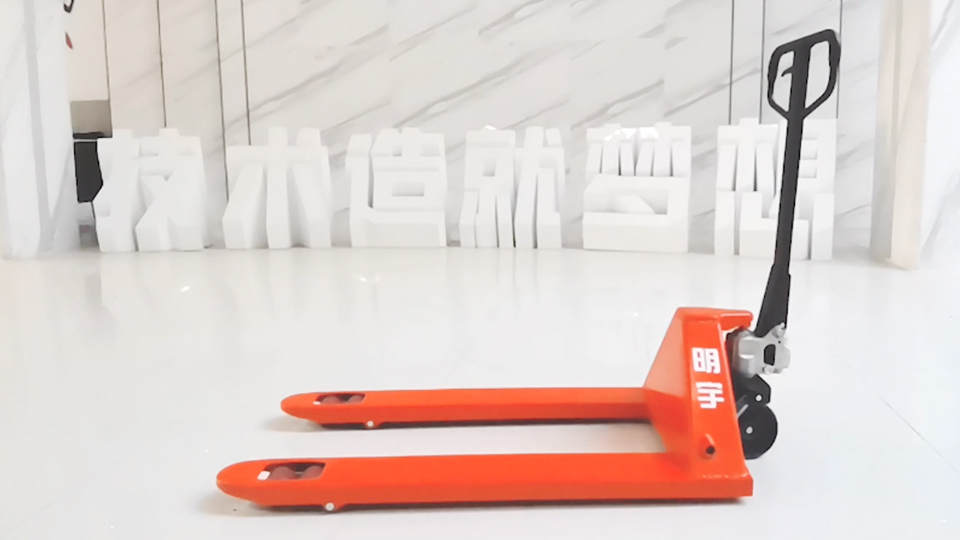
Stress Fractures: Inspect the "heel" of the fork—the 90-degree bend where the fork meets the upright frame. This is the most common point of structural failure. Look for hairline cracks in the paint or metal.
Fork Alignment: Ensure both forks are level with each other. If one fork is lower than the other, it indicates a bent lifting link or a damaged pivot pin. An uneven fork will cause the load to shift during transit.
Taper and Thickness: Check for "thinning" at the tips. If the forks have been dragged along concrete floors over time, the metal wears down, reducing the rated lift capacity.
2. Hydraulic System Analysis
The hydraulic unit is the heart of the pallet truck. A failure here can lead to a "dropped load," which poses a significant crush risk to the operator’s feet.
The Static Load Test:
To check the hydraulic integrity, perform a static test:
Pump the forks to their maximum height (without a load).
Wait for 20 seconds.
Observe if the forks "creep" downward.
Technical Insight: If the forks sink without the release trigger being pulled, the O-ring seals or the release valve are likely failing. This truck should be tagged "Out of Service" immediately, as it cannot be trusted to hold a heavy pallet securely.
Fluid Leaks:
Inspect the base of the hydraulic ram. Any presence of "sweating" or oil pooling indicates a seal breach. Not only does this compromise lifting power, but hydraulic fluid on a warehouse floor creates a severe slip hazard.
3. Wheel and Bearing Examination
The wheels are the only points of contact with the floor. Because they are small, they rotate at much higher RPMs than larger vehicle tires, leading to rapid heat buildup and wear.
Load Rollers (Front):
Debris Check: These wheels are prone to picking up "swarf" (metal shavings), nails, or discarded plastic pallet wrap. Debris can seize the bearing, causing the wheel to slide rather than roll, which damages the floor.
Flat Spots: If a truck is frequently braked hard or dragged while the wheels are locked, "flat spots" develop. This causes excessive vibration, which can destabilize fragile loads.
Steer Wheels (Back):
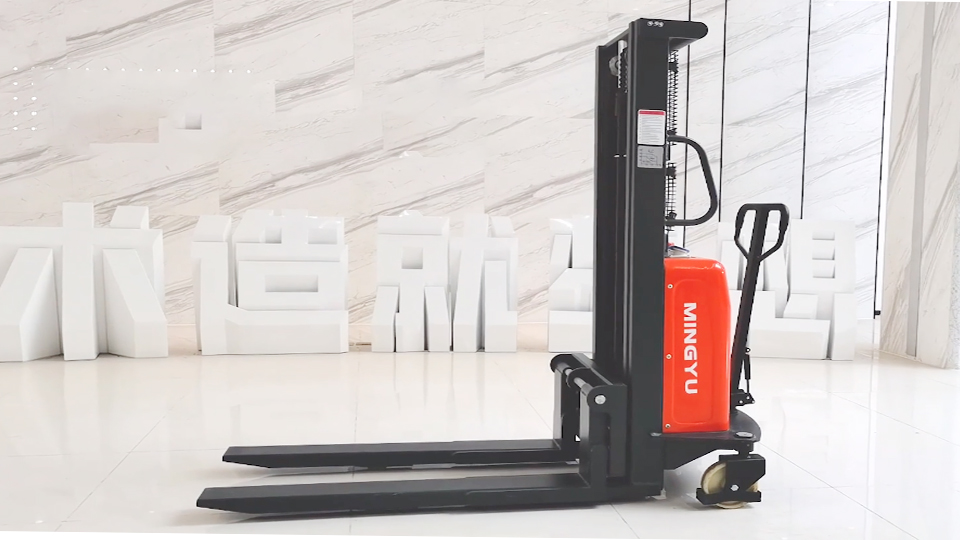
Polyurethane Integrity: Check for "chunking"—where pieces of the wheel tread have broken off. This usually happens when driving over dock levelers or uneven expansion joints.
4. Control Interface and Ergonomics
The handle (or tiller) is the operator’s only means of steering and braking. Any "play" or looseness in the handle assembly can lead to inaccurate steering in tight aisles.
Manual Trucks:
The Three-Position Lever: Verify that the handle clicks clearly into Drive, Lift, and Lower. If the neutral position (Drive) is hard to find, the control rod inside the handle may be stretched or misaligned.
Spring Return: Ensure the handle automatically returns to the upright position when released. A handle that falls to the floor is a major tripping hazard.
Electric Trucks (Power Jacks):
Belly Button Switch: This is the most critical safety feature on a powered jack. When pressed, the truck should instantly reverse direction. Test this at low speed.
Dead-man Brake: Ensure that when the tiller arm is fully vertical or fully horizontal, the electromagnetic brake engages.
Battery Connectors: Check for corrosion or "pitting" on the battery plugs. Corroded terminals can cause arcing, which is a fire risk during charging.4
5. Capacity and Safety Signage
Every pallet truck has a data plate. This is not a suggestion; it is a legal engineering limit.
Legibility: If the capacity plate is painted over, scratched, or missing, the truck is non-compliant. The operator must know exactly how much weight the machine can handle (e.g., 2,500kg).
Warning Decals: Ensure "No Rider" and "Keep Feet Clear" stickers are visible. These serve as constant psychological reinforcement of safety protocols.
The Pre-Use Inspection Summary Table
|
Component |
Check For |
Criticality |
|
Forks |
Cracks, Bending, Thinning |
High (Structural) |
|
Hydraulics |
Leaks, "Creeping" downward |
High (Safety) |
|
Wheels |
Flat spots, Seized bearings |
Medium (Efficiency) |
|
Handle |
Loose steering, Lever function |
Medium (Control) |
|
Safety Button |
Instant motor reversal (Electric) |
High (Life-Saving) |
Conclusion
A pallet truck is a heavy-duty industrial tool, not a toy. Spending three minutes at the start of a shift to perform these technical checks can prevent hours of downtime and, more importantly, life-altering injuries. If any of the above checks fail, the rule is simple: Tag it, Bag it, and Report it.
Name: selena
Mobile:+86-13176910558
Tel:+86-0535-2090977
Whatsapp:8613181602336
Email:vip@mingyuforklift.com
Add:Xiaqiu Town, Laizhou, Yantai City, Shandong Province, China
