
vip@mingyuforklift.com
+86-0535-2090977

1. Introduction
The scale of the secondary forklift market and why procurement of used equipment is a strategic decision
Balance between capital savings and operational risk
Article scope: a systematic framework for evaluating, sourcing, and acquiring pre-owned forklifts that meet safety, productivity, and total cost of ownership (TCO) targets
2. Strategic Rationale: New vs. Used
Depreciation curves: steepest value loss in years 1–3
Typical cost differential: 30–50% savings for late-model used units
Scenarios where used procurement makes sense (seasonal demand, backup fleets, budget constraints)
Scenarios where new is justified (high-hour continuous operations, specialized attachments, warranty-critical uptime)
Market dynamics: lease returns, fleet refreshes, and auction supply channels
3. Defining Operational Requirements Before Sourcing
Capacity and load center specifications based on heaviest anticipated loads
Lift height and mast type (duplex, triple, quad) matched to racking configurations
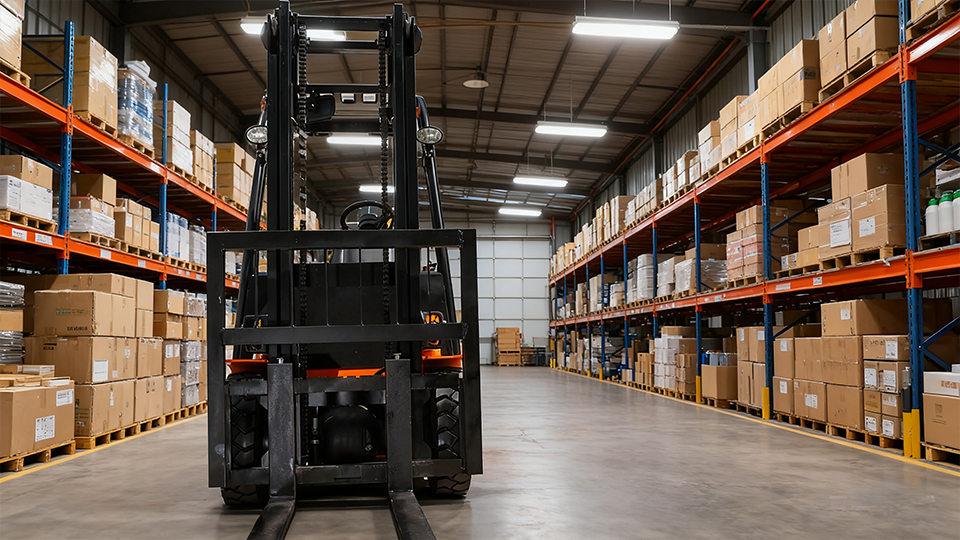
Indoor vs. outdoor duty: cushion vs. pneumatic tire selection
Fuel/power source trade-offs: diesel, LPG, electric (battery age considerations for used electrics)
Attachment needs: side shifters, fork positioners, clamps, and their compatibility with target units
Aisle width and turning radius constraints
4. Physical Inspection Framework
Frame and chassis: Crack inspection at steer axle mounts, counterweight welds, and mast channels; evidence of prior accidents or field repairs
Mast and carriage: Fork heel thickness measurement (wear limits), chain elongation, roller condition, carriage side-play
Hydraulics: Cylinder rod scoring, seal leaks at lift and tilt cylinders, hose condition and dating
Engine/drivetrain (IC trucks): Compression test benchmarks, exhaust smoke diagnosis (blue vs. black), transmission shift quality, differential noise
Electric powertrain: Battery cell voltage variance, charger compatibility, motor brush wear, controller fault history
Tires: Tread depth, chunking, bonding separation; cost impact of immediate replacement
Operator compartment: Seat suspension, overhead guard integrity, pedal and control responsiveness
5. Operational Testing and Performance Verification
Drive test: acceleration, braking effectiveness, steering drift, inching pedal modulation
Lift test: full-height lift speed, drift-down measurement (5-minute hold test), smoothness of mast staging
Tilt and attachment function: side-shift travel range, clamp pressure consistency
Noise and vibration baseline: abnormal gear whine, mast shudder, or axle chatter
Leak inspection after sustained operation: hydraulics, engine, radiator, differential
6. Hour Meter Verification and Maintenance History Analysis
Hour meter tampering risks: comparing wear patterns to displayed hours
Maintenance log evaluation: OEM parts usage, interval adherence, major component overhauls
Oil analysis history as evidence of internal engine condition
Software diagnostic downloads for electronically controlled units (fault code history, regen cycles)
Interpreting "reconditioned" vs. "as-is" classifications from sellers
7. Total Cost of Ownership Modeling
Acquisition price vs. first-year maintenance reserve (rule-of-thumb: $1–$3 per operating hour for used units)
Battery replacement cost amortization (for electric units: often 25–40% of used purchase price)
Tire replacement, fluid changes, and filter schedules
Downtime cost risk: probability-weighted lost productivity from unplanned repairs
Residual value projection at planned disposal horizon
8. Sourcing Channels and Vendor Due Diligence
Authorized dealers: certified pre-programs, limited warranties, trade-in transparency
Independent resellers: price advantages vs. inconsistent reconditioning standards
Auctions and liquidation: highest risk/reward; need for pre-bid inspection discipline
Private sales: direct fleet disposals; verifying lien-free title and OSHA compliance history
Evaluating seller credibility: facility inspection, parts availability, and service network access
9. Documentation, Compliance, and Post-Acquisition Actions
Title transfer, lien verification, and serial number confirmation
Safety standard compliance: ANSI/ITSDF B56.1 inspection upon receipt
Operator familiarization and any required training for new controls or attachments
Integration into fleet management systems: maintenance scheduling, hour tracking, and parts inventory
10. Conclusion
Summary: successful used forklift procurement is a function of disciplined inspection, accurate needs-matching, and TCO-driven decision-making rather than lowest purchase price
Final recommendation: use a standardized scorecard to objectify subjective condition assessments and align cross-functional stakeholders (operations, finance, safety)
Name: selena
Mobile:+86-13176910558
Tel:+86-0535-2090977
Whatsapp:8613181602336
Email:vip@mingyuforklift.com
Add:Xiaqiu Town, Laizhou, Yantai City, Shandong Province, China
