
vip@mingyuforklift.com
+86-0535-2090977

1. Introduction
Definition of load factor in material handling context (ratio of actual load to rated capacity)
Fuel economy as a critical operational cost and sustainability metric for diesel forklift fleets
The gap between manufacturer-rated fuel consumption and real-world warehouse performance
Article scope: quantifying how varying load factors influence hourly fuel consumption under typical indoor warehouse duty cycles
2. Defining Load Factor in Forklift Operations
Mathematical definition: Load Factor = Actual Load (kg) / Rated Capacity (kg) × 100%
Typical load factor ranges observed in warehouse settings:
Light duty: 25–40% (picking, partial pallets)
Standard duty: 40–60% (full pallets, moderate stacking)
Heavy duty: 60–85% (near-capacity lifting, bulk loads)
Distinction between static load factor (weight on forks) and dynamic load factor (including hydraulic lift demands and acceleration loads)
Measurement methodologies: onboard telematics, fuel flow meters, and standardized test cycles (VDI 2198)
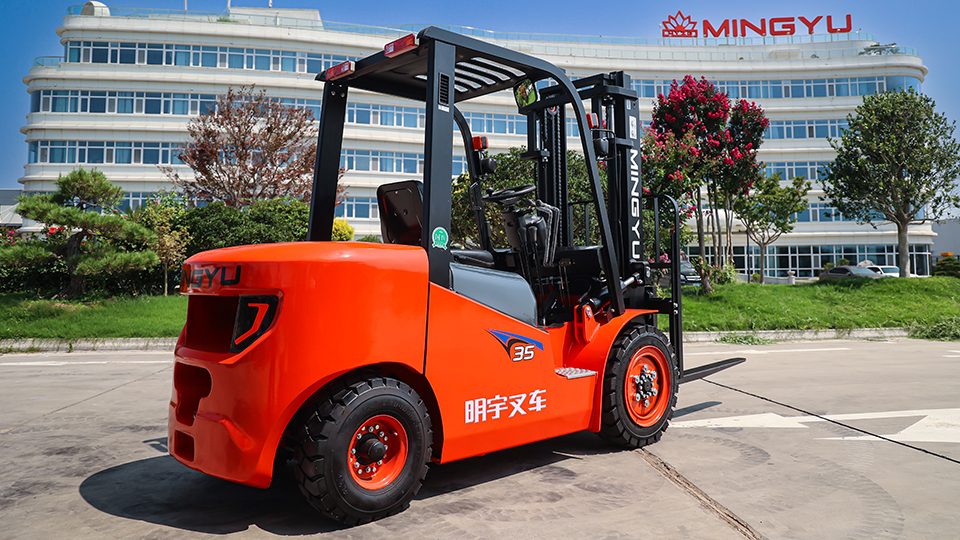
3. Baseline Fuel Consumption Mechanics of Diesel Forklifts
Diesel engine power curve and specific fuel consumption (g/kWh) characteristics
Constant parasitic loads: engine idle, cooling fan, alternator, and base hydraulic pressure
Propulsion vs. lifting energy demands: which dominates fuel draw in warehouse cycles
Manufacturer-rated consumption vs. real-world variance: why rated values often assume idealized 50–60% load factors
4. The Physics: How Load Factor Directly Impacts Fuel Draw
Rolling resistance and traction: linear relationship between axle load and tire deformation
Hydraulic system energy: lifting heavier loads requires higher pump pressure and flow rate
Engine operating point migration: low loads push engines below optimal efficiency bands; excessive loads trigger enrichment modes
Quantified impact ranges:
25% load factor: 0.6–0.9 gal/hr (3,000–5,000 lb class)
50% load factor: 0.9–1.3 gal/hr
75% load factor: 1.3–1.8 gal/hr
90%+ load factor: 1.8–2.4 gal/hr (with sharp increase due to hydraulic demand)
The non-linear curve: diminishing efficiency returns above 70% load factor
5. Warehouse Duty Cycles and Load Factor Distribution
Typical warehouse operational patterns: put-away, replenishment, order picking, cross-docking
VDI 2198 energy consumption test cycle as a benchmark vs. actual duty cycles
Idle time proportion: 30–50% of engine runtime in typical warehouses masks load factor effects
Travel distance per hour and its interaction with load factor (loaded vs. empty travel splits)
Case study framework: comparing a high-velocity e-commerce warehouse (short cycles, variable loads) vs. a bulk storage facility (long transport, stable heavy loads)
6. Interacting Variables That Amplify or Dampen Load Factor Effects
Mast lift height: multiplying effect on hydraulic energy at high load factors
Acceleration aggressiveness: inertial loads adding transient demand beyond static load factor
Floor surface and grade: even slight ramps disproportionately increase fuel draw under load
Ambient temperature: cold-start enrichment and hydraulic fluid viscosity
Tire type and inflation: cushion vs. pneumatic tires altering rolling resistance coefficients
7. Measurement, Modeling, and Fleet Management Implications
Telematics-based fuel monitoring: correlating GPS, hydraulic pressure sensors, and engine CAN data
Predictive fuel modeling: adjusting fleet cost projections based on historical load factor distributions
Right-sizing equipment: avoiding fuel waste from using oversized forklifts for light-load tasks
Operator training effects: how lifting technique and travel speed modify effective load factor energy demand
Maintenance correlation: clogged air filters and worn injectors exaggerating fuel sensitivity to load
8. Comparative Context: Load Factor Sensitivity Across Powertrains
Brief contrast with electric forklifts: battery discharge rates under load (Peukert effect)
Why diesel engines show steeper fuel economy degradation at high load factors compared to electric motors
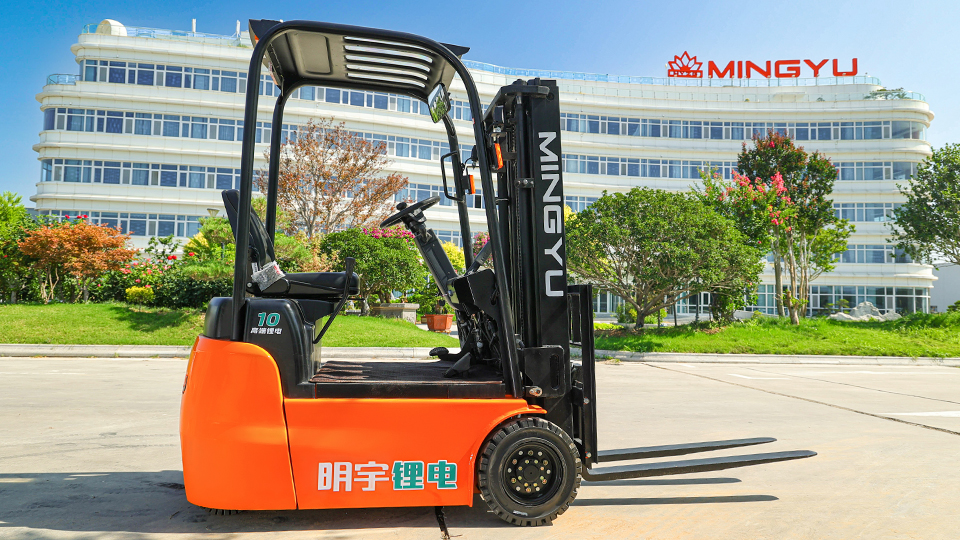
Implications for hybrid or future hydrogen fuel cell alternatives
9. Conclusion
Summary: load factor is a primary but non-linear driver of diesel forklift fuel economy, with warehouse operations typically seeing 40–100% fuel consumption variation between 25% and 90% load factors
Key insight: optimizing load factor distribution through task allocation and right-sizing yields greater fuel savings than marginal engine efficiency improvements
Final recommendation: treat load factor as a core variable in fleet fuel budgeting and carbon footprint calculations
Name: selena
Mobile:+86-13176910558
Tel:+86-0535-2090977
Whatsapp:8613181602336
Email:vip@mingyuforklift.com
Add:Xiaqiu Town, Laizhou, Yantai City, Shandong Province, China
