
vip@mingyuforklift.com
+86-0535-2090977

Introduction
The global forklift industry stands at a pivotal inflection point in 2026, shaped by converging forces of electrification, automation, e-commerce expansion, and evolving regulatory landscapes. As the backbone of material handling across manufacturing, logistics, warehousing, and retail sectors, forklifts represent a critical capital equipment category whose market dynamics reflect broader industrial and economic trends. This article examines the current market status, regional distribution, technological trajectories, and competitive dynamics of the global forklift industry, with particular attention to China's dominant position as both the world's largest market and primary manufacturing hub.
Global Market Scale and Growth Trajectory
The global forklift market has demonstrated robust expansion, with valuations reflecting sustained demand across industrial sectors. According to Grand View Research, the global forklift market size reached USD 81.4 billion in 2025 and is projected to grow from USD 91.8 billion in 2026 to USD 212.6 billion by 2033, representing a compound annual growth rate (CAGR) of 12.7 percent. Alternative market analyses from Research Nester position the 2025 market at USD 81.7 billion, with 2026 estimated at USD 92.4 billion and a projected reach of USD 279.7 billion by 2035 at a 13.1 percent CAGR.
These figures underscore the forklift industry's transition from a mature industrial equipment sector to a technology-driven growth market. The expansion is fueled by multiple demand drivers: the proliferation of e-commerce fulfillment centers requiring high-density material handling, manufacturing reshoring initiatives creating new factory floor demand, and infrastructure investments generating construction and port handling requirements. The U.S. Department of Transportation data indicates freight shipments across all modes exceeded 55.5 million tons, reinforcing the need for efficient intra-logistics equipment to manage high cargo volumes.
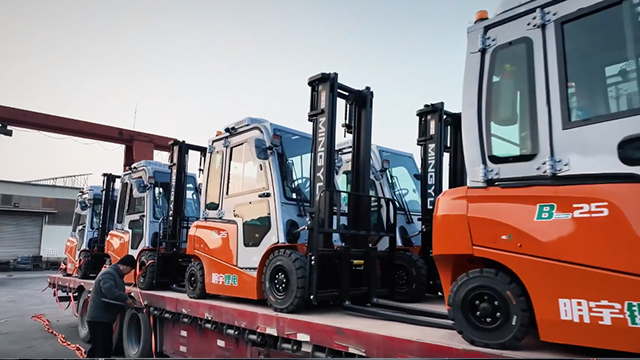
Regional distribution reveals Asia Pacific as the dominant market, holding approximately 49.0 percent of global revenue in 2025. Europe accounted for 31.4 percent with USD 27.16 billion, while North America contributed 18.0 percent at USD 15.56 billion. The Middle East and Africa represented 0.7 percent, and Latin America 1.8 percent of global demand. These proportions reflect the concentration of manufacturing capacity, logistics infrastructure investment, and e-commerce penetration across regions.
China's Market Dominance and Manufacturing Supremacy
China occupies a uniquely dominant position in the global forklift ecosystem, functioning simultaneously as the largest single market, the primary manufacturing base, and the leading exporter of forklift products. According to Coherent Market Insights, China leads the forklift truck market with an 18.6 percent share in 2026, driven by rapid industrialization, large-scale manufacturing, and rising automation in logistics. Government initiatives such as Made in China 2026 and smart factory development programs have accelerated demand for electric and automated forklifts across the country's expansive industrial sector.
The scale of China's forklift market is staggering. Coherent Market Insights reports that China alone added over 800,000 forklifts in a single year, reflecting both replacement demand and fleet expansion across manufacturing, shipping, and warehousing sectors. Major domestic e-commerce platforms including JD.com and Alibaba's Cainiao Network are deploying intelligent material handling systems and autonomous forklift fleets at scale, creating sustained demand for advanced equipment. JD.com scaled its automated warehouse network significantly in 2024, while Cainiao continues expanding smart logistics parks with integrated autonomous forklift operations.
China's manufacturing dominance extends beyond domestic consumption to global supply. The country serves as the world's primary manufacturer of lithium-ion battery cells for electric forklifts, with major production concentrated in Guangdong and Jiangsu provinces. Companies such as BYD and CATL produce much of the global lithium battery output, supplying both domestic forklift manufacturers and international OEMs. This vertical integration from battery cells to complete equipment gives Chinese manufacturers significant cost and supply chain advantages.
The competitive landscape within China features both established domestic champions and international players. Anhui Heli and Hangcha Group rank among the world's largest forklift manufacturers by volume, competing effectively against global leaders such as Toyota Industries, KION Group, and Jungheinrich. Chinese manufacturers have historically dominated the internal combustion engine segment while rapidly expanding electric forklift production to meet domestic and export demand. The government's industrial electrification initiatives and emissions reduction mandates continue accelerating the shift from diesel and LPG-powered equipment to electric alternatives.
Electrification: The Defining Market Trend
The transition from internal combustion to electric power represents the most significant structural shift in the forklift industry. Electric forklifts captured the largest market revenue share globally in 2025 and are projected to account for 58.4 percent of the market by 2035 according to Research Nester. The electric forklift market specifically is forecast to grow from USD 48.05 billion in 2026 to USD 83.38 billion by 2032 at a 9.6 percent CAGR.
Multiple factors drive this electrification trajectory. Regulatory pressure intensifies globally, with the U.S. Environmental Protection Agency's GHG Reporting Program pushing Scope 1 emissions reduction that favors electric forklifts. California's Air Resources Board has implemented zero-emission forklift mandates that set precedents for nationwide adoption. In Europe, the European Union's carbon reduction goals and stringent environmental regulations accelerate the transition from diesel and gas-powered equipment.
Economic factors complement regulatory drivers. Modern lithium-ion forklifts offer lower maintenance requirements, reduced downtime, and longer operating cycles compared to traditional lead-acid or internal combustion engine units. The total cost of ownership advantage of electric equipment improves as battery technology advances and fossil fuel costs escalate. Workplace sustainability initiatives and corporate ESG commitments further tilt procurement decisions toward electric alternatives.
Battery technology evolution underpins the electrification trend. While lead-acid batteries held the largest revenue share in 2025, lithium-ion systems are the fastest-growing segment, having captured 54.62 percent of the U.S. forklift battery market in 2025 with a projected CAGR of 13.85 percent through 2031. Lithium-ion advantages include faster charging, opportunity charging capability, longer cycle life, and elimination of maintenance tasks such as watering and equalization. The development of fast-charging, opportunity-charging, and battery-as-a-service (BaaS) models provides fleet operators with enhanced charging flexibility and improved equipment uptime.
Automation and Autonomous Operations
The integration of automation technologies represents the second major transformative trend reshaping the forklift industry. The autonomous forklift market has grown rapidly, expanding from USD 7.84 billion in 2025 to an estimated USD 8.76 billion in 2026 at an 11.7 percent CAGR, with projections reaching USD 13.79 billion by 2030.
Autonomous forklifts address multiple operational challenges simultaneously: labor cost escalation, operator availability constraints, safety incident reduction, and throughput optimization. The proliferation of automated warehouses, automated guided vehicles (AGVs), and autonomous mobile robots (AMRs) creates demand for high-performance battery systems and intelligent fleet management platforms capable of sustaining 24/7 operations. Major retailers and logistics operators are investing substantially in warehouse automation—Walmart announced plans to spend up to USD 200 million on autonomous forklifts via Fox Robotics across distribution centers, while Amazon continues expanding robotics-enabled warehouses in the United States.
Safety technology integration extends beyond full autonomy to enhance conventional forklift operations. The intelligent forklift safety system market was valued at USD 956 million in 2025 and is projected to reach USD 1.87 billion by 2034 at a 10.3 percent CAGR. These systems employ perception, early warning, and linkage control methodologies using LiDAR, ultrasonic sensors, and cameras to detect pedestrians and obstacles, monitor vehicle speed and fork height, and implement automatic deceleration or emergency braking when hazards are detected.
Telematics and fleet management platforms have emerged as essential infrastructure for modern forklift operations. Real-time monitoring of equipment utilization, battery health, fault diagnostics, and driving behavior enables predictive maintenance strategies, reduced downtime, and optimized fleet performance. AI-powered analytics and connected fleet dashboards improve operational decision-making and resource allocation, advancing the development of self-optimizing warehouse environments.
Segment and End-Use Dynamics
Market segmentation reveals distinct growth patterns across equipment categories. By forklift class, Class 3 trucks—encompassing electric pallet jacks and stackers—dominated with a 45.3 percent revenue share in 2025, reflecting the explosive growth of e-commerce fulfillment requiring high-volume, low-lift material handling. Class 2 narrow-aisle trucks led the U.S. market with 32.45 percent share, while Class 1 counterbalanced electrics are projected to grow at 9.12 percent CAGR through 2031.
Load capacity segmentation shows the 5-15 ton band accounting for the largest revenue share in 2025, while the below-5-ton segment is the fastest-growing capacity category, supported by widespread adoption across warehouses and logistics centers alongside cost-efficient fleet expansion needs. The sub-5-ton models accounted for 44.35 percent of the U.S. market in 2025.
End-use industry analysis identifies the industrial segment as the largest market in 2025, while retail and e-commerce represent the fastest-growing category. Logistics commanded 27.65 percent of 2025 U.S. revenue, with retail and e-commerce growing at 12.11 percent CAGR through 2031. The warehouse and distribution center segment is expected to capture the highest global market share in 2026, driven by the surge in e-commerce, retail, and third-party logistics operations requiring efficient material handling for high-volume goods. The rise of same-day and next-day delivery models has further increased the need for speed, precision, and automation in warehouses.
Regional Market Developments
North America is projected to emerge as the fastest-growing regional market, expanding at a 5.8 percent CAGR from 2026 to 2035. The region benefits from warehouse capacity expansion, e-commerce logistics demand, and fleet electrification mandates. The United States market specifically is projected to reach USD 12.3 billion by 2026, driven by strong manufacturing infrastructure, large logistics networks, and modern warehousing facilities. OSHA enforcement of powered industrial truck safety standards increases replacement cycles, while approximately 4.5 million forklift operators across more than 300 industries sustain baseline equipment demand.
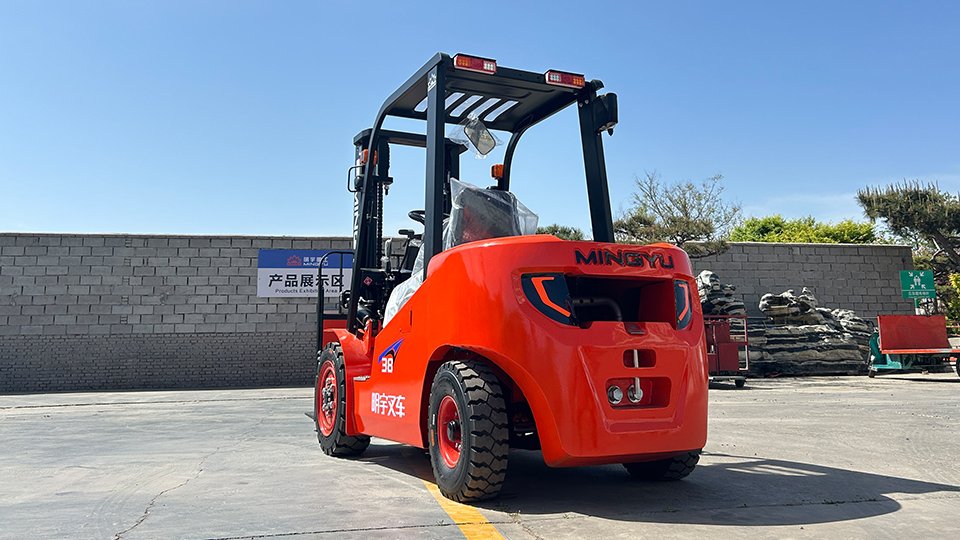
Europe's market evolution reflects regulatory changes, technological advancements, and growing e-commerce activities. Germany held a substantial market share in 2025, shaped by its strong industrial base, stringent environmental regulations, and advancements in automation. The United Kingdom market is projected to reach USD 6.62 billion by 2026, while Germany approaches USD 9.54 billion. KION Group's investment of approximately USD 11.9 million in fuel cell system development for industrial trucks exemplifies European innovation in alternative powertrains.
Asia Pacific's dominance is underpinned by expanding manufacturing activities, rising e-commerce penetration, and strong government infrastructure investments. Japan maintains over 250,000 battery-powered forklifts in operation and continues innovating logistics automation. India's battery-powered forklift fleet has exceeded 200,000 units, with logistics infrastructure expanding rapidly. Warehouse developer IndoSpace announced plans to boost investment in Tamil Nadu by 41 percent, reflecting rising demand for industrial parks serving e-commerce, automotive, and FMCG manufacturers.
Competitive Landscape and Strategic Developments
The global forklift market exhibits high competitive intensity, with four global OEMs controlling approximately 80 percent of worldwide shipments. Key players include Toyota Industries Corporation, KION Group, Mitsubishi Logisnext, Jungheinrich AG, Hyster-Yale Materials Handling, Crown Equipment Corporation, Anhui Heli, Hangcha Group, and Doosan Corporation. Differentiation is widening between premium autonomous fleets and price-pressured conventional trucks, with after-sales support rated equal to equipment performance by 88 percent of purchasers.
Recent strategic developments illustrate industry trajectories. In September 2025, LGMG held its first Global Customer Festival in Jinan, launching new aerial work platforms and forklifts demonstrating Chinese manufacturing momentum. In July 2025, Toyota Material Handling Japan and Fujitsu announced joint development of Japan's first cloud-based forklift safety evaluation service using AI. In August 2026, Linde Material Handling unveiled the Xi-Roadster electric counterbalance forklift with overhead guard designs eliminating traditional A-pillars to improve visibility. Toyota Material Handling Europe launched its Traigo48 series in February 2025, offering 1.5-2.0 ton capacities with lithium-ion or lead-acid options and Toyota's SyncoDrive system for up to 18 percent energy savings.
Challenges and Constraints
Despite robust growth prospects, the forklift industry faces significant challenges. Supply chain bottlenecks for lithium batteries constrain electrification pace, particularly as demand from electric vehicles and energy storage systems competes for limited cell production capacity. Technology complexity of automation integration creates implementation barriers for mid-sized operations lacking technical expertise. Grid-upgrade constraints limit charging infrastructure deployment in older facilities, though battery-buffer systems provide interim solutions.
Skilled operator shortages temper growth across regions, addressed through workforce training investments and semi-autonomous functions that reduce operator skill requirements. Safety concerns remain prominent, with OSHA reporting 67 forklift-related workplace fatalities in 2023 and over 2,400 citations under the Powered Industrial Truck Standard in fiscal year 2024. These statistics drive investment in safer, compliant, and technologically enhanced forklift fleets.
Conclusion
The global forklift market in 2026 is characterized by unprecedented scale, rapid technological evolution, and shifting geographic dynamics. China's dual role as dominant market and manufacturing powerhouse shapes competitive strategies across the industry. Electrification, led by lithium-ion battery adoption, is transforming fleet compositions and total cost structures. Automation and autonomous operation technologies promise to redefine material handling efficiency while addressing labor constraints. E-commerce and logistics expansion sustains demand growth across all regions, with North America emerging as the fastest-growing market.
Organizations navigating this dynamic landscape must balance immediate operational requirements with long-term technology trajectories. The convergence of electric powertrains, autonomous capabilities, and intelligent fleet management creates both opportunities and complexity. Success in the evolving forklift market will accrue to manufacturers and operators who effectively integrate these technologies while maintaining the reliability, safety, and cost efficiency that remain fundamental to material handling operations worldwide.
Name: selena
Mobile:+86-13176910558
Tel:+86-0535-2090977
Whatsapp:8613181602336
Email:vip@mingyuforklift.com
Add:Xiaqiu Town, Laizhou, Yantai City, Shandong Province, China