
vip@mingyuforklift.com
+86-0535-2090977

Introduction
The global forklift industry operates as a deeply interconnected trade ecosystem, with manufacturing concentrated in Asia, demand distributed across industrialized and emerging economies, and supply chains spanning continents through complex export-import relationships. International trade in forklifts and their components represents a significant segment of capital goods commerce, influenced by tariff regimes, regulatory harmonization, currency fluctuations, and geopolitical developments. Understanding the trade dynamics of this sector is essential for manufacturers seeking global market access, distributors optimizing procurement strategies, and policymakers evaluating industrial competitiveness. This article examines the current state of forklift international trade, with particular focus on China's export dominance, major trade corridors, tariff and non-tariff barriers, and the strategic responses of industry participants to an evolving global trade environment.
China's Export Supremacy: Scale and Trajectory
China has established itself as the undisputed center of global forklift manufacturing and export, a position built on decades of industrial development, supply chain integration, and competitive cost structures. The scale of Chinese forklift exports is remarkable by any measure. In 2025, China's forklift export volume reached 545,000 units, representing a year-on-year increase of 13.4 percent and setting a new historical export record for the twenty-second consecutive month. This figure represents a staggering transformation from a decade prior, when Chinese forklift exports totaled merely 92,000 units—a growth of 492 percent over ten years, yielding a compound annual growth rate of 19.47 percent.
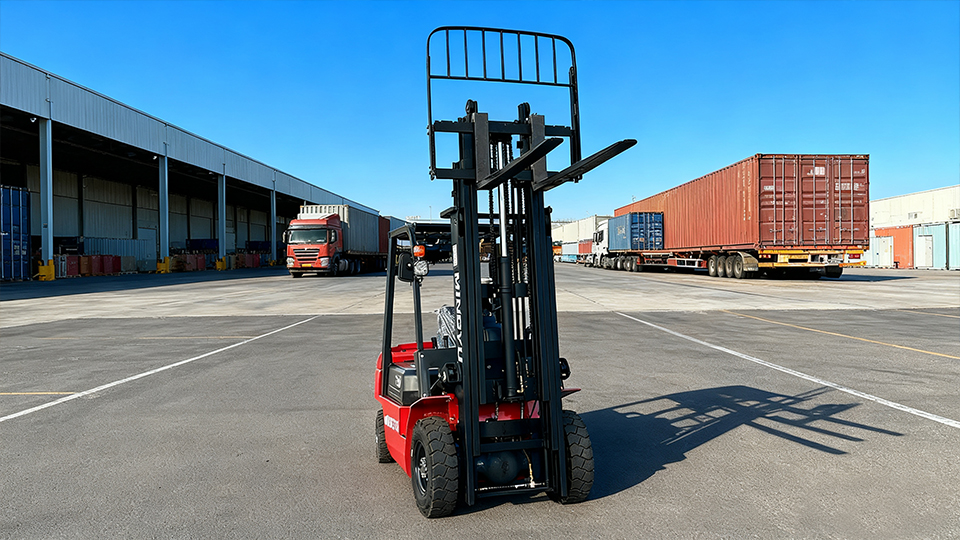
The structural composition of Chinese forklift exports has evolved significantly alongside volume growth. Electric forklifts now dominate the export mix, accounting for 78.81 percent of total export volume in 2025. This electric share precisely aligns with global green transformation imperatives, demonstrating that Chinese manufacturers have successfully transitioned from diesel-focused production to electric alternatives that meet international demand. The export product structure continues upgrading, with overseas markets—particularly developed economies—increasingly demanding high-end electric and intelligent forklift models.
Electric pedestrian storage vehicles (Class III) have emerged as the dominant export category, with sales reaching approximately 866,600 units in 2025 and representing 62.2 percent of total export volume. This category's dominance reflects the explosive growth of e-commerce fulfillment infrastructure globally, where lightweight, efficient, and electrified warehousing equipment has become the absolute mainstream. The proportion of traditional forklifts without storage vehicles in exports grew at only 5.46 percent, far below the industry average, confirming the structural shift toward specialized warehouse equipment.
Regional distribution of Chinese exports reveals diversified market penetration. In 2025, exports to Europe achieved significant growth of 36 percent, while exports to Asia grew 23.88 percent. The European market's strong growth indicates that Chinese manufacturers are successfully penetrating developed economy markets, moving beyond emerging economy price-sensitive segments. Counterbalance forklift exports specifically reached 667 shipments over a twelve-month period ending May 2025, with growth of 104 percent compared to the preceding year, destined primarily for Mexico, Vietnam, and India. Diesel forklift exports totaled 13,008 shipments over the same period, with Russia, Vietnam, and Turkey as leading destinations.
Global Trade Corridors and Regional Flows
International forklift trade follows distinct corridors shaped by manufacturing location, regional demand patterns, and trade agreements. The primary flow originates from East Asian manufacturing hubs—principally China, Japan, and South Korea—toward demand centers in North America, Europe, and Southeast Asia. Secondary corridors connect European manufacturers such as Germany, Sweden, and the United Kingdom to markets within the European Union, North America, and developing regions undergoing industrialization.
China's export dominance extends across all major forklift categories. In counterbalance forklifts, China ranks as the world's second-largest exporter behind the United States, with 1,168 shipments compared to 2,421 U.S. shipments in the twelve months ending May 2025. However, in diesel forklifts specifically, China leads global exports with 35,862 shipments, followed by Japan with 12,956 shipments and Vietnam with 1,051 shipments. This diesel leadership reflects China's continued strength in internal combustion engine forklift manufacturing even as the industry transitions toward electrification.
The import side of global forklift trade reveals different dynamics. Vietnam emerges as the world's leading importer of forklift manufacture products, with 35,422 shipments, followed by Uzbekistan with 2,206 shipments and Russia with 1,718 shipments. This import pattern reflects Vietnam's rapidly expanding manufacturing sector, which requires substantial material handling equipment to support production and export activities. The concentration of imports in emerging Asian economies underscores the regional shift of manufacturing capacity from traditional industrial centers to lower-cost locations.
Spare parts trade represents a significant and growing component of forklift international commerce. Global imports of spare parts for forklifts from China totaled 51,260 shipments over a trailing twelve-month period, supplied by Chinese exporters to 1,915 buyers worldwide. India leads global spare parts imports with 55,299 shipments, followed by Indonesia with 22,375 shipments and the United States with 9,707 shipments. This spare parts flow creates ongoing trade relationships beyond initial equipment sales, generating recurring revenue streams for exporters and ensuring operational continuity for importers.
Tariff Barriers and Trade Policy Impacts
Tariff regimes significantly influence forklift trade flows, pricing structures, and competitive dynamics. The United States has imposed 25 percent Section 301 tariffs on certain categories of Chinese-made heavy machinery, including forklifts, directly impacting export volumes from China to the U.S. market. These tariffs increase landed costs for American importers, translating to approximately 5-10 percent increases in average selling prices for end-users. The tariff impact has prompted some manufacturers to reconsider supply chain strategies, absorb costs through margin compression, or explore alternative manufacturing locations to maintain market access.
The tariff impact extends beyond complete forklifts to components and batteries. The 25 percent U.S. tariffs on certain goods from China include some battery components, directly increasing the landed cost of lithium iron phosphate (LFP) forklift batteries for American importers. This cost increase potentially slows electric forklift adoption or encourages local assembly operations to mitigate tariff impacts. Battery trade data confirms China's dominance in this segment, with China leading global exports of forklift batteries under HSN code 85044090 with 963 shipments, followed by Italy with 197 shipments and Vietnam with 143 shipments.
Free trade agreements create alternative trade corridors that circumvent tariff barriers. The European Union's single market facilitates tariff-free trade among member states, encouraging robust intra-regional forklift commerce. The USMCA agreement between the United States, Mexico, and Canada similarly eliminates or reduces duties on qualifying goods, influencing sourcing decisions for North American market access. The anticipated EU-Mercosur Free Trade Agreement, expected to take effect in May 2026, will eliminate 90 percent of tariff barriers between European and South American markets, potentially eroding the price advantage of Chinese forklifts in South America as European brands gain tariff-free access.
Non-tariff barriers present additional trade obstacles that can be equally consequential as formal tariffs. Stringent safety certifications, emission standards such as EU Stage V, and technical specifications create entry hurdles that favor manufacturers with established compliance records. Complex certification processes require manufacturers to adapt products for different markets, adding compliance costs and extending time-to-market. Phytosanitary regulations for wooden pallets and packaging materials create logistical complexities for cross-border equipment shipments. These non-tariff barriers disproportionately impact smaller exporters lacking dedicated regulatory affairs capabilities.
Trade Policy Responses and Strategic Adaptations
Forklift manufacturers and exporters have developed sophisticated strategies to navigate the complex trade policy environment. Pre-booking ocean freight represents one tactical response to shipping cost volatility, with some Chinese manufacturers pre-stocking key models in overseas warehouses to shield customers from freight rate increases. Hapag-Lloyd announced a $200 per container rate increase effective May 2026, prompting exporters to secure capacity in advance and build inventory buffers in destination markets.
Local dealer network development has emerged as a critical strategy for market penetration in regions with evolving trade relationships. Following the model established by Hangcha Group, Chinese manufacturers are identifying high-potential local partners in South America, Europe, and Southeast Asia, providing deep training, spare parts support, and co-marketing programs. These local partnerships create market presence that transcends direct export relationships, building brand recognition and service capabilities that compete with established Western manufacturers.
Product positioning strategies adapt to tariff-influenced competitive dynamics. European brands such as KION and Jungheinrich traditionally focus on premium market segments, leaving a mid-market gap that Chinese manufacturers target with lithium forklift offerings positioned as high-value, high-performance alternatives for cost-conscious buyers. This positioning leverages the 35-40 percent lower total cost of ownership that Chinese lithium forklifts offer compared to European alternatives, creating compelling value propositions even where tariff-adjusted pricing narrows the initial purchase price gap.
Manufacturing location diversification represents a longer-term strategic response to tariff concentration risk. Some manufacturers have established or expanded production facilities in regions with favorable trade agreements with target markets. Vietnam's emergence as a significant forklift exporter—with 1,051 diesel forklift shipments and 75 forklift long shipments—suggests capacity expansion that may serve both domestic demand and export markets with preferential tariff treatment. This diversification reduces exposure to any single country's tariff regime while maintaining access to global markets.
Logistics and Supply Chain Considerations
The physical logistics of forklift international trade present unique challenges distinct from general cargo. Forklifts are heavy, bulky capital goods that require specialized handling, securing, and stowage during ocean transport. Container utilization efficiency affects shipping economics, with manufacturers optimizing packaging and disassembly configurations to maximize units per container. Some larger forklift models require flat-rack or breakbulk shipping, significantly increasing transportation costs compared to containerized cargo.
Shipping route selection balances cost, transit time, and reliability. The primary routes connecting Chinese manufacturing hubs to European markets traverse the Suez Canal or round the Cape of Good Hope, with transit times of 30-45 days. North American-bound shipments cross the Pacific to West Coast ports, with rail or truck distribution to inland destinations. Route disruptions—such as Red Sea shipping interruptions or Panama Canal capacity constraints—create cascading delays and cost increases that affect delivery commitments and inventory planning.
Currency exposure management is essential for international forklift trade, with transactions typically denominated in U.S. dollars, euros, or Chinese yuan. Exchange rate fluctuations between contract signing and payment settlement can significantly impact profitability, particularly for thin-margin equipment sales. Exporters employ hedging instruments, local currency pricing, or payment term adjustments to manage currency risk, while importers face corresponding exposure on the procurement side.
Regulatory Harmonization and Standards Convergence
International forklift trade is facilitated—or impeded—by the degree of regulatory harmonization between markets. Safety standards for forklift design, operation, and maintenance vary across jurisdictions, with major standards including ISO 3691 (international), ANSI B56.1 (United States), EN 1726 (Europe), and GB/T 10827 (China). While these standards share common safety objectives, specific requirements for stability, visibility, operator protection, and control systems differ in ways that necessitate market-specific design modifications or certification testing.
Electromagnetic compatibility (EMC) requirements for electric forklifts present particular compliance challenges, as emission limits and test methods vary between regulatory domains. Battery safety standards for lithium-ion systems are evolving rapidly, with UN 38.3 transportation testing, UL 2580 cell certification, and IEC 62619 industrial battery standards creating overlapping compliance obligations. Manufacturers serving multiple markets must maintain comprehensive regulatory intelligence and testing capabilities to ensure continuous compliance as standards evolve.
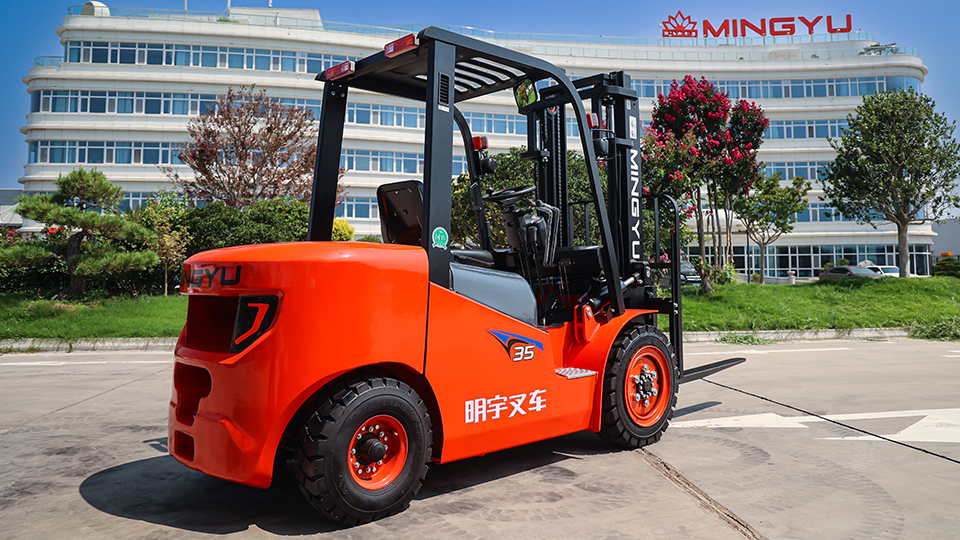
Environmental regulations increasingly influence forklift trade patterns. The European Union's Stage V emission standards for non-road mobile machinery effectively prohibit the import of non-compliant diesel forklifts, creating a regulatory barrier that favors electric equipment or advanced emission control systems. California's Air Resources Board zero-emission forklift mandates set precedents that other U.S. states may follow, progressively constraining the addressable market for internal combustion equipment. These regulatory trends reinforce the global shift toward electric forklifts that Chinese manufacturers have already embraced in their export portfolios.
Emerging Trade Dynamics and Future Outlook
Several emerging trends will reshape forklift international trade in coming years. The electrification of global forklift demand creates both opportunities and challenges for trade flows. China's dominance in lithium-ion battery cell manufacturing—concentrated in Guangdong and Jiangsu provinces with major producers including BYD and CATL—provides Chinese forklift manufacturers with integrated supply chains that Western competitors cannot easily replicate. This vertical integration advantage may strengthen China's export position even as tariff barriers on complete equipment increase.
The growth of e-commerce and logistics infrastructure in emerging economies creates new demand centers that will absorb increasing import volumes. Southeast Asia, the Middle East, Africa, and Latin America are experiencing rapid warehousing and distribution center development, generating sustained demand for material handling equipment. Chinese manufacturers, with their established export capabilities and competitive pricing, are well-positioned to serve these markets, particularly where European and Japanese brands maintain limited presence.
Automation and autonomous forklift technologies introduce new trade considerations. Autonomous forklift systems incorporate sophisticated software, sensors, and control systems that may be subject to export control regulations or data localization requirements. Cross-border data flows for fleet management, remote diagnostics, and over-the-air software updates create regulatory complexities that equipment trade alone does not encounter. Manufacturers must navigate these digital trade dimensions alongside physical equipment commerce.
Geopolitical developments continue introducing uncertainty into forklift trade relationships. Trade tensions between major economies, sanctions regimes affecting specific markets, and supply chain security concerns influence sourcing decisions and market access. The forklift industry, as a supplier of essential industrial infrastructure, is somewhat insulated from consumer-driven trade disruptions but remains exposed to broad-based tariff escalations and regulatory divergence.
Conclusion
International trade in forklifts reflects the broader dynamics of global industrial commerce: manufacturing concentration in Asia, demand dispersion across developed and emerging economies, regulatory fragmentation creating compliance complexity, and geopolitical developments introducing strategic uncertainty. China's transformation from a minor exporter to the dominant global supplier—with 545,000 units exported in 2025 and a 492 percent growth over a decade—represents one of the most significant structural shifts in capital goods trade. The electric forklift transition, with Chinese exports now 78.81 percent electric, aligns Chinese manufacturing capabilities with global green transformation imperatives.
Tariff and non-tariff barriers continue shaping competitive dynamics, with the 25 percent U.S. Section 301 tariffs and evolving European trade agreements creating both obstacles and opportunities for market participants. Strategic responses including manufacturing diversification, local partnership development, and product positioning adaptation demonstrate the industry's resilience in navigating trade policy complexity. As global logistics infrastructure expands and electrification accelerates, forklift international trade will remain a vibrant and strategically significant segment of capital goods commerce, with success accruing to manufacturers and traders who effectively balance cost competitiveness, regulatory compliance, and supply chain resilience.
Name: selena
Mobile:+86-13176910558
Tel:+86-0535-2090977
Whatsapp:8613181602336
Email:vip@mingyuforklift.com
Add:Xiaqiu Town, Laizhou, Yantai City, Shandong Province, China