
vip@mingyuforklift.com
+86-0535-2090977

Introduction: The Export Imperative for Lithium Counterbalance Forklifts
The global material handling industry is undergoing a decisive electrification shift. As warehouse logistics demand rises worldwide, 3-ton lithium counterbalance forklifts have emerged as the workhorse category for exporters targeting European, North American, and Southeast Asian markets. Unlike their lead-acid predecessors, lithium-powered units offer opportunity charging, zero emissions, and maintenance-free operation—but they also introduce a complex web of testing and certification requirements that must be satisfied before a unit can legally enter foreign commerce.
For a 3-ton lithium counterbalance forklift destined for export, the load test is not merely a quality assurance formality; it is the technical foundation upon which CE conformity, operational safety, and market access depend. This article examines the full scope of load testing—from static capacity verification and dynamic stability trials to lithium battery transport compliance—through the lens of international standards and real-world export protocols.
Understanding Rated Load and the Load Center
Before any test can begin, the concept of "rated load" must be precisely defined. A 3-ton counterbalance forklift is rated not by a single number, but by a paired parameter: rated load capacity and load center distance. The standard configuration for a 3-ton electric counterbalance truck is 3,000 kg at a 500 mm load center.
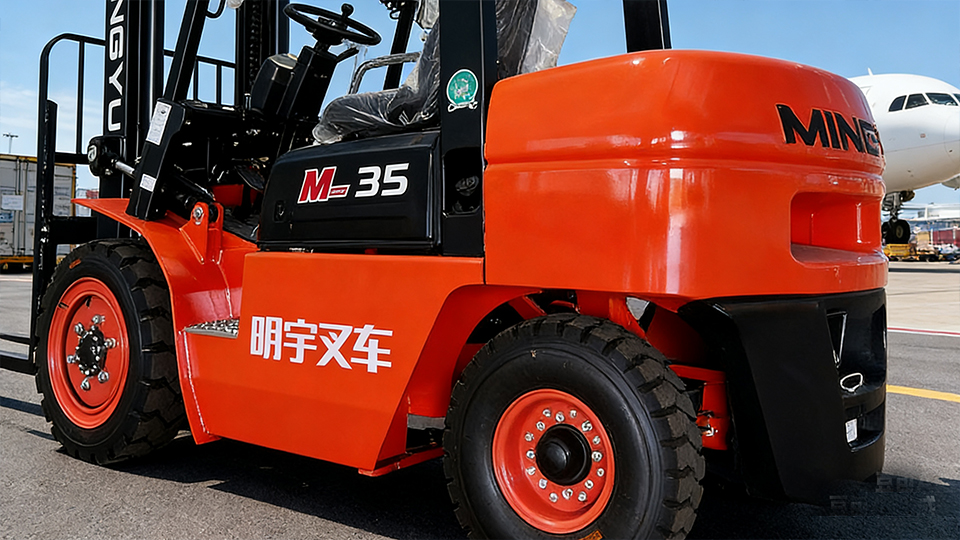
The load center distance refers to the horizontal distance from the vertical face of the fork carriage to the center of gravity of the standardized test load. This dimension is critical because it defines the moment arm against which the rear counterweight must balance. If the actual load center exceeds the rated 500 mm, the effective safe capacity drops proportionally—a fact that load testing must rigorously validate across the full range of mast heights and tilt angles.
The Regulatory Framework: ISO, FEM, and CE Conformity
Exported 3-ton lithium forklifts must satisfy a multi-layered regulatory architecture. At the product safety level, EN 1175:2020 governs the safety of electrical and electronic components of industrial trucks, including electrically actuated hydraulic valves and specifying performance levels for safety-related control systems.
For CE-marked units entering the European Union, the Technical Construction File (TCF) must include general assembly drawings, hydraulic and electrical schematics, load curves, stability test records, risk assessment reports, and a list of core components including motors, controllers, and lithium batteries.
Mechanical safety tests, braking and stability tests, noise tests, and EMC electromagnetic compatibility tests form the mandatory test report suite. Critically, any major structural change—mast height adjustment, battery configuration modification, or attachment addition—triggers a reassessment of whether supplementary testing is required to maintain valid certification.
Static Load Testing: Verifying Structural Integrity
Static load testing is the first gate in the validation sequence. The forklift is positioned on a level, rigid test surface with the mast in the vertical position. Standard test weights—typically composed of certified cast iron or concrete blocks—are loaded onto the forks at the rated 500 mm load center. For a 3-ton unit, this means precisely positioning a 3,000 kg test mass, often assembled from modular 1,000 kg and 2,000 kg standard weights.
The static test proceeds through several phases. First, the load is raised to maximum lift height and held for a specified dwell period—typically 10 to 15 minutes—while technicians inspect the mast channels, hydraulic cylinders, lift chains, and carriage rollers for deformation, leakage, or permanent set. The hydraulic system must maintain the load without measurable drift, and the mast deflection must remain within the manufacturer's engineered limits. Chain anchor points, carriage backrest welds, and fork heel sections are visually and dimensionally inspected for stress indicators.
A second static phase evaluates the tilt mechanism. With the load at ground level, the mast is cycled through its full forward and backward tilt angles. The hydraulic velocity fuses—safety devices fitted to mast rams that reduce the speed of collapse in the event of hose failure—are functionally verified.
Dynamic Load Testing: Simulating Real-World Duty Cycles
While static testing confirms structural capacity, dynamic load testing validates the forklift's ability to safely handle rated loads through operational cycles. The Chinese industry standard "Counterbalance lift trucks—Testing method for whole machines" (JB/T 3300-2024) provides a widely adopted protocol for this phase, specifying operating routes, sequences, and cycle counts.
Under JB/T 3300-2024, the 3-ton lithium forklift undergoes continuous cyclic operation for over one hour, completing approximately 37 duty cycles. Each cycle encompasses traveling, steering, lifting, lowering, and tilting operations, with the forklift transporting the full 3,000 kg load over a standardized 30-meter travel distance.
During dynamic testing, several performance parameters are continuously monitored. Battery voltage and current are recorded via CAN bus messaging, revealing the powertrain's response to peak demands. Current profiles show significant variation with instantaneous power demand, peaking during full-load lifting operations when the lift motor requires maximum power output.
Braking performance is evaluated under loaded conditions, measuring stopping distances from rated travel speeds. The test confirms that the regenerative braking system—common in lithium electric forklifts—can safely dissipate the kinetic energy of a 3-ton load plus the vehicle's own mass without brake fade or directional instability.
Stability Testing: The Tilt Table and Overturning Verification
Stability is the non-negotiable cornerstone of counterbalance forklift safety. The stability triangle—the theoretical area bounded by the front and rear wheel contact points—defines the envelope within which the combined center of gravity of the forklift and load must remain. On a 3-ton lithium unit, the battery pack itself serves as a critical counterweight component, and its mass distribution directly affects the stability margin.
Tilt table testing provides quantitative stability validation. The forklift is placed on a platform that can be inclined to specified angles in both longitudinal and lateral directions. With the rated load raised to specified heights, the platform is gradually inclined until the forklift reaches its stability limit. The measured overturning angle must exceed the minimum thresholds specified in EN ISO 3691 or FEM 4.004 standards, with safety margins accounting for dynamic effects, tire deformation, and floor surface variations.
For exported units, stability test records become part of the permanent Technical Construction File and must be available for inspection by EU notified bodies or other regulatory authorities. These records include the test date, equipment serial number, test load configuration, maximum tilt angles achieved, and pass/fail determinations.
Load Capacity Deration: Height, Attachments, and Terrain
A 3-ton rating applies only under standard conditions. As lifting height increases, stability weakens, and the actual safe load capacity decreases. Professional manufacturers provide load curve charts that map the relationship between lift height, load center distance, and safe working load.
When attachments such as side shifters, carton clamps, or push-pull systems are installed, the additional weight and shifted center of gravity further reduce effective capacity. Export units must be tested and labeled with the specific attachment configuration, and the load chart must be updated accordingly. Load testing with attachments involves recalculating the new load center and verifying stability under the revised parameters.
Lithium Battery Testing: Beyond Mechanical Load
The lithium battery pack introduces testing dimensions that have no equivalent in internal combustion or lead-acid forklifts. For export, the battery must pass UN38.3 testing—a mandatory transport safety standard covering eight abuse simulations: altitude simulation, thermal cycling, vibration, mechanical shock, external short circuit, impact/crush, overcharge, and forced discharge.
The Battery Management System (BMS) must be certified to functional safety standards such as ISO 26262 at Automotive Safety Integrity Level C (ASIL C), ensuring that electrical component failures are detected and mitigated before they can create hazards.
Thermal equilibrium testing is equally critical. During continuous load cycling, the drive motor, lift motor, and their controllers generate significant heat. Temperature monitoring focuses on IGBT modules—the primary heat sources in motor controllers—using real-time CAN bus data acquisition.
The 3-ton high-voltage lithium forklift must demonstrate that all thermal components reach equilibrium temperatures below their maximum rated limits during sustained loaded operation, ensuring that neither performance degradation nor thermal runaway risks emerge under real-world duty cycles.
Energy Consumption Validation: The Efficiency Metric
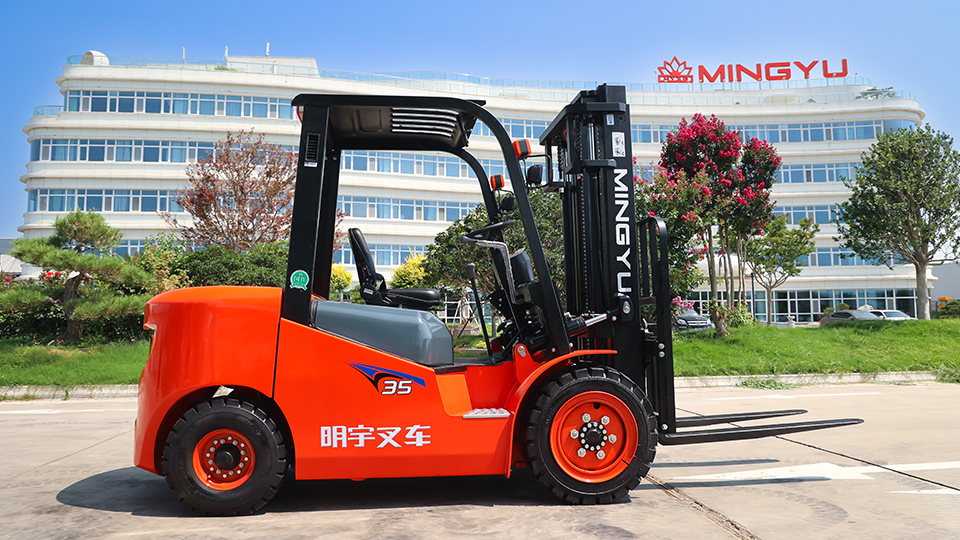
Load testing is incomplete without energy consumption characterization. Under JB/T 3300-2024 protocols, the 3-ton lithium forklift completes 37 operational cycles while total consumed capacity is integrated from battery current data. For a typical 32 kWh LiFePO₄ battery pack operating at 320 V nominal, the average energy consumption per cycle determines the operational duration under real working conditions.
Energy consumption testing serves a dual purpose for exporters. First, it validates that the battery capacity is sufficient for the claimed working shifts—typically 1.5 to 2 shifts on a single charge for lithium units. Second, it provides data for the technical documentation that buyers increasingly demand as proof of operational efficiency.
Export Documentation: The Paper Trail Behind the Test
Every load test result must be traceable through formal documentation. For lithium forklifts, the export document set includes the UN38.3 test summary, MSDS (Material Safety Data Sheet), dangerous goods packaging certificate, and transport condition identification reports specific to each shipping mode—sea, air, or land.
The UN38.3 test summary—mandatory since 2020—must specify the cell and battery model numbers, test laboratory accreditation, and pass/fail results for all eight test items.
For sea freight, lithium batteries ship as Class 9 dangerous goods under UN3481 (when contained in equipment), requiring IMDG Code compliance, proper segregation, and DG-approved container booking.
Consistency across all documents is paramount. If the packing list states a 48V battery while the test report references an 80V configuration, customs authorities will flag the discrepancy, potentially causing detention, return shipment, or fines.
Pre-Shipment Inspection: The Final Gate
Before containerization, each exported unit undergoes a final pre-shipment inspection that functionally replicates key load test elements. The mast is cycled through full lift and lower sequences with rated load; travel and braking are verified; tilt angles are confirmed; and the BMS communication via CAN bus is checked for proper state-of-charge display and fault code reporting.
Container loading itself requires technical consideration. Counterbalance forklifts typically require mast removal or tilting, overhead guard removal or folding, and proper securing with chains and dunnage.
Battery state of charge is confirmed and documented before sealing, with most export protocols requiring the battery to be at a reduced charge level—particularly for air freight, where 2026 IATA DGR regulations mandate lithium-ion batteries ship at no more than 30% SoC.
Conclusion: Load Testing as Export Currency
The load test of an exported 3-ton lithium counterbalance forklift is far more than a mechanical stress check. It is the technical currency that converts engineering design into market access. From static structural validation and dynamic cyclic performance to stability tilt trials and lithium battery transport safety, each test layer builds the documentary evidence that foreign customs authorities, notified bodies, and safety inspectors demand.
For manufacturers and exporters, the investment in rigorous load testing pays dividends not only in compliance but in competitive positioning. A 3-ton lithium forklift backed by complete JB/T 3300-2024 test records, UN38.3 battery certification, EN 1175:2020 electrical safety compliance, and comprehensive CE Technical Construction Files commands premium positioning in global markets. It signals to distributors and end-users that the machine has been validated not merely to move 3,000 kg, but to do so safely, efficiently, and repeatedly—across borders, through customs, and onto the warehouse floors of the world's most demanding logistics operations.
In an industry where a single documentation gap can strand a container at port for weeks, thorough load testing is not an overhead cost. It is the foundation of export reliability.
Name: selena
Mobile:+86-13176910558
Tel:+86-0535-2090977
Whatsapp:8613181602336
Email:vip@mingyuforklift.com
Add:Xiaqiu Town, Laizhou, Yantai City, Shandong Province, China
