
vip@mingyuforklift.com
+86-0535-2090977

Introduction
The material handling industry stands at the threshold of a maintenance revolution. For decades, forklift fleet management relied on reactive repair models—equipment operated until failure, then serviced by technicians responding to breakdown calls. Preventive maintenance schedules, while an improvement, still treated maintenance as a calendar-driven activity disconnected from actual equipment condition. Today, the convergence of Internet of Things (IoT) technology, cloud computing, and advanced analytics is fundamentally transforming how organizations maintain their forklift fleets.
Industry data reveals the scale of this transformation: approximately 50 to 75% of forklift fleets now leverage digital technology including telematics and predictive analytics to manage operations, while many legacy fleets continue to suffer from unplanned downtime due to haphazard data collection practices . The financial impact is substantial—businesses implementing comprehensive forklift telematics systems report up to 30% reduction in operational costs through optimized routes, reduced energy consumption, predictive maintenance, and fewer accidents .
This article examines how IoT-enabled remote diagnostics is revolutionizing traditional forklift maintenance, exploring the technological architecture, diagnostic capabilities, implementation strategies, and the transformative impact on fleet management economics. Understanding these developments is essential for maintenance professionals seeking to transition from reactive service models to predictive, data-driven maintenance strategies.
The Architecture of Smart Forklift Diagnostics
Sensor Deployment and Data Acquisition
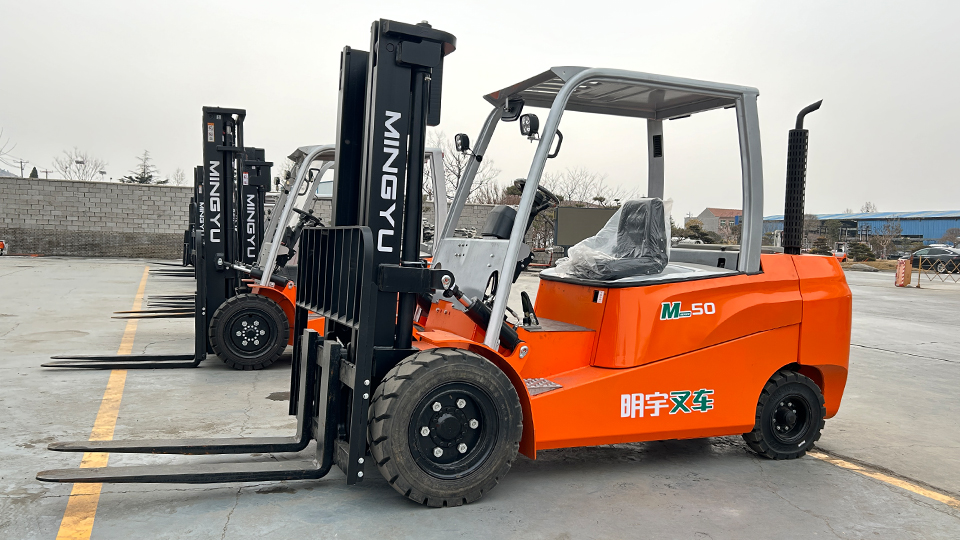
The foundation of smart forklift remote diagnostics lies in comprehensive sensor networks deployed across vehicle systems. Modern telematics systems integrate multiple sensor types, each capturing specific operational parameters that collectively create a complete picture of equipment health .
Core Sensor Categories:
Mechanical sensors monitor vibration, temperature, and acoustic signatures from critical components including motors, pumps, bearings, and gearboxes. Accelerometers detect impact events and rough handling, while vibration sensors identify bearing wear, misalignment, and imbalance conditions before they result in catastrophic failure. Temperature sensors track motor winding temperatures, hydraulic fluid temperatures, and brake system thermal performance.
Electrical sensors monitor battery management system parameters including cell-level voltages, state of charge, state of health, charge/discharge currents, and internal resistance. For internal combustion forklifts, sensors track alternator output, starter motor current draw, and electrical system voltage stability. Power quality monitoring identifies harmonic distortion and voltage fluctuations that accelerate component degradation.
Hydraulic system sensors measure fluid pressure, flow rates, filter differential pressure, and fluid temperature. These parameters reveal pump wear, valve malfunctions, cylinder seal degradation, and contamination levels that compromise system efficiency and reliability.
Environmental sensors capture ambient temperature, humidity, and atmospheric conditions that influence equipment performance and degradation rates. GPS and indoor positioning systems provide location data that correlates operating conditions with specific facility zones, enabling identification of high-stress operational areas.
Data Transmission and Cloud Integration
The data collected by onboard sensors must be transmitted reliably to centralized processing platforms. Modern systems employ multiple communication pathways optimized for different operational environments .
Wi-Fi connectivity serves facilities with comprehensive wireless infrastructure, offering high-bandwidth data transmission suitable for rich diagnostic datasets. Cellular connectivity enables monitoring of forklifts operating across distributed facilities or outdoor yards where Wi-Fi coverage is impractical. Bluetooth and near-field communication support localized data exchange during service events and operator interactions.
The CANedge2 platform exemplifies modern data transmission architecture, utilizing WiFi-enabled CAN bus data loggers to capture vehicle network data and transmit it to cloud-based storage systems. In a deployment across 250+ automated guided vehicles, these devices continuously upload operational data to AWS S3 servers, triggering automated analysis workflows that extract battery management system key performance indicators and diagnostic trouble codes .
Cloud-based platforms provide the computational infrastructure for data storage, processing, and analytics. These platforms offer scalability to accommodate fleets ranging from single-digit units to enterprise-scale deployments spanning thousands of vehicles across multiple facilities. Data security protocols ensure that sensitive operational information remains protected while enabling authorized access for maintenance personnel, fleet managers, and equipment manufacturers.
Analytics and Intelligence Layer
Raw sensor data requires sophisticated processing to transform operational parameters into actionable maintenance intelligence. Advanced analytics platforms employ multiple analytical approaches to extract diagnostic value from the continuous data streams .
Descriptive analytics establish baseline operational parameters and identify current equipment status. Dashboard visualizations present real-time fleet health metrics, enabling maintenance managers to monitor equipment condition at a glance and identify units requiring immediate attention.
Diagnostic analytics identify root causes of observed anomalies. When a forklift exhibits elevated motor temperatures, diagnostic algorithms correlate temperature data with load histories, duty cycles, and environmental conditions to distinguish between overload conditions, cooling system failures, and motor winding degradation.
Predictive analytics forecast future equipment conditions based on historical trends and degradation models. Machine learning algorithms trained on fleet-wide operational data identify patterns that precede specific failure modes, enabling maintenance scheduling before functional degradation impacts operations. These predictive capabilities represent the core value proposition of IoT-enabled maintenance, transitioning fleet management from reactive to proactive strategies.
Prescriptive analytics extend predictive capabilities by recommending specific maintenance actions optimized for operational constraints. Rather than simply predicting that a component will fail within a defined timeframe, prescriptive systems suggest the optimal maintenance window that balances failure risk against operational scheduling requirements, parts availability, and technician capacity.
Remote Diagnostic Capabilities
Real-Time Health Monitoring
IoT-enabled forklift systems provide continuous visibility into equipment health that was previously impossible with traditional maintenance approaches. Real-time monitoring dashboards display critical parameters for every connected forklift, enabling maintenance teams to assess fleet condition without physical inspection .
Battery health monitoring exemplifies the diagnostic power of connected systems. The CANedge2 deployment for 250+ AGVs demonstrates how continuous monitoring of battery management system parameters enables prediction of thermal events before they cause operational failures. When analytics algorithms identify battery parameters trending toward thermal event thresholds, affected vehicles are automatically routed to maintenance stations while maintenance teams receive real-time notifications .
Motor and drivetrain monitoring tracks performance parameters including current draw, efficiency, temperature profiles, and vibration signatures. Deviations from established baselines trigger diagnostic protocols that assess severity and recommend response actions. Early detection of bearing wear, insulation degradation, or alignment issues enables scheduled maintenance before catastrophic failures occur.
Hydraulic system monitoring identifies pump cavitation, valve sticking, filter clogging, and seal degradation through analysis of pressure, flow, and temperature data. These insights enable maintenance scheduling that prevents the sudden hydraulic failures that traditionally cause unexpected downtime.
Impact Detection and Structural Health Assessment
Impact events represent a leading cause of forklift structural damage and subsequent maintenance requirements. Smart diagnostic systems employ accelerometers and machine learning algorithms to detect and classify impact events, distinguishing between minor incidents requiring inspection and major impacts necessitating immediate equipment removal from service .
The Powerfleet Forklift Gateway incorporates machine-learning impact sensors that detect and report damage events, enabling maintenance teams to address minor issues before they escalate into costly repairs. Event data captured includes impact magnitude, direction, location, and operator identification, supporting both immediate response and long-term trend analysis .
Structural health monitoring extends beyond impact detection to assess cumulative fatigue damage. Vibration analysis of mast assemblies, carriage structures, and overhead guards identifies developing cracks, loose fasteners, and weld failures that compromise structural integrity. These capabilities are particularly valuable for forklifts operating in high-cycle applications where fatigue failures represent significant safety risks.
Operator Behavior Analysis
Operator behavior significantly influences forklift maintenance requirements and equipment lifespan. IoT diagnostic systems capture operational data that reveals behavioral patterns impacting equipment health .
Speed monitoring and acceleration profiles identify aggressive driving behaviors that accelerate mechanical wear. Hard braking events stress brake systems and drivetrain components, while rapid acceleration increases motor and controller thermal loading. Data-driven operator coaching programs target specific behaviors identified through fleet-wide analysis.
Load handling analytics assess compliance with rated capacity limits and proper load center positioning. Overloading and off-center loading stress structural components, accelerate hydraulic system wear, and compromise stability systems. Continuous monitoring enables intervention before cumulative damage reaches critical thresholds.
Idle time tracking identifies operational inefficiencies and unnecessary engine or motor runtime that accelerates wear without productive output. Route optimization based on location and usage data reduces non-productive travel, extending equipment life while improving operational efficiency .
Predictive Maintenance Implementation
From Time-Based to Condition-Based Scheduling
The transition from preventive to predictive maintenance represents the most significant operational impact of IoT-enabled diagnostics. Traditional maintenance schedules based on operating hours or calendar intervals often result in unnecessary service activities on healthy equipment while missing incipient failures in heavily stressed units .
Condition-based maintenance leverages real-time equipment condition data to schedule service activities only when diagnostic indicators warrant intervention. This approach extends maintenance intervals for lightly used equipment while ensuring that heavily stressed units receive attention before failure occurs. The result is optimized maintenance resource utilization, reduced unnecessary service costs, and improved equipment availability.
A manufacturer's implementation of forklift telematics illustrates these benefits: predictive maintenance alerts based on actual usage and impact data reduced unexpected breakdowns by 20%, cutting maintenance costs while extending equipment life. The system identified inefficient routes that led to a 15% reduction in forklift travel distance and a 10% decrease in fuel consumption, demonstrating the integrated benefits of data-driven fleet management .
Automated Maintenance Workflows
Modern diagnostic platforms integrate with maintenance management systems to automate workflow generation and scheduling. When diagnostic algorithms identify equipment requiring attention, the system automatically generates work orders, schedules technician assignments, and orders replacement parts based on failure mode predictions .
The AGV fleet deployment demonstrates automated workflow integration: when battery thermal event predictions trigger maintenance alerts, affected vehicles are automatically dispatched to maintenance stations while the maintenance team receives real-time notifications. This automation eliminates the communication delays and manual coordination that traditionally extend equipment downtime .
Integration with enterprise resource planning and warehouse management systems enables maintenance scheduling that considers operational priorities, production schedules, and inventory requirements. Rather than removing equipment from service arbitrarily, predictive systems recommend maintenance windows that minimize operational impact.
Fleet-Wide Trend Analysis
Aggregated diagnostic data across entire fleets enables trend analysis that identifies systemic issues invisible at the individual equipment level. Comparative analysis of similar equipment operating in different environments reveals facility-specific stress factors that accelerate degradation. Cross-fleet analysis identifies design weaknesses or manufacturing defects that manifest as elevated failure rates across specific model populations.
These analytical capabilities transform fleet management from equipment-level maintenance to strategic asset optimization. Maintenance investments can be prioritized based on quantified reliability impact, replacement timing optimized for total cost of ownership, and capital planning informed by data-driven lifecycle projections.
Safety and Compliance Enhancement
Pre-Operational Safety Verification
IoT diagnostic systems automate pre-operational safety checks that traditionally relied on operator completion of paper checklists. Electronic pre-use safety checklists integrated with telematics platforms ensure consistent inspection completion while capturing inspection data for compliance documentation .
Toyota's MyInsights+ Compliance system exemplifies this integration, requiring operators to complete pre-operational checklists before equipment activation. The system verifies checklist completion, locks out equipment with failed inspections, and maintains inspection records for regulatory compliance. This automation eliminates the documentation gaps that frequently result in OSHA violations .
Operator Access Control and Credential Management
Smart diagnostic systems incorporate operator authentication that ensures only qualified personnel operate equipment. Wireless access control systems verify operator credentials, training status, and certification currency before enabling equipment operation. Operators with expired or invalid credentials are automatically locked out, preventing unauthorized equipment use that compromises safety and accelerates wear .
Geofencing and Operational Zone Management
GPS and indoor positioning capabilities enable geofencing that restricts equipment operation to designated areas. Hazardous zones, pedestrian corridors, and restricted areas can be defined with automatic speed limitations or operational restrictions when equipment enters defined boundaries. Real-time alerts notify operators and supervisors of zone violations, enabling immediate corrective action .
Collision avoidance systems integrate proximity detection with diagnostic platforms to prevent accidents while capturing near-miss data for safety analysis. AI-powered pedestrian detection cameras identify pedestrians and vehicles in travel paths, providing escalating visual and audible warnings as collision risk increases. Event data including breach location, time, and operator identification supports incident investigation and targeted safety training .
Implementation Strategies
Retrofit vs. New Equipment Integration
Organizations need not replace entire fleets to benefit from IoT diagnostic capabilities. Bolt-on sensor packages, data collection devices, and wireless transmitters enable retrofit of legacy equipment that lacks factory-installed telematics . These retrofit solutions provide diagnostic capabilities comparable to new equipment while extending the useful life of existing assets.
For new equipment purchases, OEM-integrated systems from manufacturers including Linde, Clark, and Toyota offer seamless connectivity with fleet management platforms. Linde Connect provides modular fleet management including access control, vehicle data monitoring, and usage analysis. Clark SMART Telematics offers user-friendly web-based dashboards displaying impact reports, pre-shift inspections, and utilization metrics, with dedicated data analyst support for enterprise accounts .
Data Infrastructure Requirements
Successful IoT diagnostic implementation requires appropriate data infrastructure. Facilities must evaluate wireless network coverage to ensure reliable connectivity throughout operational areas. Wi-Fi networks require sufficient bandwidth and access point density to support continuous data transmission from multiple forklifts. Cellular connectivity alternatives provide coverage in areas where Wi-Fi infrastructure is impractical.
Cloud platform selection should consider data security requirements, integration capabilities with existing enterprise systems, and scalability to accommodate fleet growth. Data governance policies must address data ownership, access controls, and retention requirements that balance diagnostic value against storage costs and privacy considerations.
Organizational Change Management
Technology implementation succeeds only when accompanied by appropriate organizational adaptation. Maintenance personnel require training in diagnostic system operation, alert interpretation, and response protocols. The transition from hands-on mechanical troubleshooting to data-driven diagnostic analysis demands new skill sets that organizations must develop through targeted training programs.
Operator engagement is essential for system effectiveness. Operators must understand that diagnostic monitoring supports their safety and operational efficiency rather than representing surveillance or punitive oversight. Transparent communication about data usage, performance feedback mechanisms, and recognition programs for safe operation foster positive engagement with diagnostic systems.
Economic Impact and Return on Investment
Quantified Benefits
The economic case for IoT-enabled remote diagnostics is compelling when considering the full spectrum of operational benefits. Direct maintenance cost reductions include decreased emergency repair expenses, optimized parts inventory through predictive ordering, and reduced technician overtime through scheduled maintenance planning.
Operational benefits extend beyond maintenance cost savings. The USPS hydrogen fuel cell forklift pilot demonstrated that technology-enabled fleet management increased operator productivity by 27%, generating returns that far exceeded maintenance cost considerations . Reduced equipment downtime translates directly to increased throughput capacity, enabling revenue growth without proportional fleet expansion.
Safety improvements reduce workers' compensation costs, liability exposure, and regulatory penalties. Automated compliance documentation eliminates the administrative burden of manual record-keeping while ensuring inspection completeness that prevents OSHA violations.
Implementation Cost Considerations
Investment requirements vary significantly based on fleet size, equipment vintage, and selected technology platform. Hardware costs include sensor packages, communication devices, and installation labor. Software costs encompass platform licensing, cloud storage, and analytics capabilities. Ongoing costs include data transmission, platform maintenance, and system administration.
The rapid return on investment demonstrated by early adopters—frequently within 6 to 12 months—reflects the magnitude of operational improvements achievable through IoT-enabled diagnostics . Organizations should develop comprehensive business cases that quantify both direct maintenance savings and broader operational benefits to secure appropriate investment authorization.
Future Trajectories
Artificial Intelligence and Machine Learning Evolution
Current predictive analytics capabilities represent early stages of AI application in forklift maintenance. Future developments will incorporate more sophisticated machine learning models trained on larger datasets spanning multiple fleets, equipment types, and operating environments. These models will achieve higher prediction accuracy for emerging failure modes and enable prescriptive maintenance recommendations that optimize across multiple operational constraints.
Natural language processing capabilities will enable maintenance technicians to query diagnostic systems using conversational interfaces, receiving detailed troubleshooting guidance without navigating complex software platforms. Computer vision integration will automate visual inspection tasks, identifying surface defects, fluid leaks, and component damage through camera-based analysis.
Digital Twins and Simulation
The convergence of IoT data with digital twin technology will enable virtual representations of physical forklifts that simulate behavior under various operational scenarios. Maintenance teams will test proposed interventions in virtual environments before implementing them on physical equipment, optimizing repair strategies and validating component substitutions.
Autonomous Maintenance Integration
As autonomous forklift technology matures, IoT diagnostics will integrate directly with self-maintenance capabilities. Automated guided vehicles will self-diagnose developing issues, autonomously navigate to maintenance stations, and potentially execute simple maintenance tasks without human intervention. The AGV fleet deployment demonstrating automatic dispatch to maintenance stations represents an early manifestation of this trajectory .
Conclusion
IoT-enabled remote diagnostics represents a fundamental transformation in forklift maintenance philosophy and practice. The transition from reactive breakdown response to predictive, condition-based maintenance delivers quantified benefits including 20% reduction in unexpected breakdowns, 30% operational cost reduction, and significant improvements in safety performance and regulatory compliance web_search:3#9.
The technological architecture—encompassing comprehensive sensor networks, cloud-based data platforms, and advanced analytics—provides maintenance professionals with unprecedented visibility into equipment health and degradation patterns. Real-time monitoring, automated workflow generation, and fleet-wide trend analysis transform maintenance from a cost center to a strategic capability that drives operational excellence.
For organizations yet to embrace IoT diagnostics, the imperative is clear: the competitive advantage enjoyed by connected fleets will continue to widen as technology capabilities advance and implementation costs decline. The maintenance professionals who master these technologies will define the future of material handling operations, while those who cling to traditional approaches risk obsolescence in an increasingly data-driven industry.
The connected forklift is not merely an incremental improvement over traditional equipment—it represents a new paradigm in which equipment communicates its needs, maintenance anticipates failures before they occur, and fleet management optimizes across operational, safety, and economic dimensions simultaneously. As we advance toward fully autonomous material handling systems, the diagnostic and predictive capabilities established today will form the foundation for self-managing fleets that require minimal human intervention to maintain peak performance.
The revolution in forklift maintenance is not coming—it is already here, and its practitioners are capturing the competitive advantages that data-driven maintenance strategies deliver.
Name: selena
Mobile:+86-13176910558
Tel:+86-0535-2090977
Whatsapp:8613181602336
Email:vip@mingyuforklift.com
Add:Xiaqiu Town, Laizhou, Yantai City, Shandong Province, China