
vip@mingyuforklift.com
+86-0535-2090977

Introduction: The Economics of Preventive Maintenance
In the fast-paced world of warehouse operations and logistics, stackers—also known as pallet stackers, walkie stackers, or walk-behind forklifts—represent a significant capital investment. Yet many facilities treat these workhorses as disposable commodities, running them until catastrophic failure forces replacement. This approach is not only financially reckless but also dangerous.
The Occupational Safety and Health Administration (OSHA) mandates under 29 CFR 1910.178 that powered industrial trucks, including stackers, must be maintained in safe operating condition and inspected at least daily before being placed in service. Failure to comply can result in severe penalties—OSHA has fined companies up to $258,672 for maintenance violations, including instances where faulty brakes were reported by employees but never repaired.
However, compliance is merely the baseline. The real value of a disciplined daily maintenance routine lies in the compounding returns: reduced downtime, extended equipment lifespan, lower total cost of ownership, and—most importantly—prevention of accidents that could injure operators or damage valuable inventory. Industry data consistently shows that proper preventive maintenance can extend stacker service life by 30% or more, effectively adding three additional productive years to a machine that might otherwise be retired prematurely.
This article presents a comprehensive, operator-friendly daily maintenance checklist designed to be completed in five minutes or less. When executed consistently, these simple procedures form the foundation of a maintenance culture that protects both people and profits.
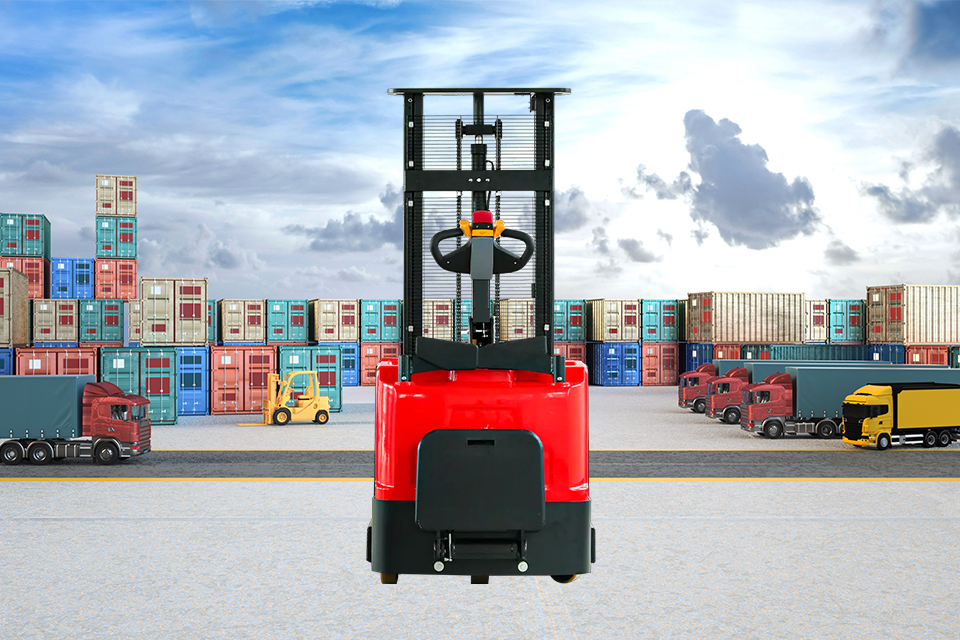
The Five-Minute Daily Inspection Protocol
Phase 1: Pre-Start Visual Survey (60 Seconds)
Before powering on the stacker, conduct a systematic 360-degree walk-around inspection. This visual sweep is the most critical minute of the day because it identifies obvious hazards that could cause immediate failure or injury.
Fluid Leakage Check: Examine the floor beneath and around the machine for any signs of oil, hydraulic fluid, coolant, or battery electrolyte. Even minor seepage indicates deteriorating seals, loose fittings, or cracked hoses that will worsen under operational stress. A single unattended hydraulic leak can escalate into complete system failure during a critical lift operation.
Structural Integrity Assessment: Inspect the mast assembly for cracks, deformation, or damaged welds. Check the forks for bends, cracks, or excessive wear at the heel—the point where the vertical and horizontal sections meet. Fork damage is particularly insidious because it compromises load stability; a compromised fork can fail catastrophically when lifting a heavy pallet at maximum height. Verify that fork positioning mechanisms operate smoothly and that locking pins are present and secure.
Tire Condition Evaluation: For electric stackers, examine polyurethane or rubber drive wheels and load wheels for flat spots, chunking, embedded debris, or excessive wear. Uneven wear patterns often signal alignment issues, overloading, or poor floor conditions that will accelerate deterioration if unaddressed. On pneumatic-tire models, verify tire pressure falls within the manufacturer-specified range—typically 2.5 to 3.0 bar.
Battery and Electrical Components: For electric units, check that the battery is securely mounted, terminals are clean and tight (no corrosion or "white bloom" acid deposits), and cables show no fraying or damage. Verify the battery charge indicator shows sufficient capacity for the intended work session. A battery that cannot complete a full shift forces unplanned downtime and accelerates cell degradation through deep discharge.
Phase 2: Functional System Tests (120 Seconds)
After the visual inspection, power on the stacker and systematically test every operational system. This phase validates that controls, safety devices, and mechanical systems respond correctly under no-load conditions.
Control Responsiveness: Test all directional controls—forward, reverse, lift, lower, and any auxiliary functions such as side shift or reach mechanisms. Operations should be smooth, immediate, and free of hesitation, jerking, or abnormal noise. Delayed response often indicates low hydraulic fluid, contaminated oil, or failing control valves.
Brake System Verification: Test both service brakes and parking brakes. The service brake should provide firm, progressive stopping power without excessive pedal travel, sponginess, or noise. The parking brake must hold the machine stationary on a slight incline. Any degradation in braking performance—longer stopping distances, pedal fade, or unusual sounds—demands immediate removal from service and professional inspection.
Safety Device Confirmation: Activate the horn, test all lights (headlights, brake lights, warning beacons), and verify the reverse alarm functions. These devices are not accessories; they are legally required safety equipment that protects pedestrians in busy warehouse environments. A non-functioning backup alarm or inoperative brake light transforms a routine maneuver into a high-risk operation.
Hydraulic Performance Observation: Raise the forks to maximum height and observe the lift speed and stability. Lowering should be smooth and controlled, not abrupt or drifting. Any visible oil mist around cylinders, fittings, or hoses during operation indicates active leakage that requires immediate attention.
Phase 3: Load Handling Component Inspection (90 Seconds)
The mast, chains, and carriage assembly bear the full weight of every lifted load. Their condition directly determines operational safety.
Chain Tension and Wear: Inspect lifting chains for proper tension—neither slack nor overtightened. Look for signs of rust, kinking, cracked links, or elongated pins. Worn chains can jump sprockets or break under load, causing uncontrolled descent of the carriage. Lubricate chains weekly with a penetrating chain lubricant to prevent corrosion and reduce friction.
Mast Channel and Roller Condition: Examine the mast's inner and outer channels for scoring, deformation, or accumulated debris that could interfere with smooth vertical movement. Check mast rollers for flat spots, excessive wear, or looseness in their mounting. Damaged rollers increase friction, strain the hydraulic system, and can cause binding that makes precise load placement impossible.
Carriage and Backrest Integrity: Verify the load backrest is securely mounted, undamaged, and free of deformation. A compromised backrest cannot prevent loads from falling backward onto the operator—a scenario that causes severe injuries annually.
Phase 4: Operator Environment and Documentation (30 Seconds)
Operator Compartment: Ensure the operator platform or tiller handle is clean, dry, and free of debris that could cause slipping. Verify the emergency stop button (if equipped) is accessible and functional. Check that the overhead guard—if fitted—shows no cracks, damaged welds, or deformation from impact.
Documentation: Record the inspection date, machine identification number, operator name, and any anomalies noted. Even if no defects are found, this documentation creates the audit trail that OSHA expects and that demonstrates organizational commitment to safety. If defects are identified, immediately tag the machine "OUT OF SERVICE" and report it to maintenance personnel. Never operate a stacker with known deficiencies—this is not merely a policy violation but a potential life-or-death decision.
The Hidden Value: How Five Minutes Compounds Into Three Years
The five-minute daily investment yields extraordinary returns through three interconnected mechanisms: failure prevention, performance optimization, and lifecycle extension.
Failure Prevention Through Early Detection
Catastrophic stacker failures rarely occur without warning. A leaking hydraulic seal, a worn brake pad, or a loose chain anchor bolt emits early signals that the trained eye can detect during a routine inspection. The daily checklist transforms operators from passive equipment users into active condition monitors who identify problems at the incipient stage—when repair costs are minimal and downtime is manageable.
Consider a common scenario: a hydraulic hose develops a small crack. Caught during daily inspection, this hose costs perhaps $50 to replace and requires 30 minutes of downtime. Ignored, the hose ruptures during a lift, dumping hydraulic oil, dropping a loaded pallet, and potentially damaging the pump through cavitation. The resulting repair bill—including emergency service, lost productivity, and possible product damage—can easily exceed $5,000. The daily inspection's return on investment in this single instance is 100:1.
Performance Optimization Through Consistent Care
Well-maintained stackers operate more efficiently. Properly lubricated chains reduce motor current draw, extending battery life between charges. Correctly inflated tires minimize rolling resistance, reducing energy consumption and improving maneuverability. Clean electrical connections ensure consistent power delivery, preventing the voltage sags that cause erratic control response.
These incremental efficiency gains compound across a fleet. A 10-stacker operation where each machine gains 10% efficiency through proper maintenance effectively adds one machine of capacity without capital expenditure.
Lifecycle Extension Through Wear Management
Stackers are engineered with specific wear tolerances. When maintenance is neglected, components operate outside these tolerances, accelerating wear on adjacent parts in a cascade of degradation. A slightly worn chain, for example, places uneven loads on sprockets, which then wear eccentrically, which in turn damages the chain further. Within months, what began as a $200 chain replacement becomes a $2,000 drive system overhaul.
Conversely, disciplined daily maintenance keeps all components within design tolerances, distributing wear evenly and predictably. The result is that major components—motors, pumps, transmissions, and frames—reach their designed service life rather than failing prematurely due to avoidable secondary damage. Industry analyses confirm that comprehensive preventive maintenance programs add 30–50% to equipment lifespan while reducing unexpected breakdowns by the same margin.
Electric Stacker-Specific Considerations
Electric stackers dominate modern warehousing due to zero emissions, quiet operation, and lower energy costs. However, they present unique maintenance requirements that demand particular attention during daily inspections.
Battery Care: The Critical Difference
The battery represents 25–30% of an electric stacker's total cost and is the single greatest determinant of operational economics. Daily battery maintenance is therefore non-negotiable.
Watering Discipline: Battery electrolyte levels must be checked weekly (or more frequently in high-use applications), but the daily inspection should note any visible low-level indicators or crystallization on terminals. When watering is required, use only distilled or deionized water with conductivity below 50μS/cm. Never use tap water, purified drinking water, or mineral water—these contain dissolved minerals and ions that accelerate self-discharge, cause sulfation, and permanently reduce battery capacity.
Charging Protocol: Batteries should be charged only in well-ventilated areas with minimum five air changes per hour, as mandated by OSHA 1910.178(g). Charging generates hydrogen gas, which is explosive at concentrations above 4%. The charging area must be equipped with eye wash stations, acid spill containment supplies, and "No Smoking" signage.
Temperature Monitoring: During charging, electrolyte temperature must not exceed 45°C (113°F). Excessive temperature indicates cell imbalance, overcharging, or inadequate ventilation—all conditions that accelerate battery degradation.
Motor and Controller Inspection
Listen for abnormal motor sounds during operation—grinding, squealing, or excessive whining indicates bearing wear, brush deterioration, or controller issues. Check motor brushes every 3–5 months; worn brushes cause arcing that damages the commutator and reduces motor efficiency.
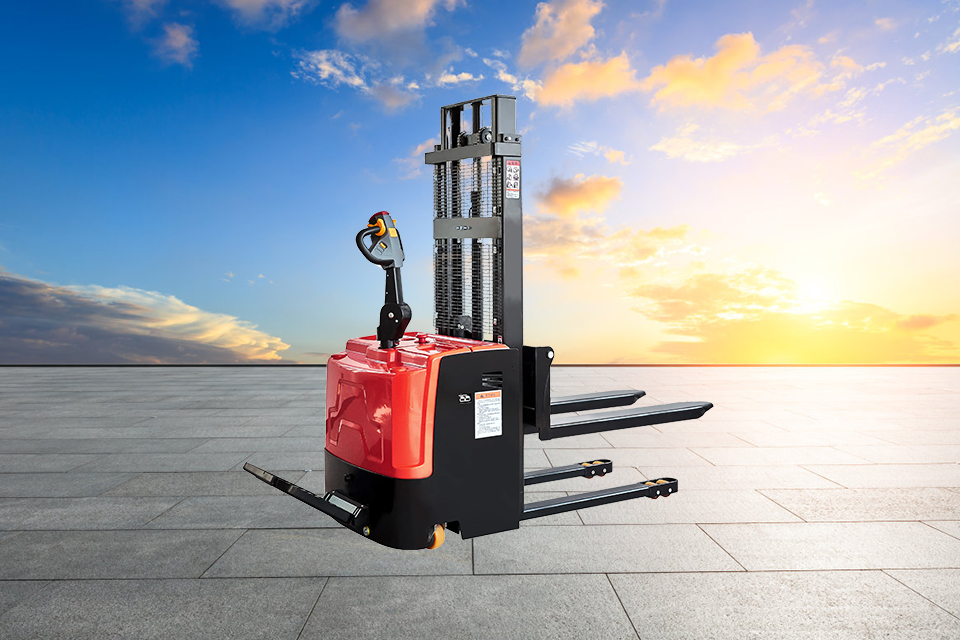
Manual Hydraulic Stacker Maintenance
While manual hydraulic stackers lack motors and batteries, they are not maintenance-free. Daily inspection should include:
Hydraulic unit operation: The pump handle should raise forks smoothly without excessive force. Difficult pumping often indicates low hydraulic oil or air in the system.
Oil level check: Verify hydraulic oil is at the proper level in the reservoir. Use only manufacturer-recommended hydraulic fluid.
Release valve function: The lowering control should allow smooth, controlled descent. Jerky or rapid dropping indicates valve wear or contamination.
Frame and weld inspection: Manual stackers rely entirely on structural integrity; any crack or deformation is an immediate safety concern.
Building a Maintenance Culture
The five-minute checklist is only effective when embedded in organizational culture. Management must provide:
Training and Authorization: Only trained and authorized personnel should perform maintenance. Operators must understand not merely what to check, but why each item matters and what failure modes to anticipate.
Tools and Resources: Provide operators with inspection forms, tags for out-of-service equipment, and immediate access to maintenance reporting channels. Digital record-keeping systems streamline documentation and enable trend analysis across the fleet.
Accountability and Recognition: Track inspection completion rates and celebrate teams with perfect compliance. Conversely, investigate missed inspections with the same rigor applied to safety incidents—because unchecked, they are precursors to incidents.
Professional Service Partnership: While daily inspections are operator responsibilities, major maintenance—hydraulic system overhauls, brake rebuilds, electrical diagnostics, and structural welding—requires factory-trained technicians. Establish relationships with qualified service providers before emergencies occur.
Conclusion: The Compound Interest of Care
A stacker is a precision machine operating under significant mechanical stress. Like any precision machine, its longevity depends on the consistency of care it receives. The five-minute daily checklist is not a bureaucratic exercise—it is a high-leverage investment that compounds into years of additional service, thousands of dollars in avoided repairs, and an immeasurable reduction in accident risk.
The math is compelling: five minutes per day across 250 working days equals approximately 21 hours annually. Those 21 hours, distributed across the year, prevent the dozens of hours lost to breakdowns, the days of downtime for major repairs, and the weeks or months required to replace a prematurely failed machine. They protect the operator who relies on functioning brakes, the pedestrian who depends on a working backup alarm, and the business that cannot afford unplanned operational interruptions.
In the end, the question is not whether you can afford five minutes for daily stacker maintenance. The question is whether you can afford not to.
Name: selena
Mobile:+86-13176910558
Tel:+86-0535-2090977
Whatsapp:8613181602336
Email:vip@mingyuforklift.com
Add:Xiaqiu Town, Laizhou, Yantai City, Shandong Province, China
