vip@mingyuforklift.com
+86-0535-2090977

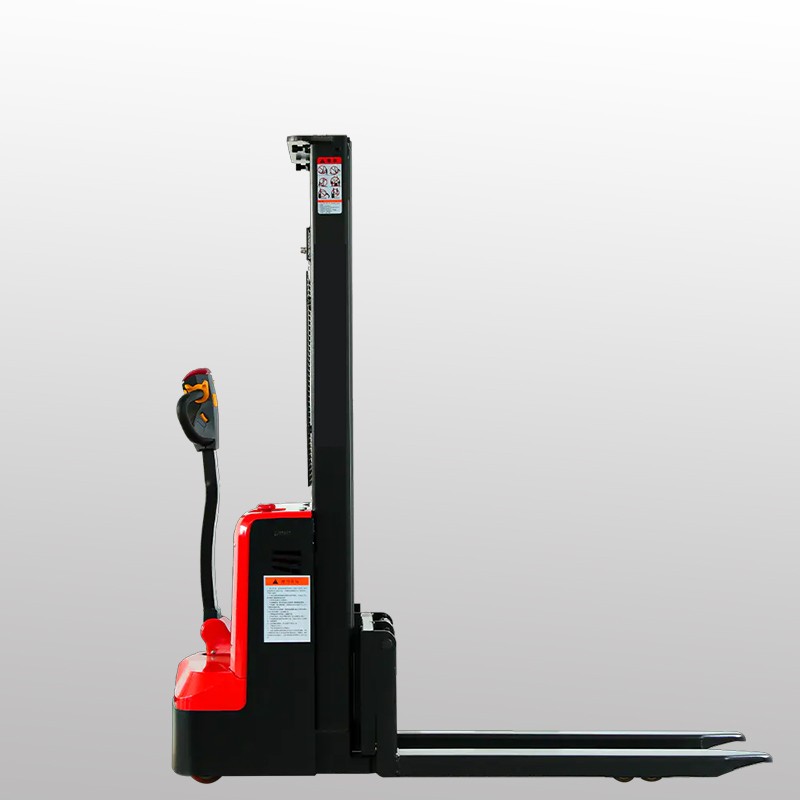
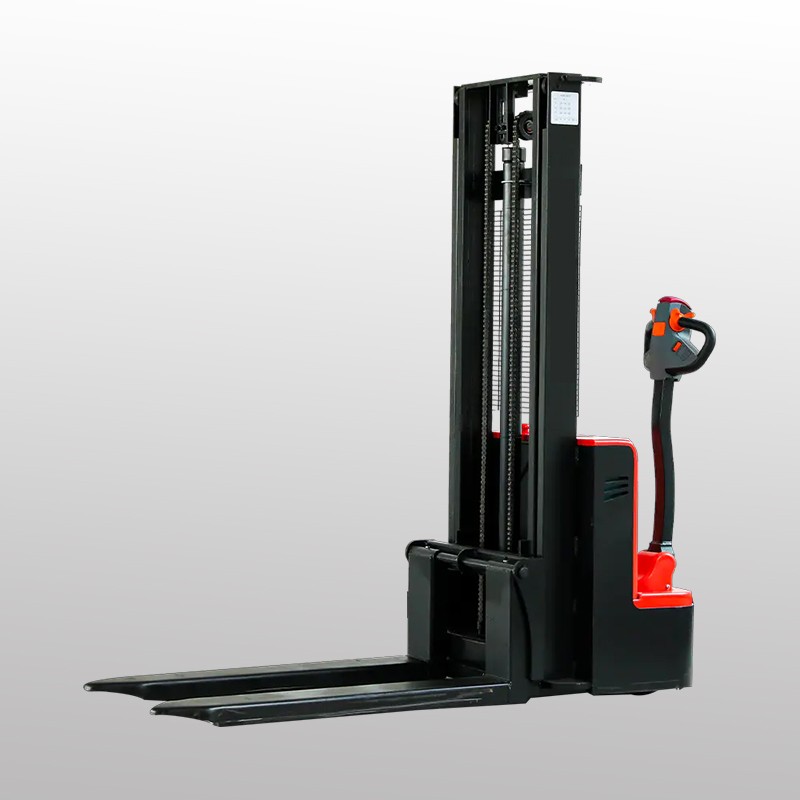
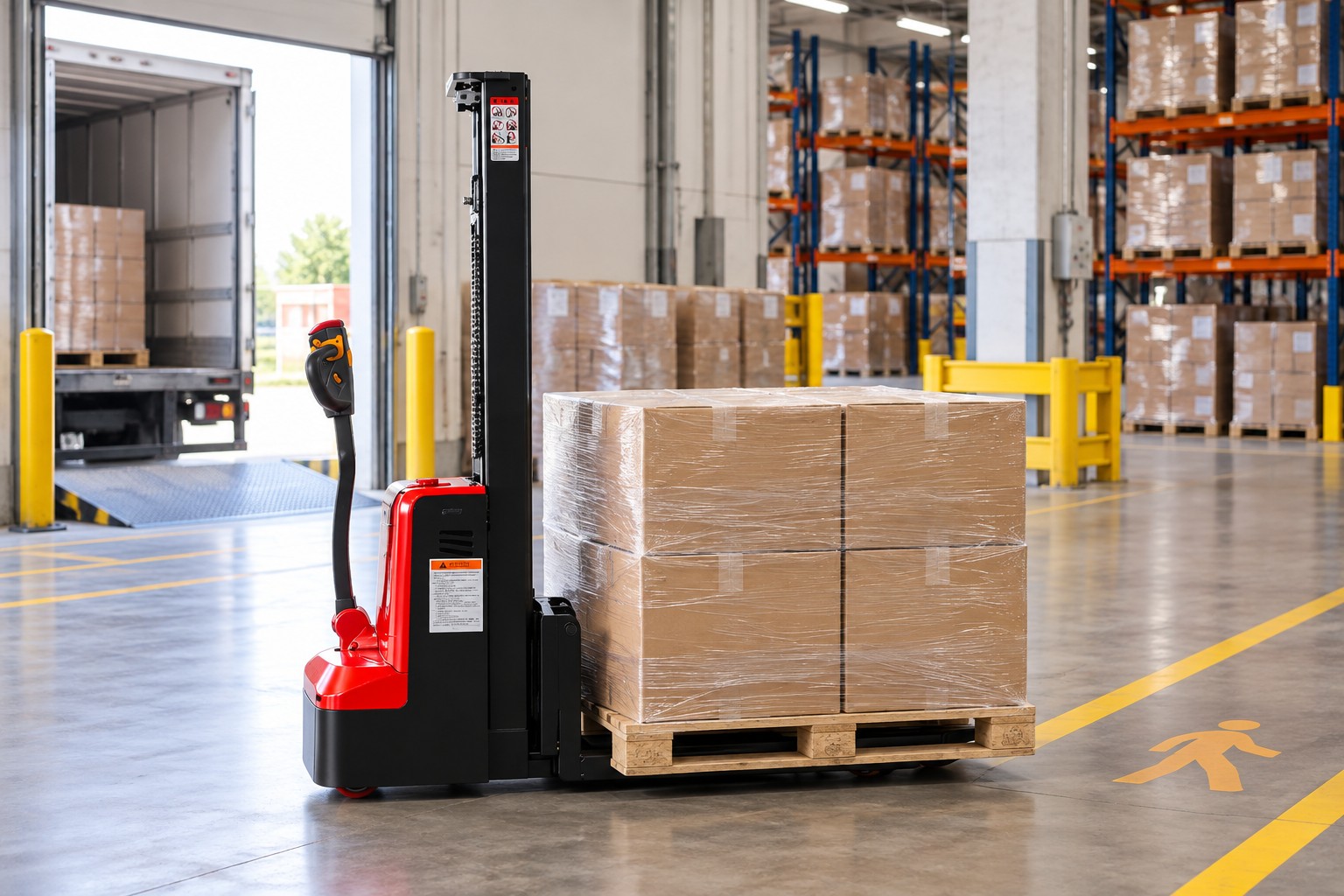
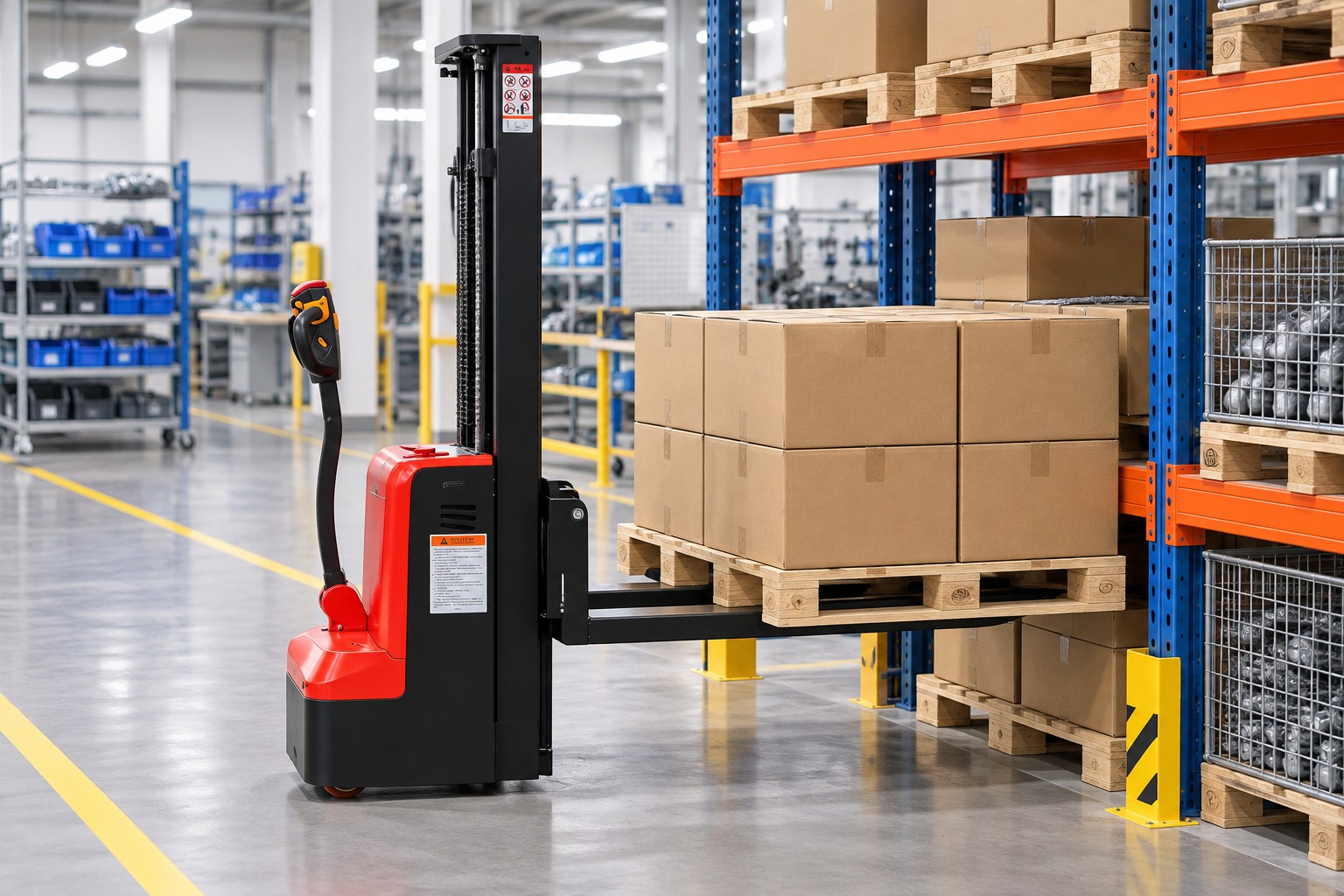
The CDDA15 1.5 ton electric walkie stacker is an application-led solution for pallet transport and stacking in warehouses, production buffers, retail backrooms and regional distribution facilities. ZGFORKLIFT / MYZG presents this compact pedestrian stacker for buyers who need controlled low-speed handling, a small operating footprint and electric power without engine exhaust at the point of use. The nominal 1,500 kg class is only the starting point: final capacity at the required height must be confirmed for the ordered mast, load center, fork arrangement and site conditions.
A useful buying enquiry describes the work instead of asking only for a price. Record the heaviest pallet, load dimensions, pallet entry, actual load center, maximum stacking height, lowest doorway and narrowest turning point. Add the daily number of moves, longest travel distance, gradients, floor joints, dock plates, cold or hot areas and pedestrian traffic. A long, uneven or offset load can change stability and residual capacity. The delivered data plate and manual, not a general web description, govern safe operation.
CDDA15 is most relevant where pallets move over short or moderate indoor routes and where a pedestrian operator can maintain a clear view and safe walking position. It can support receiving, reserve-storage replenishment, line-side supply and dispatch staging when the aisle, floor and pallet are suitable. Buyers with long travel routes, frequent ramps or very high throughput should compare a platform, reach or counterbalance design before selecting a walkie stacker.
Regional distribution: map receiving doors, inspection zones, reserve racks and dispatch lanes. The solution is not simply faster travel; it is a predictable route with clear stopping points, pedestrian separation and enough turning room for the longest pallet. Confirm rack clearances and floor capacity before commissioning.
Light manufacturing: use the stacker for palletized components, packaging material and finished goods only after matching the fork layout and capacity to the real load. Line-side buffers benefit from quiet electric operation, but traffic rules, horn use, visibility and battery discipline remain essential.
Retail and wholesale backrooms: measure doors, lift entrances, mezzanine limits and shared staff areas. Schedule replenishment outside peak pedestrian periods and keep emergency exits clear. A compact electric pallet stacker can reduce manual handling when the route is controlled and operators are trained.
Cold-chain and food logistics: state the operating temperature, time inside each temperature zone, condensation exposure and sanitation process. Battery performance and approved lubricants must be assessed for the actual temperature. Do not assume a standard configuration is suitable for every cold room.
First verify the pallet interface: fork length, outside width, lowered height and wheel openings must fit the pallets used on site. Next specify lift height and closed-mast height, including ceiling services, doors and rack beams. Then confirm residual capacity at working height. Compare fixed forks with adjustable or straddle options only where those options are approved for the selected configuration. Wheel material should match the floor, joints, debris and noise expectations.
The source product family lists a 24 V electric system and configuration-dependent battery capacity. The final battery and charger must be selected from real duty-cycle information: operating hours, travel distance, lift cycles, breaks, shift changes, ambient temperature and available electrical supply. Charging should take place in a designated, protected area following the supplied battery and charger instructions. Never mix chargers, battery chemistries or voltage ratings without written confirmation.
Procurement teams can compare the complete ZGFORKLIFT material-handling range, review the dedicated electric stacker product category and browse All Products. These pages help create a shortlist, while final suitability still requires a documented application review.
Pedestrian operation requires deliberate separation between the operator, the machine, racking and other people. Operators should inspect the pallet, center the load, keep forks low during travel, approach racks squarely and reduce speed before turns. Never stand beneath raised forks or permit anyone inside the operating envelope. Gradients, dock edges and poor floors need a specific risk assessment. Only trained and authorized operators should use the machine under local workplace rules.
A pre-delivery or site acceptance test should use representative pallets and the intended route under controlled conditions. Verify steering, braking, emergency controls, lift and lowering, warning devices, stability, visibility, charger compatibility and documents. Record the agreed mast, forks, battery, charger, wheels and optional equipment. The forklift FAQ and service guide can help buyers prepare questions without replacing the manual or local assessment.
Before each shift, inspect forks, mast, chains, rollers, hydraulic hoses, load wheels, drive wheel, tiller, emergency reverse function, horn, brakes and visible electrical connections. Check for leaks, damage, loose fasteners or abnormal noise. Record defects and remove the stacker from service when a safety-related fault is found. Maintenance intervals must follow the delivered manual and reflect dust, temperature, moisture, shift intensity and floor condition.
Battery care depends on the supplied chemistry. Follow the approved charge sequence, connector inspection and ventilation requirements. Avoid deep discharge, damaged cables and blocked charger airflow. Flooded lead-acid batteries require competent electrolyte procedures, while maintenance-free or lithium configurations have different rules. Keep serial and configuration records with every parts request. Buyers and dealers can discuss service items through the parts business and support page.
A dealer should qualify each enquiry with a consistent checklist, demonstrate the machine on a controlled route and document the accepted configuration. Plan technician coverage, routine parts stock, battery and charger support, operator familiarization and escalation contacts before delivery. Rental fleets may prefer standardized mast and battery combinations, while project customers may need site-specific fork or straddle arrangements after technical review.
Total cost should include electricity, charging infrastructure, planned maintenance, wheels, battery replacement assumptions, transport and downtime risk. A lower purchase price does not compensate for an unsuitable aisle or energy plan. ZGFORKLIFT / MYZG can support configuration communication, packing coordination and parts identification within the confirmed commercial scope. Company background is available on the Shandong Zhuogong Machinery Equipment Co., Ltd. profile.
Compliance must be verified for the exact machine and destination. Where CE conformity requirements apply, ask for documentation tied to the ordered configuration. EPA engine-emission requirements are generally not relevant to a fully electric walkie stacker because it has no combustion engine; destination rules may still cover electrical equipment, batteries, chargers, transport and workplace use. This page does not claim that one document automatically covers every market.
For export planning, confirm destination voltage and plug, operating language, manuals, packing method, battery transport requirements, spare-parts package and responsibility for import or local registration. References or cooperation cases should be shared only when available and permitted. No named customer, certification number, performance record or logo is invented on this page.
Send maximum load weight and dimensions, pallet photographs, load center, lift height, rack and doorway measurements, aisle width, floor condition, gradients, daily shifts, travel distance, temperature, preferred fork layout, destination country and required documents. This information lets the technical team identify whether CDDA15 or another platform better matches the work.
Contact Shandong Zhuogong Machinery Equipment Co., Ltd. for application review, configuration and export support. Visit the contact page, email vip@mingyuforklift.com, call +86-0535-2090977 or use WhatsApp +86 131 8160 2336. Address: Xiaqiu Town, Laizhou, Yantai City, Shandong Province, China.
SEO summary: CDDA15 electric walkie stacker, 1.5 ton electric stacker, narrow aisle pallet stacker, warehouse pallet stacker, manufacturing material handling, regional distribution equipment, electric stacker buying guide, battery stacker maintenance, ZGFORKLIFT and MYZG.
Name: selena
Mobile:+86-13176910558
Tel:+86-0535-2090977
Whatsapp:8613181602336
Email:vip@mingyuforklift.com
Add:Xiaqiu Town, Laizhou, Yantai City, Shandong Province, China