
vip@mingyuforklift.com
+86-0535-2090977

Published: October 31, 2026
HTML Meta Description: Organize electric stacker flow in returns hubs with verified pallet loads, inspection buffers, refurbishment lanes and charging windows.
Keywords: electric stacker, e-commerce returns, refurbishment hub logistics, circular economy warehouse, returns triage, pallet stacker, reverse logistics flow, repair inventory staging, ZGFORKLIFT, MYZG
E-commerce return centers sort products into resale, repair, refurbishment, recycling and supplier-return streams. A stacker can feed inspection buffers and move approved pallet loads between triage and storage, but mixed returns need clear status controls so damaged or unverified stock is not placed into saleable inventory. A circular flow depends on accurate labels and dedicated lanes as much as on travel speed; the stacker configuration must fit the actual pallet and aisle.
Separate unopened returns, inspection holds, repair parts, refurbishment work-in-progress, recycled materials and release-ready goods. Place scanners and disposition rules at the handoff points, and define who can change a product status. Keep batteries, liquids, damaged packaging and sharp scrap in designated areas. Use short, visible routes between triage and each destination so items are not moved repeatedly while a decision is pending. Plan labor and charging around peak promotional return periods.
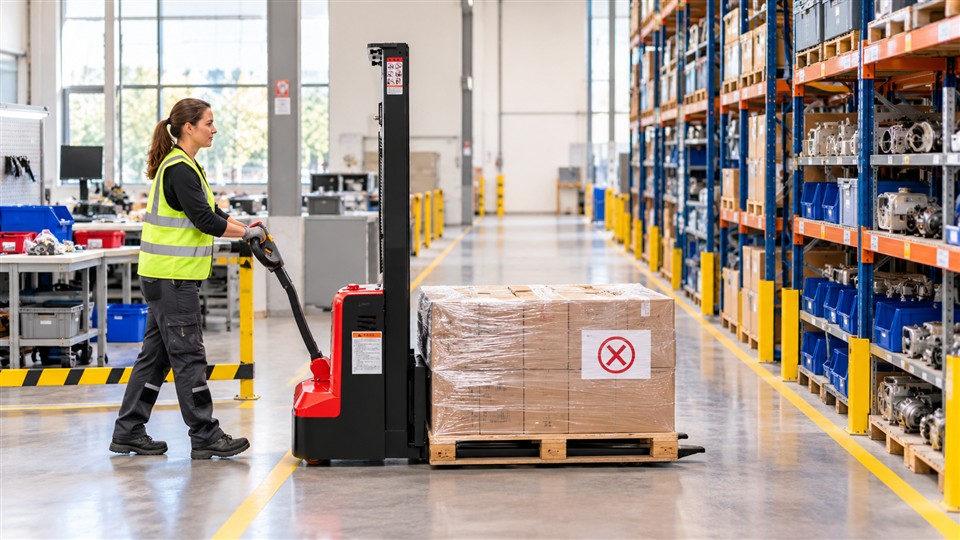
Configuration and route survey: Measure pallet weights, load centers, container sizes, rack levels, lift height, aisle width, floor slope and turn clearance. Verify the truck’s capacity at the required height with the real packaging and any attachments. Check whether counterbalanced or reach-style geometry is appropriate for the layout and whether floor transitions call for an all-terrain variant. Confirm battery capacity, charger compatibility, parking space and opportunity charging against actual shift and peak-volume data.
Review the MYCPDB counterbalanced stacker as an initial product reference. Verify capacity, attachment, load center and operating limits for the proposed task.
Operating and safety controls: Keep pedestrians separated from reverse-flow lanes and mark inspection holds so unverified loads are not stacked. Secure irregular boxes against falling; damaged pallets should be stabilized or rejected before travel. Train operators to stop if the disposition label is missing, the load shifts or a route is blocked. Inspect forks, mast, chains, controls, brakes, wheels, alarms and battery connections daily. Keep repair tools and waste materials outside the truck aisle.
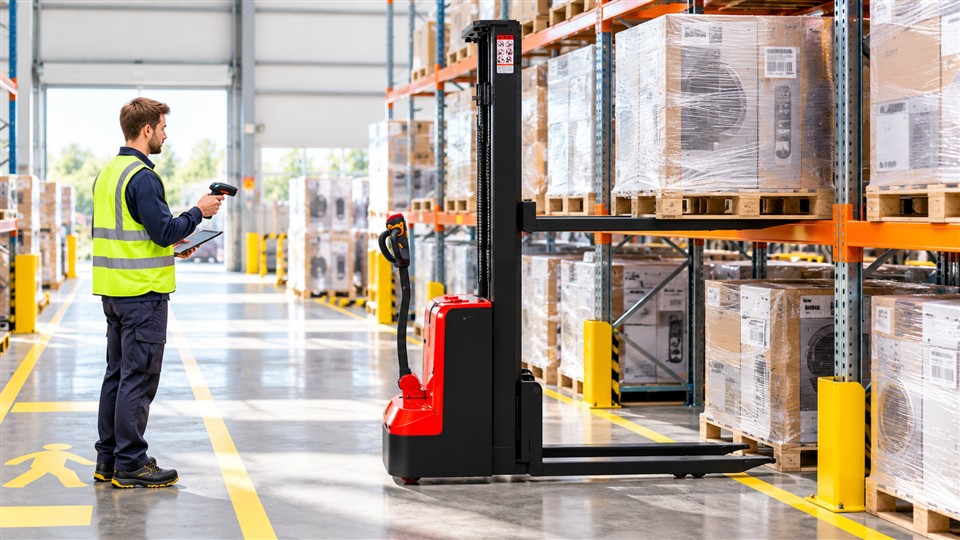
Compare the MYCDDH all-terrain stacker for another configuration view and confirm current technical information with the supplier.
Performance and total cost: Track return-to-triage time, disposition accuracy, inventory reclassification, re-handles, storage density, charging downtime and product damage. Include scanning process changes, operator training, repair-lane layout, battery infrastructure and service access. Review both a routine day and a peak returns wave. If delays stem from slow inspection decisions or missing product data, adding stackers will not improve the time to resale; fix the information handoff as well.
Supplier review: Provide return-pallet data, rack drawings, throughput peaks, aisle dimensions, floor conditions, lift height and charging profile. Ask for a configuration review for each material stream and confirm service coverage. Shandong Zhuogong Machinery equipment Co.,Ltd, through ZGFORKLIFT and MYZG, can review stackers for documented circular-commerce workflows.
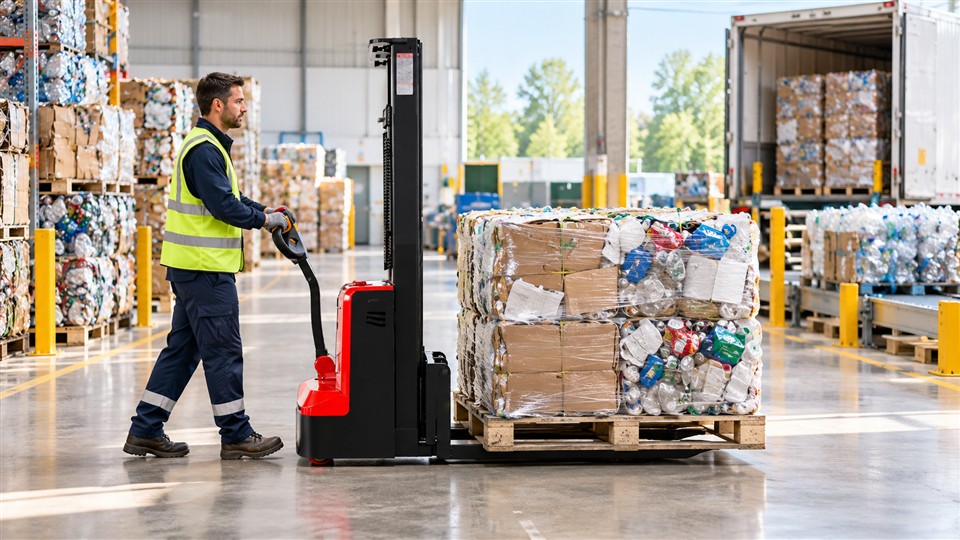
The CDD15G stand-on stacker is a third product reference. Specifications and availability may vary by market; verify details before purchase or operation.
Contact Shandong Zhuogong Machinery equipment Co.,Ltd for an application review. ZGFORKLIFT / MYZG sales: vip@mingyuforklift.com; telephone +86-0535-2090977; WhatsApp +86 131 8160 2336. Address: Xiaqiu Town, Laizhou, Yantai City, Shandong Province, China.
For a practical recommendation, send destination country, maximum load, load-center distance, route width, lift height, ground or floor condition, operating hours and work environment. These details let the engineering team review a specific duty rather than rely on a catalogue-only answer.
Name: selena
Mobile:+86-13176910558
Tel:+86-0535-2090977
Whatsapp:8613181602336
Email:vip@mingyuforklift.com
Add:Xiaqiu Town, Laizhou, Yantai City, Shandong Province, China