
vip@mingyuforklift.com
+86-0535-2090977

In the world of material handling, the choice of fuel is a high-stakes engineering decision. While passenger vehicles have long relied on gasoline and the heavy-duty trucking industry favors diesel, the forklift industry has carved out a unique niche for Liquid Propane Gas (LPG).
To the casual observer, a propane forklift and a gasoline forklift might look identical, but the technical reasons for choosing one over the other involve complex considerations of combustion chemistry, indoor air quality (IAQ) regulations, and engine longevity.
1. Combustion Chemistry and Indoor Safety
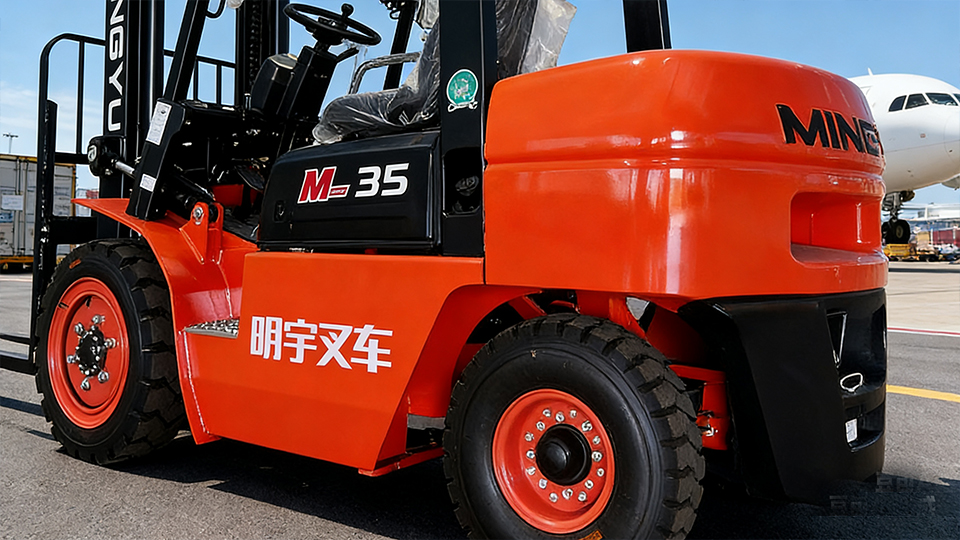
The most significant driver for propane use is emission profiles. Forklifts are unique because they frequently transition between outdoor yards and enclosed warehouses.1
Carbon Monoxide (CO) Mitigation
In a spark-ignited internal combustion engine, gasoline produces significantly higher levels of carbon monoxide (CO) and particulate matter than propane.2
Gasoline: A complex mixture of hydrocarbons ($C_4$ to $C_{12}$), gasoline often results in "dirty" combustion, especially during cold starts or idling. This produces soot and high concentrations of CO.
Propane: Consisting primarily of 3$C_3H_8$, propane has a simpler molecular structure.4 When burned in a well-tuned engine, it produces mostly carbon dioxide (5$CO_2$) and water vapor (6$H_2O$).7
Because propane is a gaseous fuel when it enters the combustion chamber, it mixes more thoroughly with air than liquid gasoline droplets. This leads to a more complete burn, making it safe for indoor use under OSHA and NIOSH ventilation standards, whereas gasoline exhaust would quickly reach toxic levels in a confined space.8
2. Engine Longevity and Maintenance
From a mechanical engineering perspective, propane is a "dry" fuel, which offers several technical advantages for the internal components of the engine.
Carbon Deposits and Oil Contamination
Gasoline contains additives and heavy carbon chains that do not always burn off. These remnants create carbon buildup on valves, piston heads, and spark plugs. Furthermore, unburnt gasoline can wash down cylinder walls, thinning the lubricating oil (oil dilution).
Propane, by contrast:
Eliminates "Gumming": Propane does not degrade or turn into "varnish" over time like gasoline does in a fuel tank.
Extends Oil Life: Because propane burns so cleanly, the engine oil stays clear for much longer. It is common for propane engines to go twice as long between oil changes compared to gasoline counterparts.9
Higher Octane Rating: Propane typically has an octane rating of roughly 104 to 112, significantly higher than premium gasoline.10 This allows for higher compression ratios and better resistance to "engine knock," leading to a smoother power curve.
3. The Pressurized Fuel System Advantage
Unlike gasoline, which is stored in a vented tank at atmospheric pressure, propane is stored in a sealed, high-pressure cylinder.11 This distinction provides two critical operational benefits.
1. Zero Evaporative Emissions
Gasoline tanks must be vented to prevent pressure buildup, leading to the release of Volatile Organic Compounds (VOCs) into the warehouse even when the forklift is turned off. Propane systems are closed loops; no fuel is lost to evaporation, and no fumes are released unless the engine is running.
2. Refueling Speed vs. Infrastructure
While electric forklifts are gaining ground, they require hours of "soak time" to recharge.12 A propane forklift can be refueled in under 60 seconds by swapping a 33-lb cylinder.
|
Feature |
Propane (LPG) |
Gasoline |
|
Fuel State |
Pressurized Liquid (Gas at intake) |
Liquid |
|
Refueling Time |
< 5 Minutes (Tank swap) |
5–10 Minutes (Pumping) |
|
Indoor Approval |
Yes (with ventilation) |
Generally No |
|
Octane Rating |
104–112 |
87–93 |
4. Cold Start Performance
Gasoline engines often struggle in cold storage or winter outdoor environments because liquid fuel does not atomize well at low temperatures. Propane is stored under pressure as a liquid but vaporizes into a gas the moment it is released into the regulator. This gaseous state allows for instantaneous ignition even in sub-zero temperatures, making it the preferred choice for "cold-chain" logistics and outdoor lumber yards.
5. Conclusion: The Industry Standard
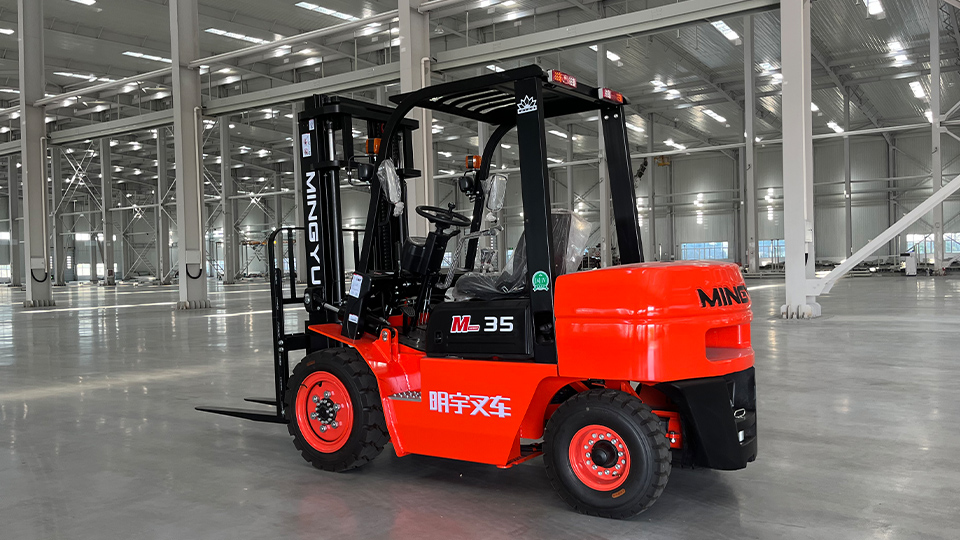
While gasoline forklifts still exist for specialized outdoor-only applications, propane has become the industrial standard because it solves the "indoor-outdoor" paradox.13 It provides the high-torque performance of an internal combustion engine with an emission profile clean enough to meet stringent indoor air quality regulations.14
As long as warehouses require high-uptime, 24/7 operations, the chemistry and mechanical simplicity of propane will continue to outperform gasoline in the material handling sector.
Name: selena
Mobile:+86-13176910558
Tel:+86-0535-2090977
Whatsapp:8613181602336
Email:vip@mingyuforklift.com
Add:Xiaqiu Town, Laizhou, Yantai City, Shandong Province, China