vip@mingyuforklift.com
+86-0535-2090977

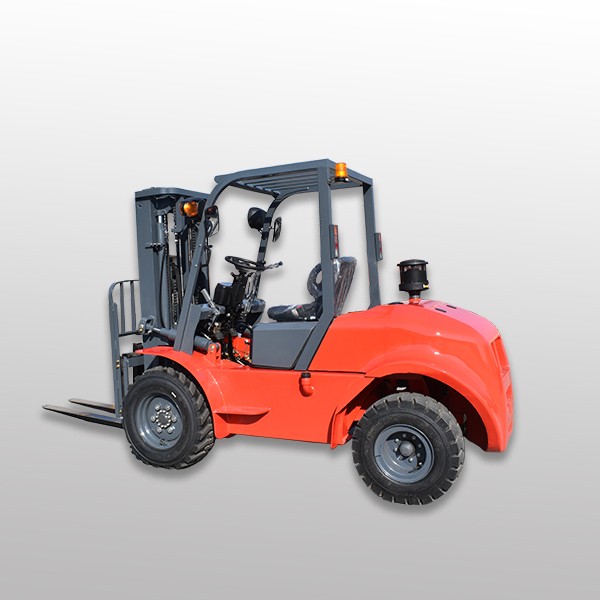
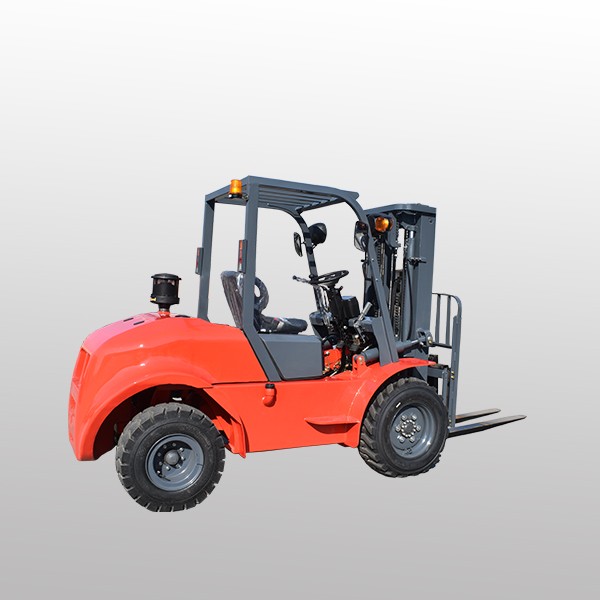
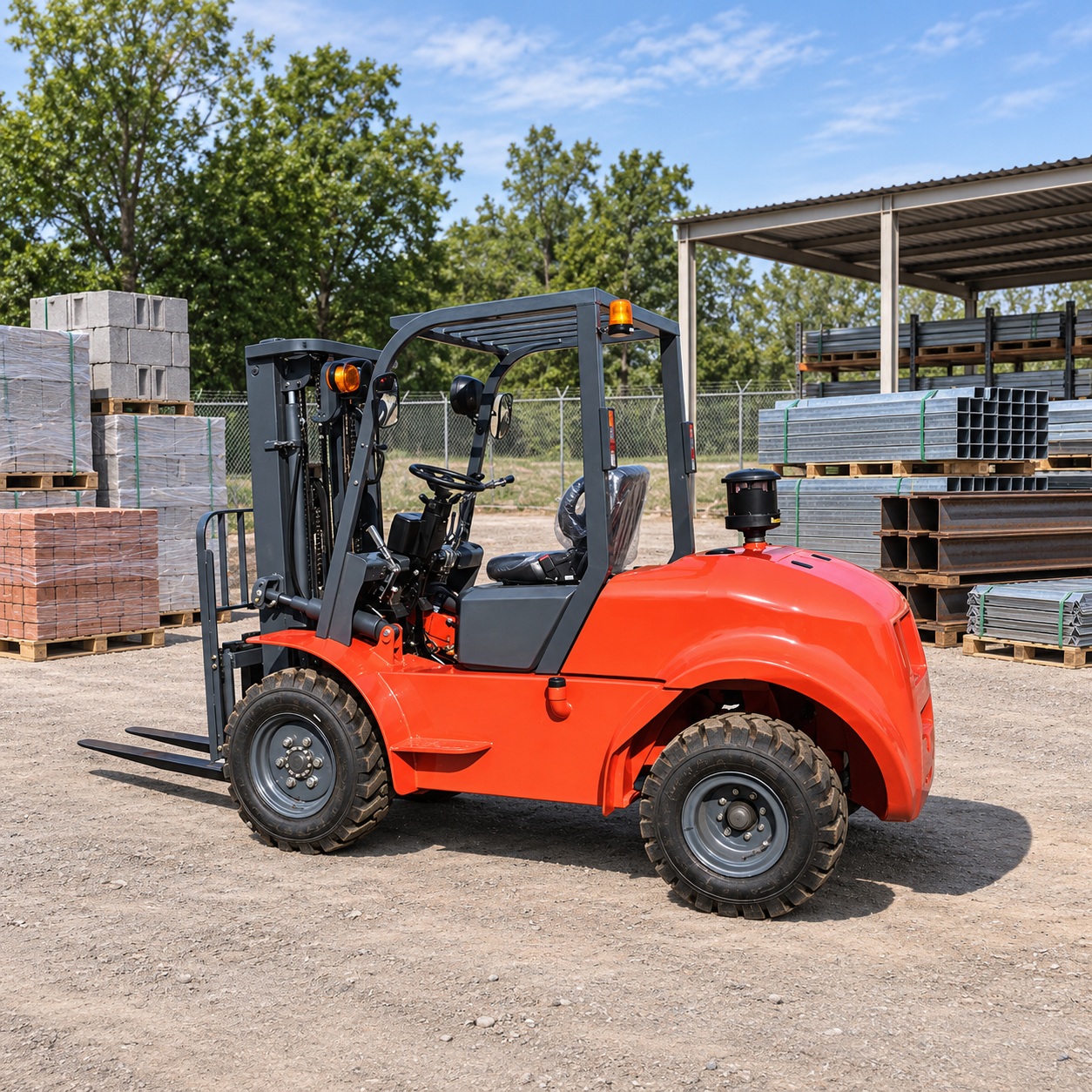
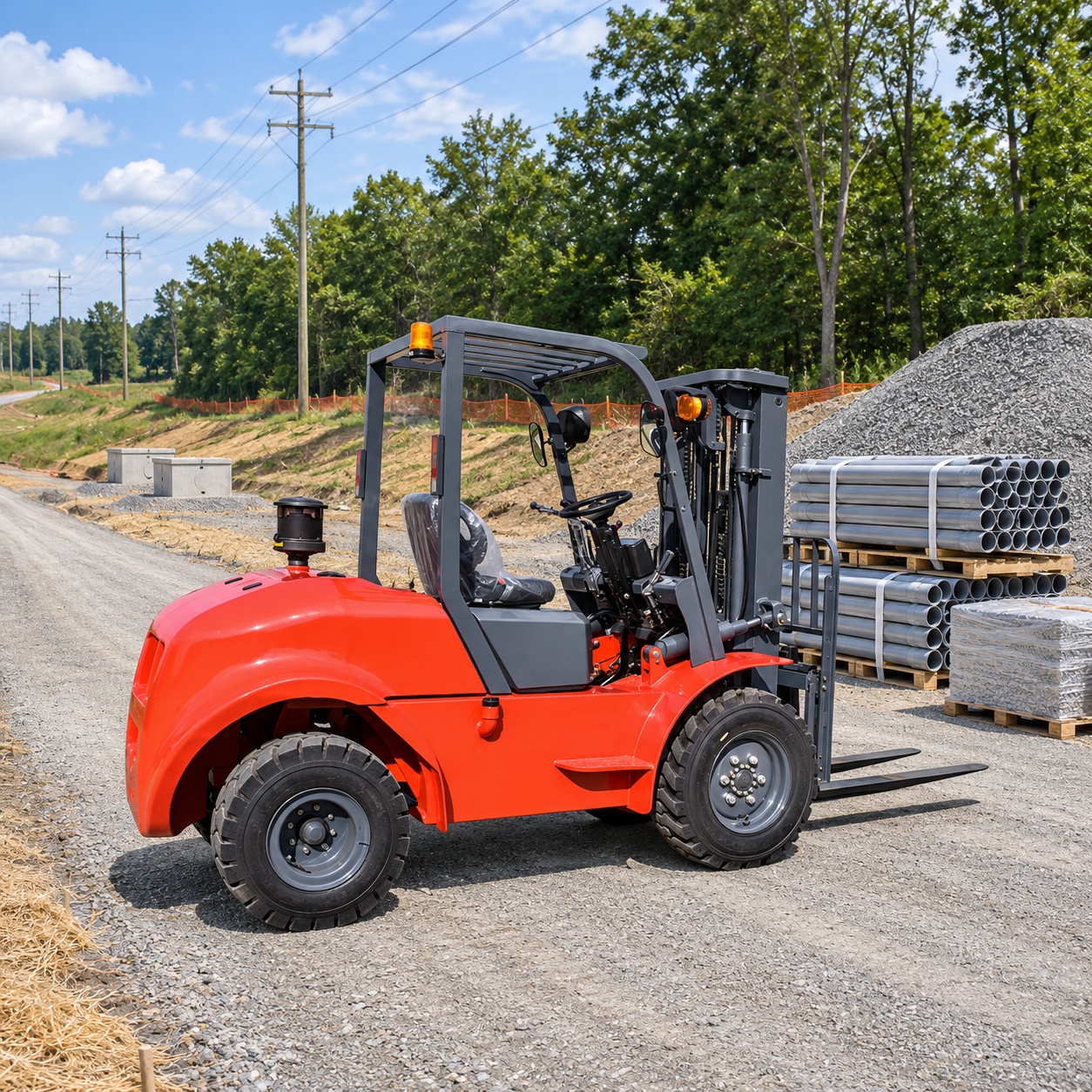
The CPC35SY rough-terrain diesel forklift is an orange-red, open-guard ZGFORKLIFT / MYZG machine shown in the website's established product photographs. This application guide concerns construction supply yards and utility project stores where palletized materials must travel over prepared outdoor surfaces. Customers need dependable access between receiving and a laydown area, but the label “off-road” does not make weak ground, sharp cross-slopes or unprotected excavation edges safe. The appropriate solution combines the right vehicle configuration with a measured load, a released route, trained operators and a service plan.
At a utility project, pallets of fittings, conduit supports and packaged tools may arrive at a roadside delivery point while crews work farther inside a controlled site. A general contractor may need to move bricks or bagged goods between a storage container and a firm staging pad. These jobs are often seasonal and the ground can change after rain or repeated truck movements. The buyer should identify the load weight, package stability, center of gravity, travel path, gradients and turning space before choosing the forklift. A temporary route should be compacted, drained, marked and inspected as conditions change. Where it cannot be made suitable, replan the delivery method rather than asking the forklift to cross an unverified surface.
The original CPC35SY product page identifies a nominal 3,500 kg model with a diesel power source. Its published dimensions and features are a starting reference; the ordered truck's capacity plate, engine, tires, mast, forks and documents determine the actual specification. The usable capacity at the intended height and load center must be confirmed, especially for long pallets or attachments. Do not use a source page's broad claims about terrain or service as proof of performance on the customer's route.
Prepare a written worksheet with the maximum and routine load weights, pallet or bundle dimensions, center of gravity, lifting points, fork entry and required set-down height. Measure the narrowest gate, lowest overhead structure, smallest turning space, steepest grade and the weakest section of the travel surface. State whether the machine works only outside or approaches a building where exhaust ventilation must be assessed. Ask for a capacity review of the exact mast and any fork positioner, extension or special attachment. The rough-terrain forklift category offers alternative chassis for comparison when clearance, tire size or load class differ.
A complete quotation should identify the engine and emissions configuration, transmission, drive arrangement, mast and collapsed height, fork dimensions, tire specification, safety equipment, manuals, warranty terms, packing dimensions and recommended spare parts. Confirm what is standard and what is optional. Compare ownership cost, including diesel fuel, engine and hydraulic maintenance, tires, transport to remote sites, operator training and downtime. A machine that is too large for the access route or too heavy for the ground may cost more than a well-matched alternative even if its nominal lifting capacity looks attractive. Review the wider All Products index when deciding between an off-road forklift and another material-handling type.
For a building-supply depot, the forklift can transfer sound pallets from a delivery lane to a designated outdoor bay after the yard is assessed for load-bearing and drainage. For a pipeline or cable installation project, it can move approved packaged supplies along a firm construction access road, with a spotter at blind corners and clear separation from pedestrians. For a concrete contractor, it can stage palletized fittings beside an installation zone without blocking emergency access. These are examples of planning tasks, not claims about completed customer projects. Each use needs a route trial with a representative load and a supervisor empowered to stop work if the surface deteriorates.
Operators should keep the load at the travel height specified by the manual, avoid sudden turns and never rely on all-terrain tires to overcome soft shoulders or unmeasured cross-slope. Verify bridge plates, ramps and trailer decks for the combined weight of machine and load. A spotter needs agreed signals and must remain outside the forklift path. Pedestrian routes, truck routes and laydown areas should be marked before delivery peaks begin. The product category overview helps compare a conventional diesel truck for firm paved work, while the equipment FAQ can frame technical questions before final selection.
An operator's daily check should include forks and locks, mast chains, hydraulic hoses, steering response, brakes, tire condition, wheel fasteners, fluid levels, warning devices, lights, horn, seat restraint and visible leaks. Park and isolate a machine with an unsafe defect. Site dust, vibration and mud can shorten the interval between cleaning and inspection, so maintenance should follow the supplied truck and engine manuals as well as actual duty. Qualified technicians should service brakes, lifting systems, hydraulic leaks and engine emissions components. Record work by serial number and operating hours. Where a truck is sent to a remote site, prepare filters, belts, hoses, seals and other confirmed service items before deployment.
Dealers serving contractors can improve the handover by documenting the customer's loads, route, operator training and first-service inspection. A repeat failure may point to a damaged surface or unsuitable pallet rather than a faulty part. Keep a clear channel for parts identification, technical support and warranty decisions. The parts and dealer page is a starting point, while availability, lead times and local repair responsibility belong in the actual agreement. Cooperation cases or results should be published only with verifiable records and customer permission.
Shandong Zhuogong Machinery Equipment Co., Ltd. can discuss ZGFORKLIFT / MYZG configuration, export packing, manuals, spares and after-sales communication. State the destination country before selecting an engine. CE-related declarations, if required, must correspond to the final completed vehicle. EPA or other engine-emissions requirements depend on the precise engine and import market; request the matching documents rather than assuming a general website statement applies. The buyer or importer should also check local operating, registration and environmental requirements. Export experience and service capacity can be evaluated using order documentation and permitted references, without inventing a certification, case study or performance figure.
For an application review, send load photos, mass and center of gravity; route images and measured gradients; soil or pavement description; required lift height; daily hours; attachment needs; destination market; and expected quantity. The company background introduces the supplier, and the contact page accepts a detailed enquiry. Email vip@mingyuforklift.com, call +86-0535-2090977, or message WhatsApp +86 131 8160 2336. Shandong Zhuogong Machinery Equipment Co., Ltd. can then assess the CPC35SY against the proposed site. Final specifications and safe operating limits come from the supplied documentation, site assessment and signed technical agreement.
Name: selena
Mobile:+86-13176910558
Tel:+86-0535-2090977
Whatsapp:8613181602336
Email:vip@mingyuforklift.com
Add:Xiaqiu Town, Laizhou, Yantai City, Shandong Province, China