vip@mingyuforklift.com
+86-0535-2090977

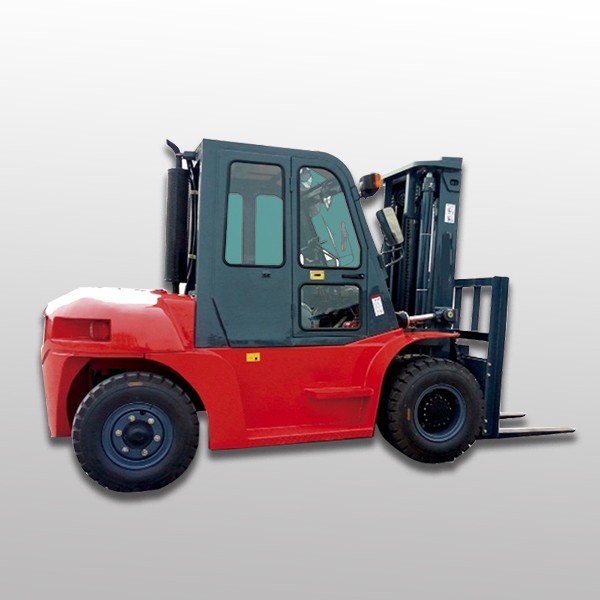
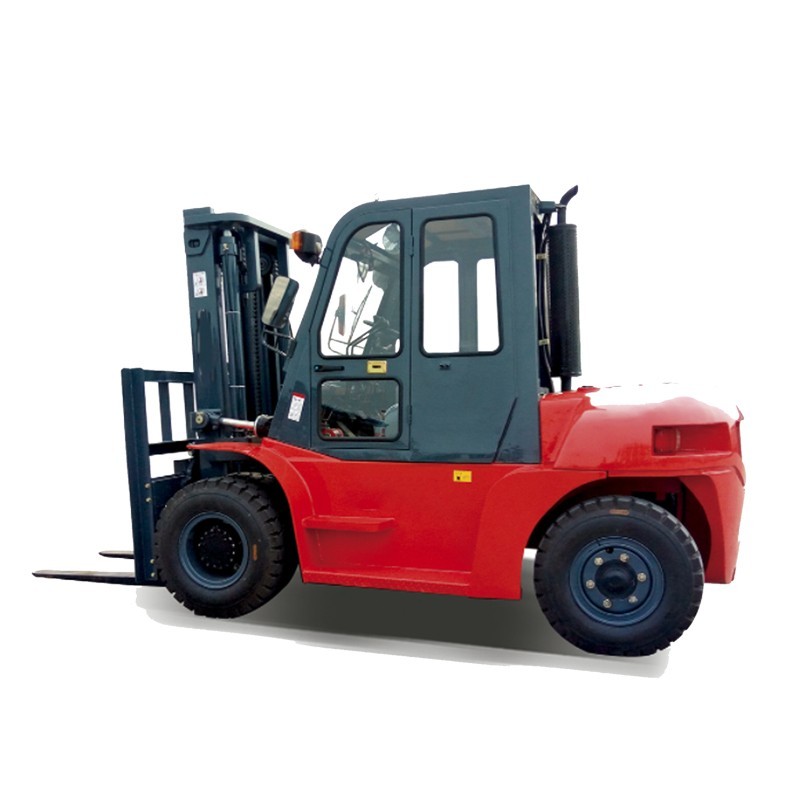
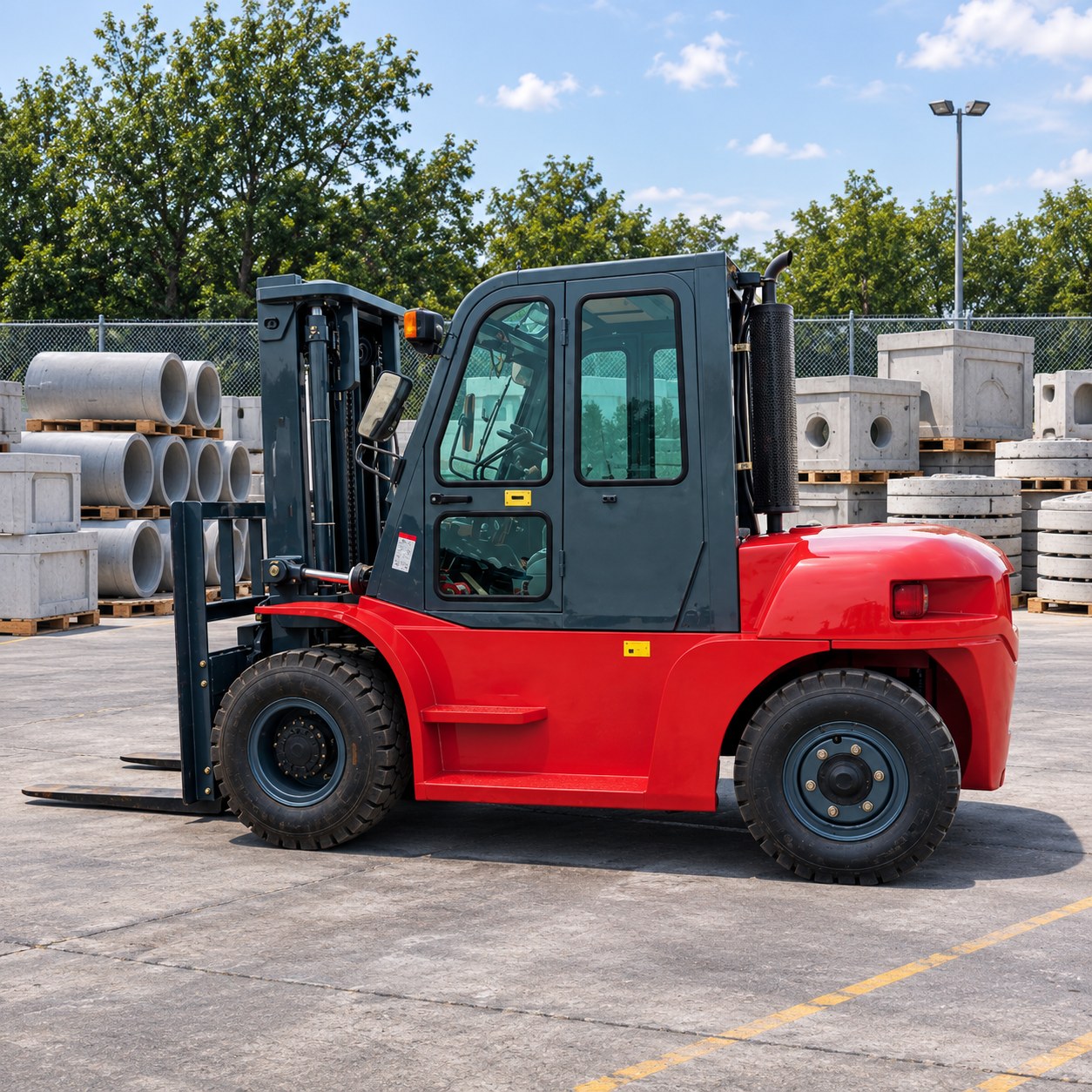
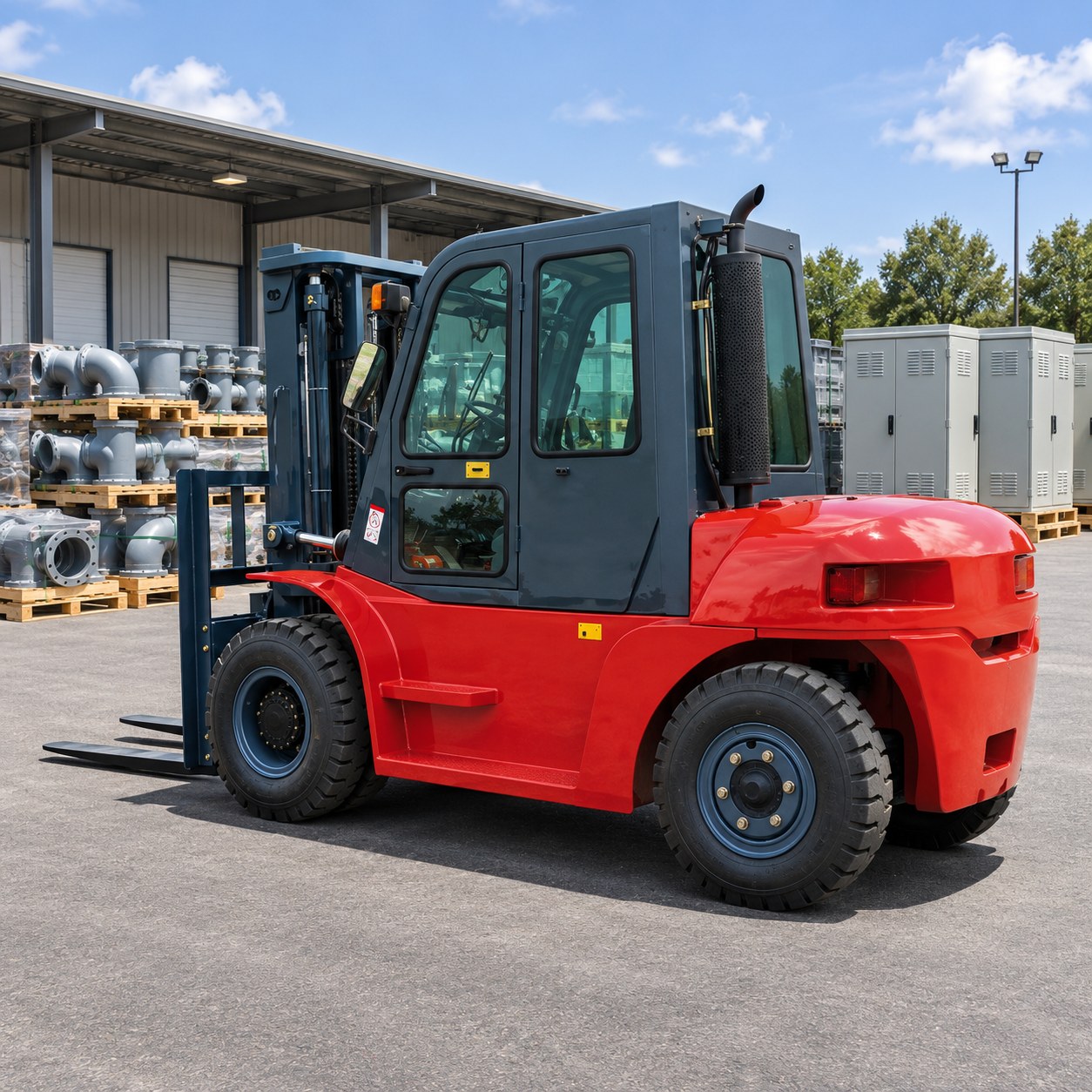
The CPC60 diesel forklift shown on this website is a red counterbalance truck with a dark enclosed cab, large tires and a rear exhaust in its source photographs. This ZGFORKLIFT / MYZG guide considers utility-infrastructure supply yards that stage palletized concrete components, pipe fittings and electrical cabinets on engineered paved routes. Customers need controlled heavy-load transfers between arriving trucks, storage and project dispatch. The solution begins with a load and ground survey, then an exact machine specification, operator plan and service arrangement. An enclosed cab does not make weak ground or unsafe gradients suitable for a forklift.
Infrastructure components vary in shape and center of gravity. A pallet of pipe fittings may be compact and dense; a cabinet may be tall and vulnerable to fork damage; a concrete chamber may require a purpose-designed base. Record mass, dimensions, fork pockets, packaging and true load center for each recurring item. Walk the route from delivery vehicle to inspection and onward to project staging. Check pavement bearing strength, joints, drainage, slope, turning radius, overhead clearance and trailer restraint. Keep pedestrian inspection and loading activities separate from moving equipment.
The CPC60 source model page establishes the model family and truck appearance. Obtain the rated capacity and residual-capacity data for the precise delivered mast, fork length, attachment and load center. Do not infer that a truck can carry any object merely because its gross mass appears below a family rating. An offset or high-center load needs an engineered handling plan and possibly another machine. The supplier should confirm the final configuration in writing and provide the machine's capacity plate.
Compare CPC60 with the diesel forklift range and other handling methods for the customer's real route. A smaller truck may be more maneuverable, but only if it safely handles the heaviest load at the required height. A larger truck may add turning and pavement demands. Ask for the exact engine and emissions variant, mast, forks, tires, cab features, warning devices, maintenance items, warranty and technical support. Measure the loaded turning space before assuming a yard has room for a heavy counterbalance truck.
A utility depot may use one truck for receiving and another machine for remote project sites. The All Products catalog helps compare equipment families, but the final choice should follow a site trial with a representative pallet and a ground assessment. Include fuel supply, shift length, technician coverage and spare parts in the cost comparison. Diesel operation in a building requires a local exhaust and ventilation assessment; an enclosed cab protects the operator from some weather but does not remove emissions from the surrounding work area.
At the receiving point, restrain the trailer, verify the loading surface and inspect the pallet or cradle. Identify a clear landing zone so inspectors approach only after the truck has set down the component and withdrawn. Place pipe fittings and concrete items in stable storage locations with accessible fork entry. Travel with loads low, slow at joints and blind turns, and avoid rapid steering with a high or offset load. Do not cross unsupported covers, trenches or utility access chambers. A route should be checked again after rain, construction changes or new material stacks alter visibility.
If a specialized attachment is proposed for pipes or irregular objects, the fork positioner reference can begin the discussion, but the source CPC60 photographs show ordinary forks and do not prove any attachment is included. Obtain a compatibility check and a revised capacity plate before use. In some cases a purpose-built pallet or another lifting device is safer than adapting a forklift. Keep handling methods documented for each load family so operators do not improvise during a rushed project shipment.
Inspect forks, mast rails and chains, tires, brakes, steering, hydraulic hoses, cab doors, seat belt, lights, warning devices, exhaust and readable capacity plate before each shift. Stop operation for a damaged fork, fluid leak, brake defect or abnormal engine condition until qualified inspection. Record faults by serial number and operating hours. Heavy yards expose equipment to dust and grit; follow the supplied manual for filters, cooling, lubrication and tire care. Keep the travel surface free of scrap that could damage tires or create an unstable turn.
A procurement team should know who can supply routine filters, hoses, tires and mast components promptly. The parts business page provides a route for inquiries; exact components must match the delivered engine, mast and serial number. Agree on a local technician, escalation process and planned maintenance windows before a project shipment depends on one truck. Fuel handling and service work belong in designated areas subject to local spill and fire procedures.
A dealer should survey an infrastructure customer's load drawings, pavement, trailer access and shift pattern before quoting CPC60 stock. Demonstrate the same configuration proposed for sale and record the representative load and route. Include operator familiarization, parts ordering and service response. The company page supports supplier review. Any cooperation case or export experience used in a purchasing decision should be backed by shareable evidence; a generated application image is an illustration, not proof of a completed customer project.
Shandong Zhuogong Machinery Equipment Co., Ltd. can be asked for manuals, engine details, packing records, spare-parts lists and after-sales terms for the destination market. For CE-related requirements, request evidence for the exact delivered unit and have the importer check applicability. EPA or other diesel-emissions rules depend on engine and jurisdiction, so obtain the relevant written documents rather than rely on broad marketing statements. Put certification needs, labeling, warranty and support in the signed order. The FAQ is general context, not a market-specific compliance decision.
Send load mass, dimensions and center of gravity, lift height, pavement and dock plan, operating hours and destination country to Shandong Zhuogong Machinery Equipment Co., Ltd. through the contact page, email vip@mingyuforklift.com or telephone +86-0535-2090977. ZGFORKLIFT / MYZG can then discuss whether a CPC60 configuration fits the utility-infrastructure supply route and confirm all technical and commercial terms in writing.
Name: selena
Mobile:+86-13176910558
Tel:+86-0535-2090977
Whatsapp:8613181602336
Email:vip@mingyuforklift.com
Add:Xiaqiu Town, Laizhou, Yantai City, Shandong Province, China