vip@mingyuforklift.com
+86-0535-2090977

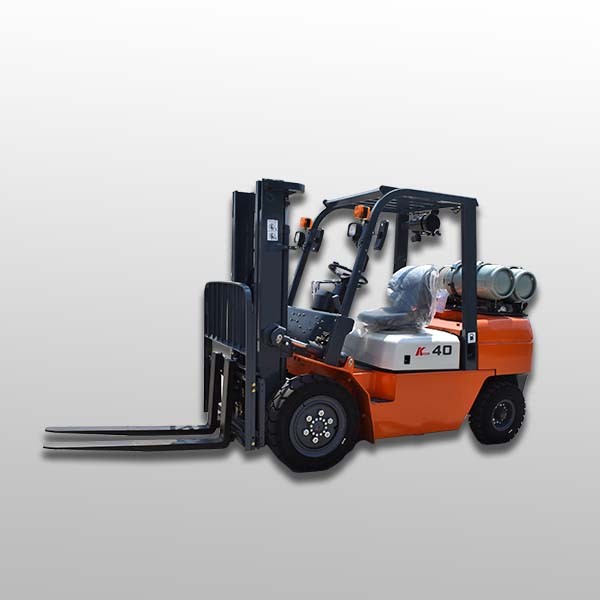
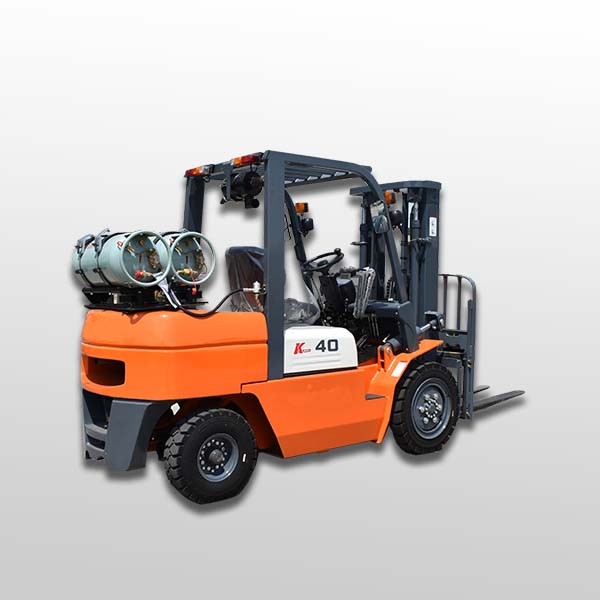
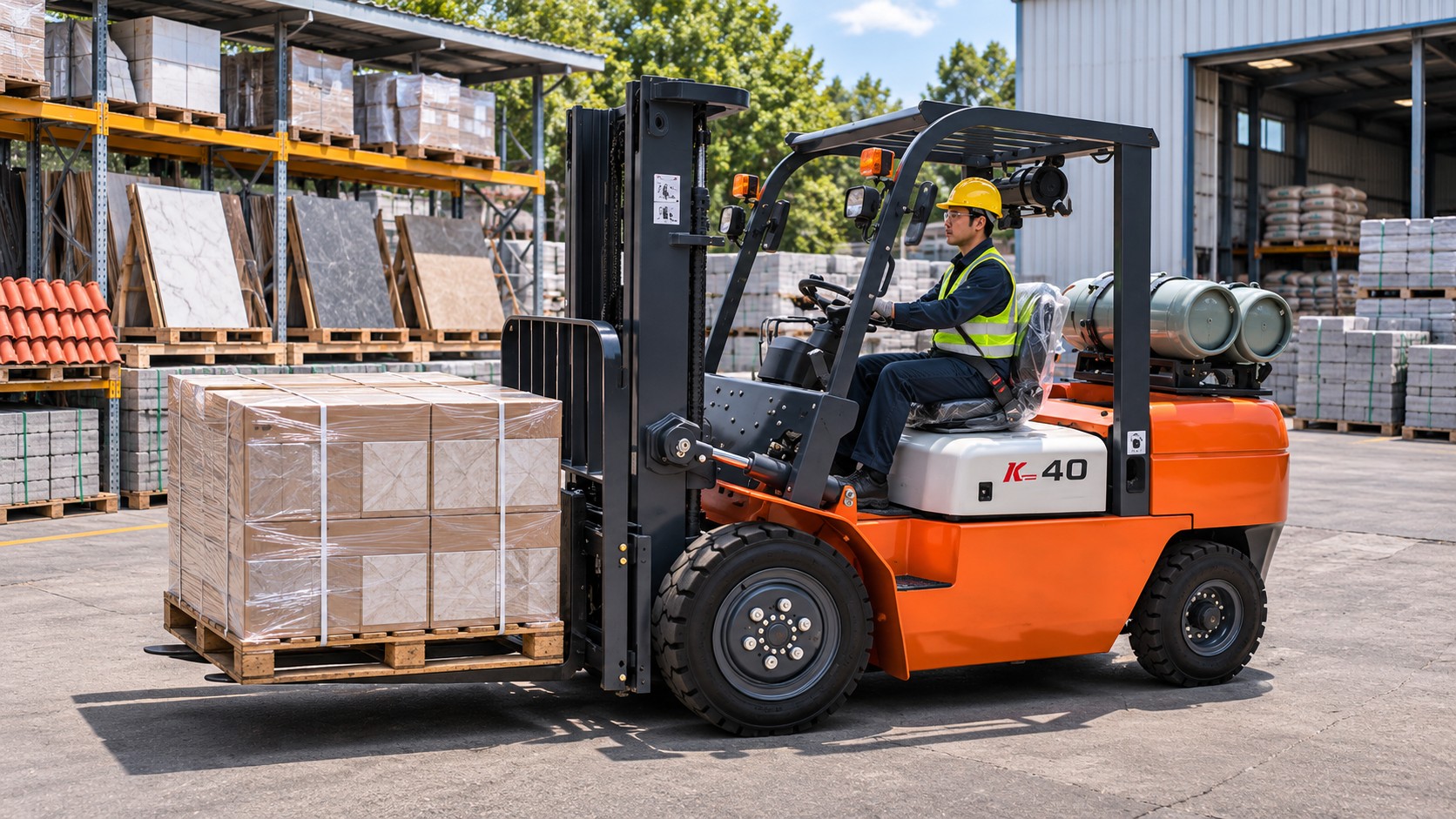
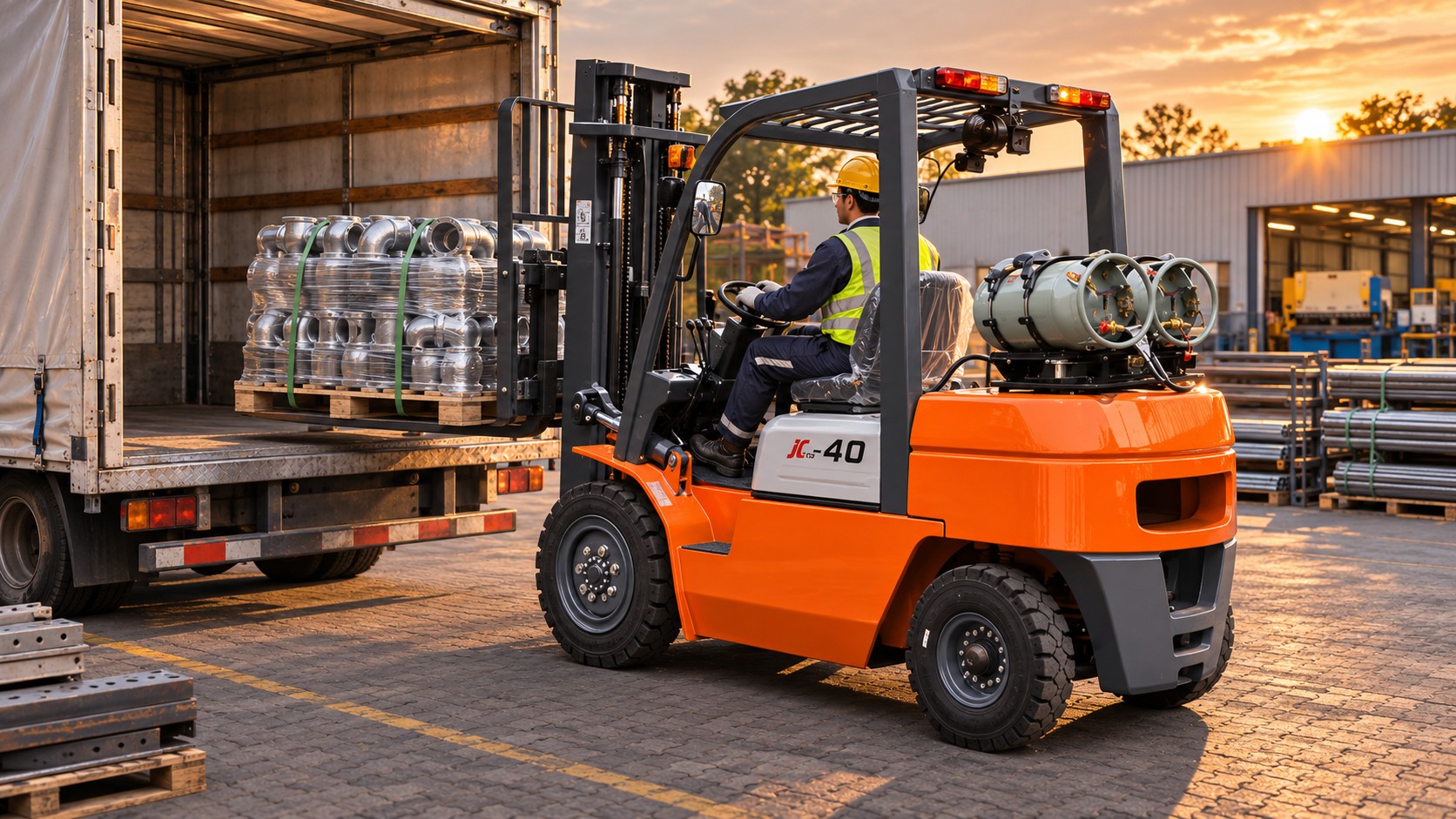
The CPY40 gasoline/LPG forklift on this site is an orange counterbalance truck with an open overhead guard and twin rear LPG cylinders. Its original listing identifies a 4,000 kg rated load and calls the parameter-table variant CPCR40. This ZGFORKLIFT / MYZG guide focuses on paved building-material and metal-fittings distribution yards where buyers need dependable loading, pallet transfers and flexible fuel planning. It treats the photographed machine as the product reference; final engine, mast, fuel configuration and capacity must be confirmed against the unit offered.
A distributor may unload incoming tile, stone, metal fittings or crated equipment, stage orders by route, and load trucks at a different dock. The challenge is not a single headline capacity: pallets differ in mass, center of gravity, fork entry and packaging strength. Survey the heaviest real load, its load center and its lifting height, then map every travel path. Check pavement condition, gradients, drainage, overhead obstructions, pedestrian crossings and turning room. A 4-ton class forklift can only be selected after the delivered truck's capacity plate and residual-capacity chart match these conditions.
The CPY40 original model page provides the identity and source photographs for this application guide. Its CPY40 title and CPCR40 parameter label should be reconciled on the quotation and nameplate before ordering. Ask for a written specification showing model designation, engine, rated capacity, load center, mast, fuel equipment, tire type and options. This simple check prevents a sales description from being mistaken for the delivered configuration.
For a mixed yard, build a sample-load schedule that lists mass, footprint, pallet construction and maximum stacking height. Trial the truck on the narrowest turn and beside the actual loading vehicle. Check the mast's lowered height against doors and truck canopies, and its raised height against racks and overhead services. A longer fork or attachment can move the load center and lower remaining capacity. Ask the supplier for the correct capacity plate after options are selected. Compare acquisition cost with fuel delivery, cylinder handling, tire wear, planned service and downtime, rather than using the purchase price alone.
The gasoline/LPG forklift category is useful when comparing this truck with other fuel and load classes. Confirm whether the quoted unit is gasoline, LPG or a specifically documented dual-fuel configuration. Cylinder exchange and storage need trained staff, suitable ventilation and local fire-code compliance. LPG exhaust still requires an exposure assessment; never assume a combustion forklift is suitable for enclosed production or food spaces without a site-specific ventilation and regulatory review.
At a building-supply depot, group inbound pallets by load family and reserve a firm, level receiving zone. Restrain the delivery vehicle, inspect packaging and fork pockets, and keep people outside the operating envelope. Move loads at a low travel height and avoid sudden steering. At a fabrication dispatch yard, metal fittings may arrive in dense bins; weigh or document each bin and prevent loose items from shifting. At a contractor's yard, separate customer pickup traffic from forklift lanes and establish a marked loading handoff point.
The wider All Products range can help a buyer compare electric and diesel alternatives for a second site with different ventilation or surface conditions. A side shift can simplify careful pallet positioning, but the source images do not establish that this CPY40 includes one. Review the side shifter reference, obtain written compatibility and account for its effect on remaining capacity before specifying the option. Do not use an attachment as a substitute for correct load packaging or driver training.
Set a daily pre-use inspection for tires, forks, mast chains, hydraulic leaks, brakes, steering, lights, horn, seat belt and LPG hoses and connections. Isolate any truck with a suspected fuel leak, damaged fork or abnormal braking. Follow the supplied service schedule for engine oil, cooling, filters, transmission and hydraulic components; record operating hours and recurring faults. Keep cylinders secured and have exchanges performed under the applicable site procedure. Train operators to stop work when pavement deteriorates, loads become unstable or visibility is blocked.
For uptime planning, the parts and service information is a starting point for identifying commonly needed consumables and support channels. Before export, agree on a parts list, maintenance documents, technician response path and warranty terms for the exact serial-numbered machine. The buyer should check whether local engine parts, LPG components and qualified service are available. A demonstration with representative pallets and a preventive-maintenance plan gives a more reliable purchasing decision than an unsupported promise of performance.
A dealer serving construction-material warehouses can package the machine with operator familiarization, an initial inspection, scheduled maintenance and clearly priced spare parts. Segment prospects by load class, operating surface, ventilation and fuel availability. Record the configuration supplied to each customer so future parts and service match the actual engine and mast. If a buyer requests CE documentation or market-specific emissions evidence, including EPA-related evidence where applicable, request the documents for the exact engine and completed truck before making a compliance claim. Requirements differ by market and configuration; this page does not claim a universal certification.
Shandong Zhuogong Machinery Equipment Co., Ltd. can discuss quotation details, export paperwork, packaging, shipping and after-sales arrangements for the selected configuration. Ask for the specific document set, delivery terms and any references relevant to your market; no customer case or export volume is represented here without supporting records. See company information and frequently asked questions while preparing a shortlist. A dealer should keep the final sales specification and local compliance review with the customer's order.
Send the maximum pallet mass, load-center distance, lift height, aisle and door dimensions, operating hours, surface photos, fuel preference and destination market. Specify any side shift, fork length or tire requirement. The supplier can then check whether the CPY40/CPCR40 family is appropriate and provide a configuration-specific quotation and supporting documents. Contact Shandong Zhuogong Machinery Equipment Co., Ltd. through the contact page, email vip@mingyuforklift.com or phone +86-0535-2090977. A measured site plan and representative load are the best starting point for a safe, useful forklift selection.
Name: selena
Mobile:+86-13176910558
Tel:+86-0535-2090977
Whatsapp:8613181602336
Email:vip@mingyuforklift.com
Add:Xiaqiu Town, Laizhou, Yantai City, Shandong Province, China