vip@mingyuforklift.com
+86-0535-2090977

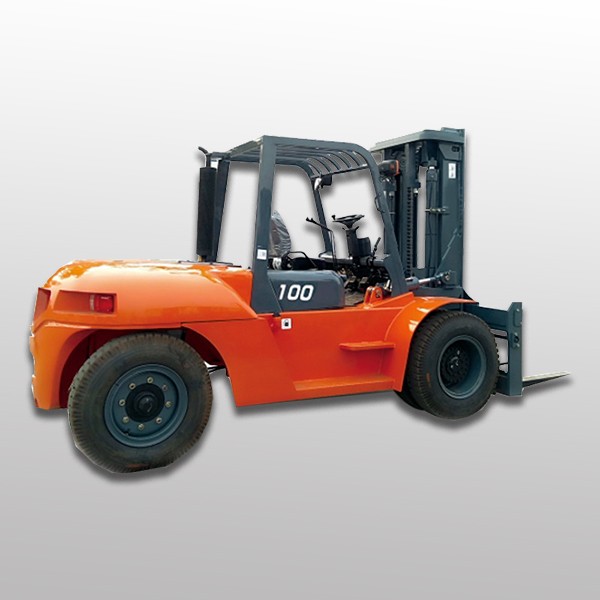
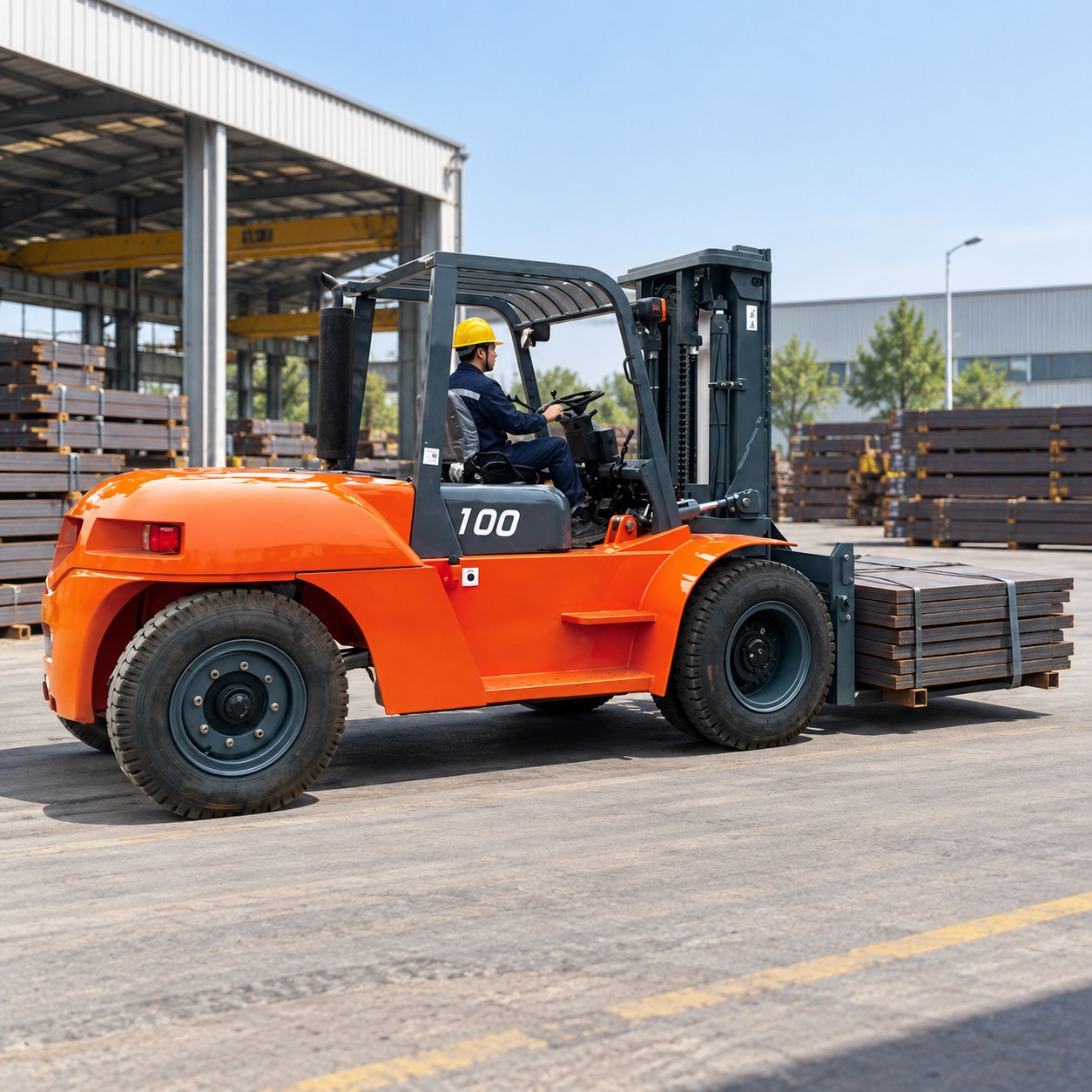
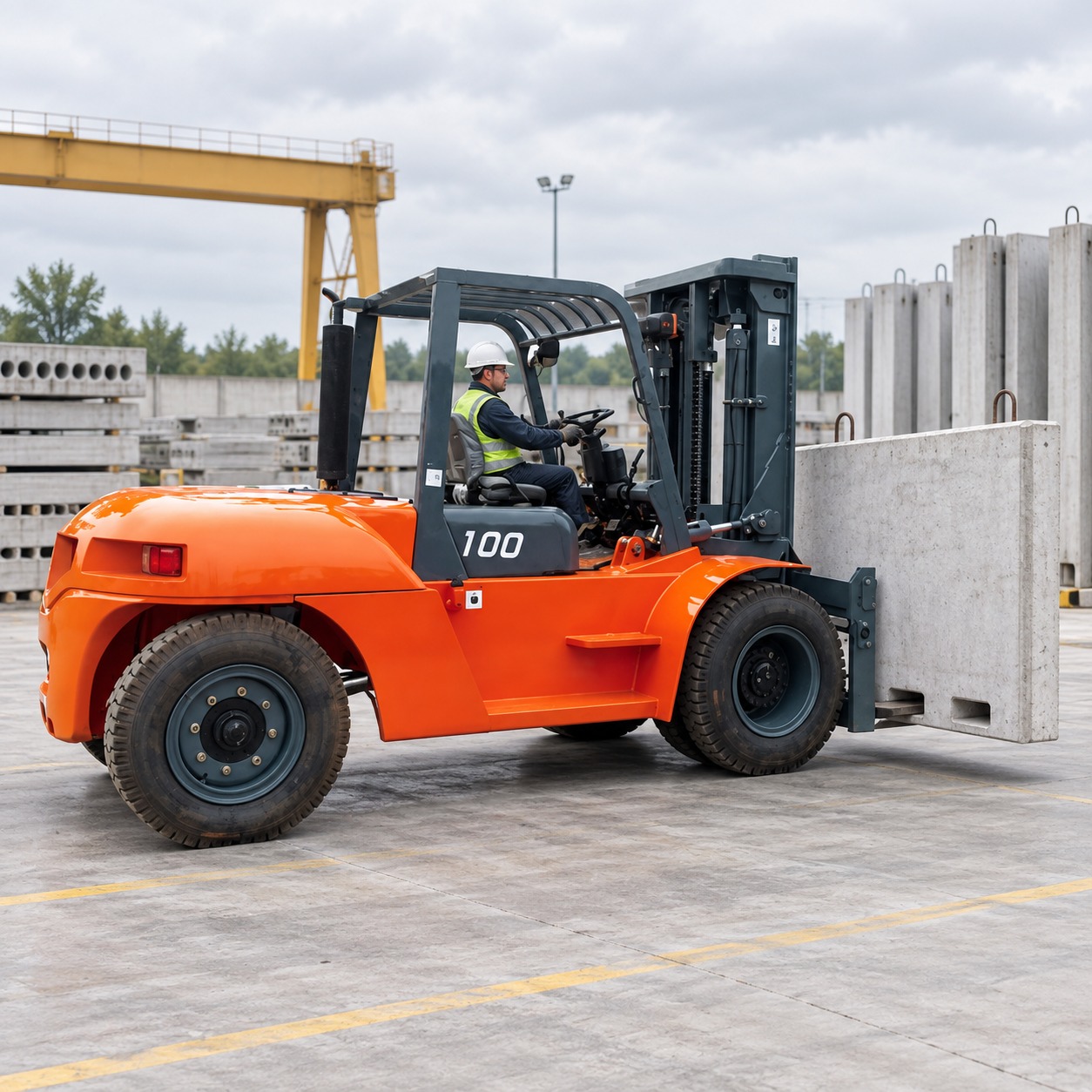
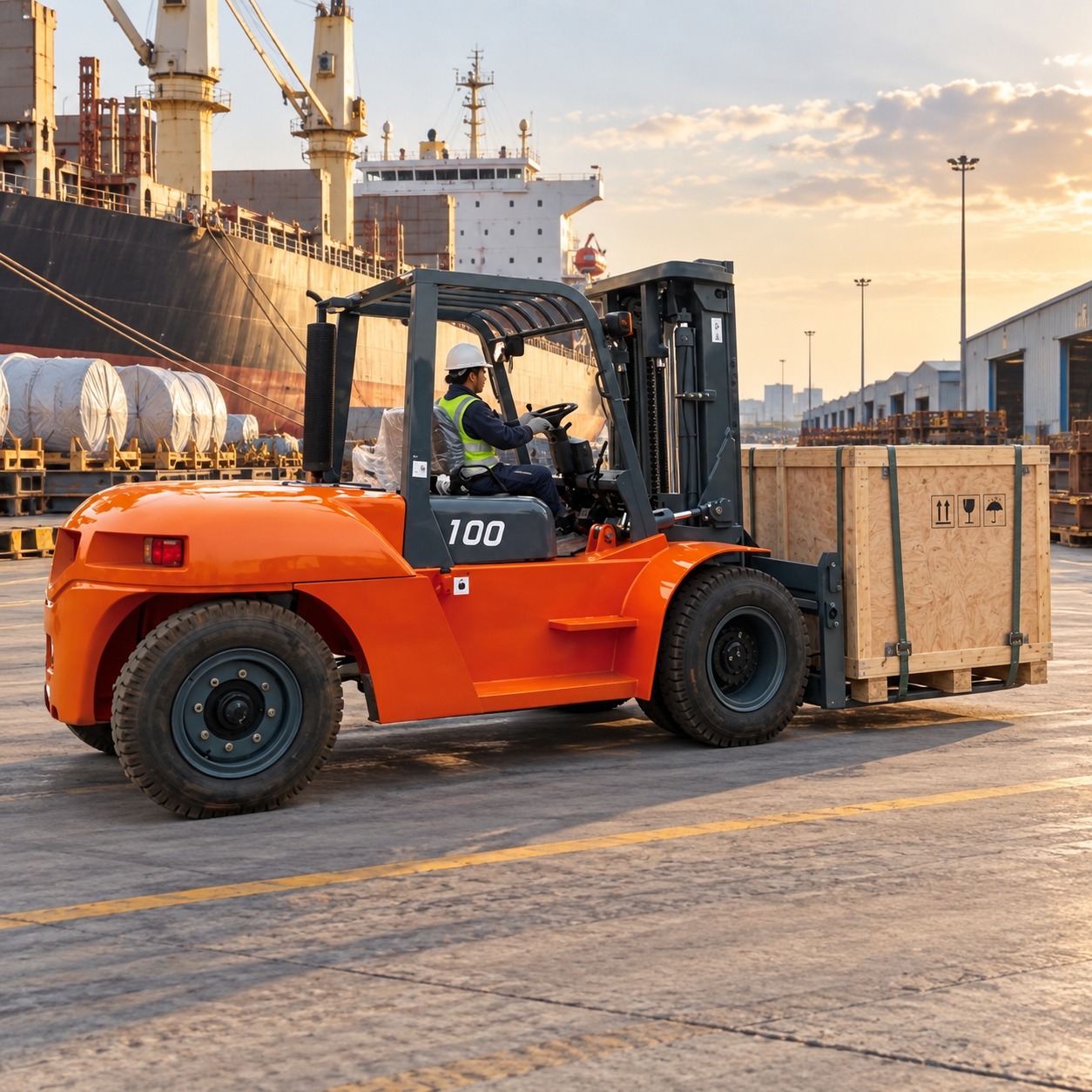
CPCD100K 10 Ton Diesel Forklift — Application-Led Heavy Material Handling
The ZGFORKLIFT / MYZG CPCD100K is an 10-ton diesel forklift for buyers who routinely need to move dense and oversized loads in demanding outdoor work areas. It is intended for applications such as steel stockholding, precast concrete production, heavy cargo terminals, lumber yards, large fabrication and machinery logistics. The 10,000 kg nominal capacity describes the capacity class; it does not guarantee that every 10,000 kg load can be lifted at every height, load center or attachment configuration. Final capacity must always come from the approved data plate for the ordered truck.
A productive selection begins with the real handling task, not a headline rating. Long plate bundles, coils, molds, castings, concrete elements and large export crates can shift the effective load center far beyond a standard pallet. Lift height, mast design, fork length, fork thickness, side shift, fork positioner and other attachments may reduce residual capacity. Shandong Zhuogong Machinery Equipment Co., Ltd. therefore asks buyers to provide load drawings, confirmed weights, center-of-gravity information, route dimensions, surface condition and duty-cycle details before the commercial configuration is finalized.
In a steel service center, buyers often need one truck to handle plate packs, billets, tooling and fabricated assemblies. The challenge is not only weight: long loads can obstruct visibility, increase turning space and create concentrated pressure on the forks. A suitable solution combines verified fork geometry, disciplined fork-spacing rules, marked travel lanes and sufficient residual capacity. Compare the broader diesel forklift product category when deciding whether the 10-ton class is necessary or whether a smaller machine can provide adequate capacity margin.
Precast concrete plants present abrasive dust, uneven yard joints and heavy products whose lifting pockets may not match standard forks. Buyers should record the lifting-point spacing, underside clearance, product weight variation and maximum stacking height. Tire selection, cooling-system protection and planned cleaning frequency should reflect the site. The CPCD100K solution should support repeatable handling within the approved load chart, not occasional moves based on estimates.
At ports and breakbulk terminals, route availability and coordination can matter as much as truck capacity. Crated machinery, steel products and project cargo should have verified weights and marked lifting points before movement. The CPCD100K is a counterbalance forklift, not a container handler or reach stacker. Site management should separate routine pallet or breakbulk movements from engineered lifts that require specialist equipment, supervision or a documented lift plan.
Heavy manufacturing customers may need to move dies, machine bases, pressure vessels or production modules between receiving, assembly and dispatch zones. The configuration review should include floor loading, dock-plate capacity, door height, turning envelope and destination support. If the load blocks the forward view, the operating plan must define a safe travel method consistent with the manual, local rules and the site risk assessment.
A useful quotation requires the maximum and typical load weight, load dimensions, center of gravity, required lift height, attachment needs, operating hours per shift, travel distance, maximum slope, surface type, ambient temperature and local fuel quality. Also provide aisle width, doorway dimensions and any trailer, container or dock interaction. The complete forklift catalog helps procurement teams compare power sources and capacity classes, while the All Products directory provides a wider view of related material-handling equipment.
The final technical agreement should identify the selected engine, transmission, mast, forks, tires, brakes, lighting, operator-protection equipment and documentation package. It should also state rated capacity, reference load center, residual capacity for the chosen lift height and attachment, closed mast height, overall dimensions and shipping dimensions. Engine and component availability may change by destination or production configuration, so buyers should treat the signed specification as controlling.
For destinations governed by CE or EPA-related requirements, ask the sales team to confirm in writing whether the selected truck and engine configuration can be supplied with the documents and labels required for that market. Compliance is destination- and configuration-dependent. ZGFORKLIFT / MYZG does not present a general web statement as proof that every configuration has every approval. Importers remain responsible for checking current local regulations before shipment.
1. Verify the real load center. The nominal rating applies under the conditions shown on the truck capacity plate. A longer, offset or irregular load may reduce available capacity even when its weight is below 10,000 kg. Provide a drawing and confirmed center of gravity for nonstandard cargo.
2. Match mast geometry to the route. Required lift height, free lift and lowered mast height affect both access and residual capacity. Confirm doorways, overhead services, mezzanines and trailer roofs. Do not select a mast solely from maximum lift height.
3. Select forks and attachments as one system. Fork positioners can reduce manual adjustment time, and long forks may support large packages, but attachment weight and forward thickness alter the capacity calculation. Review compatible options through the parts and attachment support page and request an updated data plate where required.
4. Choose tires for surface and debris. Pneumatic and solid options differ in ride, traction, puncture resistance and maintenance. Use the actual route, not a generic preference, to decide. Yard potholes, rail crossings, sharp metal and concrete debris can materially change the best choice.
5. Compare total operating cost. Include fuel, filters, fluids, tires, planned service, wear parts, technician access, operator training and likely downtime. A truck that is larger than the regular task requires can add cost and reduce maneuverability, while an undersized truck can create unsafe pressure to work beyond its approved capacity.
Steel distributors should define standard fork spacing for each product family and prevent people from entering the travel envelope of long loads. Precast yards should confirm lifting pockets and protect the route from loose debris. Timber operations may require purpose-designed attachments and additional specific stability controls. Heavy equipment dealers should confirm that receiving docks, transport trailers and customer yards can support the complete truck-and-load combination.
Diesel power can suit long outdoor shifts where refueling is available, but enclosed buildings require special attention to ventilation, emissions exposure, noise and local law. A diesel forklift should not be selected for indoor work simply because it has sufficient capacity. Compare electric or alternative-power equipment where air-quality or operating restrictions make them more suitable. The forklift FAQ and service guidance can help teams prepare application questions.
Safety planning must include trained and authorized operators, seat restraints, pedestrian separation, speed rules, inspection routines and stop-work authority. Never lift people on the forks or an unapproved platform. Never use counterweight additions, passengers or improvised attachments to increase capacity. Local law, the supplied manual, the data plate and a competent site risk assessment take priority over general website information.
Before each shift, inspect the forks, fork locking devices, carriage, mast, chains, hoses, cylinders, tires, wheel fasteners, brakes, steering, lights, alarms, seat belt and visible fluid leaks. Record defects and hour-meter readings. A damaged fork, leaking hydraulic component or abnormal brake condition should be handled through the approved maintenance process before the truck returns to service.
Preventive maintenance intervals must follow the supplied manual and the selected engine maker’s instructions. Dusty steel, concrete and timber environments may require more frequent cooling-system and air-intake attention. Keep radiator surfaces clean, monitor fluid condition, inspect chain wear and lubrication, and check mast rollers under the real duty cycle. Only competent personnel should perform service, and replacement parts should match the agreed specification.
Fuel use should be measured against productive operating hours and tons moved rather than engine hours alone. Excessive idling, aggressive acceleration, low tire pressure, blocked cooling systems and poor route layout can raise consumption. ZGFORKLIFT / MYZG does not promise a universal fuel figure because results depend on load, surface, operator behavior, engine configuration and duty pattern.
Export purchasing requires more than a base machine price. Confirm packaging, shipping dimensions, lifting and lashing points, destination-port conditions, manuals, parts lists, maintenance schedules and the initial spare-parts package. Request pre-shipment records for the inspection points agreed in the contract. The buyer should identify locally available consumables and critical wear parts before the truck enters service.
Shandong Zhuogong Machinery Equipment Co., Ltd. supports international discussions through application review, configuration confirmation, shipment coordination and after-sales communication. Specific warranty terms, service scope, response arrangements and parts lead times should be written into the commercial agreement. Buyers can review the company information page for background. Cooperation references may be requested where disclosure is permitted, but no unverified case, performance number or certification claim is used on this page.
For dealers, an 10 ton diesel forklift can extend the portfolio into steel processing, construction materials, heavy manufacturing, equipment rental and breakbulk logistics. Stock planning should reflect local engine-service capability, common tire sizes, filters, seal kits and wear parts. Demonstrations should use a known load within the approved capacity and a controlled area rather than an improvised maximum-load test.
Distributors can improve quotation quality by using a standard application survey and keeping written records of the selected load center, lift height and attachment. Product training should explain the difference between nominal and residual capacity. After delivery, a structured handover covering manuals, inspections, maintenance and operator responsibilities supports safer use and stronger customer relationships.
To request a CPCD100K 10 ton diesel forklift configuration review, send the load weight and dimensions, required lift height, route information, working hours and destination country. The team can then discuss an appropriate specification and documentation package.
Shandong Zhuogong Machinery Equipment Co., Ltd.
Website: https://www.vavforklift.com/
Email: vip@mingyuforklift.com
Tel: +86-0535-2090977
WhatsApp: +86 131 8160 2336
Address: Xiaqiu Town, Laizhou, Yantai City, Shandong Province, China.
Name: selena
Mobile:+86-13176910558
Tel:+86-0535-2090977
Whatsapp:8613181602336
Email:vip@mingyuforklift.com
Add:Xiaqiu Town, Laizhou, Yantai City, Shandong Province, China