vip@mingyuforklift.com
+86-0535-2090977

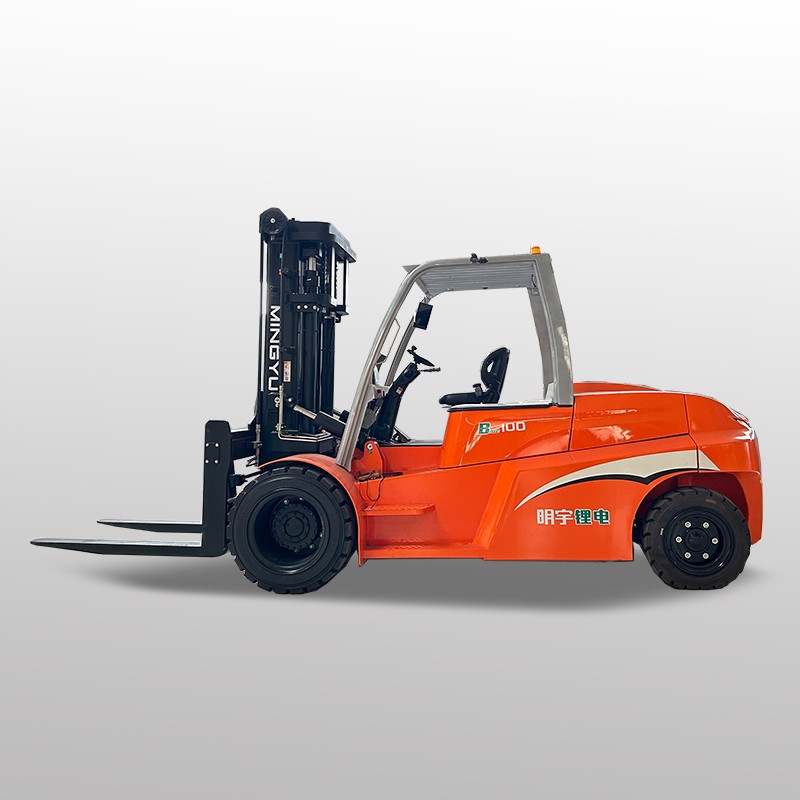
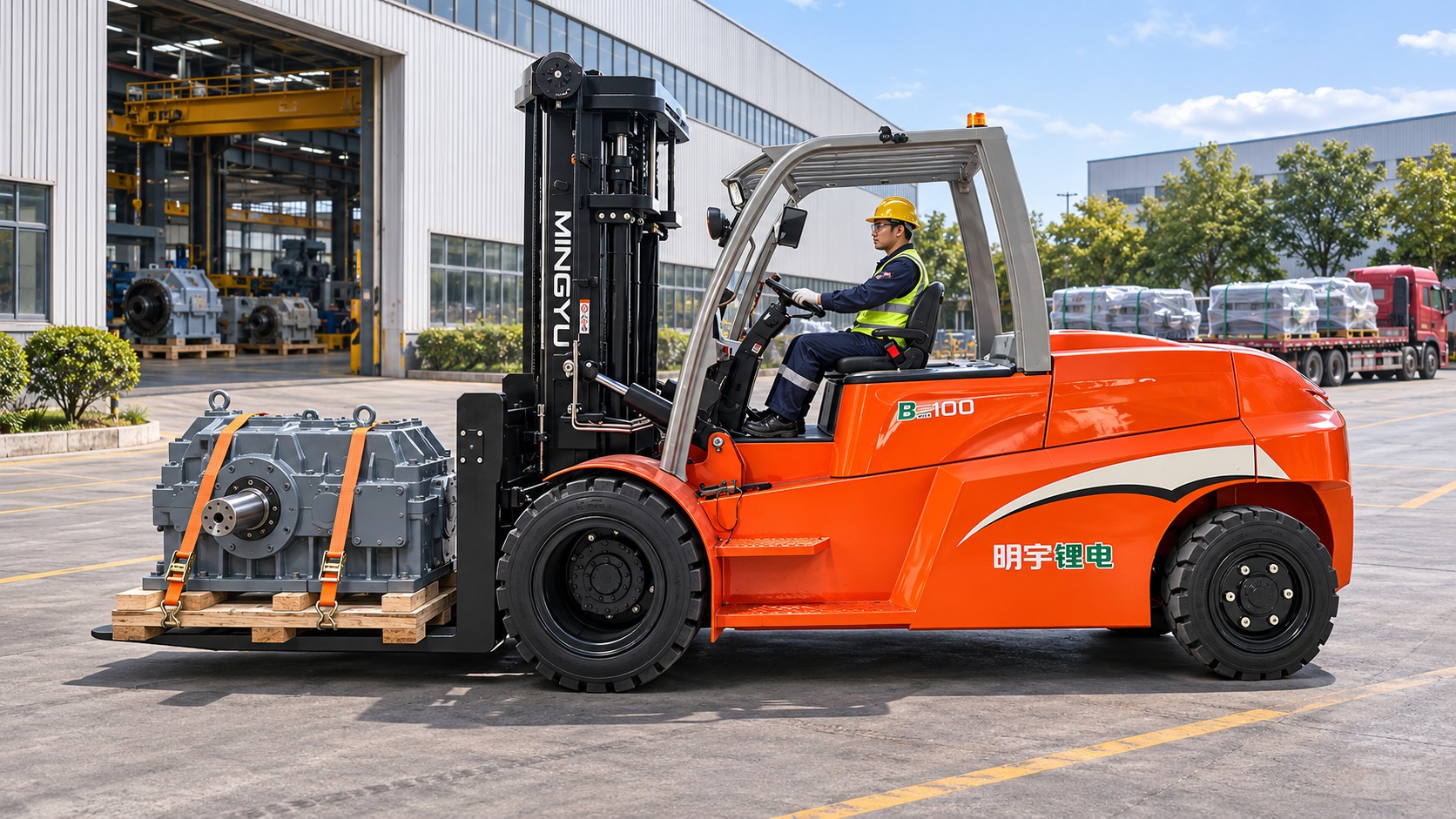
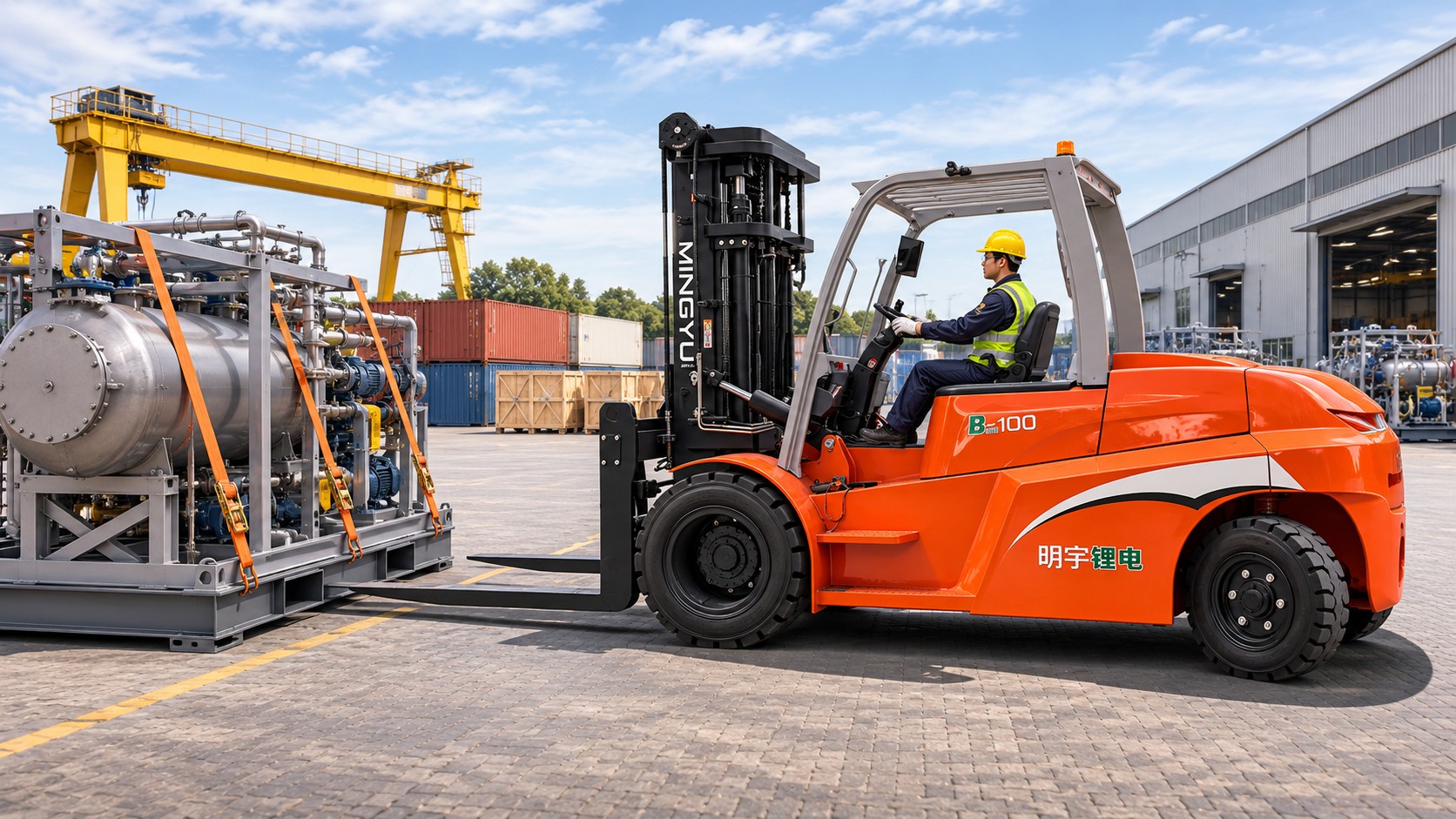
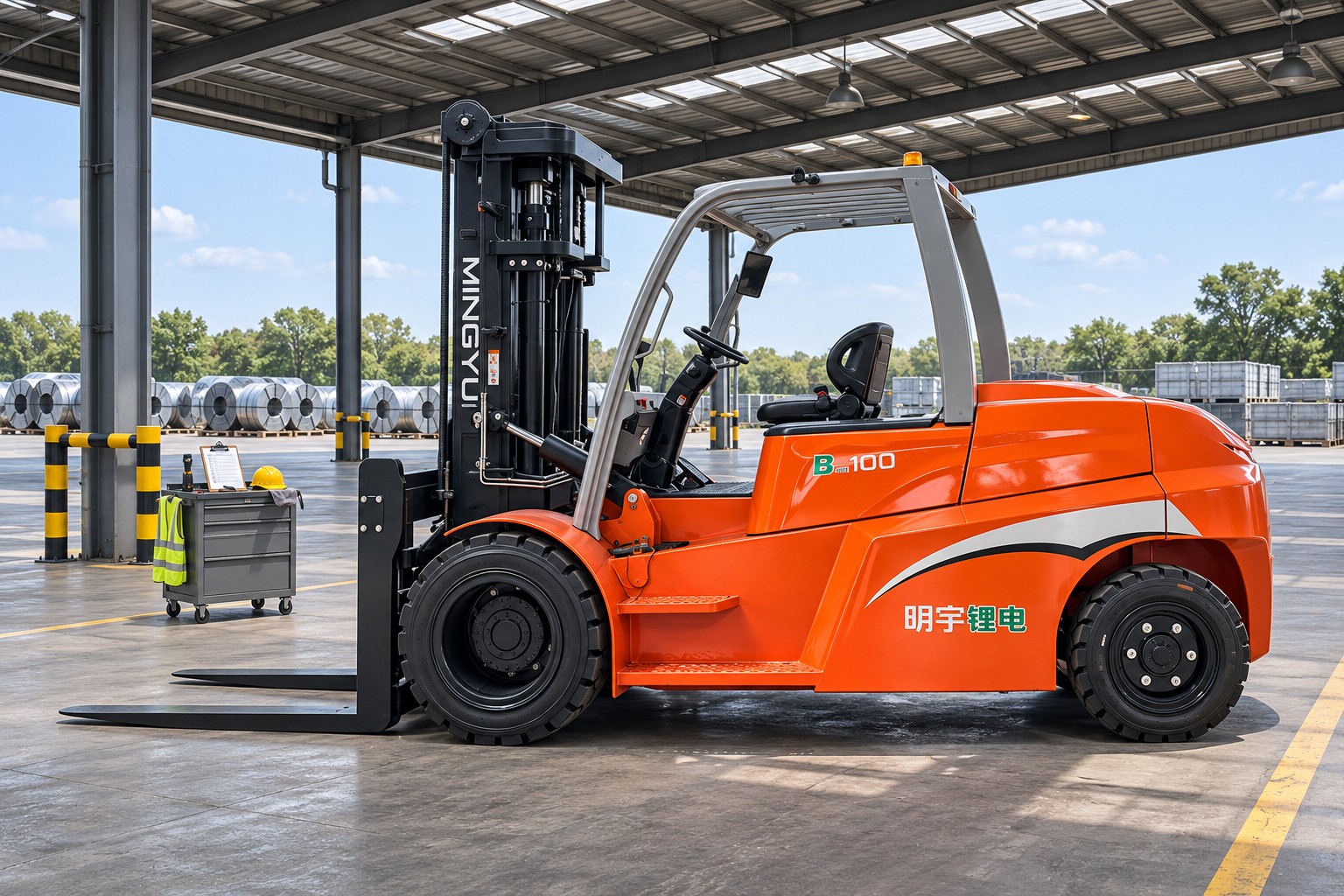
The CPD100 electric forklift shown on this site is a large orange counterbalance machine with a grey overhead guard, dark mast, B100 side marking and MINGYU mast lettering. The source listing describes a 10-ton lithium-electric class truck. This ZGFORKLIFT / MYZG guide addresses heavy-machinery manufacturers and export yards moving palletized gearboxes, industrial skids and secured equipment between production, inspection and dispatch. Heavy electric lifting can be attractive where a site wants a charging plan rather than diesel fuel handling, but the right choice depends on actual loads, pavement, power supply, duty cycle and the delivered truck's capacity plate.
Machinery components are often heavy, long or offset. A gearbox on a skid may have lifting eyes but poorly placed fork pockets; an export crate may hide its true center of gravity. Record gross mass, dimensions, load center, packaging strength, fork entry and required lift height for each repeat load. Check whether the pallet or skid can withstand the fork contact and whether slings, spreaders or a crane are more suitable. Walk the entire route, including floor joints, ramps, loading plates, drainage grates, door heights and turning points. Verify the ground's bearing capacity under the loaded truck rather than relying on a general warehouse floor rating.
The original CPD100 model page establishes the visual identity and product family. The original page mixes B100 and CPD100 labels, so put the exact delivered model, serial number, battery and mast configuration on the purchase specification. It also contains broad marketing claims about charging, operating cost and battery life; buyers should request test conditions and written warranty terms before relying on any such figure. A source photograph cannot prove an attachment or a precise residual capacity.
Prepare a load matrix with the heaviest representative items, their centers of gravity, lift heights and cycles per shift. Ask the supplier for the capacity chart at the selected mast height and with the proposed fork length or attachment. Measure aisle width and turning room with the largest real load, then review operator sightlines and pedestrian separation. An oversized truck may not pass a door or fit a loading bay; a smaller one may lack remaining capacity when an offset crate is raised. Trial the proposed configuration under controlled conditions, with a qualified operator and the customer's representative load.
The electric forklift category helps compare electric load classes, while the All Products catalog shows other material-handling options for a second site. Evaluate charger input, available electrical capacity, charging location, shift pattern and battery support before calculating total cost. Ask for the battery chemistry and protection system for the delivered machine, charger compatibility, safe charging instructions, service intervals and end-of-life handling route. Do not extrapolate another model's charge time or energy use to this machine.
At a machinery plant, identify a firm staging area between final assembly and inspection. Mark the point where a qualified handler accepts each crate or skid, with its mass and lifting method recorded. Move the load low and slowly, especially near floor joints and blind turns. Keep pedestrians outside the truck's turning envelope. At an export yard, restrain the trailer, verify the loading platform and have a supervisor manage the handoff between forklift operator and shipping crew. Never use a forklift to improvise lifting points on an untested machine frame.
A fork positioner reference may help when skids have varied fork pockets, but the source CPD100 image shows ordinary forks and does not establish that a positioner is included. Any attachment changes load-center and residual-capacity calculations. Obtain compatibility approval and the correct capacity plate. For very long or asymmetric machinery, request an engineered handling plan and consider a crane or purpose-built fixture. Document the approved method so a later shift does not repeat an unsafe trial by guesswork.
Set a daily pre-use check for forks, mast, chains, hoses, tires, brakes, steering, horn, lights, seat belt and battery or charger warnings. Isolate damaged equipment and record the fault. Follow the manufacturer's delivered manual for battery charging, connector care, cooling, hydraulic service and inspection intervals. Locate the charging point away from vehicle impact and keep access to emergency isolation clear. Only trained staff should service high-voltage components. Review local electrical and fire requirements for the specific battery and charger rather than assuming one generic rule fits every market.
The parts and service information is a starting point for selecting a spare-parts package. Request serial-specific filter, tire, hydraulic and electrical parts references, charger support and a technician escalation route before shipment. A heavy truck that cannot be charged or repaired promptly may interrupt an entire dispatch line. Record shift hours, energy use and faults after commissioning, then adjust charging windows and preventive-maintenance timing with real operating data.
Dealers serving equipment makers can lead with site and load surveys, a documented demonstration and operator familiarization. Quote the machine, charger, installation checks, spare parts, warranty and service response as clear separate items. Keep a configuration record so later parts requests match the serial-numbered truck and battery. Shandong Zhuogong Machinery Equipment Co., Ltd. can discuss export packaging, shipping documents, delivery terms and service arrangements for a confirmed order. Ask for relevant customer references if a cooperation case matters; no unverified case or export volume is claimed here.
For a destination requiring CE documents, EPA-related evidence or another market-specific approval, request the exact documents for this electric machine, battery and destination before making a compliance claim. EPA requirements can differ by equipment and market; this page does not assert a universal EPA certification. The company information and FAQ may help initial due diligence, but the signed quotation should list precisely which documents and service commitments will be delivered.
Send the maximum load mass and load center, drawings or photographs of fork pockets, lift height, surface and aisle dimensions, shift schedule, available electrical supply and destination market. Identify any attachment and the required charger. Ask for a written CPD100/B100 configuration, residual-capacity chart and charging plan. Contact Shandong Zhuogong Machinery Equipment Co., Ltd. through the contact page, email vip@mingyuforklift.com or phone +86-0535-2090977. A measured load and route plan is the basis for a safe selection and useful quotation.
Name: selena
Mobile:+86-13176910558
Tel:+86-0535-2090977
Whatsapp:8613181602336
Email:vip@mingyuforklift.com
Add:Xiaqiu Town, Laizhou, Yantai City, Shandong Province, China