vip@mingyuforklift.com
+86-0535-2090977

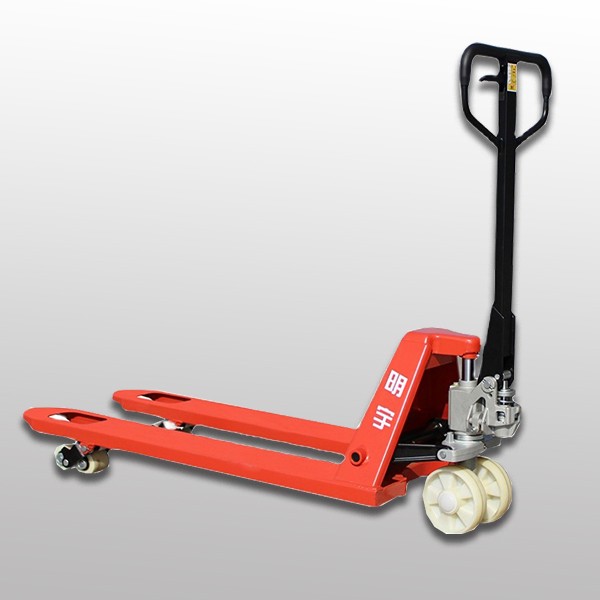
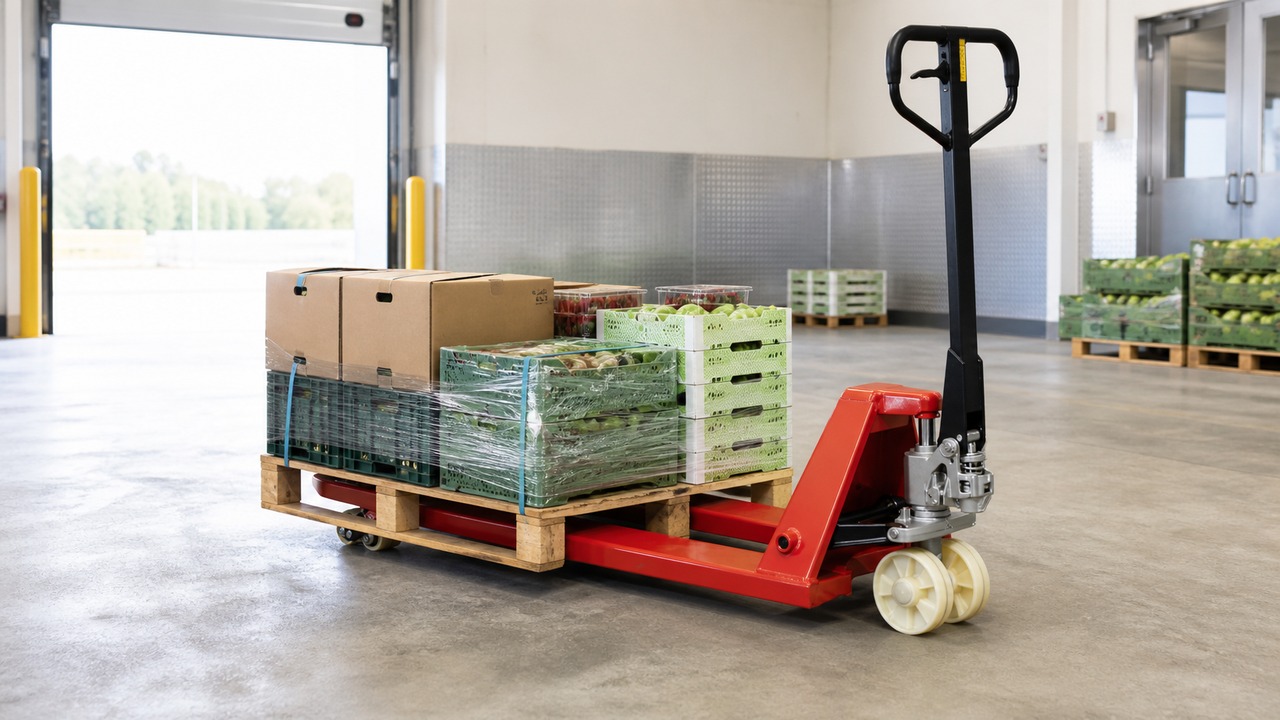
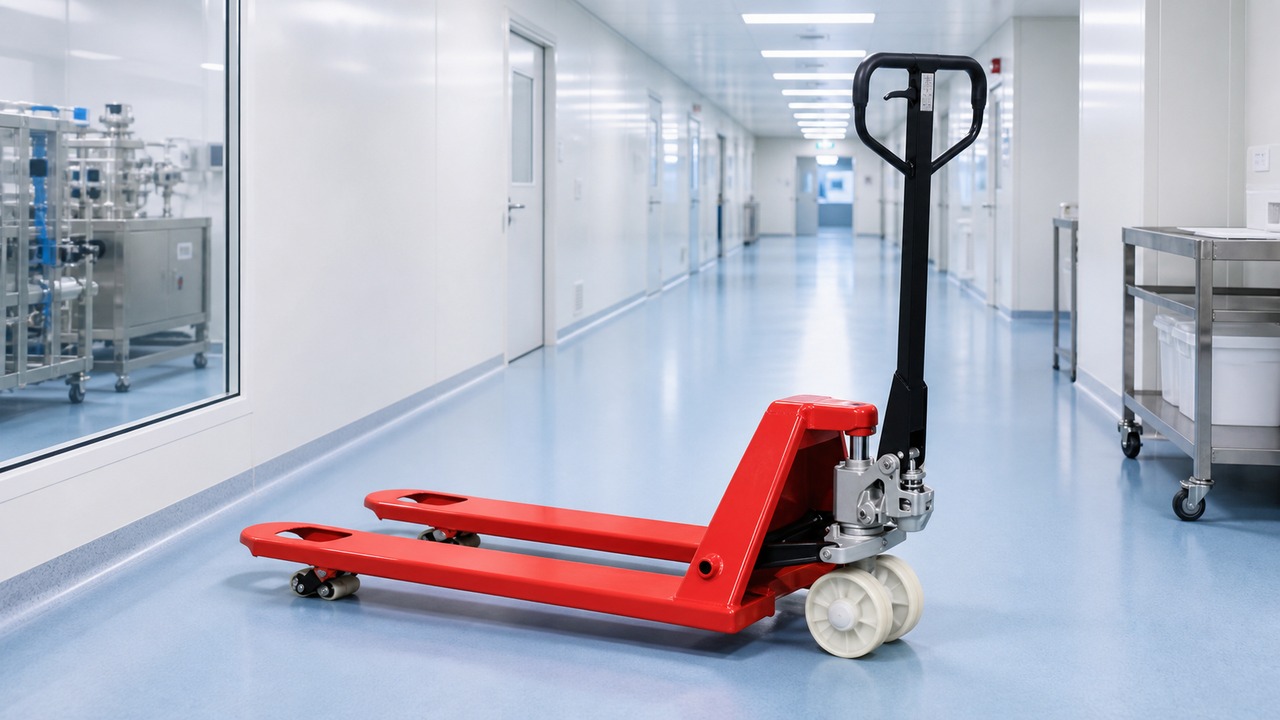
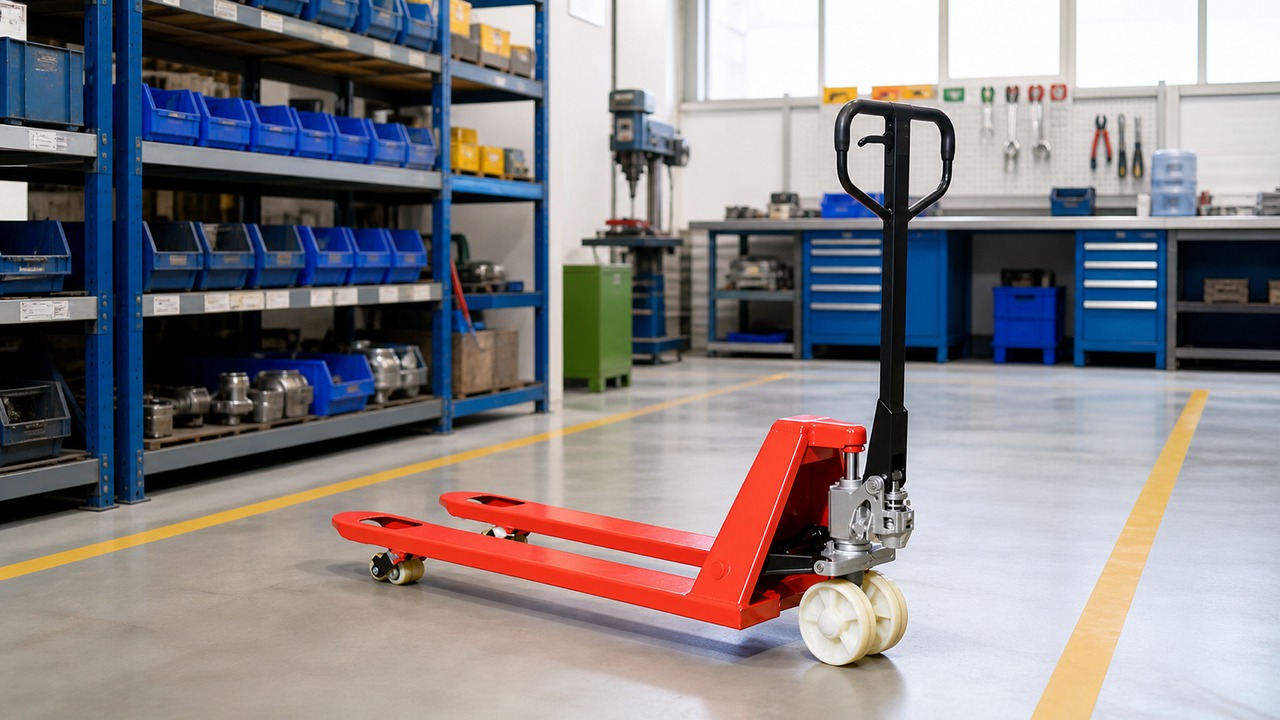
The DF2.5 2.5 ton manual hand pallet truck is a practical solution for short-distance horizontal pallet movement in retail backrooms, warehouses, production areas and dispatch zones. It uses manual travel and hydraulic lifting, so it is best matched to firm, level floors and repeatable pallet routes where operators need a simple material-handling tool without a traction battery or charger. ZGFORKLIFT / MYZG treats the model name as the start of selection, not the whole answer: pallet entry, gross load, floor condition, route length, gradients and operator workload must all be reviewed before purchase.
Many buyers do not need a powered truck for every movement. A grocery store may move beverages from a receiving door to a stockroom, a workshop may transfer boxed components between benches, and a small warehouse may position inbound pallets before put-away. In these applications the customer usually values straightforward controls, compact storage, easy daily inspection and predictable maintenance. The DF2.5 is intended for those short, controlled movements; it is not a forklift, a stacker, a personnel carrier or a substitute for powered equipment on long routes.
The website’s source DF family lists a 2,500 kg nominal class for DF2.5. That figure is a selection reference, not permission to handle every 2,500 kg load. Actual suitability depends on the delivered data plate, evenly distributed load, pallet strength, load center, fork engagement and floor condition. Buyers should provide the heaviest real pallet rather than an estimated average. Unstable, damaged, off-center or unusually long loads need separate assessment and may require a different solution.
For retail and grocery operations, a manual pallet truck can support receiving, shelf-replenishment staging and backroom organization where aisles are clear and movements are short. In production support, it can feed packaged materials to work cells or move finished cartons to dispatch. In general warehousing, it can help with dock staging, pallet alignment and low-frequency transfer between nearby zones. Operators should never use the truck on public roads, at exposed dock edges or on unapproved slopes.
Start with the pallet truck product category and the broader All Products catalog. The existing hand pallet truck family page provides the source family context. If the task requires vertical stacking rather than floor-level transport, compare the manual hydraulic pallet stacker solution instead of assuming one machine can perform both jobs.
Load profile: record maximum gross pallet weight, dimensions, center of gravity, packaging condition and daily movement count. Include occasional peak loads. The rated class must never be exceeded, and the delivered machine data plate and manual remain controlling.
Pallet interface: state pallet type, entry direction, opening height, bottom-board layout and fork-pocket dimensions. Confirm fork length and outside width against the actual pallet. A truck that is too wide, too long or unable to enter the pallet cleanly will reduce productivity and may damage goods.
Route and floor: measure the full travel distance and inspect joints, thresholds, drain channels, dock plates, ramps and damaged concrete. Manual pulling force rises quickly on rough floors and gradients. Where travel is long, frequent, sloped or time-critical, a powered pallet truck may be a better ergonomic choice.
Wheel choice: wheel material should match floor protection, noise, rolling resistance, debris and temperature. Ask for configuration confirmation rather than assuming one wheel compound works in every facility. Keep strings, stretch film and packing straps away from wheels.
Operator and shift: estimate pushes and pulls per hour, congestion, doorways and available turning space. A low purchase price does not compensate for excessive operator effort. The right buying decision balances equipment cost with route design, handling frequency, training and maintenance.
Choose manual equipment when routes are short, level and intermittent, the load is compatible and trained operators can control it without excessive force. Consider electric travel when distances, frequency, ramps or productivity targets make manual handling unsuitable. Consider a stacker or forklift when loads must be raised to racking or vehicles. The guide standard pallet truck weight capacity explains why nominal capacity must be read together with load distribution and safe use.
Before ordering, create a route map and test the tightest turn with the intended pallet length. Check that operators can see around the load and stop before crossings. Protect pedestrians with marked lanes, mirrors or controlled access where appropriate. Never carry a person on the forks or load, never stand under raised material and never place hands or feet beneath a pallet. The truck should be parked with forks fully lowered in a location that does not block an aisle or emergency exit.
Inspect the truck before each shift, fully enter the pallet from the approved side, center the load and raise it only enough for travel clearance. Pulling can give better steering control in some open areas, while pushing may be appropriate for positioning when the operator can see the route and site rules allow it. Avoid sudden direction changes, sharp turns, running and uncontrolled movement. Use additional control at dock plates, vehicle beds and congested intersections.
Training should cover the release lever, neutral position, controlled lowering, steering arc, stopping distance, pinch points and damaged-pallet recognition. The related manual hydraulic handling guide can support planning, but the delivered instructions, data plate and local safety rules take priority. Supervisors should remove the truck from service if steering, lifting, lowering or wheel condition becomes abnormal.
Daily checks should include forks, frame, handle, control lever, lift and lowering response, hydraulic leakage, steer wheels, load rollers, fasteners and unusual noise. Keep the truck clean and dry, remove wrapped film from axles and inspect rollers after impacts. Do not weld, drill, heat or straighten structural parts without approved technical guidance. Hydraulic repairs and load-bearing component replacement should be carried out by qualified personnel.
A preventive-maintenance log should record inspection date, defect, repair, parts used and return-to-service approval. Wheel and seal wear varies with load, floor, debris and operating frequency, so fixed marketing claims about service life are not reliable. Dealers and fleet managers can review the parts and dealer support page and should identify the exact model and machine serial information when requesting components.
For distributors, the strongest quotation starts with application discovery. Ask about load, pallet, floor, route, daily cycles, wheel preference, destination, packaging and local service capability. Present the DF2.5 as one option within a duty-based recommendation, not as a universal answer. A handover checklist should cover inspection, safe travel, controlled lowering, parking, defect reporting and parts identification.
For export orders, confirm the exact supplied configuration, labeling, manuals, packing, shipping terms and destination requirements before contract. Where CE documentation is required, request and verify the documents applicable to the exact machine supplied. EPA engine-emissions certification is generally not applicable to a fully manual pallet truck because it has no combustion engine; other destination, workplace and product requirements may still apply. This page does not make an unsupported certificate, test-result, export-volume or customer-case claim.
The useful service is correct application matching. Shandong Zhuogong Machinery Equipment Co., Ltd. can review inquiry details, discuss configuration and help organize product, parts and shipment questions for the proposed order. Final specifications, compliance documents, lead time and commercial terms must be confirmed in the quotation or contract. This approach gives end users and dealers a clear basis for comparison without relying on invented performance promises.
Send pallet drawings, maximum gross load, route distance, floor photographs, thresholds, gradients, daily cycles, preferred fork dimensions, wheel requirements, destination and service expectations. Contact Shandong Zhuogong Machinery Equipment Co., Ltd. at vip@mingyuforklift.com or +86-0535-2090977, or use the contact and inquiry page. Include “DF2.5 2.5 ton manual hand pallet truck” so the request can be reviewed as one complete application.
Name: selena
Mobile:+86-13176910558
Tel:+86-0535-2090977
Whatsapp:8613181602336
Email:vip@mingyuforklift.com
Add:Xiaqiu Town, Laizhou, Yantai City, Shandong Province, China