vip@mingyuforklift.com
+86-0535-2090977



This manual hydraulic pallet stacker is presented for light-duty, intermittent lifting and short-distance pallet positioning in retail stockrooms, small warehouses, workshops and production support areas. Both travel and lifting depend on the operator: the stacker is moved by hand and the hydraulic system is raised through a manual pump handle or approved manual control. ZGFORKLIFT / MYZG recommends selecting the final configuration from the real load, pallet, floor, aisle, lift height and operator workload.
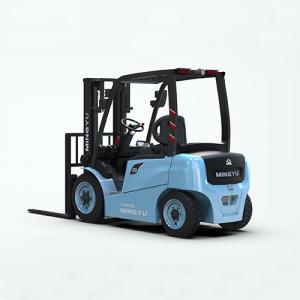
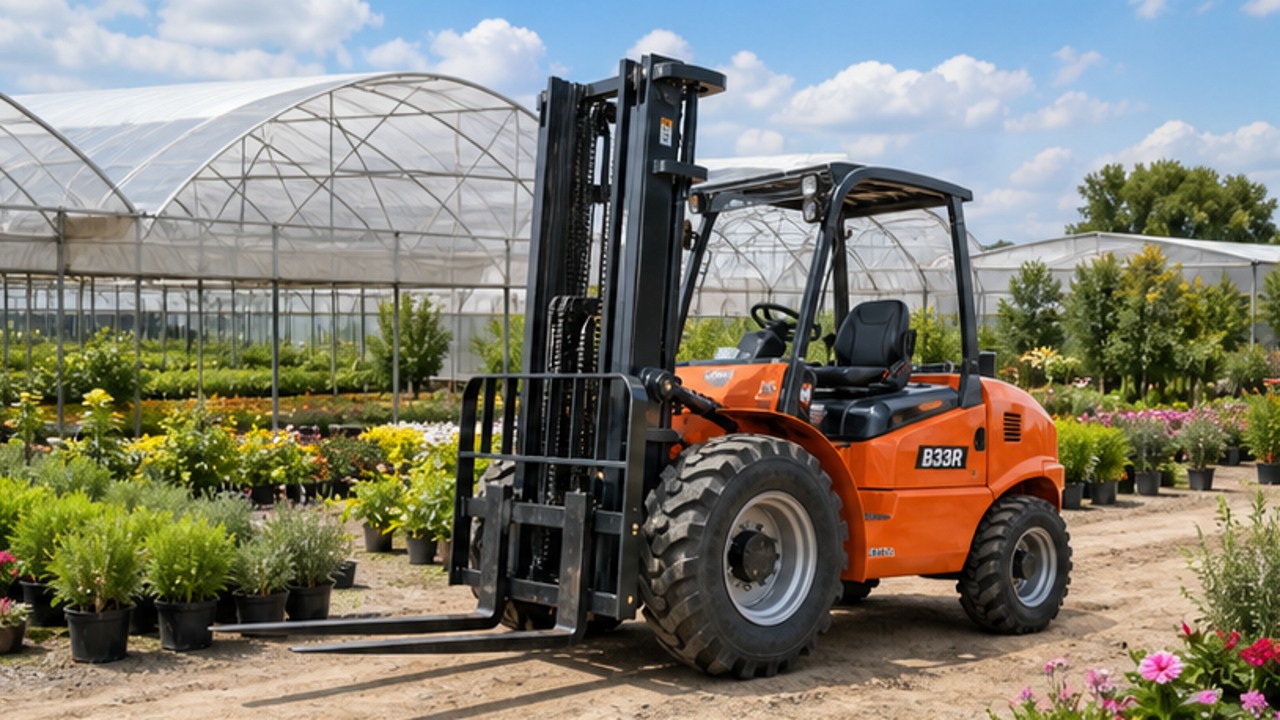
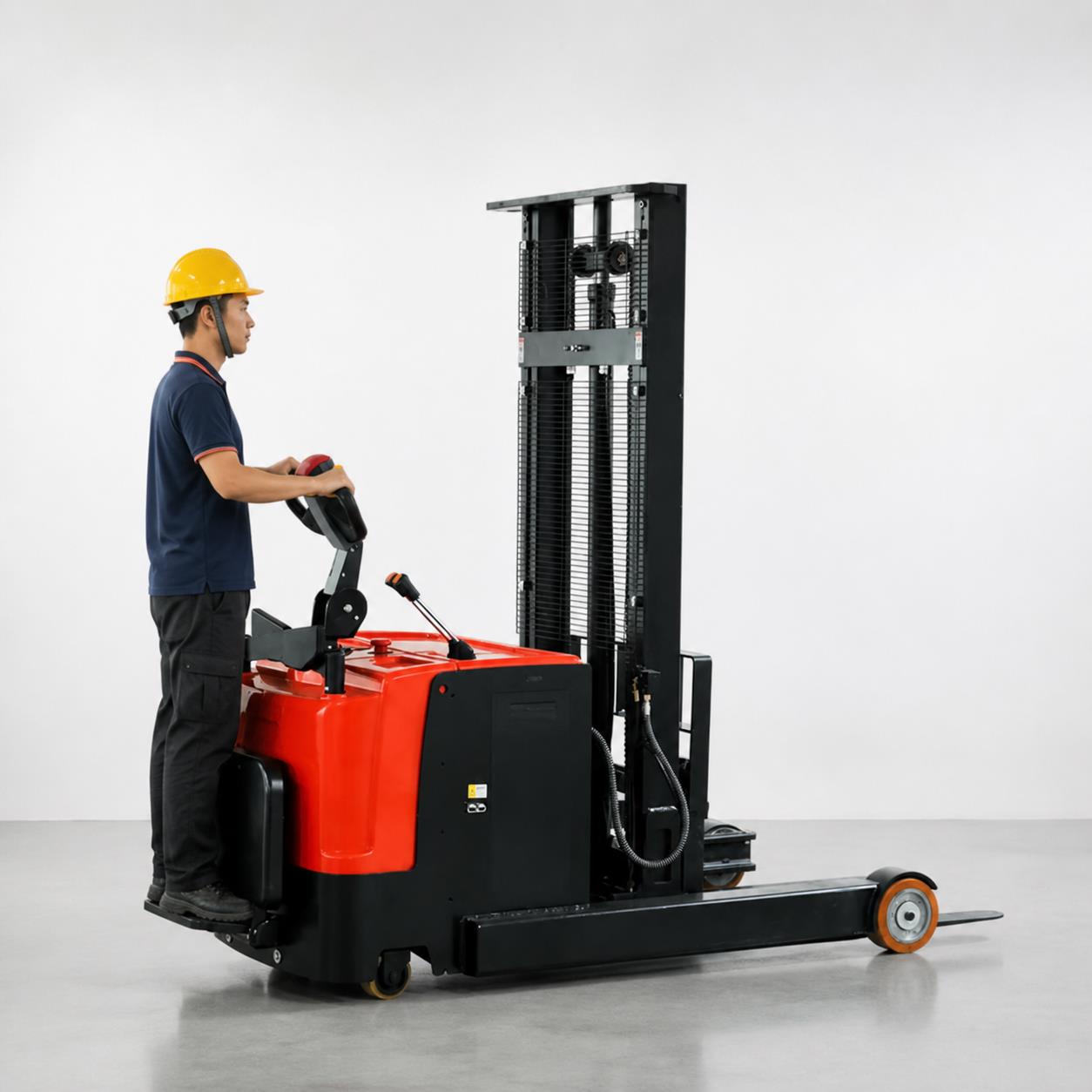
No unverified model code, capacity figure, lift height or certification number is claimed on this page. Rated capacity, load center, mast, fork dimensions, straddle width, wheel material, service weight and available options must be confirmed in the commercial offer and shown on the delivered data plate. Product and application images illustrate a manual hydraulic stacker configuration; the supplied machine and identification markings must match the confirmed order.
A manual stacker can be economical where lifts are occasional, travel routes are short and the floor is smooth and level. It does not require battery charging or fuel, which simplifies storage and may reduce idle-time maintenance. That simplicity does not make it suitable for every job. High cycle counts, long routes, heavy steering effort, gradients or frequent high lifts may justify a semi-electric or fully powered alternative.
The customer need should be defined as a material-flow problem: what arrives, where it is inspected, how far it moves, where it is stored and how often it is retrieved. A good layout places receiving, quarantine and storage close together so operators do not push loads unnecessarily. The stacker should complement pallet jacks, tables and racks rather than becoming a substitute for an unsuitable process.
Retail backrooms often need to lift packaged stock from floor level to a low reserve rack or ergonomic picking height. A compact manual hydraulic stacker may serve this task when the route is level and pedestrian traffic can be controlled. Measure the narrowest doorway, loaded turn and rack opening. Protect emergency exits, keep fire equipment accessible and avoid parking the stacker in customer or employee walkways.
Receiving teams should inspect pallet boards, wrapping, load stability, weight information and overhang before movement. Broken pallets and unknown loads must be isolated or repacked. Standard pallet quality reduces fork-entry problems and prevents a damaged base from failing while elevated. The operating plan should define accepted pallet types and a clear rejection process.
In a workshop, a manual stacker can position palletized components near a bench, machine or transfer table. Confirm that the straddle legs, forks, mast and carriage can approach the destination without collision. Check the full load envelope, including packaging and overhang. The transfer surface must be stable, correctly rated and arranged so the operator is not trapped between the stacker and fixed equipment.
Production teams should use fixed pickup and set-down points, visual floor markings and a defined maximum load. If the stacker supports changeovers or occasional tooling movement, every load still needs a known weight and center of gravity. Long, tall, liquid or irregular loads require a separate assessment and may need purpose-designed handling equipment rather than standard forks.
Load and load center: document maximum actual weight, dimensions, packaging and center of gravity. Rated capacity applies under stated conditions and may reduce as load center or lift height increases. Ask for written residual-capacity confirmation for the real mast, forks and working height.
Pallet and fork entry: record pallet length, width, entry direction, underside structure, fork spacing, lowered fork height and required straddle clearance. Closed-bottom pallets, stillages and custom platforms may need a straddle or adjustable-fork configuration. Never assume compatibility from an external photograph.
Route and floor: inspect gradients, thresholds, expansion joints, drainage channels, damaged concrete and contamination. Manual pushing and steering effort rises rapidly with load and poor surfaces. Repair problem areas and compare powered travel if the route cannot remain short and level.
Purchasing teams can compare the complete ZGFORKLIFT product range, review alternatives in the stacker category and browse the All Products catalog. These pages support research; the confirmed order specification controls the supplied product.
Required lift height should be measured at the surface that supports the pallet, not estimated from the top of the load. Also record closed-mast height, doorway clearance, ceiling services, lights and sprinklers. A taller mast may change visibility, capacity, service weight and pumping effort. The selected mast must remain compatible with the load and site.
Rack placement should be tested with a representative pallet under controlled conditions. Forks must enter fully, the pallet must remain stable and the operator must keep clear of chains, rollers, carriage and wheel paths. Nobody may stand beneath raised forks or between the stacker and a fixed object. Where sight lines are poor, redesign the approach rather than improvising.
Manual equipment transfers effort to the operator. Evaluate starting force, sustained pushing, turning, stopping and pump cycles using representative loads. Consider operator size, task frequency, route congestion and recovery time. A manual stacker that is acceptable for a few lifts per day may be unsuitable for continuous replenishment or multiple shifts.
Fleet quantity should follow measured demand, not a theoretical maximum. Record daily moves, peak-hour lifts, travel distance, queue time and downtime. If operators wait for equipment, shorten routes or create dedicated zones before simply adding units. A semi-electric lift or powered walkie stacker may produce better lifecycle value when manual effort becomes the limiting factor.
Only instructed and authorized personnel should use the manual hydraulic stacker according to the delivered manual and local workplace rules. Keep the load low during travel, move at walking pace and maintain a clear view. Avoid ramps unless the manufacturer and site assessment specifically allow the task. Never ride on the machine, carry a passenger or use the forks as a personnel platform.
Acceptance testing should use representative pallets on the intended route. Check wheels, steering, parking device or brake where fitted, hydraulic pumping, controlled lowering, load holding, chains, forks, mast alignment, labels and documents. Confirm the narrowest turn and highest intended placement. The handling equipment FAQ and service guide can help customers prepare questions.
Before use, inspect forks, carriage, mast, chains, rollers, hydraulic cylinder, pump handle, lowering control, seals, hoses where fitted, straddle legs and wheels. Look for cracks, bends, leaks, loose fasteners, damaged wheels, uneven fork height and abnormal noises. A stacker with a safety-related defect must be isolated until qualified personnel complete the repair.
Scheduled service should follow the manufacturer’s instructions and reflect load severity, lift cycles, dust, moisture and floor condition. Hydraulic oil and replacement seals must be compatible with the system. Chain adjustment, structural repair and hydraulic diagnosis require suitable tools and competence. Customers can plan lifecycle support through the parts business and service page.
Dealers should qualify every enquiry with a standard form covering load, pallet, height, aisle, floor and cycles. Demonstrations should show manual steering and pumping effort honestly. Record the agreed mast, forks, straddle arrangement, wheels and options, then define commissioning, operator familiarization, service coverage and spare-parts responsibility before delivery.
Rental fleets can benefit from simple manual equipment for screened short-term tasks, but each renter still needs an application check. Total cost includes inspection, wheels, hydraulic seals, transport, training and downtime—not only purchase price. Company and service background is available on the Shandong Zhuogong Machinery Equipment Co., Ltd. profile.
Compliance requirements depend on the exact product and destination. Where CE conformity requirements apply, request the relevant declaration, labels, risk information and manual for the ordered configuration. A fully manual hydraulic stacker has no combustion engine, so engine-emissions EPA requirements generally do not apply in the same way as they do to diesel or gasoline forklifts. Other machinery, workplace and inspection rules may still apply.
Export planning should confirm packing, corrosion protection, manuals, warnings, spare parts and responsibility for import or local inspection. Shandong Zhuogong Machinery Equipment Co., Ltd. can coordinate the verified commercial scope, but this page does not claim unconfirmed certifications, named customer cases, production data or approvals. Documentary evidence should be supplied only when available and permitted.
Send load weight and dimensions, pallet drawings, required lift height, aisle and doorway measurements, rack or transfer-table details, route photographs, gradients, daily cycles, ambient conditions, destination country and requested options. The technical team can then compare a manual hydraulic stacker with semi-electric and fully powered alternatives.
Contact Shandong Zhuogong Machinery Equipment Co., Ltd. for selection, configuration and export support. Visit the contact page, email vip@mingyuforklift.com, call +86-0535-2090977 or use WhatsApp +86 131 8160 2336. Address: Xiaqiu Town, Laizhou, Yantai City, Shandong Province, China.
SEO summary: manual hydraulic pallet stacker, hand-operated warehouse stacker, manual straddle stacker, retail stockroom stacker, workshop lifting equipment, small warehouse stacker, manual stacker buying guide, hydraulic stacker maintenance, ZGFORKLIFT and MYZG.
Name: selena
Mobile:+86-13176910558
Tel:+86-0535-2090977
Whatsapp:8613181602336
Email:vip@mingyuforklift.com
Add:Xiaqiu Town, Laizhou, Yantai City, Shandong Province, China