vip@mingyuforklift.com
+86-0535-2090977

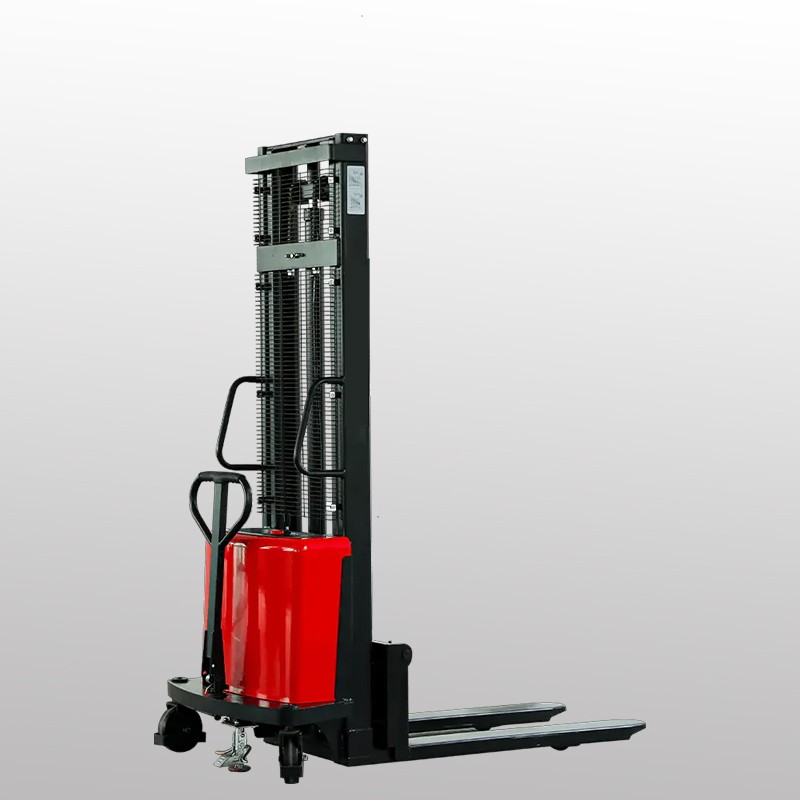
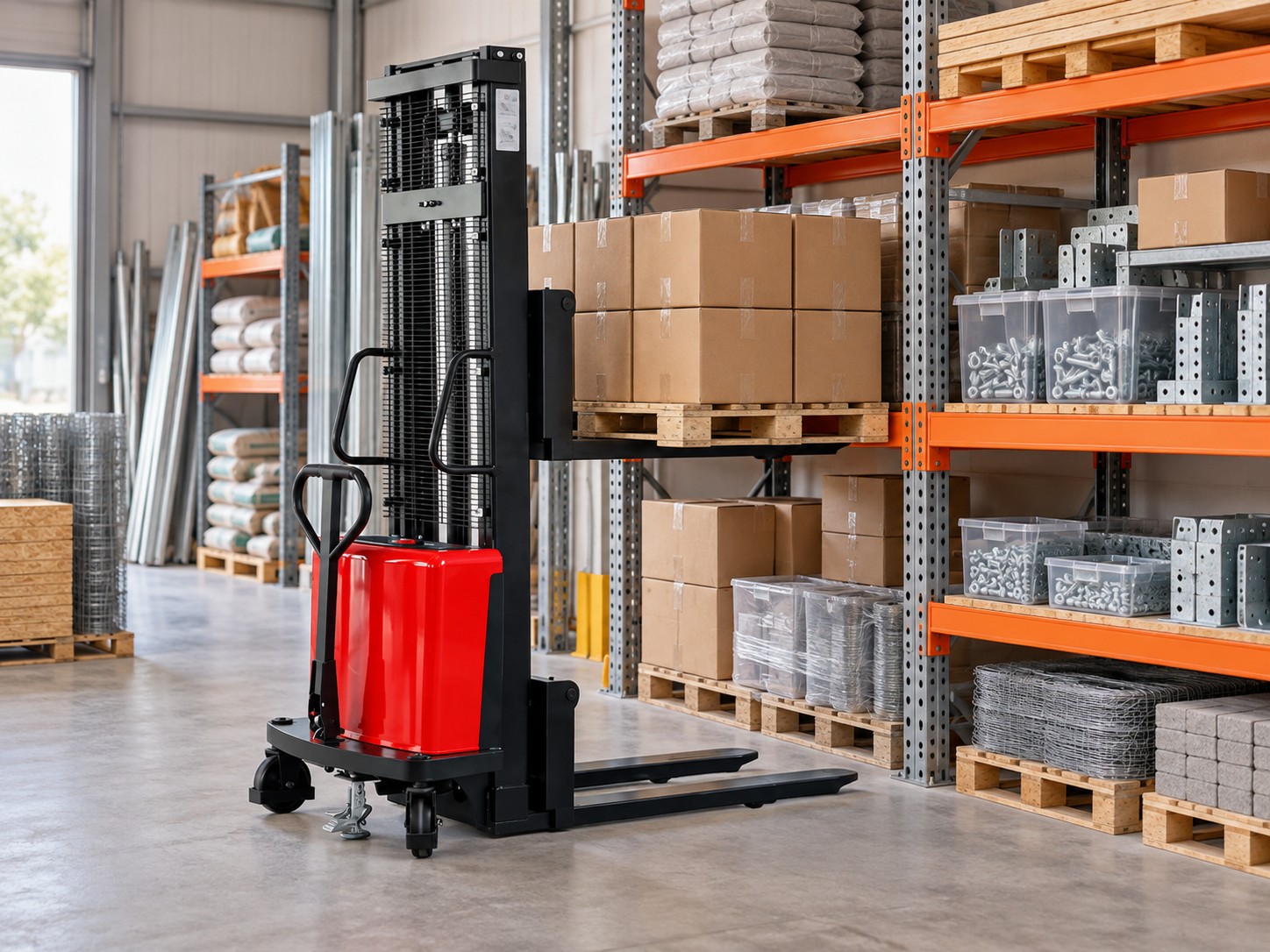
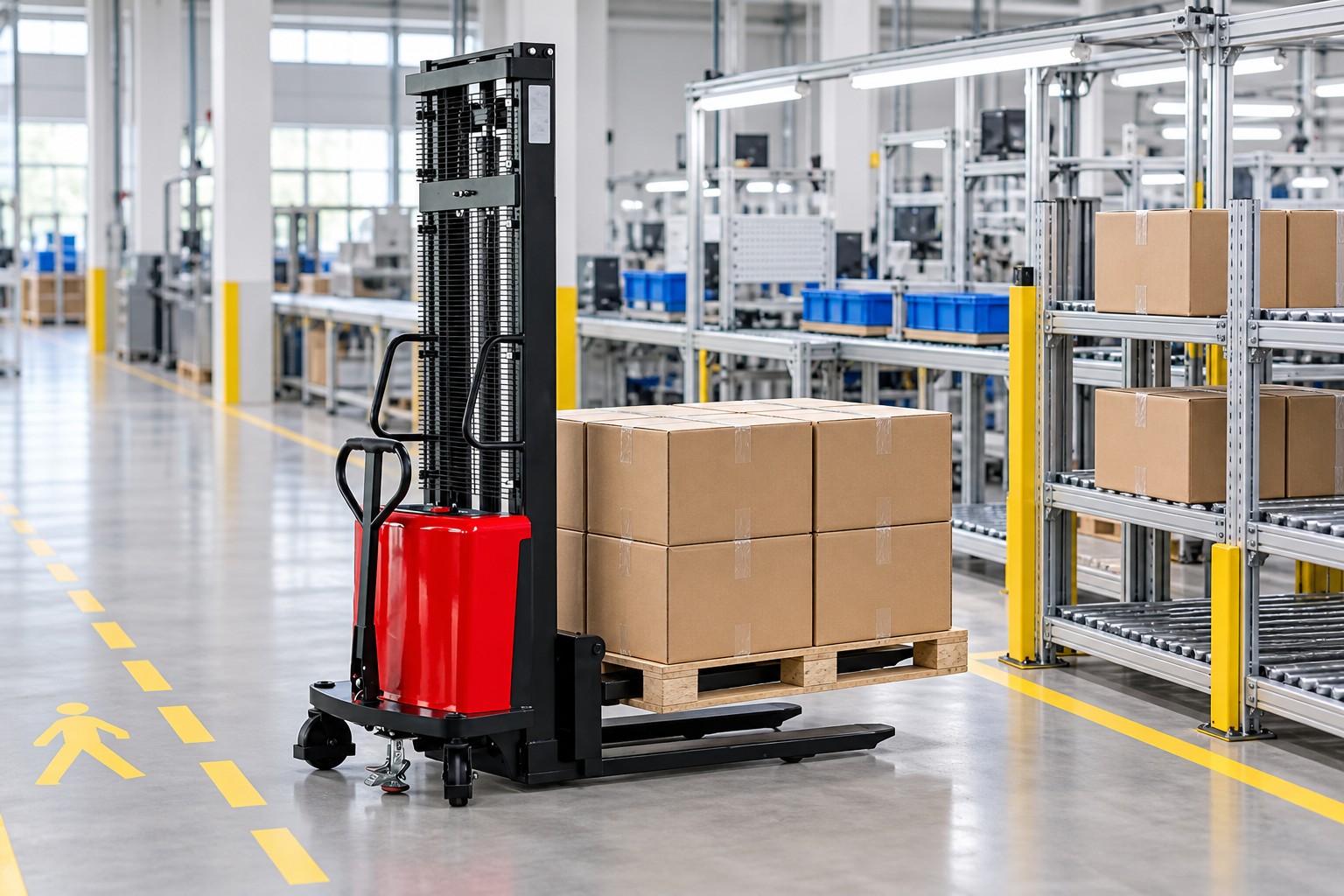
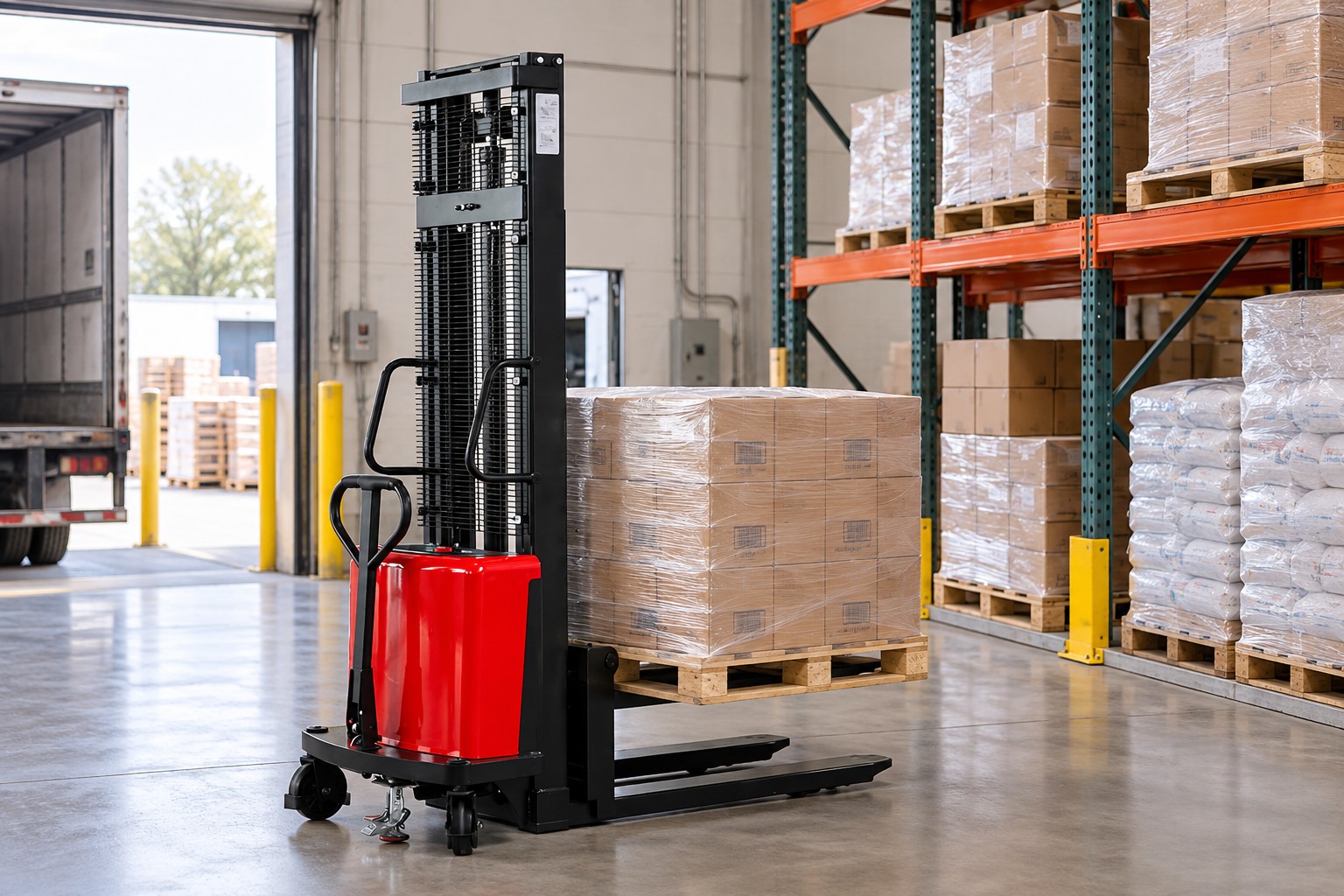
The SBD20 2.0 ton semi-electric straddle pallet stacker is a practical option for customers who need powered vertical lifting for heavier palletized loads but only short, controlled travel. The pedestrian machine uses manual travel and an electric hydraulic lift, while its straddle-leg arrangement can serve pallet and platform formats that need clearance outside the fork path. ZGFORKLIFT / MYZG recommends selecting it from measured application data rather than capacity alone.
SBD20 suits occasional stacking, receiving support, workshop supply and low-to-medium rack replenishment where routes are short, floors are smooth and travel can remain at walking pace. Powered lifting can reduce repetitive manual pumping, yet the operator still pushes, pulls and steers the load. The site must therefore assess manual handling effort, gradient, surface resistance, cycle count and visibility before choosing this format.
The website’s source family covers SBD10, SBD15 and SBD20 models at 1,000 kg, 1,500 kg and 2,000 kg nominal capacity. This page is specifically for the SBD20 2,000 kg class. Source-family information identifies a 500 mm load center, a 12 V system and a 120 Ah battery. Final mast, lift height, charger, fork size, straddle dimensions, residual capacity and machine weight must be confirmed in the quotation, data plate and delivered manual.
Wholesale depots often receive dense pallets of packaged goods that move only a short distance from the receiving zone to reserve storage. The SBD20 can provide powered lift for that transfer when the route is level and congestion is controlled. Mark pedestrian lanes, keep dock edges protected and create a receiving check for pallet damage, unstable wrapping, overhang and unknown weight before a load enters the storage system.
A good solution reduces unnecessary touches. Position the inspection, quarantine and staging zones so the stacker does not travel across long picking routes. Measure the loaded turning envelope at rack ends, columns and doors. If daily travel becomes long or throughput rises, compare a fully powered pedestrian or rider machine instead of relying on manual propulsion beyond a reasonable duty.
Hardware, fastener and building-materials stores may handle compact but heavy pallets. The SBD20’s 2 ton class can be evaluated for sealed cartons, bagged goods and palletized components, provided the load center and pallet condition are verified. Irregular stone, long steel, loose bags or unstable mixed loads need a separate handling assessment and may require a different truck or approved attachment.
Straddle geometry is especially important in these locations. Measure the inside and outside width of the support legs, fork width, pallet opening, rack base and any floor obstruction. Confirm that the legs can surround the load without striking shelves or adjacent pallets. Test both entry and withdrawal with a representative load; clearance on an empty machine does not prove safe loaded operation.
Production facilities can use SBD20 for palletized raw materials, packaging, work-in-process and finished goods between a nearby storage point and a line-side buffer. Plan fixed pickup and set-down locations, preserve emergency access and separate the route from operators working at benches or machines. Smooth lift and lowering control, stable loads and repeatable pallet quality are more valuable than an unrealistic speed target.
Where a pallet must approach a machine table or transfer station, check the mast, carriage, straddle legs and fork tips against the actual frame. Do not assume that nominal lift height equals usable transfer height. A supervised trial should confirm approach clearance, operator sight lines, load stability and the effort required to position and withdraw the machine.
Load: document maximum weight, dimensions, load center, packaging and stability. Long or offset loads and higher lift positions can reduce residual capacity. Request written capacity confirmation for the exact mast and real load rather than treating 2,000 kg as available in every condition.
Pallet and forks: record pallet length, width, entry direction, underside structure, fork length, outside fork width and lowered height. Closed-bottom pallets, stillages and custom platforms require dimensional review. Special forks or attachments need technical approval for the ordered machine.
Aisle and floor: map the narrowest loaded turn, doorway, threshold, expansion joint, damaged surface and maximum gradient. Manual travel force increases with weight and poor floors. Repair critical surfaces and set route limits before commissioning.
Buyers can compare the complete ZGFORKLIFT material-handling range, examine alternatives in the stacker category and browse the All Products catalog. These pages assist comparison; the signed specification defines the supplied configuration.
Choose the mast from the required load-support height, closed-mast restriction, doorway clearance and residual capacity. Measure the highest shelf or transfer surface and account for pallet and load height when checking ceilings, lights and sprinklers. A taller mast changes visibility, service weight and stability. The supplier should confirm capacity at the real working height for the specified load center.
Rack placement requires clear fork alignment and a no-person zone around the mast and raised load. Operators should not reach through the mast, stand between the stacker and a fixed object or use hands and feet to guide a moving pallet. If visibility is restricted, redesign the approach or use an approved spotter procedure under site rules.
The source family lists a 12 V battery and 120 Ah capacity. Confirm these values, charger input, plug type and charging instructions for the purchased configuration. Estimate energy demand from actual lift cycles, load weight, lift height, shift duration and available breaks. Semi-electric design saves battery energy by using manual travel, but inadequate charging discipline can still stop work during peak receiving periods.
Establish an authorized charging area and follow the battery and charger instructions together with local workplace rules. Inspect cables, connectors and housing before use. Repeated alarms, abnormal heat, odor, swelling, leakage or damaged wiring require the machine to be removed from service and checked by qualified personnel.
Only trained and authorized personnel should operate the SBD20. Keep forks low during travel, move at walking pace and maintain control of the handle. Never ride on the machine, carry passengers or permit anyone beneath elevated forks. Heavy loads increase stopping and steering effort, so the site must define safe routes, parking positions and exclusion zones.
Commissioning should use representative pallets on the real route. Test steering, wheels, brakes or parking devices where fitted, lift and lowering, hydraulic response, mast alignment, chains, fork condition, emergency controls, charger compatibility and documentation. Confirm the highest intended lift and the narrowest turn. The forklift FAQ and handling guide can help prepare questions, while the delivered manual governs operation.
Pre-shift inspection should cover forks, carriage, mast, chains, rollers, hydraulic cylinder and hoses, straddle legs, load wheels, steering wheels, handle, controls, battery connector and visible wiring. Look for cracks, leaks, loose components, deformation, abnormal noise and excessive wheel wear. Record faults and isolate the stacker whenever safety is affected.
Service frequency should reflect lift cycles, load severity, dust, moisture, temperature and floor condition. Qualified technicians should adjust chains and repair hydraulic or electrical systems. Parts requests should include the serial number, mast, battery and component details. Lifecycle support can be discussed through the parts and service business page.
Distributors should qualify SBD20 leads with a structured application survey and demonstrate manual travel effort as honestly as powered lifting. Record the accepted mast, forks, straddle width, battery, charger and options. Before delivery, agree on commissioning, operator familiarization, service territory, routine parts and escalation contacts.
Rental fleets can use standardized configurations for screened short-route applications, but every renter still needs capacity, pallet, height and floor checks. Total cost includes charging, wheels, hydraulic service, battery replacement planning, transport, training and downtime. Company and support information is available in the Shandong Zhuogong Machinery Equipment Co., Ltd. profile.
Compliance must be checked for the exact configuration and destination. Where CE conformity requirements apply, request the relevant declaration, labels and manuals. The SBD20 has battery-powered lifting and no combustion engine, so engine-exhaust EPA requirements generally do not apply as they do to diesel or gasoline equipment. Electrical, battery, transport, recycling and workplace rules may still apply.
Export planning should confirm packing, charger supply, plug, manuals, warnings, battery transport documents, spare parts and responsibility for import or registration. Shandong Zhuogong Machinery Equipment Co., Ltd. can coordinate the agreed scope, but this page does not invent certificate numbers, named cooperation cases, test results or approvals. Evidence should be supplied only when verified and permitted.
Send load weight and dimensions, pallet drawings, lift height, rack and straddle clearances, aisle and doorway measurements, route photographs, gradients, daily cycles, charging windows, ambient conditions, destination country and required options. The technical team can then compare SBD20 against lighter semi-electric, fully electric and counterbalance alternatives.
Contact Shandong Zhuogong Machinery Equipment Co., Ltd. for selection, configuration and export support. Visit the contact page, email vip@mingyuforklift.com, call +86-0535-2090977 or use WhatsApp +86 131 8160 2336. Address: Xiaqiu Town, Laizhou, Yantai City, Shandong Province, China.
SEO summary: SBD20 semi-electric stacker, 2 ton semi-electric pallet stacker, heavy-duty straddle stacker, electric lift manual travel stacker, wholesale warehouse stacker, building-materials stockroom stacker, manufacturing buffer stacker, semi-electric stacker buying guide, ZGFORKLIFT and MYZG.
Name: selena
Mobile:+86-13176910558
Tel:+86-0535-2090977
Whatsapp:8613181602336
Email:vip@mingyuforklift.com
Add:Xiaqiu Town, Laizhou, Yantai City, Shandong Province, China