vip@mingyuforklift.com
+86-0535-2090977

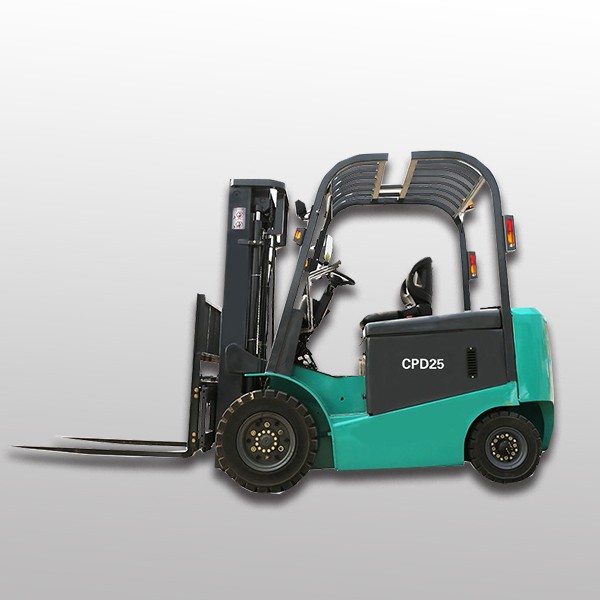
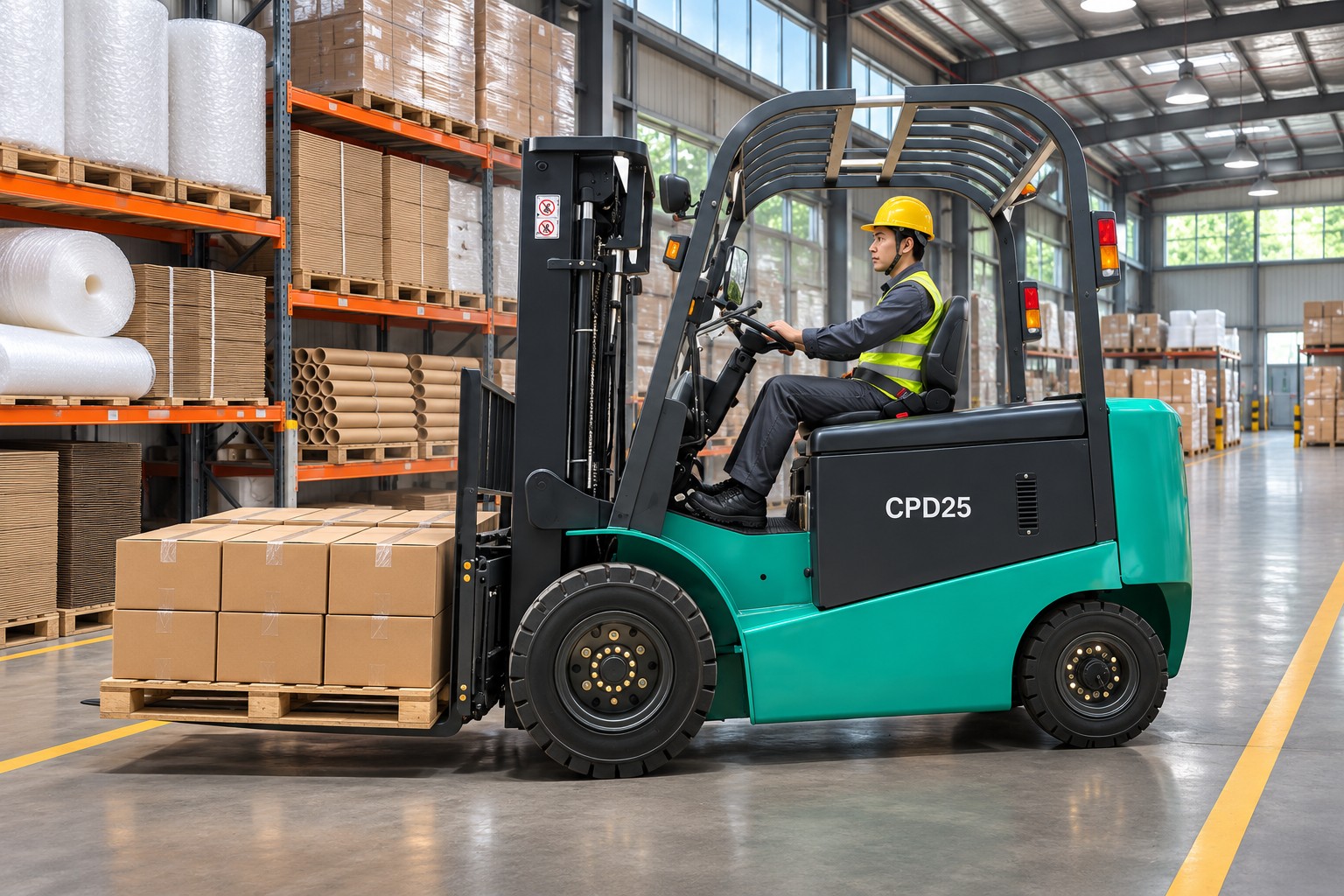
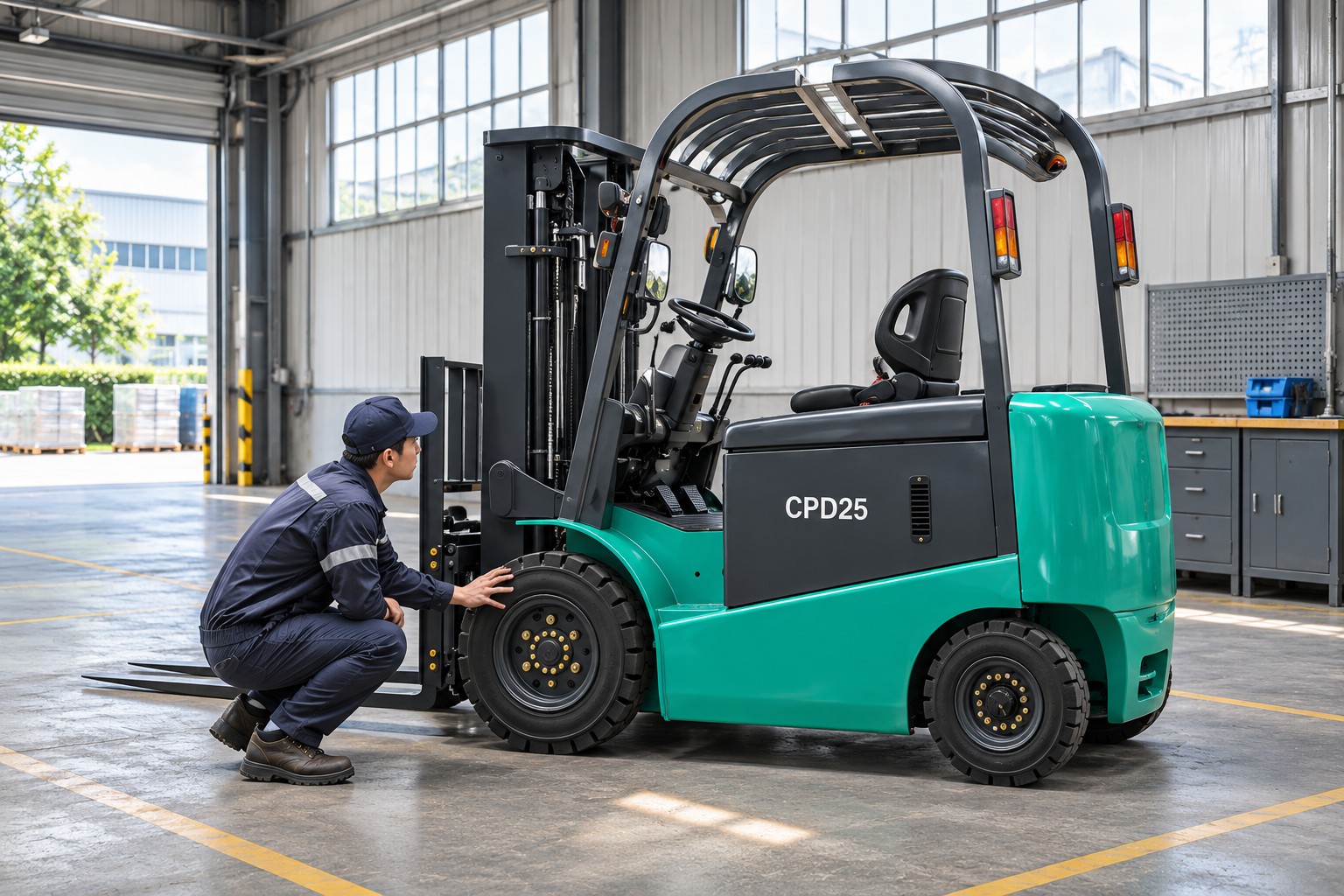
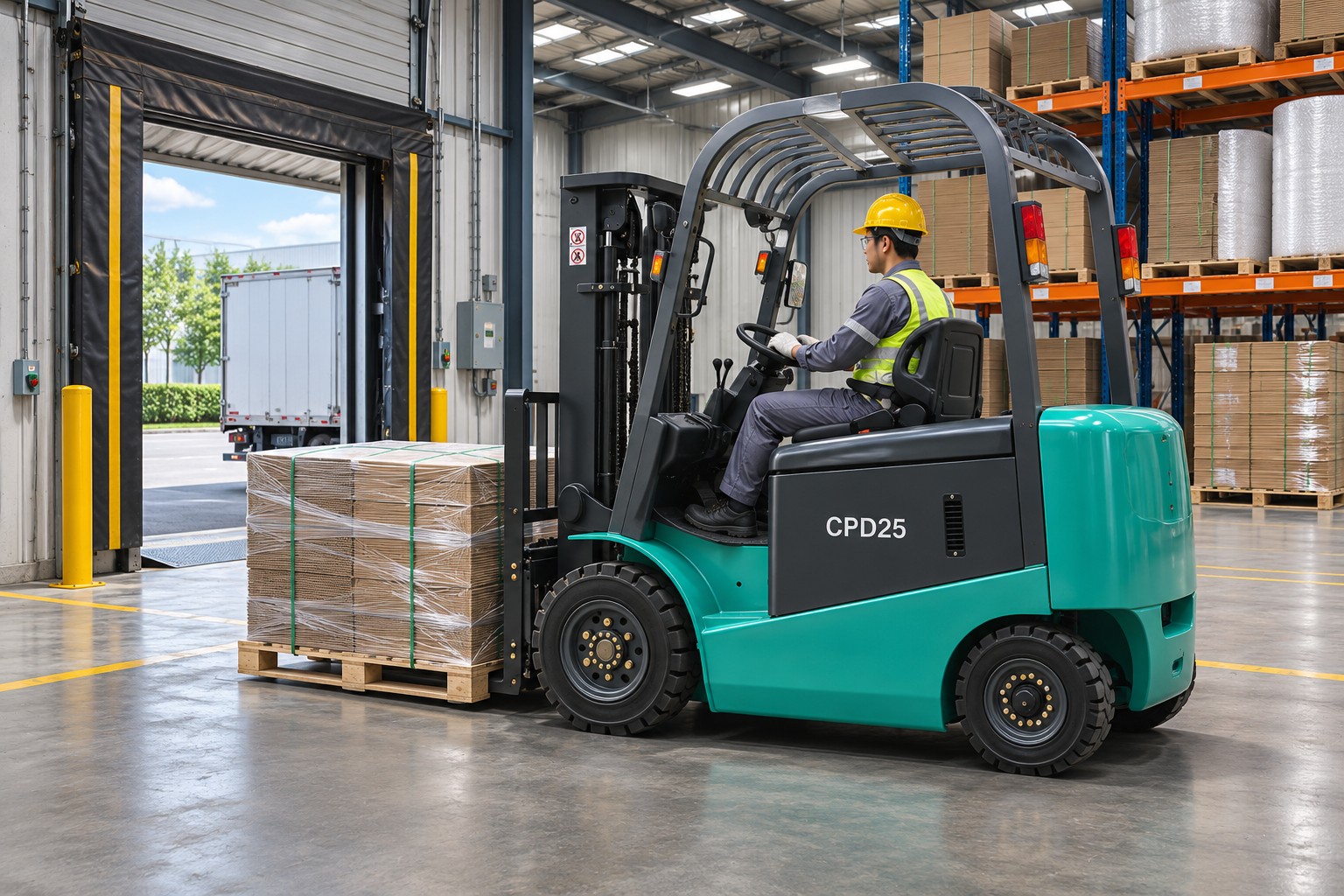
The ZGFORKLIFT / MYZG CPD25 lead-acid electric counterbalance forklift is an option for packaging-supply warehouses that move mixed pallet loads between receiving, storage and dispatch. The original CPD25 product page identifies a 2,500 kg rated-load class and a 48 V / 600 Ah battery reference. Those figures describe the published configuration; a buyer should confirm the offered data sheet, nameplate, load center, mast and battery specification before placing an order. A practical buying decision begins with the goods, routes and operating schedule, then works back to the truck configuration.
A distributor may receive corrugated cartons, stretch film, strapping and other packaging materials in different pallet footprints. Receiving teams need a truck that can move these loads to reserve storage, bring replenishment to picking areas and stage outbound pallets without blocking pedestrian routes. Battery-electric operation can fit a covered warehouse where operators want to avoid an engine running in the aisle. The actual suitability of this CPD25 depends on the floor, ventilation, turning area, dock layout, load stability and approved operating practices. The truck should be evaluated as part of a whole handling process, rather than selected from its nominal capacity alone.
For a site survey, record the heaviest routine pallet, the widest and longest pallet, the highest planned lift, the narrowest clear aisle and the steepest permitted travel route. Check whether a dock plate, ramp, uneven threshold or outdoor transfer is part of the route. Keep pedestrians separate from vehicle movement and assess visibility around shelving and doorways. Where pallet weight is uncertain, weigh representative loads. A 2.5-ton class description does not guarantee that every load can be raised to every height: residual capacity changes with mast, attachment, load center and lift height. Ask for a capacity chart for the precise build that will be supplied.
At inbound receiving, a counterbalance forklift can take a stable pallet from an approved transfer point and move it to a marked staging lane. At storage, operators need sufficient aisle and rack clearance to align forks squarely, lower the load into position and reverse without contacting adjacent stock. At dispatch, a predictable charging and inspection routine supports repeated short movements. The CPD25 is relevant when the buyer wants a seated electric counterbalance format and has verified that the site can accommodate its dimensions and lead-acid battery care. For a broader comparison of battery-electric formats, review the electric forklift category while documenting the actual site constraints.
A buyer comparing this truck with other warehouse equipment should also check the full product range. A stacker or pallet truck may be more suitable for some short, level moves, while a counterbalance forklift may be preferred for a mixed receiving and racking route. The choice should be tested against pallet construction, safe fork entry, required lift height, cycle frequency and operator training. Do not assume that the presence of a larger battery automatically solves a shift schedule: charging windows and battery service conditions must be planned.
Request a written quotation that identifies the CPD25 configuration, rated capacity and load center, mast type and lowered height, lift height, fork dimensions, tires, brake arrangement, charger input, battery chemistry and capacity, and any requested attachments. Confirm the machine dimensions against doors and rack aisles, and ask for a drawing where clearance is tight. Review the exact product identity on the original CPD25 lead-acid product page, then reconcile any difference between a catalog illustration and the machine being quoted. Ask for current photographs of the offered unit and its nameplate before shipment.
For ownership cost, compare more than the purchase price. Map scheduled operating hours, expected charger access, battery inspection time, replacement battery planning, tire wear, local service availability and spare-parts lead time. Confirm which items are included with the base truck and which are optional. If an attachment is considered, request a revised capacity plate and written compatibility assessment. In a packaging operation, a side-shift or alternative fork length may help align pallets, but its value depends on pallet weight, rack layout and the actual safe residual capacity. The parts and support information can help the purchasing team prepare a stocking and maintenance discussion.
Potential applications include wholesale carton distribution, packaging conversion plants, appliance-parts warehouses and general merchandise replenishment. These are use cases for assessment, not claims about completed customer installations. For each operation, create a route map from delivery vehicle to storage and dispatch, identify floor loading and turning areas, and set rules for travel with the load low and stable. Review whether indoor air quality, pedestrian segregation, fire rules and charging-room arrangements meet local requirements. The site supervisor should authorize routes and train operators on the delivered truck, not on an assumed generic specification.
Warehouse planners can use the site's service guidance and FAQ as a starting point for questions, then request machine-specific answers in writing. Relevant questions include how to inspect forks and chains, which lubricant schedule applies, what battery maintenance is specified, how a charger fault is handled and what documentation accompanies the machine. If loads include fragile cartons or tall unstable stacks, agree on pallet wrapping, load height and travel speed before operation. A clean aisle and consistent pallet standard often improve handling more than selecting a higher nominal capacity.
Follow the supplied battery and charger manuals for charging, electrolyte checks where applicable, ventilation, personal protection and isolation. Only trained personnel should work on the battery. Record charge cycles and inspection findings so the team can spot changes before a shift is interrupted. Before use, inspect tires, forks, mast channels, chains, hydraulic hoses, lights, horn, brakes and any visible leaks or damage; stop the machine and follow site procedure when a fault affects safe operation. Keep the charging area protected from unauthorized access and confirm that the electrical installation suits the charger supplied. Maintenance intervals should come from the final delivered manuals and local duty cycle.
The original CPD25 listing supplies a battery reference, but it does not settle every detail of the offered truck. Ask the supplier to identify battery manufacturer and model, charger specification, service consumables and replacement-part numbers for the exact serial-numbered unit. A dealer should keep a clear handover record for operators and technicians. If a customer is comparing another lead-acid machine, the CPDJ20 lead-acid product page provides a separate model reference; compare the actual quotation and capacity charts rather than treating the two models as interchangeable.
Shandong Zhuogong Machinery Equipment Co., Ltd. can discuss product configuration, commercial terms, shipping documents and service scope for a specific destination. Before committing to an order, ask for the exact machine specification, inspection scope, packing details, spare-parts list, warranty terms and communication channel after delivery. For CE or other market requirements, request the documentation applicable to the exact configuration and destination; do not infer certification from a website photograph. EPA requirements depend on the product and market, and a battery-electric forklift should not be represented as having an engine-emissions approval without a relevant document. Export experience or a customer case should be evaluated through verifiable shipment or reference material supplied for the specific inquiry.
A distributor considering the CPD25 should plan demonstration routes, operator training, battery-care guidance, spare-parts stock and a clear escalation path for service. Qualify each prospect by goods, floor, lift height and charging access, then quote the appropriate build. Avoid promising a performance figure or certificate that has not been confirmed for the delivered serial number. The company's company information and contact page are available for further discussion.
Send your pallet weight range, load center, required lift height, aisle and doorway dimensions, operating hours, destination country and requested battery or attachment options. ZGFORKLIFT / MYZG can then discuss a CPD25 lead-acid electric forklift configuration against those requirements. Contact Shandong Zhuogong Machinery Equipment Co., Ltd. at vip@mingyuforklift.com or call +86-0535-2090977. Confirm the offered specification, documentation and service terms before purchase.
Name: selena
Mobile:+86-13176910558
Tel:+86-0535-2090977
Whatsapp:8613181602336
Email:vip@mingyuforklift.com
Add:Xiaqiu Town, Laizhou, Yantai City, Shandong Province, China