
vip@mingyuforklift.com
+86-0535-2090977

Published: October 30, 2026
HTML Meta Description: Coordinate electric stackers with returns buffers and sortation induction using verified pallets, clear handoff zones and realistic charging plans.
Keywords: electric stacker, returns buffer, sortation replenishment, reverse logistics 2026, pallet stacker, warehouse robotics, buffer management, narrow aisle safety, ZGFORKLIFT, MYZG
Reverse logistics creates short-lived buffers between receipt, inspection, grading, repack and sortation. If those buffers are poorly placed, return pallets block aisles or arrive at an induction line without a confirmed status. Electric stackers can replenish a buffer with precision in compact spaces when pallet presentation, floor condition and the robot or conveyor handoff are agreed in advance. A simple queue rule is often more reliable than trying to keep every station full.
Warehouse automation trends increasingly combine digital task assignment with physical systems, while keeping people involved in exceptions and safety. For a returns buffer, this means every move should retain a trustworthy pallet ID and destination. A stacker operator needs a clear way to identify a damaged pallet, incomplete inspection or blocked lane without improvising. Set buffer limits that protect walkways and emergency access, and decide who may release a load back into active inventory.
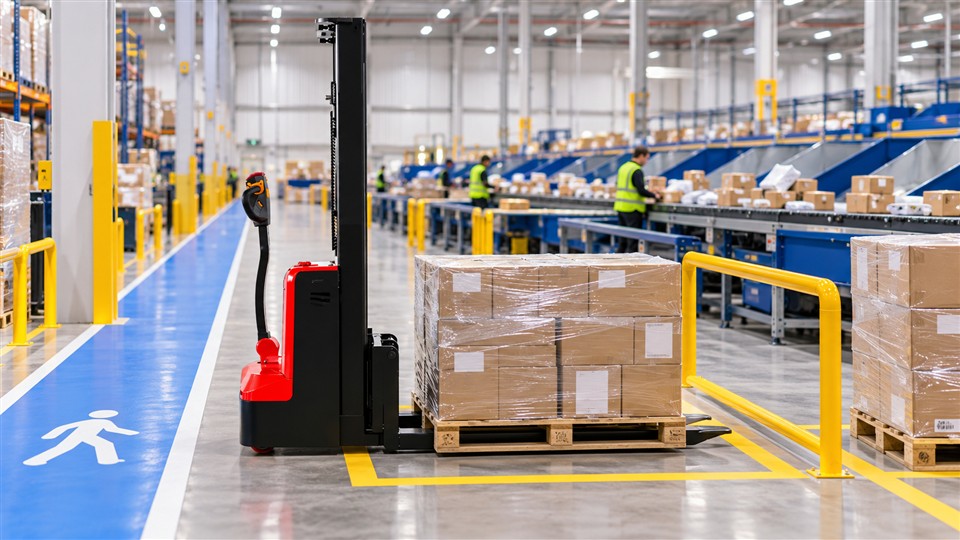
Application setup: Map the distance from receiving to inspection, buffer, sortation and restock. Measure pallet size, maximum weight, lift height, aisle clearance, floor joints and transfer-table height. Check stacker capacity at the actual mast elevation and confirm the tiller or platform layout suits the route. Plan opportunity charging without locating chargers inside a buffer or egress path. Agree on a standard pallet orientation and stopping point with sortation teams, and include a manual bypass for scanner or conveyor downtime.
Compare the ZG-CDD15G electric stacker for rated capacity, configuration and access requirements. Confirm the final specification for the exact attachment and work height.
Daily operating controls: Keep pedestrians separate from stacker travel and define a marked handoff area where no one reaches beneath a raised load. Use a stop signal and physical barrier before entering a robot or conveyor interface. Operators should not continue when pallet identity is uncertain, a load is leaning or the sortation station has stopped. Inspect forks, mast chains, wheels, brakes, steering, tiller, warning devices, controls and battery connections each shift. Keep forks low while traveling and respect rated limits.
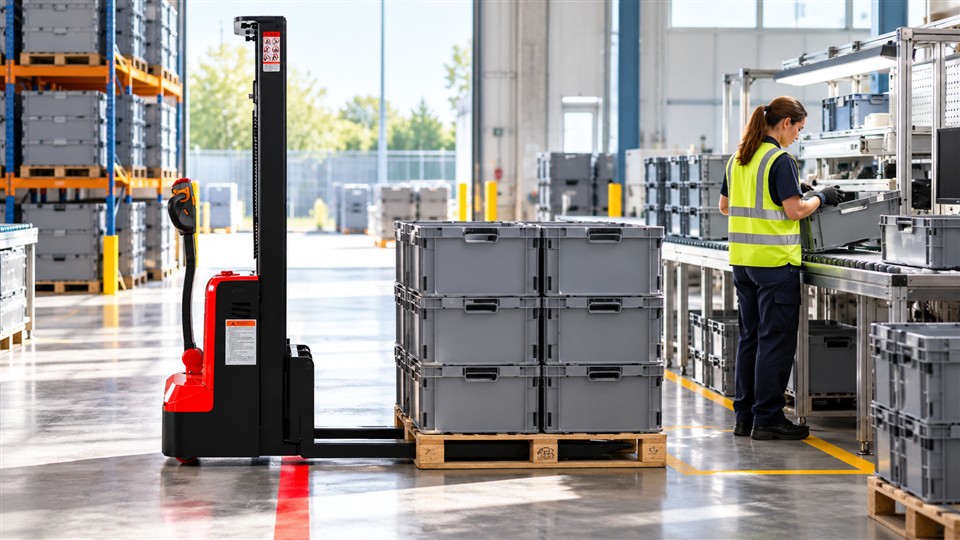
Review the CQDH20 reach stacker as another product reference, then compare dimensions and service access with the planned route.
Performance and total cost: Track buffer dwell time, queue length, correct scan rate, replenishment cycle time, charging delay, manual rework and blocked-aisle incidents. Compare these measures with a baseline before changing task software. Include charging infrastructure, scanner maintenance, training, service and floor marking in the total cost. If queue growth appears only when one downstream station is offline, adjust exception routing rather than buying another stacker to feed an unavailable process.
Commissioning note: Share pallet sizes, maximum weights, aisle dimensions, lift height, duty cycle and handoff drawings to compare stacker configurations. Confirm battery, charger, rated capacity and service support. ZGFORKLIFT and MYZG at Shandong Zhuogong Machinery equipment Co.,Ltd can review the layout with the warehouse team.
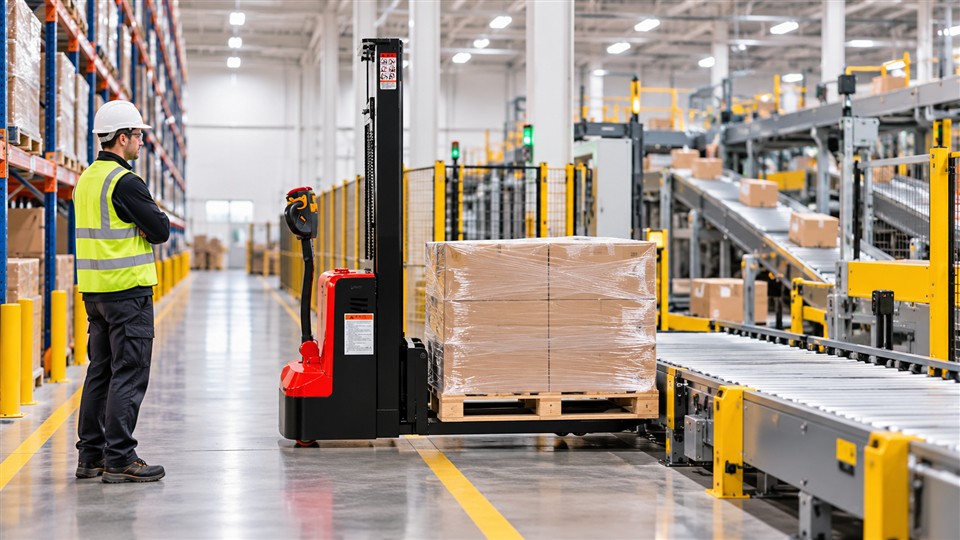
The MYCDDH all-terrain pallet stacker provides a third internal reference for comparing application fit. Product availability and specifications vary by market; verify current technical data before purchase or operation.
Contact Shandong Zhuogong Machinery equipment Co.,Ltd for application review. ZGFORKLIFT / MYZG sales: vip@mingyuforklift.com; telephone +86-0535-2090977; WhatsApp +86 131 8160 2336. Address: Xiaqiu Town, Laizhou, Yantai City, Shandong Province, China.
For a practical recommendation, send the destination country, maximum load, load-center distance, aisle width, lift height, surface, daily operating hours and working temperature. This information helps the engineering team review a specific configuration instead of relying on a generic catalogue description.
Name: selena
Mobile:+86-13176910558
Tel:+86-0535-2090977
Whatsapp:8613181602336
Email:vip@mingyuforklift.com
Add:Xiaqiu Town, Laizhou, Yantai City, Shandong Province, China