
vip@mingyuforklift.com
+86-0535-2090977

Published: October 30, 2026
HTML Meta Description: Use lift platforms to inspect warehouse sensors, motors and safety systems through planned access, isolation, rescue and aisle controls.
Keywords: lift platform, warehouse sensor inspection, preventive maintenance, aerial work platform, warehouse safety systems, motor inspection, overhead access, work-at-height planning, ZGFORKLIFT, MYZG
Warehouse automation depends on photo-eyes, network devices, drive motors, warning lights and sensors remaining clean, aligned and connected. A preventive inspection round can catch faults before they stop a conveyor or interrupt inventory flow. A lift platform provides a defined work position for technicians when selected to fit the height, reach, floor and obstruction profile. It should be integrated with equipment isolation and aisle management, not treated as an informal access ladder.
Current warehousing analysis highlights greater use of AI and physical automation, but those systems still rely on maintained infrastructure. Sensor drift, dust, vibration and accidental impacts can create data errors or unsafe machine behavior. Schedule inspection windows using maintenance records and fault alerts, then isolate the affected conveyor or robot area before raising a platform. The goal is a repeatable human service task that supports automation uptime while preserving safe pedestrian and vehicle routes.
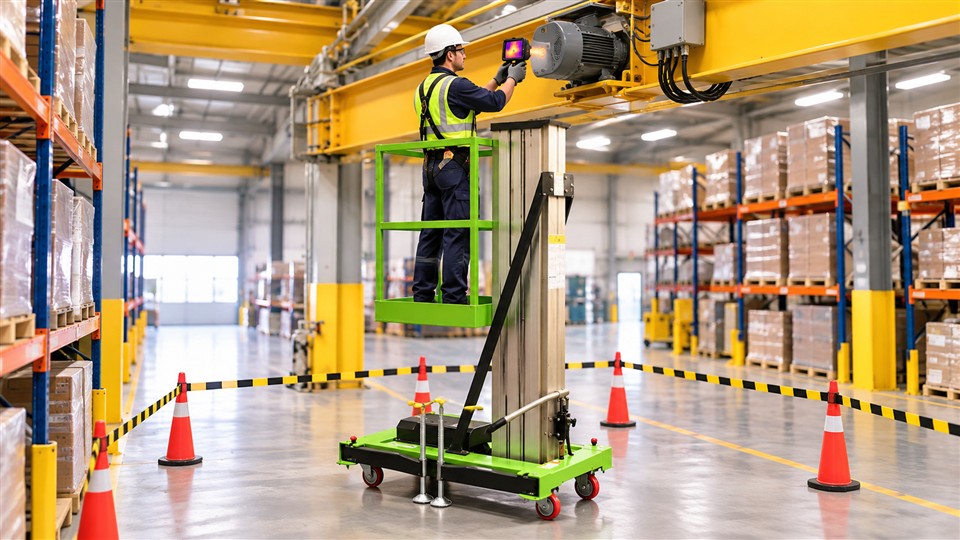
Application setup: List every work point with height, horizontal reach, tool load, number of technicians and time needed. Check floor loading, slope, threshold plates, rack overhang, overhead pipes, electrical clearance and aisle width. Choose a lift with platform capacity for people and tools together, and verify transport dimensions for access through doors. Plan the route to the first sensor and between inspection points, including a safe parking location. Coordinate the platform with conveyor shutdowns and battery charging or refueling needs.
Compare the DZ-10SD lift platform for rated capacity, configuration and access requirements. Confirm the final specification for the exact attachment and work height.
Daily operating controls: Use trained operators and technicians. Inspect guardrails, gate, wheels, tyres, controls, emergency lowering, alarms and power connections before the shift. Establish an exclusion zone below the work and prevent forklifts from entering it. Isolate electrical, conveyor or robotic motion as required; use lockout procedures where applicable. Keep tools secured, stay within rated capacity and do not reposition an elevated platform unless the model permits it. Confirm ground controls, rescue method and communication before lifting anyone.
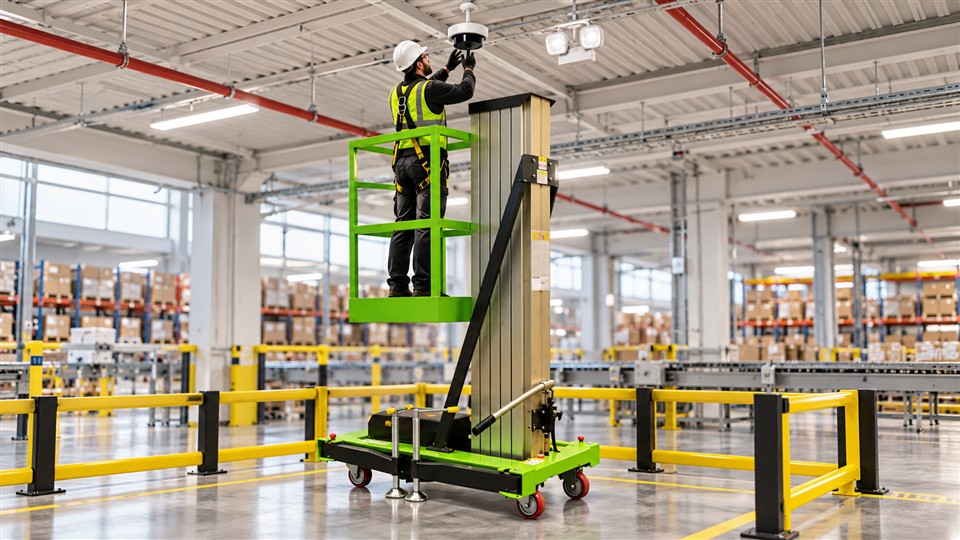
Review the ZX14 boom lift as another product reference, then compare dimensions and service access with the planned route.
Performance and total cost: Preventive access should reduce emergency stoppages and repeated service callouts. Measure inspection coverage, work duration, faults found, unplanned downtime and the number of aisle closures. Include transport, training, battery or fuel, maintenance and storage in the platform cost. Review which sensors can be safely inspected in a single planned route and which require a specialist. Do not trade away isolation time to shorten the round; a small scheduled window is more predictable than an uncontrolled failure during a dispatch peak.
Commissioning note: Send the equipment layout, work heights, reach points, floor condition, tool weight and travel clearances for model review. Confirm platform capacity and access limits with the supplier. Shandong Zhuogong Machinery equipment Co.,Ltd, with ZGFORKLIFT and MYZG, can help discuss platform configurations for a documented inspection plan.
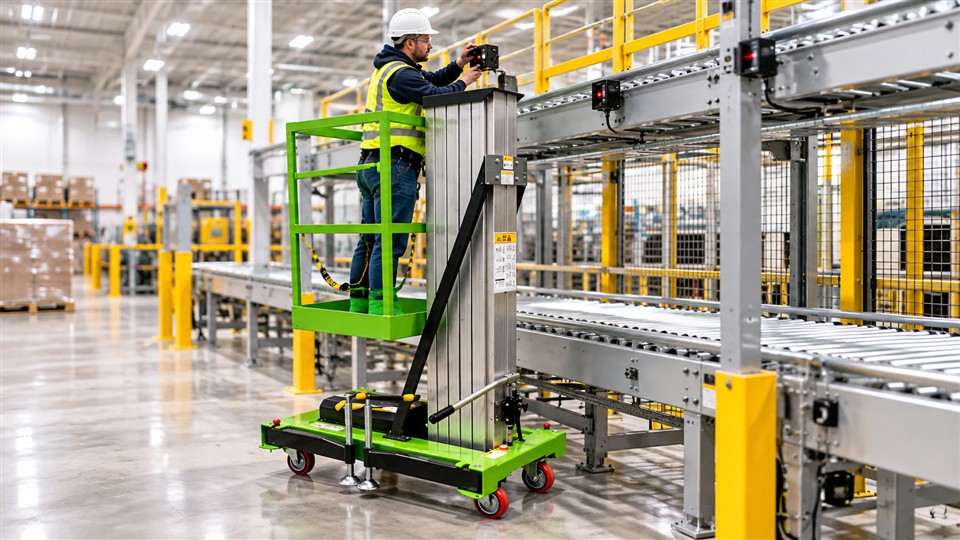
The ZGTT06 telescopic work platform provides a third internal reference for comparing application fit. Product availability and specifications vary by market; verify current technical data before purchase or operation.
Contact Shandong Zhuogong Machinery equipment Co.,Ltd for application review. ZGFORKLIFT / MYZG sales: vip@mingyuforklift.com; telephone +86-0535-2090977; WhatsApp +86 131 8160 2336. Address: Xiaqiu Town, Laizhou, Yantai City, Shandong Province, China.
For a practical recommendation, send the destination country, maximum load, load-center distance, aisle width, lift height, surface, daily operating hours and working temperature. This information helps the engineering team review a specific configuration instead of relying on a generic catalogue description.
Name: selena
Mobile:+86-13176910558
Tel:+86-0535-2090977
Whatsapp:8613181602336
Email:vip@mingyuforklift.com
Add:Xiaqiu Town, Laizhou, Yantai City, Shandong Province, China