
vip@mingyuforklift.com
+86-0535-2090977

Introduction
The decision between electric and internal combustion (IC) forklifts extends far beyond the sticker price observed at the point of purchase. Fleet managers, procurement officers, and operations directors must evaluate the total cost of ownership (TCO) over the equipment's service life to make financially sound decisions. While electric forklifts have gained substantial market share over the past decade—now representing over 60% of new forklift sales in developed markets—their economic advantage varies significantly based on application intensity, duty cycles, energy pricing, and maintenance infrastructure.
This article presents a rigorous framework for calculating the five-year total cost of ownership for electric versus internal combustion forklifts, using standardized assumptions applicable to a typical Class I or Class V counterbalance forklift operating 2,000 hours annually in a multi-shift warehouse or manufacturing environment. By dissecting each cost component, this analysis provides decision-makers with a replicable model for fleet-specific evaluations.
Methodology and Baseline Assumptions
To ensure comparability, we establish a standard operational profile: a 5,000-pound capacity counterbalance forklift operating 2,000 hours per year (approximately 10,000 hours over five years) across two shifts, five days per week. This represents a moderately intensive application typical of distribution centers and manufacturing plants. We assume the forklift is purchased outright rather than leased, and costs are calculated in nominal dollars without discounting, though fleet accountants may apply present value adjustments for capital budgeting purposes.
For the electric baseline, we specify a 48-volt lead-acid battery system with a standard charger. For the IC baseline, we specify a liquid propane gas (LPG) engine, the most common IC fuel type in indoor warehousing. Diesel and gasoline variants follow similar calculation frameworks with adjusted fuel pricing and maintenance intervals.
Acquisition Costs: The Starting Point
The purchase price represents the most visible cost component but frequently constitutes less than 25% of the five-year TCO for high-utilization equipment.
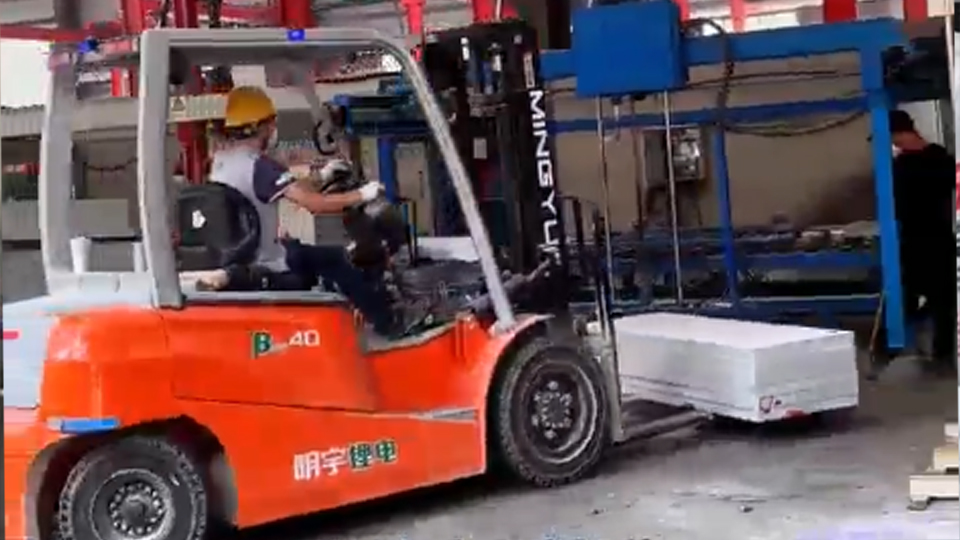
Electric Forklift: A new, standard-duty 5,000-pound capacity electric sit-down counterbalance forklift typically ranges from $28,000 to $35,000 depending on brand, mast configuration, and optional features. For this analysis, we adopt a median acquisition cost of $31,000. This price includes the forklift chassis but typically excludes the battery and charger, which are often sold separately.
Battery and Charger: A standard 48-volt, 1,000 ampere-hour lead-acid battery suitable for this application costs approximately $5,500 to $7,500. A compatible high-frequency smart charger adds $2,500 to $3,500. Combined, the power system adds $9,500 to the initial investment, bringing total electric acquisition cost to $40,500.
LPG Forklift: An equivalent IC forklift with an LPG engine generally costs less upfront, ranging from $22,000 to $28,000. The median acquisition cost of $25,000 includes the engine, fuel system, and standard mast. No separate energy storage purchase is required, though facilities must install fuel storage and dispensing infrastructure if not already present.
At acquisition, the electric forklift commands a $15,500 premium—approximately 62% higher than its IC counterpart. This initial capital differential frequently drives purchasing decisions at organizations with constrained capital budgets or short-term financial planning horizons. However, the TCO analysis reveals whether this premium generates returns through operational savings.
Energy and Fuel Costs: The Operational Engine
Energy costs represent the most significant variable expense difference between the two technologies and the primary driver of long-term electric forklift economic advantage.
Electric Forklift Energy Consumption: A typical 48-volt electric forklift draws approximately 15-20 kWh per operating hour under mixed load conditions, accounting for lifting, travel, and idle time. At 17.5 kWh per hour and 2,000 operating hours annually, annual consumption equals 35,000 kWh. Industrial electricity rates vary regionally but typically range from $0.08 to $0.14 per kWh. Using a conservative $0.11 per kWh average, annual electricity cost totals $3,850. Over five years, electricity expenditure reaches $19,250.
LPG Forklift Fuel Consumption: LPG forklifts typically consume 1.5 to 2.0 gallons of propane per operating hour. At 1.75 gallons per hour and 2,000 hours annually, annual consumption equals 3,500 gallons. Propane pricing fluctuates with petroleum markets but generally ranges from $2.00 to $3.50 per gallon delivered in bulk, with a median of $2.75 per gallon. Annual fuel cost totals $9,625. Over five years, propane expenditure reaches $48,125.
The five-year energy cost differential alone—$28,875 in favor of the electric forklift—substantially offsets the initial acquisition premium. In regions with lower industrial electricity rates or higher propane costs, this advantage expands further. Facilities with solar generation or time-of-use rate optimization can reduce electric costs by 30-50%, though such scenarios require separate analysis.
Maintenance and Repair Costs: Mechanical Complexity vs. Simplicity
Maintenance costs diverge significantly based on the fundamental mechanical differences between the two power systems.
Electric Forklift Maintenance: Electric forklifts eliminate engine oil, filters, spark plugs, belts, radiators, exhaust systems, and emission control components. Routine maintenance consists primarily of brake inspections, hydraulic system service, tire replacement, and battery maintenance. Annual maintenance costs for a well-maintained electric forklift in moderate-duty application range from $1,200 to $2,000. Using $1,600 annually, five-year maintenance totals $8,000.
LPG Forklift Maintenance: IC forklifts require engine oil changes every 250-500 hours, air and fuel filter replacements, cooling system maintenance, tune-ups, and periodic exhaust system repairs. Engine components experience greater thermal and mechanical stress, accelerating wear. Annual maintenance costs typically range from $2,500 to $4,000 for equivalent duty. Using $3,250 annually, five-year maintenance totals $16,250.
The maintenance cost differential of $8,250 over five years further erodes the IC forklift's initial price advantage. Additionally, electric forklifts experience fewer unplanned breakdowns, reducing downtime costs that, while difficult to quantify precisely, significantly impact operational productivity.
Battery Replacement: The Electric Wildcard
The most substantial maintenance expense unique to electric forklifts is battery replacement. Standard lead-acid batteries in moderate-duty applications typically deliver 1,200 to 1,500 charge cycles. At two shifts and one charge cycle per shift (assuming battery change or opportunity charging), a battery may complete 1,000 cycles within three to four years. Conservative planning assumes one battery replacement during the five-year ownership period.
A replacement lead-acid battery costs $6,500 installed. Lithium-ion alternatives, while eliminating mid-life replacement, add $12,000 to $18,000 to initial acquisition cost—a calculation beyond our baseline lead-acid scenario. Amortizing the original battery over its first life and adding one replacement, battery costs over five years total approximately $12,000 ($6,000 initial plus $6,000 replacement, simplified).
IC forklifts face no equivalent energy storage replacement, though fuel system components, catalytic converters, and engine rebuilds may eventually require major investment. Engine rebuilds at 8,000-10,000 hours—approaching our five-year horizon—can cost $6,000 to $10,000, though many fleets defer such investments by trading equipment before failure.
Tire, Wear Item, and Miscellaneous Costs
Both forklift types consume tires, forks, hydraulic hoses, and operator compartment components at roughly equivalent rates under identical applications. Cushion tires for warehouse use last 2,000-4,000 hours and cost $800-$1,200 per set. Pneumatic tires for outdoor or rough applications cost more and wear faster. For our warehouse baseline, we allocate $2,500 over five years for tires and miscellaneous wear items, applied equally to both configurations.
Infrastructure and Facility Costs
Often overlooked in TCO calculations, facility infrastructure requirements differ meaningfully between technologies.
Electric Infrastructure: Battery charging requires dedicated charging stations with adequate electrical supply. A standard 48-volt, 1,000 Ah charger draws 480V three-phase power at approximately 150 amps during peak charging. Facilities lacking sufficient electrical capacity may face panel upgrades, conduit installation, and charging bay construction costing $5,000 to $15,000 depending on existing infrastructure proximity. For this analysis, we assume a moderate infrastructure investment of $8,000 amortized over five years ($1,600 annually).
LPG Infrastructure: Propane storage requires an outdoor tank (typically 500-1,000 gallons), vaporizer, pressure regulators, and dispensing equipment. Installation costs range from $3,000 to $8,000. Annual tank rental or inspection fees add $500 annually. Over five years, LPG infrastructure totals approximately $5,500 ($3,000 installation plus $2,500 operating fees).
The electric infrastructure premium of $2,500 over five years is modest relative to energy savings but requires upfront capital availability.
Productivity and Operational Considerations
Beyond direct costs, operational factors influence economic outcomes. Electric forklifts operate more quietly (reducing hearing protection requirements and improving communication), produce zero emissions (eliminating ventilation costs and enabling food/pharmaceutical applications), and offer superior acceleration and lifting precision due to electric motor torque characteristics. Conversely, IC forklifts refuel in minutes versus the 8-hour standard charge cycle for lead-acid batteries, though fast-charge and lithium-ion technologies increasingly narrow this gap.
For multi-shift operations using lead-acid batteries, battery changing infrastructure and labor add $1,500 to $3,000 annually. Our baseline assumes opportunity charging or battery availability that avoids this penalty, but fleet managers must verify applicability to their operations.
Five-Year Total Cost Calculation Summary
Consolidating all components into a comprehensive five-year model:
Cost Component Electric Forklift LPG Forklift
Initial Acquisition (Chassis) $31,000 $25,000
Battery / Fuel System $9,500 $0
Energy/Fuel (5 years) $19,250 $48,125
Maintenance (5 years) $8,000 $16,250
Battery Replacement $6,500 $0
Tires and Wear Items $2,500 $2,500
Infrastructure (5 years) $8,000 $5,500
Five-Year Total $84,750 $97,375
Under these standard assumptions, the electric forklift delivers a $12,625 five-year savings despite its $15,500 acquisition premium—a 13% total cost reduction. The crossover point where cumulative electric savings offset the initial premium occurs approximately 18-24 months into service, depending on utilization intensity and local energy pricing.
Sensitivity Analysis: When the Calculation Shifts
Several variables can invert or amplify these results:
Low Utilization: At fewer than 1,000 annual hours, energy and maintenance savings diminish while the acquisition premium remains fixed. Electric forklifts in intermittent-use applications may fail to achieve TCO parity within five years.
High Electricity Costs: Regions with industrial rates exceeding $0.18 per kWh reduce the energy advantage. Conversely, regions with rates below $0.07 per kWh strengthen the electric case substantially.
Lithium-Ion Adoption: While lithium-ion batteries increase initial cost by $10,000-$15,000, they eliminate mid-life replacement, reduce maintenance, and enable opportunity charging. In high-utilization, multi-shift applications, lithium-ion electric forklifts often achieve superior TCO despite higher upfront investment.
Outdoor/Rough Terrain: IC forklifts maintain advantages in outdoor applications where electric infrastructure is impractical, where extreme temperatures degrade battery performance, or where pneumatic tire wear accelerates electric maintenance costs.
Environmental and Regulatory Considerations
While not directly captured in financial TCO, regulatory trends increasingly influence total cost. Emissions regulations in California and expanding jurisdictions impose fees, reporting requirements, and operational restrictions on IC equipment. Carbon pricing mechanisms, though nascent in North American material handling, may eventually internalize environmental costs. Electric forklifts future-proof operations against tightening environmental standards, representing option value not quantified in standard TCO models.
Conclusion
The five-year total cost calculation demonstrates that electric forklifts, despite higher acquisition costs, generally deliver superior economic returns in standard warehouse and manufacturing applications through dramatically lower energy and maintenance expenditures. The $12,625 savings calculated in our baseline model—derived primarily from $28,875 in energy savings partially offset by battery replacement and infrastructure costs—represents a compelling financial case for electrification.
However, TCO is inherently site-specific. Fleet managers must input local energy rates, labor costs, utilization patterns, and infrastructure constraints into this framework to generate operationally accurate comparisons. The methodology presented here provides that replicable structure. In an era of rising fuel costs, advancing battery technology, and intensifying environmental regulation, the economic case for electric forklifts continues to strengthen—provided organizations evaluate beyond the purchase order and calculate across the full ownership horizon.
Name: selena
Mobile:+86-13176910558
Tel:+86-0535-2090977
Whatsapp:8613181602336
Email:vip@mingyuforklift.com
Add:Xiaqiu Town, Laizhou, Yantai City, Shandong Province, China