
vip@mingyuforklift.com
+86-0535-2090977

Introduction
Aerial work platforms (AWPs), now formally classified as Mobile Elevating Work Platforms (MEWPs) under current ANSI and CSA standards, represent critical equipment for elevated access across construction, maintenance, and industrial sectors. While these machines dramatically enhance productivity compared to traditional scaffolding and ladders, they also introduce significant operational hazards—including falls, tip-overs, electrocution, and structural failures—that demand rigorous safety protocols and systematic maintenance programs.
This technical guide establishes comprehensive safe operation specifications and daily maintenance procedures grounded in regulatory requirements and manufacturer best practices. The framework addresses pre-operation protocols, operational safety controls, emergency procedures, and preventive maintenance schedules essential for ensuring both personnel safety and equipment longevity.
Regulatory Framework and Training Requirements
Operator Qualification and Authorization
Modern MEWP operation requires formal training and authorization under OSHA 29 CFR 1910.67 and 1926.453, as well as ANSI A92.22 and A92.24 standards . Training programs must encompass three mandatory components:
Formal Instruction: Classroom or online instruction covering OSHA regulations, fall protection systems, hazard recognition, and equipment-specific operational theory .
Practical Training: Supervised hands-on operation of the specific MEWP type and model, including setup, maneuvering, emergency lowering, and platform safety protocols .
Performance Evaluation: Direct observation and verification of safe operational competency by a qualified trainer before authorization .
Employers must provide refresher training every three years, or sooner if operators demonstrate unsafe practices, accidents occur, or equipment changes introduce new hazards . Documentation of training and authorization must be maintained and readily accessible for regulatory compliance verification.
Equipment Classification and Specific Requirements
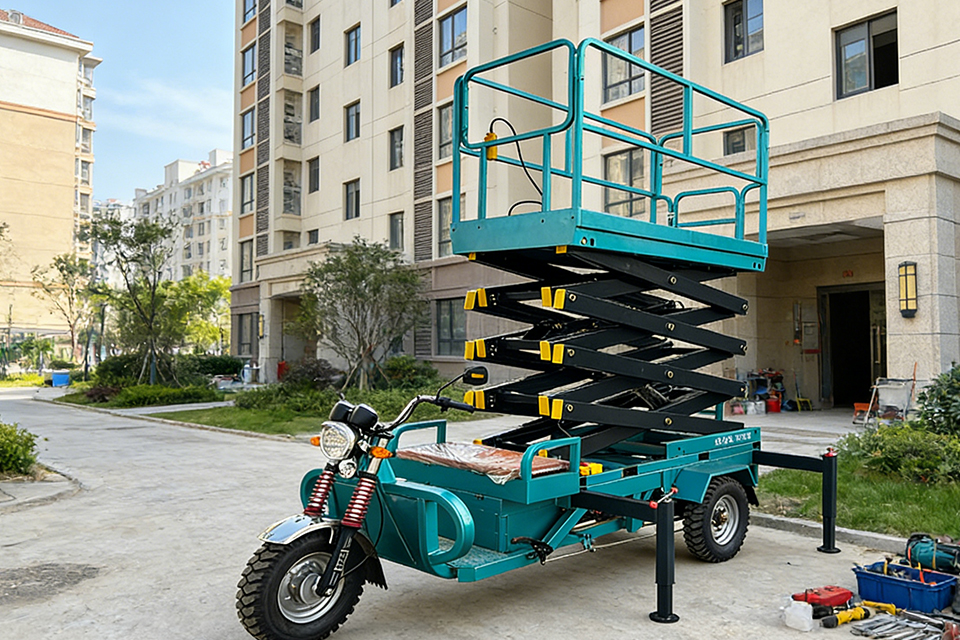
Understanding MEWP classification is essential for proper operation. Under ANSI/CSA standards, machines are categorized by Group (A or B based on platform position relative to tipping lines) and Type (1, 2, or 3 based on mobility characteristics) . Group A MEWPs (scissor lifts, vertical mast lifts) maintain platforms within tipping lines, while Group B MEWPs (all boom types) extend platforms beyond the base footprint. This distinction fundamentally affects fall protection requirements—Group B operations mandate harness and lanyard use due to ejection hazards, while Group A operations typically rely on guardrail systems, though some jurisdictions require harnesses for all elevated work .
Pre-Operation Inspection Protocols
Documentation Verification
Before any operational checks, operators must verify equipment documentation status :
Operator's Manual: Confirm presence in a weatherproof container on the machine. Review specific operational procedures, safety features, and limitations for the model .
Six-Monthly Inspection Certificate: Verify current certification issued by a competent person, displayed near ground controls or platform entrance .
Maintenance Logbook: Confirm presence and review recent entries for outstanding issues or recent repairs .
Load Capacity Decals: Ensure all capacity, reach, and safety placards are legible and intact .
Visual and Structural Inspection
A comprehensive walk-around inspection covers all structural and mechanical components :
Chassis and Superstructure:
Examine chassis, scissor arms, or boom mechanisms for cracks, deformation, corrosion, or unauthorized modifications .
Verify all structural welds are intact; check for paint damage that may indicate underlying metal fatigue .
Inspect pivot pins, keeper plates, and bolts for security; confirm no missing or loose fasteners .
Hydraulic Systems:
Check all hydraulic cylinders, hoses, and fittings for leaks, cracks, bulges, or abrasion .
Verify hydraulic fluid level within manufacturer-specified range .
Look for fluid accumulation beneath the machine indicating active leaks .
Power Systems:
For diesel units: Check engine oil, coolant, and fuel levels; inspect for leaks around engine and drivetrain .
For electric units: Inspect battery casing for cracks or corrosion; verify secure mounting and clean terminal connections .
Check battery charge level; ensure sufficient capacity for planned operation duration .
Tires and Wheels:
Inspect tire tread depth, sidewall condition, and embedded debris .
Verify tire pressure (record specific PSI for pneumatic tires) .
Check wheel nuts for proper torque and security .
For rough-terrain units, verify tire condition appropriate for ground conditions .
Functional Testing Procedures
All control systems must be tested before elevating personnel :
Ground Control Verification:
Test all ground-level controls for proper operation .
Verify emergency lowering system functionality—this critical safety feature must operate independently of primary systems .
Confirm lower controls successfully override platform controls when activated .
Platform Control Verification:
Test all platform controls including lift, lower, drive, and steer functions .
Verify deadman controls (foot pedals or spring-return switches) automatically return to neutral when released .
Check emergency stop buttons at both ground and platform stations .
Test motion alarms, horns, and warning lights .
For boom lifts: Verify turntable rotation, boom extension/retraction, and basket leveling .
Safety System Verification:
Confirm limit switches prevent operation beyond manufacturer-specified boundaries .
Test tilt sensors and alarms if equipped .
Verify platform load-sensing system operates correctly .
Check that guardrail gates self-close and latch securely .
Site-Specific Hazard Assessment
Before deploying the MEWP, operators must evaluate the work environment :
Ground Conditions:
Confirm surface is firm, level, and capable of supporting the machine with rated load .
Identify voids, drop-offs, soft areas, or underground structures that could compromise stability .
For outrigger-equipped machines, verify adequate space for full deployment on stable bearing surfaces .
Overhead Hazards:
Maintain minimum 10-foot clearance from energized power lines under 50kV; greater distances for higher voltages .
Identify overhead obstructions, building projections, or other structural elements in the work path .
Assess wind conditions—most MEWPs have operational limits of 28–35 mph .
Environmental and Traffic Considerations:
Evaluate weather conditions; suspend operations during lightning, high winds, or precipitation affecting visibility .
Establish barricaded work zones to exclude pedestrians and vehicles from below elevated platforms .
Ensure adequate visibility or assign spotters for travel near obstacles or personnel .
Operational Safety Specifications
Platform Loading and Personnel Requirements
Load Capacity Compliance:
Never exceed manufacturer-rated platform capacity, which includes all personnel, tools, materials, and dynamic forces .
Distribute loads evenly; avoid concentrated loads that could destabilize the platform .
For scissor lifts with extendable platforms, verify load ratings apply only when fully retracted or adjust accordingly .
Personnel Positioning:
Stand with both feet on the platform floor; never climb on guardrails, boxes, or other devices to gain additional height .
Secure platform entry chains or gates before elevating .
Maintain 100% tie-off for Group B MEWPs (boom lifts); attach harness lanyards to manufacturer-designated anchor points only .
Movement and Positioning Protocols
Elevated Travel Restrictions:
Scissor lifts must not travel with platform elevated unless specifically designed and manufacturer-approved for such operation .
Boom lifts may travel with platform elevated only on flat, level surfaces with boom retracted and lowered to minimum necessary height .
Always maintain clear line of sight during travel; use spotters when visibility is restricted .
Stabilization Requirements:
Deploy outriggers or stabilizers on equipped machines; verify proper ground contact and machine leveling .
For rough-terrain scissor lifts, ensure slope sensors and auto-leveling systems are functional and within operational limits .
Emergency Procedures
Emergency Stop Activation:
Use emergency stop buttons immediately when hazardous conditions develop—equipment malfunction, contact with obstacles, or personnel distress .
Platform Descent Failure:
Engage emergency lowering systems (typically hand pumps or auxiliary power units) to return platform to ground level .
Never attempt to climb down the MEWP structure; await rescue by trained personnel if emergency systems fail .
Electrical Contact:
If any part of the MEWP contacts energized power lines, occupants must remain in the platform and avoid touching any metal surfaces .
Ground personnel must not approach the machine; contact emergency services and utility company immediately .
Daily Maintenance Procedures
Hydraulic System Maintenance
The hydraulic system constitutes the operational core of MEWPs, requiring systematic attention :
Daily Checks:
Inspect all hydraulic hoses, cylinders, and connections for leaks or damage .
Verify fluid level in reservoir; top off with manufacturer-specified fluid only .
Check for abnormal hydraulic operating temperatures or unusual noises indicating pump or valve issues .
Scheduled Maintenance:
Change hydraulic fluid and filters at manufacturer-specified intervals .
Inspect hydraulic cylinder rods for scoring, corrosion, or seal damage .
Address any leaks immediately; hydraulic fluid loss compromises both operational capability and safety .
Battery and Electrical System Maintenance (Electric MEWPs)
Daily Protocols:
Verify battery charge level before operation; recharge after each use .
Inspect battery terminals for corrosion; clean and protect as necessary .
Check all electrical cables and wiring harnesses for security, chafing, or damage .
Long-Term Care:
Avoid complete battery discharge; maintain charge levels above 20% to prolong battery life .
Use manufacturer-specified chargers only; incorrect charging damages batteries and creates fire hazards .
Test battery capacity and health quarterly; replace degraded units before failure .
Mechanical Component Maintenance
Lubrication Requirements:
Apply manufacturer-specified lubricants to all pivot points, bushings, and sliding surfaces daily or per maintenance schedule .
Grease scissor arm joints, boom pivot points, and turntable bearings to prevent wear and ensure smooth operation .
Wear Component Inspection:
Check scissor arm condition daily for cracks, deformation, or misalignment .
Inspect boom sections for structural integrity; pay particular attention to weld zones and high-stress areas .
Verify condition of tires, wheels, and braking systems; replace worn components before they compromise safety .
Seasonal and Environmental Considerations
Cold Weather Operations:
Allow hydraulic systems and engines to warm up before operation; cold fluid has elevated viscosity affecting response times .
Use cold-weather hydraulic fluids or pre-heat systems where specified .
Monitor battery performance; cold temperatures reduce capacity and increase charging requirements .
Check tire condition; rubber hardening reduces traction on frozen surfaces .
Hot Weather Operations:
Monitor hydraulic fluid temperatures; elevated ambient temperatures increase thermal load on systems .
Check tire pressure frequently; heat expansion affects inflation levels .
Protect batteries from excessive heat exposure to prevent electrolyte loss and reduced lifespan .
Documentation and Record Keeping
Comprehensive maintenance documentation serves both safety and regulatory compliance functions :
Daily Inspection Logs:
Record pre-operation inspection results, including any deficiencies noted and corrective actions taken .
Document operator identification, equipment serial number, hour meter reading, date, and shift .
Maintain logs on the equipment or at the worksite for regulatory inspection availability .
Maintenance Records:
Track all scheduled maintenance activities, fluid changes, filter replacements, and component repairs .
Record parts replacements with dates, hour meter readings, and technician identification .
Maintain manufacturer service bulletins and modification records .
Incident and Deficiency Reporting:
Immediately report any equipment defects, malfunctions, or safety incidents to supervision .
Remove defective equipment from service until qualified maintenance personnel complete repairs and return to service .
Conclusion
Safe MEWP operation demands systematic adherence to pre-operation inspection protocols, strict operational safety specifications, and rigorous daily maintenance procedures. The integration of qualified operator training, comprehensive equipment inspection, environmental hazard assessment, and preventive maintenance creates a defense-in-depth approach that minimizes incident risk while maximizing equipment availability.
Organizations that implement these specifications as standardized operating procedures—supported by thorough documentation and continuous oversight—achieve not only regulatory compliance but superior operational performance. The investment in safety systems and maintenance discipline returns measurable dividends in reduced downtime, extended equipment lifespan, and elimination of the human and financial costs associated with aerial work platform incidents.
As MEWP technology evolves with electric power systems, enhanced stability controls, and telematics integration, these fundamental safety and maintenance principles remain applicable. Technical advancement must complement, not replace, disciplined operational protocols and systematic equipment care.
Name: selena
Mobile:+86-13176910558
Tel:+86-0535-2090977
Whatsapp:8613181602336
Email:vip@mingyuforklift.com
Add:Xiaqiu Town, Laizhou, Yantai City, Shandong Province, China