
vip@mingyuforklift.com
+86-0535-2090977

Forklift trucks represent one of the most ubiquitous pieces of material handling equipment in the global economy. With the global forklift market projected to grow from USD 91.19 billion in 2025 to USD 141.32 billion by 2032 at a compound annual growth rate (CAGR) of 6.5%, understanding who uses these machines—and why—provides critical insight into industrial operations, supply chain dynamics, and economic infrastructure. This article examines the major end-user industries, operational environments, and emerging adoption patterns that define the forklift truck user landscape.
The Forklift User Ecosystem: An Overview
Forklift trucks serve as the mechanical backbone of material handling across virtually every sector that involves the movement, storage, or processing of physical goods. The user base spans from massive e-commerce fulfillment centers processing millions of packages daily to small manufacturing shops moving raw materials between workstations. What unifies these diverse users is the fundamental requirement to lift, transport, and position loads that exceed safe manual handling thresholds—typically defined as loads above 50 pounds or requiring movement beyond a single ergonomic reach zone.
The forklift user ecosystem can be segmented by end-use industry, operational environment, fleet size, and application specificity. Market research identifies eleven primary end-use industries: third-party logistics (3PL), food and beverage, automotive, e-commerce, aviation, pulp and paper, chemicals, healthcare, semiconductors and electronics, metals and heavy machinery, and a residual "others" category encompassing construction, agriculture, mining, and specialized applications.
Logistics and Third-Party Logistics (3PL): The Dominant User Segment
The logistics and 3PL sector represents the largest forklift user segment by revenue, controlling 27.65% of the US forklift market in 2025. This dominance reflects the explosive growth of e-commerce, omnichannel retail distribution, and the outsourcing of supply chain operations to specialized logistics providers. Within this sector, forklifts perform the core functions that enable modern commerce: unloading inbound freight from trucks and containers, put-away operations into high-density racking systems, order picking for customer fulfillment, and loading outbound shipments.
The logistics sector's forklift usage exhibits several distinctive characteristics. First, fleet sizes are typically large—major 3PL operators like DHL Supply Chain, XPO Logistics, and C.H. Robinson maintain fleets numbering in the thousands of units across their North American operations. Second, utilization rates are exceptionally high, with many logistics forklifts operating 16-20 hours per day across multiple shifts, driving demand for fast-charging lithium-ion battery systems and opportunity charging infrastructure. Third, the sector leads in automation adoption, with autonomous forklifts and automated guided vehicles (AGVs) seeing the fastest growth rates due to labor cost pressures and the need for 24/7 operational consistency.
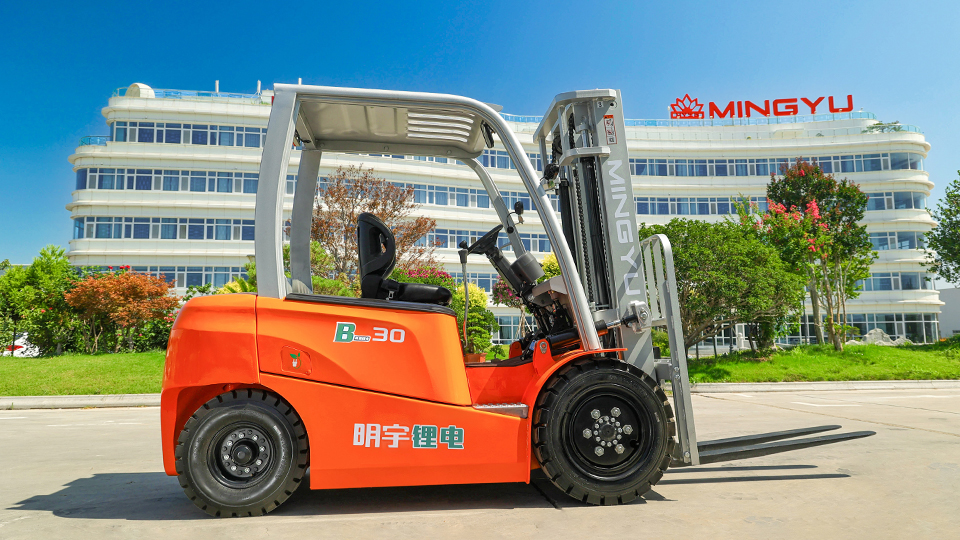
E-commerce specifically represents the fastest-growing user subset within logistics, projected to expand at 12.11% CAGR through 2031. Companies like Amazon, Walmart, and Alibaba operate fulfillment centers where forklifts and their automated equivalents handle the "middle mile" of e-commerce logistics—moving goods from receiving docks to storage racks, from storage to picking zones, and from consolidation areas to outbound shipping. The e-commerce user profile demands Class 2 narrow-aisle forklifts (which captured 32.45% of the US market in 2025) and Class 3 electric pallet jacks that maximize cubic space efficiency in high-rent distribution facilities.
Manufacturing: The Foundational Industrial User
Manufacturing operations represent the second major forklift user category, contributing approximately 35% of market share and providing baseline stability to forklift demand. Unlike logistics users, whose demand fluctuates with consumer spending patterns, manufacturing forklift usage correlates with industrial production indices and capital expenditure cycles. The manufacturing user base is extraordinarily diverse, spanning automotive assembly plants, steel mills, chemical processing facilities, electronics fabrication cleanrooms, and food processing plants.
In automotive manufacturing, forklifts handle just-in-time delivery of components to assembly lines, movement of work-in-process inventory between stations, and transport of finished vehicles from end-of-line to shipping areas. The automotive sector's forklift requirements are distinctive for their need to handle non-palletized loads—engines, transmissions, and vehicle bodies often require specialized attachments including roll clamps, carpet poles, and custom fixtures. Toyota, Ford, and Volkswagen operate some of the world's largest forklift fleets within their manufacturing complexes, with individual plants maintaining 100-500 units depending on production volume.
The metals and heavy machinery manufacturing segment utilizes forklifts at the upper end of the capacity spectrum. Steel mills, aluminum foundries, and heavy equipment manufacturers require forklifts with capacities exceeding 15 tons—and in some cases above 36 tons—to handle raw metal stock, forgings, castings, and finished machine components. These users predominantly employ Class 4 and Class 5 internal combustion engine forklifts with pneumatic tires, as the outdoor yard environments, extreme weights, and harsh operating conditions exceed the capabilities of electric alternatives. Kalmar, Toyota Material Handling, Hyster-Yale, and Komatsu are the leading suppliers to this demanding user segment, with models like the Kalmar DCG 380-540 and Toyota THD4500-48 designed specifically for steel and heavy machinery applications.
Food and beverage manufacturing represents another substantial forklift user group, projected to hold significant market share throughout the forecast period. These users face unique requirements including cold storage operation (-20°F to 35°F), washdown capability for sanitation compliance, and explosion-proof specifications for facilities handling flammable ingredients like alcohol or grain dust. The food and beverage user profile drives demand for specialized electric forklifts with sealed components, stainless steel hardware, and specialized battery systems that maintain performance in refrigerated environments.
Retail and Wholesale: The Commercial User Segment
Retail and wholesale operations represent a distinct forklift user category characterized by smaller fleet sizes, lower utilization rates, and diverse operational environments. Big-box retailers like Walmart, Target, and Home Depot maintain forklift fleets for back-of-store receiving, cross-docking operations, and seasonal inventory surges. Wholesale distributors serving independent retailers require forklifts for bulk breaking—dividing pallet-quantity shipments into case or individual unit quantities for downstream customers.
The retail user segment has been transformed by the "omnichannel" revolution, where stores now function as mini-fulfillment centers for online orders. This shift has increased forklift utilization in retail backrooms and created demand for compact electric forklifts capable of operating in constrained spaces while handling the mixed loads characteristic of store replenishment. Walmart's deployment of autonomous medium-capacity forklifts illustrates how even traditional retail users are adopting automation to address labor availability challenges.
Construction and Outdoor Industrial Users
Construction sites represent a specialized forklift user environment where rough-terrain capabilities dominate. Unlike warehouse users who operate on smooth concrete surfaces, construction users require forklifts capable of navigating mud, gravel, and uneven ground while handling building materials including bricks, concrete blocks, steel beams, and piping. These users predominantly employ Class 7 rough-terrain forklifts and telehandlers (telescopic handlers), which combine forklift functionality with extended reach capabilities.
The construction user profile emphasizes durability and versatility over precision. Forklifts in construction applications often serve multiple roles—moving materials, lifting workers via man baskets, and assisting with equipment placement. The Asia-Pacific region, with its massive infrastructure development programs, drives significant demand in this segment, where Class 4/5 internal combustion forklifts remain the preferred choice for outdoor heavy-duty applications.
Ports, shipyards, and marine freight operations constitute another outdoor user category with extreme requirements. These users employ heavy-duty forklifts with capacities up to 40,000 pounds to handle shipping containers, steel coils, and bulk cargo. The port user environment subjects equipment to corrosive salt air, extreme weather, and continuous heavy loading, requiring specialized forklifts with enhanced corrosion protection, heavy-duty cooling systems, and robust structural designs.
Specialized and Emerging User Segments
Several specialized user segments demonstrate the forklift's adaptability beyond conventional material handling.
Healthcare and Pharmaceutical: Hospitals, pharmaceutical manufacturers, and medical device companies utilize forklifts for supply chain operations, though with stringent requirements for cleanliness, contamination control, and regulatory compliance. These users require electric forklifts with non-marking tires, minimal vibration, and the ability to operate in temperature-controlled environments. Strict regulatory requirements for drug production, storage, and distribution drive demand for forklifts with comprehensive documentation, validation support, and traceability features.
Semiconductors and Electronics: Cleanroom manufacturing environments for semiconductors, flat-panel displays, and electronic components require forklifts that generate minimal particulate contamination. These users specify electric forklifts with special filtration, non-outgassing materials, and electrostatic discharge (ESD) protection. The semiconductor industry's emphasis on enhancing intralogistics operations drives adoption of automated guided vehicles and very narrow aisle (VNA) forklifts that maximize cleanroom space utilization.
Chemical Processing: Chemical manufacturers and handlers require forklifts meeting explosion-proof (Ex) standards for operation in hazardous atmospheres where flammable vapors, dusts, or fibers may be present. These users specify forklifts with Class I Division 1 or Zone 1/2 certifications, involving specialized electrical enclosures, intrinsically safe circuits, and surface temperature limitations. The chemical user segment commands premium pricing due to these specialized requirements, with explosion-proof forklifts costing 50-100% more than standard equivalents.
Aviation and Aerospace: Aircraft manufacturers, MRO (maintenance, repair, and overhaul) facilities, and airport ground handling operations utilize forklifts for component movement, engine handling, and cargo loading. The aviation user profile demands high-precision handling, non-marking operation, and compatibility with aircraft materials that are sensitive to damage. Boeing, Airbus, and their supplier networks maintain specialized forklift fleets for moving composite materials, aircraft engines, and subassemblies.
Pulp and Paper: This industry utilizes forklifts for handling paper rolls, pulp bales, and finished products. The distinctive requirement is the ability to handle cylindrical loads via roll clamps rather than standard forks. Paper mills and converting operations require forklifts with high mast capabilities for stacking rolls in vertical storage systems and robust clamp mechanisms capable of handling rolls weighing several tons without damage.
Fleet Composition and User Decision Factors
Forklift users make procurement decisions based on a matrix of operational requirements, economic constraints, and regulatory pressures. The composition of a user's forklift fleet reveals their operational priorities:
Electric vs. Internal Combustion: Electric forklifts captured 60.55% of US market volume in 2025 and are projected to reach dominance through the forecast period, driven by zero-emission mandates, government incentives like the US IRA's $7,500 tax credit, and suitability for indoor operations. However, ICE forklifts retain 39.45% market share, primarily serving outdoor users, heavy-capacity applications, and budget-constrained operations where the 20% higher upfront cost of electric units presents a barrier. Users in California face the most aggressive electrification mandates, while users in developing Asian markets continue ICE adoption due to lower switching costs and less stringent emissions regulation.
Capacity Segmentation: Sub-5-ton forklifts represented 44.35% of 2025 shipments, reflecting demand for agile units in retail, assembly-line, and high-density warehouse settings. The 5-15 ton segment is the fastest-growing at 8.08% CAGR, driven by medium-duty manufacturing and autonomous forklift adoption. Above-15-ton machines remain staples in construction supplies, ports, and metals handling. User selection of capacity class directly correlates with their typical load weights, with significant safety and efficiency penalties for over-specifying or under-specifying capacity.
Automation Adoption: The manual forklift segment retains significant market share due to affordability and ease of integration, but autonomous forklifts exhibit the highest growth rates. Users adopt automation to reduce labor dependence, increase operational efficiency, improve accuracy, and achieve higher return on investment over extended deployment periods. Early automation adopters include large e-commerce fulfillment centers, automotive manufacturing plants, and 3PL operations with predictable, high-volume material flows.
Regional User Distribution and Characteristics
Forklift user demographics vary significantly by geographic region, reflecting industrial structure, regulatory environment, and economic development stage.
Asia-Pacific: The largest and fastest-growing forklift market, Asia-Pacific benefits from rapid industrialization, massive e-commerce expansion, and infrastructure development. China dominates regional demand, driven by its robust manufacturing base and fast-growing e-commerce market. Users in this region show strong preference for Class 32 electric forklifts in warehouse and factory applications, while Class 4/5 ICE forklifts serve outdoor heavy-duty roles. The region's manufacturing sector—including heavy metal and automotive industries—generates substantial demand for large-capacity ICE forklifts that would be transitioning to electric in European or North American markets.
North America: Characterized by high automation adoption, stringent safety regulation (OSHA), and aggressive electrification mandates (particularly in California). North American users lead in telematics integration, using digital safety checks and real-time productivity dashboards to guide maintenance cycles and optimize fleet utilization. Southern Glazer's Wine & Spirits exemplifies the data-driven North American user, leveraging digital safety checks to guide maintenance cycles and convert powertrain shifts into operational gains.
Europe: European users emphasize sustainability, energy efficiency, and advanced automation. The region leads in hazardous environment certifications (ATEX, IECEx), driving specialized user requirements for explosion-proof and intrinsically safe equipment. European forklift users also show strong preference for modular, scalable fleet solutions that can adapt to changing operational demands.
The Evolving User Landscape: Trends and Disruptions
Several macro trends are reshaping who uses forklifts and how they deploy them:
Labor Dynamics: Persistent labor shortages in logistics and manufacturing are accelerating automation adoption among users who previously relied entirely on manual forklift operation. The COVID-19 pandemic exacerbated this trend, as e-commerce volume surged while warehouse labor availability contracted. Users are increasingly evaluating forklifts not merely on lift capacity and purchase price, but on labor substitution potential and operational consistency.
Sustainability Imperatives: Corporate sustainability commitments and regulatory pressure are driving users to evaluate forklifts through a carbon accounting lens. Users in Europe and North America face increasing pressure to report Scope 1 emissions from material handling equipment, making electric and hydrogen fuel cell forklifts attractive despite higher capital costs. The shift toward lithium-ion batteries—capturing 54.62% market share in 2025 with 13.85% projected CAGR—reflects user demand for maintenance-free, fast-charging, long-life power systems that support continuous operation while eliminating lead-acid battery maintenance burdens.
Digital Supply Chain Integration: As 90% of logistics providers budget for digital supply chain upgrades, forklift users increasingly evaluate equipment based on data compatibility and lifecycle emissions rather than purely on lift metrics. Modern forklift users require telematics-native equipment that integrates with warehouse management systems (WMS), enterprise resource planning (ERP) platforms, and fleet management software. This integration enables predictive maintenance, operator performance monitoring, and real-time asset tracking—capabilities that have become standard user expectations rather than premium options.
Rise of Alternative Equipment: Users with specific operational profiles are increasingly evaluating alternatives to traditional forklifts. Stacker cranes, for example, offer advantages in high-bay warehouse environments by navigating narrower aisles than forklifts and retrieving goods at greater vertical heights. Automated storage and retrieval systems (AS/RS) and autonomous mobile robots (AMRs) compete for tasks traditionally performed by forklifts, particularly in greenfield facilities designed around automation rather than retrofitting existing forklift-centric layouts. However, forklifts retain their versatility advantage—the ability to handle diverse load types, operate across indoor and outdoor environments, and adapt to changing operational requirements without infrastructure modification.
Conclusion
The question "who uses forklift trucks?" yields a remarkably diverse answer that spans virtually every sector of the physical economy. From the e-commerce fulfillment centers that define modern consumer expectations to the steel mills that produce industrial infrastructure, from pharmaceutical cleanrooms to construction mud pits, forklift trucks serve as the universal tool of material movement.
The user landscape is segmented by industry vertical, with logistics and 3PL operators leading in volume and growth rate, manufacturing providing foundational demand stability, and specialized sectors like chemicals, healthcare, and aviation demanding customized equipment configurations. Regional differences in user behavior reflect varying regulatory environments, industrial structures, and economic development stages, with Asia-Pacific driving volume growth while North America and Europe lead in automation and sustainability adoption.
As the global forklift market expands toward $141 billion by 2032, the user base will continue evolving. Electrification, automation, and digital integration are transforming not merely the equipment itself, but the operational paradigms of the organizations that deploy it. The forklift user of 2032 will likely operate a fleet that is predominantly electric, increasingly autonomous, and deeply integrated with broader supply chain systems—yet the fundamental purpose will remain unchanged: moving the physical goods that power the global economy.
Name: selena
Mobile:+86-13176910558
Tel:+86-0535-2090977
Whatsapp:8613181602336
Email:vip@mingyuforklift.com
Add:Xiaqiu Town, Laizhou, Yantai City, Shandong Province, China
