
vip@mingyuforklift.com
+86-0535-2090977

I. Daily Pre-Shift Inspection (5 Minutes)
Visual Walk-Around Inspection:
Check for collision damage, oil or fluid leaks on the body
Verify tire pressure is normal; inspect for damage or foreign objects embedded
Inspect forks for cracks or deformation; ensure positioning pins are secure
Check lubrication of chains and mast guide rails
In-Cab Inspection:
Fluid levels: diesel fuel, engine oil, coolant, hydraulic oil, brake fluid
Lights and signals: headlights, turn signals, brake lights, marker lights, horn
Braking performance: pedal travel, parking brake tension
Gauge readings: water temperature, oil pressure, fuel level
Seatbelt condition and seat security
Report any abnormalities immediately; do not operate with defects
II. Starting and Warm-Up
Step Key Points
1 Adjust seat and mirrors; fasten seatbelt
2 Confirm neutral gear, parking brake engaged, forks lowered
3 Insert key; start after preheat indicator goes off
4 Idle for 3-5 minutes (5-10 minutes in winter)
5 Check gauges: proceed only when water temp and oil pressure are normal
Do not run at high RPM or under load immediately after cold start
III. Daily Precautions While Driving
Speed control: ≤15 km/h in plant areas; ≤5 km/h at turns/intersections/congested areas
Visibility first: Must drive in reverse when load obstructs forward view
Turning protocol: Slow down, sound horn, check surroundings
Maintain distance: ≥1 meter from pedestrians; ≥3 meters from other vehicles
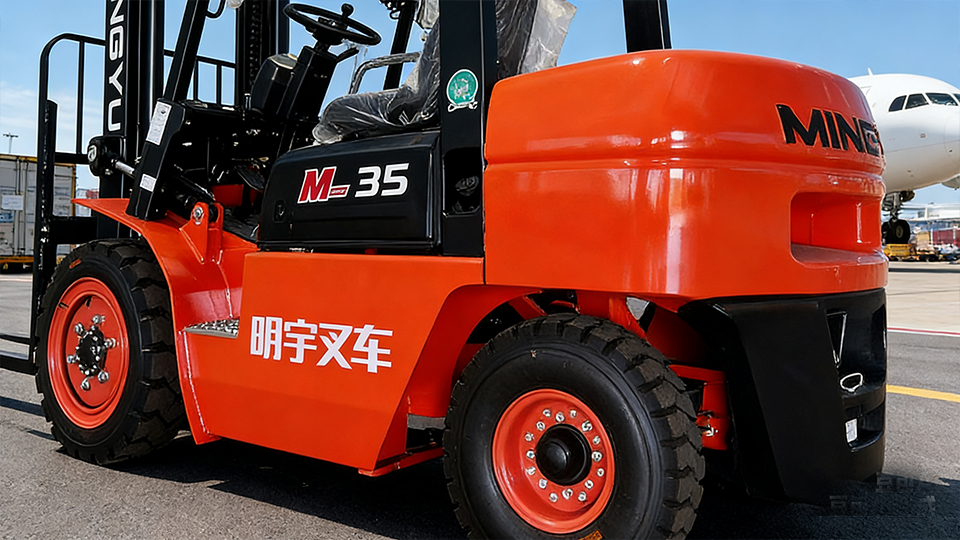
Slope rules:
Ascending: load facing forward; no gear shifting
Descending: load facing forward; no coasting in neutral
No parking on slopes (use wheel chocks + parking brake if unavoidable)
IV. Daily Loading/Unloading Essentials
Picking Up Loads:
Center fork spacing; fully insert forks into pallet (≥2/3 depth)
Lift slowly; confirm load stability and no tilting
Tilt mast back slightly; keep load against backrest
While Driving:
Keep forks 15-20 cm above ground; mast tilted back
Lower load or drive in reverse if height obstructs visibility
Stacking/Unloading:
Align with rack position; lower slowly after mast is vertical
Confirm forks are fully clear before reversing
Strictly prohibited: Overloading, uneven loading, single-fork operation, riding on forks, lifting/lowering while moving
V. Diesel-Specific Daily Precautions
Item Daily Practice
Refueling Use specified diesel grade; refuel with engine off; no open flames
Exhaust ventilation Ensure adequate ventilation for indoor/warehouse operation to prevent CO buildup
Winter fuel Switch to low-grade diesel (e.g., -10, -20) based on temperature to prevent waxing
Pre-shutdown idle Idle for 2-3 minutes before shutdown to protect turbocharger
Leak cleanup Clean up fuel/hydraulic leaks immediately to eliminate fire hazards
VI. Parking Protocol
Lower forks to ground; tilt mast forward
Shift to neutral; engage parking brake
Idle for 2-3 minutes, then shut down
Turn off power; remove key
On slopes: place wheel chocks; point wheels toward safe direction
VII. Daily Safety Red Lines (Commit to Memory)
plain
❌ Operating without valid certification
❌ Operating under influence of alcohol, fatigue, or medication
❌ Overloading, excessive height/width, uneven loading
❌ Riding on forks or using forks to lift people
❌ Standing or walking under raised loads
❌ High-speed sharp turns or sudden braking
❌ Traversing or turning on slopes
❌ Lifting/lowering forks while driving
❌ Towing other vehicles with forklift
VIII. Simple Daily Maintenance
End of each shift: Clean body and forks of oil and debris
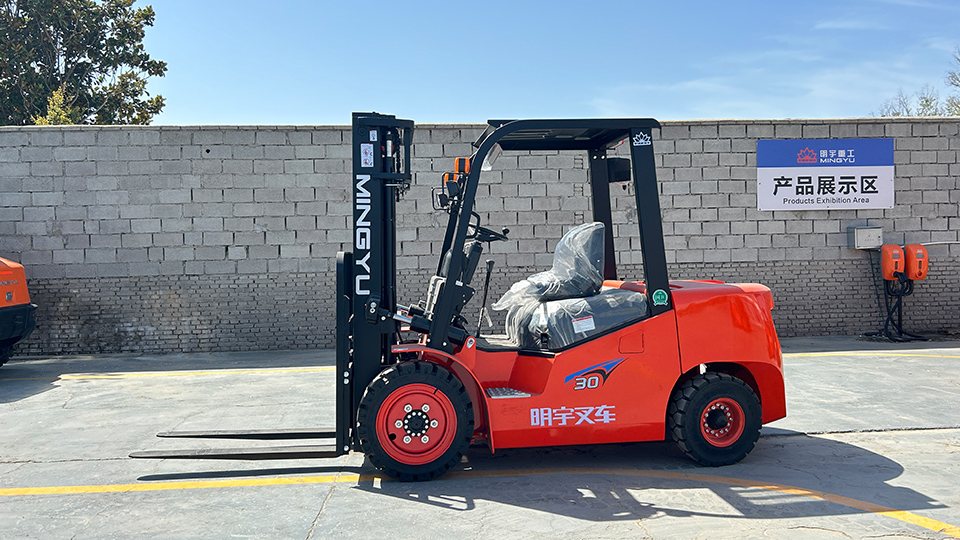
Weekly: Check tire bolt tightness; lubricate chains
Monthly: Inspect brake fluid and hydraulic oil condition; clean/replace air filter
Per schedule: Change engine oil, oil filter, and fuel filter (refer to maintenance manual)
Name: selena
Mobile:+86-13176910558
Tel:+86-0535-2090977
Whatsapp:8613181602336
Email:vip@mingyuforklift.com
Add:Xiaqiu Town, Laizhou, Yantai City, Shandong Province, China
