
vip@mingyuforklift.com
+86-0535-2090977

Introduction
The powered industrial truck known colloquially as a "forklift" operates under numerous designations across industries, regulatory frameworks, and geographic regions. Understanding this terminology is not merely an academic exercise—it is essential for procurement professionals, safety officers, operators, and compliance managers who must navigate technical documentation, regulatory standards, and international supply chains. This article provides a comprehensive technical analysis of forklift nomenclature, examining the origins, applications, and contextual appropriateness of alternative names while exploring how terminology variations impact safety compliance, equipment specification, and cross-border operations.
The Regulatory Foundation: OSHA's "Powered Industrial Truck"
From a regulatory compliance perspective, the most technically precise designation is "powered industrial truck," the term employed by the Occupational Safety and Health Administration in 29 CFR 1910.178. This regulatory terminology encompasses far more than the common perception of a forklift, including electric hand trucks, platform lift trucks, motorized pallet jacks, and specialized industrial tractors. OSHA deliberately selected this broad terminology to capture the full spectrum of motorized material handling equipment capable of raising, lowering, or transporting loads.
The regulatory definition specifies that powered industrial trucks are "mobile, power-propelled trucks used to carry, push, pull, lift, stack, or tier material." This definition excludes vehicles intended primarily for earth moving or over-the-road hauling, distinguishing material handling equipment from construction and highway vehicles. For compliance officers and safety professionals, "powered industrial truck" represents the legally operative term, appearing in inspection citations, training requirements, and accident investigations.
The term's regulatory primacy creates an important distinction: while all forklifts are powered industrial trucks, not all powered industrial trucks are forklifts in the narrow sense. This inclusive terminology ensures comprehensive safety coverage while occasionally creating confusion among operators who associate the regulatory category exclusively with counterbalance forklifts.
"Forklift Truck": The British and International Standard
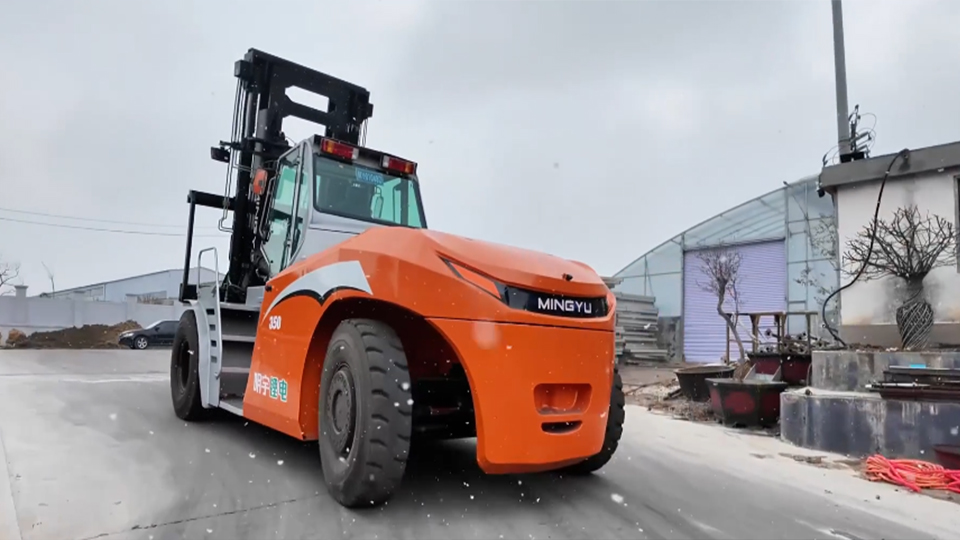
In British English and many Commonwealth nations, "forklift truck" represents the standard technical term, with "forklift" serving as the abbreviated colloquialism. The British Standards Institution (BSI) and European Committee for Standardization (CEN) predominantly use "forklift truck" in technical specifications and safety standards (EN 1726 series). This terminology emphasizes the vehicle nature of the equipment, distinguishing it from non-powered lifting devices such as manual pallet jacks or stationary lifting tables.
The "truck" suffix carries technical significance in international commerce and engineering documentation. ISO 5053-1:2015, which establishes vocabulary for industrial trucks, uses "fork-lift truck" as the primary designation, defining it as a "self-propelled truck with an elevating load carriage and fork arms or other load handling means." This international standardization facilitates cross-border equipment procurement, technical translation, and multinational safety program development.
For organizations operating across Anglo-American linguistic boundaries, awareness of this terminology variation prevents procurement errors and specification misunderstandings. A British engineering specification referencing "forklift truck" describes identical equipment to what American counterparts call simply "forklift," though the full term may appear more frequently in European technical contexts.
"Lift Truck": The Industry-Preferred Abbreviation
"Lift truck" represents the most common industry abbreviation, widely used by manufacturers, dealers, and fleet operators as shorthand for forklift truck. Major industry associations, including the Industrial Truck Association (ITA) in North America, employ "lift truck" in statistical reporting, market analysis, and technical publications. The ITA's annual shipment reports and safety initiatives consistently use this terminology, reflecting its establishment as professional industry jargon.
The abbreviation carries practical utility in technical writing and inventory management, where brevity improves documentation efficiency. However, "lift truck" can introduce ambiguity in contexts where other lifting equipment—such as boom trucks, crane trucks, or vehicle-mounted aerial platforms—might be mistakenly included. Safety professionals must ensure contextual clarity when using this abbreviated form, particularly in training materials where precise equipment identification is critical.
Manufacturers often use "lift truck" in model designations and marketing materials. Toyota Material Handling, Raymond Corporation, and Crown Equipment Corporation—all major North American manufacturers—frequently employ this terminology in product literature while maintaining "forklift" for consumer-facing communications. This dual usage reflects the term's acceptance across technical and commercial contexts.
"Fork Truck": The Material Handling Sector Variant
"Fork truck" represents a less common but technically valid variant, particularly prevalent in specific regional markets and older technical literature. This designation emphasizes the fork-based load handling mechanism rather than the lifting function, highlighting the equipment's distinctive feature. Some manufacturers and dealers prefer this terminology when distinguishing fork-equipped vehicles from alternative lifting mechanisms such as clamps, push-pull systems, or carpet poles.
The term appears with notable frequency in certain industrial sectors, including lumber and building materials distribution, where specialized attachments modify standard fork configurations. In these contexts, "fork truck" distinguishes the base vehicle from its various attachment configurations, facilitating clearer equipment specification and operator training documentation.
However, "fork truck" remains less standardized than "lift truck" or "forklift," and its usage may confuse audiences unfamiliar with this variant. Technical writers and safety professionals should consider audience familiarity when selecting terminology, reserving "fork truck" for contexts where it enjoys established usage.
"Industrial Truck": The Equipment Classification
"Industrial truck" serves as a broader classification encompassing forklifts alongside other powered material handling equipment. The American National Standards Institute (ANSI) B56 series uses "industrial truck" as the overarching category, with specific sections addressing high lift trucks, low lift trucks, and rough terrain forklift trucks. This classification system organizes equipment by operational characteristics rather than specific configurations.
Within ANSI standards, "industrial truck" provides the framework for safety requirements, stability testing, and operator training protocols. The B56.1 standard, "Safety Standard for Low Lift and High Lift Trucks," applies to what most operators would recognize as standard forklifts, while B56.6 addresses rough terrain forklift trucks, and B56.8 covers personnel and burden carriers.
For equipment specifiers and safety professionals, "industrial truck" offers useful categorical precision, distinguishing material handling vehicles from construction equipment, agricultural machinery, or highway vehicles. However, the term's breadth requires additional specification to identify particular equipment types, making it less suitable for operational contexts requiring specific equipment identification.
Specialized Designations by Equipment Configuration
Counterbalance Forklift
The "counterbalance forklift" represents the most common configuration, named for the weight distribution system that balances loads at the front of the vehicle with a counterweight at the rear. This designation distinguishes the equipment from reach trucks, order pickers, and other configurations that manage load stability through alternative mechanisms. Counterbalance forklifts dominate outdoor applications, general warehousing, and manufacturing operations where maneuverability and load capacity take priority over vertical storage density.
Reach Truck
"Reach truck" designates forklifts equipped with extending mast mechanisms that allow the load carriage to reach forward into racking systems while the vehicle remains stationary. This configuration maximizes vertical storage density in narrow aisle warehouse applications. The term precisely describes the equipment's distinctive operational characteristic, differentiating it from counterbalance models in technical specifications and operator training requirements.
Order Picker
"Order picker" identifies forklifts designed to elevate the operator alongside the load, facilitating manual case picking from elevated storage locations. Also called "stock pickers" or "cherry pickers" (though the latter term more properly describes boom-mounted aerial work platforms), order pickers serve specific warehouse applications where individual item selection replaces full pallet handling.
Pallet Jack and Pump Truck
Manual and powered pallet jacks operate under numerous designations, including "pallet truck," "pump truck" (referencing the hydraulic pumping mechanism), and "walkie" (distinguishing pedestrian-operated models from rider configurations). While technically powered industrial trucks when motorized, these low-lift devices often receive distinct classification in operational contexts due to their limited lifting height and different risk profiles.
Telehandler and Rough Terrain Forklift
"Telehandler" (telescopic handler) and "rough terrain forklift" describe specialized equipment combining forklift functionality with telescopic boom extension and off-road capability. These designations emphasize equipment capabilities rather than configuration, distinguishing them from standard warehouse forklifts. The term "telehandler" predominates in European and agricultural markets, while "rough terrain forklift" sees greater usage in North American construction applications.
Regional and Cultural Variations
British and Commonwealth Terminology
Beyond "forklift truck," British English employs several distinctive terms. "Fork lift" (two words) appears in older technical literature and some current British standards. "Fork hoist" sees limited usage in specific regional markets, particularly in former industrial centers. Australian and New Zealand markets generally follow British conventions while incorporating American influences through multinational equipment manufacturers.
European Continental Variations
Non-English-speaking European markets employ direct translations that inform English usage in international contexts. The German "Gabelstapler" (fork stacker) and French "chariot élévateur" (elevating cart) influence English terminology in multinational corporate environments. The European materials handling industry increasingly uses English terminology for international commerce, but local language variants persist in national regulations and workplace communications.
Asian Market Terminology
Japanese manufacturers, including Toyota, Komatsu, and Mitsubishi, have historically used English terminology for export markets while maintaining Japanese designations (フォークリフト, "fōkurifuto") for domestic communications. Chinese markets use "叉车" (chāchē, fork vehicle) as the standard designation, with English terminology increasingly prevalent in international-facing operations. These linguistic dynamics affect technical documentation, operator training materials, and equipment specifications in global supply chains.
Historical Terminology Evolution
The terminology evolution reflects technological development and industry maturation. Early 20th-century equipment was variously called "lifting trucks," "platform trucks," or "mechanical hoists" before industry consolidation around current terminology. The term "forklift" emerged prominently in the 1940s and 1950s as standardized fork attachments became universal and the equipment type achieved widespread industrial adoption.
Historical literature and vintage equipment documentation may employ obsolete terminology that confuses modern readers. Archival safety records, vintage equipment manuals, and historical accident reports require careful interpretation to distinguish early forklifts from related but distinct equipment types such as platform trucks or crane-mounted lifting devices.
Terminology Implications for Safety and Compliance
Training Program Development
Inconsistent terminology creates significant challenges for safety training program development. OSHA's "powered industrial truck" requirement must cover equipment that operators commonly call "forklifts," "lift trucks," or by specific configuration names. Training materials must clearly establish that regulatory requirements apply regardless of colloquial terminology, ensuring operators understand that certification for a "forklift" equally covers operation under alternative names.
Multinational organizations face particular challenges in harmonizing training programs across linguistic boundaries. Translation of safety materials must preserve technical precision while accommodating local terminology conventions. A training program developed in American English using "forklift" requires careful adaptation for British or Australian operations where "forklift truck" predominates, without introducing confusion about equipment coverage.
Accident Investigation and Reporting
Terminology precision proves critical in accident investigation and regulatory reporting. OSHA accident investigation forms, insurance claims, and legal proceedings require accurate equipment identification. Misidentification of equipment type—confusing a telehandler with a standard forklift, for example—can lead to inappropriate safety analysis, incorrect regulatory citation, and flawed corrective action.
Incident databases and safety statistics rely on consistent terminology for trend analysis. The Bureau of Labor Statistics and industry safety organizations aggregate data using standardized categories, but reporting at the facility level often reflects local terminology. Safety professionals must ensure accurate translation of local terms into standardized reporting categories to maintain data integrity.
Procurement and Specification
Equipment procurement represents another domain where terminology precision prevents costly errors. Specification documents must clearly identify required equipment types using unambiguous terminology understood by all stakeholders. International procurement particularly requires attention to terminology variations, as a specification developed in one linguistic market may be interpreted differently in another.
Attachment specifications, capacity ratings, and dimensional requirements all depend on clear equipment identification. A procurement specification requesting "lift trucks" without further qualification might receive proposals for pallet jacks, order pickers, or counterbalance forklifts—dramatically different equipment with distinct capabilities and price points.
Modern Industry Trends and Emerging Terminology
Automation and Robotics Terminology
The emergence of automated guided vehicles (AGVs) and autonomous mobile robots (AMRs) is introducing new terminology distinctions. "Autonomous forklift" describes robotic equipment performing traditional forklift functions without continuous operator control. "Robotic lift truck" and "self-driving forklift" represent alternative designations in marketing and technical literature.
These emerging terms create classification challenges for safety standards and regulatory frameworks. Traditional "powered industrial truck" definitions assume human operators, requiring regulatory adaptation to address autonomous equipment. The terminology evolution in this space remains fluid, with standardization efforts ongoing in ANSI, ISO, and regional regulatory bodies.
Electric and Alternative Fuel Designations
Propulsion technology variations generate additional terminology subsets. "Electric forklift," "LPG forklift," "diesel forklift," and "hydrogen fuel cell forklift" specify power sources, with implications for indoor air quality, refueling infrastructure, and operational range. "IC forklift" (internal combustion) serves as shorthand distinguishing fossil-fuel equipment from electric alternatives.
The growing emphasis on sustainability is introducing "green forklift" and "zero-emission lift truck" terminology, primarily in marketing contexts rather than technical standards. These designations reflect environmental performance characteristics rather than distinct equipment categories, but they increasingly influence procurement decisions and corporate sustainability reporting.
Conclusion
The "forklift" operates under a rich tapestry of alternative names, each carrying specific technical, regulatory, and contextual implications. From OSHA's legally operative "powered industrial truck" to the British standard "forklift truck," from industry shorthand "lift truck" to specialized configuration names like "reach truck" and "telehandler," this terminology reflects the equipment's diverse applications, international usage, and evolving technology.
For safety professionals, precise terminology ensures regulatory compliance, accurate accident investigation, and effective training program development. For procurement specialists, clear nomenclature prevents specification errors and procurement mismatches. For operators, understanding terminology variations facilitates employment mobility across organizations and geographic regions.
As automation, alternative fuels, and international commerce continue reshaping the materials handling landscape, terminology will inevitably evolve. Safety standards organizations, regulatory bodies, and industry associations must collaborate to maintain terminology coherence while accommodating innovation. The fundamental equipment—whether called forklift, lift truck, powered industrial truck, or fork truck—remains indispensable to global commerce, and clear communication about its capabilities, limitations, and safe operation serves the paramount goal of protecting the workers who operate it.
Organizations should develop internal terminology standards that align with regulatory requirements while accommodating operational realities. Training programs should explicitly address terminology variations, ensuring operators recognize that "forklift," "lift truck," and "powered industrial truck" describe the same regulatory entity. By mastering this nomenclature landscape, materials handling professionals enhance safety, improve compliance, and facilitate the efficient movement of goods that underpins modern economic activity.
Name: selena
Mobile:+86-13176910558
Tel:+86-0535-2090977
Whatsapp:8613181602336
Email:vip@mingyuforklift.com
Add:Xiaqiu Town, Laizhou, Yantai City, Shandong Province, China