
vip@mingyuforklift.com
+86-0535-2090977

Introduction
Working at height remains one of the most hazardous activities across construction, maintenance, manufacturing, and infrastructure sectors. The evolution of work platforms—from simple ladders to sophisticated aerial lifts—has fundamentally transformed how industries approach elevated tasks. This comprehensive analysis examines the technical specifications, operational capabilities, and safety considerations of work platforms spanning from a few meters to several dozen meters in height, providing engineers, safety managers, and procurement specialists with the knowledge necessary to select appropriate equipment for their specific applications.
Low-Level Access Platforms (2-6 Meters)
Podium Steps and Low-Level Scissor Lifts
For tasks requiring elevation between 2 and 6 meters, low-level access solutions offer distinct advantages over traditional ladders. Podium steps, constructed from aluminum or fiberglass, provide enclosed guardrails and a stable working platform that significantly reduces fall risks compared to stepladders. These platforms typically support working loads of 150-200 kg and feature anti-surf brakes and outrigger systems for enhanced stability.
Low-level scissor lifts in this range represent the transition to powered access equipment. Electric scissor lifts with platform heights of 4-6 meters offer horizontal outreach capabilities and platform capacities ranging from 200-450 kg. The narrow widths (typically 0.76-1.2 meters) enable passage through standard doorways, making them ideal for indoor maintenance, retail environments, and facility management. Key technical specifications include non-marking tires for sensitive flooring, zero-emission electric drive systems, and proportional controls for precise positioning.
Safety Systems and Standards
Low-level platforms must comply with EN 131 (portable ladders) and EN 280 (mobile elevating work platforms) standards. Critical safety features include tilt sensors that prevent operation on excessive gradients, pothole protection systems that deploy automatically during elevation, and emergency lowering systems. The integration of load-sensing devices prevents platform overload, while motion alarms alert ground personnel during machine movement.
Mid-Level Access Solutions (6-14 Meters)
Scissor Lift Technology
Scissor lifts dominate the 6-14 meter range, offering vertical elevation with substantial platform capacity. Hydraulic scissor mechanisms utilize crossed-linked folding supports that extend vertically while maintaining platform horizontality. Modern scissor lifts incorporate variable speed drive motors, enabling smooth acceleration and deceleration that reduces operator fatigue and improves load stability.
Electric scissor lifts in this category typically achieve platform heights of 10-14 meters with working heights (including operator reach) of 12-16 meters. Rough terrain variants feature four-wheel drive, oscillating axles, and enhanced ground clearance for outdoor construction applications. The technical evolution includes self-leveling platforms that maintain horizontal orientation on slopes up to 5 degrees, and extendable decks that increase platform area by 30-40% when fully deployed.
Articulating Boom Lifts
Articulating boom lifts enter the market at approximately 10 meters, offering up-and-over capability that scissor lifts cannot match. Knuckle booms utilize multiple pivot points (typically 2-3 joints) that enable navigation around obstacles while maintaining vertical elevation. Electric articulating booms in the 10-14 meter range provide zero-emission operation with working outreach of 6-8 meters.
The kinematic design of articulating booms requires sophisticated control systems. Modern units feature CAN-bus electronic architecture that monitors boom angles, load distribution, and stability margins in real-time. Jib attachments at the platform end provide additional 120-135 degree rotation, enabling precise positioning in confined spaces such as atrium maintenance or industrial equipment servicing.
High-Level Access Equipment (14-30 Meters)
Telescopic Boom Lifts
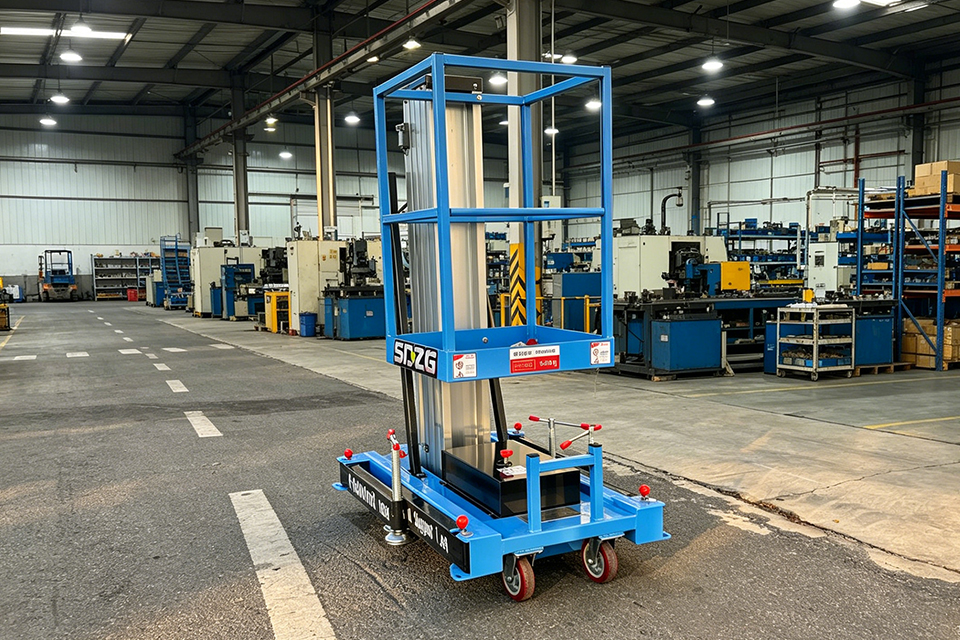
Telescopic boom lifts represent the pinnacle of horizontal outreach capability, with units in the 14-30 meter range achieving horizontal reaches of 10-20 meters. The telescoping boom sections, typically constructed from high-strength steel with aluminum outer sections, extend via hydraulic cylinders or chain-drive systems. Boom deflection compensation systems automatically adjust platform position to maintain precise placement despite load-induced flexing.
Diesel-powered telescopic booms dominate outdoor applications, with engine options ranging from 48-74 horsepower. Four-wheel drive with limited-slip differentials ensures traction on challenging terrain, while four-wheel steering configurations (front, rear, crab, and coordinated) enable maneuverability in confined spaces. Platform capacities of 230-450 kg accommodate multiple workers with tools and materials.
Heavy-Duty Scissor Lifts
Large scissor lifts extend to platform heights of 18-22 meters, with deck sizes reaching 6-8 meters in length. These industrial platforms utilize multiple scissor stacks and high-capacity hydraulic systems to lift loads exceeding 1000 kg. Applications include cladding installation, glazing operations, and heavy industrial maintenance where material handling requirements exceed boom lift capabilities.
The structural engineering of high-level scissor lifts addresses significant challenges in stability and rigidity. Cross-bracing systems prevent platform sway, while outrigger systems with automatic leveling extend the effective base width during operation. Wind speed monitoring systems restrict operation when gusts exceed manufacturer specifications (typically 12.5 m/s for standard models, 7.5 m/s for high-reach units).
Ultra-High Access Systems (30+ Meters)
Large Boom Configurations
Access platforms exceeding 30 meters platform height transition into specialized equipment categories. Truck-mounted platforms extend to 70+ meters, utilizing commercial vehicle chassis with outrigger stabilization systems spanning 8-10 meters. These units combine rapid deployment (setup times under 5 minutes) with highway mobility, serving utility maintenance, telecommunications, and emergency services.
Self-propelled booms in the 30-43 meter range represent the upper limit of conventional MEWP (Mobile Elevating Work Platform) design. These machines require extensive counterweight systems (often exceeding 10,000 kg) and complex stability calculations. Dual capacity modes allow operators to select between restricted capacity (typically 450 kg) with full outreach or unrestricted capacity (230 kg) with limited outreach, optimizing the relationship between load and stability.
Spider Lifts and Compact Crawlers
Spider lifts—compact tracked platforms with outrigger stabilization—provide access solutions up to 52 meters while maintaining transport weights under 3,500 kg. The tracked chassis distributes ground pressure to approximately 0.5 kg/cm², enabling operation on sensitive surfaces including landscaping, flooring systems, and structural slabs with limited load capacity.
The kinematic sophistication of spider lifts enables operation in confined spaces with setup footprints as small as 3×3 meters. Bi-energy systems (diesel/electric or diesel/battery) provide flexibility for indoor/outdoor transitions, while radio remote controls allow operators to position the base unit while monitoring clearances from the ground.
Technical Innovations and Emerging Technologies
Hybrid and Electric Powertrains
The transition toward electrification has accelerated across all height categories. Lithium-ion battery systems now provide full-shift operation (8+ hours) for electric scissor lifts and booms up to 20 meters. Fast-charging capabilities (1-2 hours to 80% capacity) minimize downtime, while battery management systems optimize cell balancing and thermal regulation.
Hybrid systems incorporating small diesel generators extend range for electric units, automatically engaging combustion engines when battery levels deplete or when hydraulic demands exceed electric power capabilities. This architecture maintains zero-emission capability in sensitive environments while eliminating range anxiety for remote applications.
Teleoperation and Autonomous Features
Remote operation capabilities have expanded significantly, with radio control systems enabling platform manipulation from distances up to 100 meters. This technology proves invaluable in hazardous environments (chemical plants, nuclear facilities) or where operator positioning improves visibility and safety.
Semi-autonomous features including self-leveling, automatic obstacle avoidance, and return-to-home functions reduce operator workload and error potential. Machine learning algorithms analyze operational patterns to predict maintenance requirements, optimizing service intervals and preventing catastrophic failures.
Load Management and Stability Control
Advanced load moment indicators (LMI) continuously calculate stability margins based on boom geometry, platform load, and outrigger configuration. These systems prevent operation outside safe working envelopes while maximizing productive capacity within limits. Wind speed sensors, platform load cells, and inclination sensors provide real-time data to onboard computers that adjust operational parameters dynamically.
Safety Considerations and Regulatory Framework
Fall Protection Integration
Modern work platforms incorporate primary guarding systems (guardrails 1.1 meters high with mid-rails and toe boards) that satisfy regulatory requirements without additional personal protective equipment. However, attachment points for harness systems provide secondary protection during entry/exit, platform transfer, or when guardrails must be removed for specific tasks.
Training and Competency Requirements
Operation of powered access platforms requires certified training covering machine-specific controls, stability principles, and emergency procedures. IPAF (International Powered Access Federation) certification represents the global standard, with categories corresponding to platform types (Static Vertical, Mobile Vertical, Mobile Boom, etc.).
Inspection and Maintenance Protocols
Pre-use inspections by operators, combined with periodic thorough examinations by qualified engineers, ensure continued safe operation. Hydraulic system integrity, structural weld inspection, and control system calibration form the technical basis of maintenance programs. Digital logbooks and RFID-based inspection systems streamline documentation compliance.
Selection Methodology and Application Guidelines
Selecting appropriate work platforms requires systematic analysis of:
Height Requirements: Working height (platform height plus 2 meters operator reach) determines the minimum platform specification. However, outreach requirements often dictate boom selection over scissor platforms.
Load Capacity: Combined weight of personnel, tools, and materials must not exceed platform rated capacity, with consideration for dynamic loads during movement.
Environment: Indoor applications prioritize electric power and non-marking tires; outdoor construction requires rough terrain capability and weather protection.
Access Constraints: Transport dimensions, doorway widths, and ground loading limits may restrict equipment choices regardless of height requirements.
Duration and Frequency: Short-duration, occasional tasks may justify rental solutions, while continuous operations favor ownership with dedicated maintenance programs.
Conclusion
The technical landscape of work platforms has evolved from simple mechanical devices to sophisticated electro-hydraulic systems integrating advanced materials, electronic controls, and safety systems. From podium steps at 2 meters to truck-mounted platforms exceeding 70 meters, each category addresses specific operational requirements through optimized engineering solutions.
The ongoing electrification of access equipment, integration of autonomous capabilities, and refinement of safety systems continues to expand the applications for elevated work platforms while reducing accident rates. As urban construction increases vertical density and infrastructure maintenance demands grow, the technical capabilities of work platforms will remain essential to industrial productivity and worker safety.
Understanding the engineering principles, operational limitations, and selection criteria across the full spectrum of heights enables organizations to optimize their access equipment portfolios, ensuring that each task receives the most appropriate technical solution while maintaining the highest safety standards.
Name: selena
Mobile:+86-13176910558
Tel:+86-0535-2090977
Whatsapp:8613181602336
Email:vip@mingyuforklift.com
Add:Xiaqiu Town, Laizhou, Yantai City, Shandong Province, China
