
vip@mingyuforklift.com
+86-0535-2090977

I. The Three Avenues for Forklift Operator Certification
The critical principle governing where you get certified is that the process must meet the tripartite OSHA requirement. No single online course or facility-based lecture is sufficient alone; certification is only complete after the individual is deemed competent by a qualified person (an instructor or employer representative) on the specific type of truck and in the specific working environment.
1. Employer-Provided Training (The On-Site Model) ��
This is the most common and often the most technically robust path, as it guarantees site-specific training.
Mechanism: OSHA places the legal responsibility for training and certification directly on the employer. Many large companies (warehousing, manufacturing, logistics) maintain an in-house training program with certified "Train-the-Trainer" personnel.
Location: The training occurs at the workplace (on-site).
Process Breakdown:
Formal Instruction: Delivered by the in-house qualified trainer via lecture, video, or online modules.
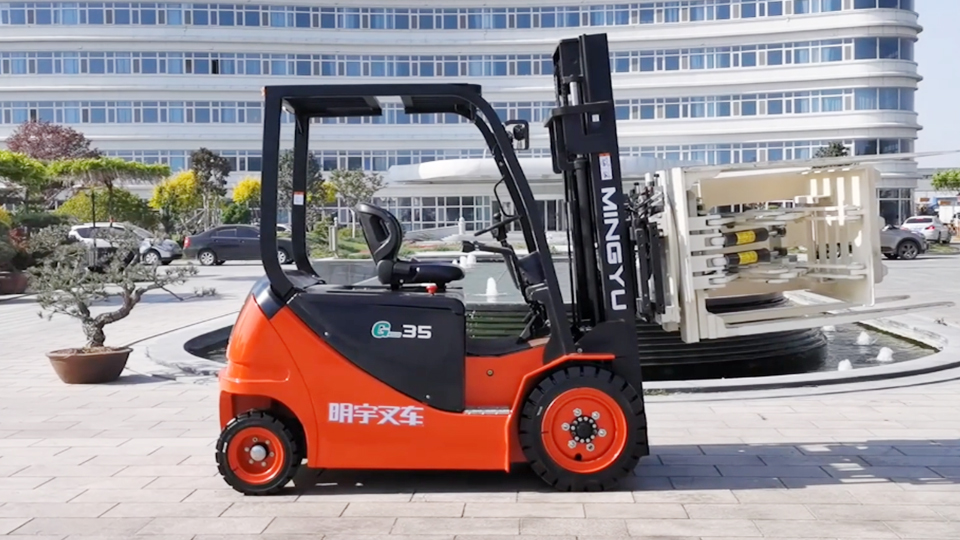
Practical Training & Evaluation: Conducted on the actual equipment (e.g., a Class IV Internal Combustion forklift) the operator will use, and within the actual working environment (e.g., narrow aisles, loading docks, unique floor surfaces).
Technical Advantage: This model is superior for compliance because it inherently addresses the workplace-related hazards and the truck-specific characteristics—two required elements of the OSHA standard. The operator is evaluated on the exact machine they will use, maximizing proficiency.
Certification Issuance: The employer issues the final certification record and the operator's wallet card.
2. Third-Party Certification Centers (The Commercial Model) ⚙️
These dedicated training facilities cater to individuals seeking certification before employment or to small businesses that lack in-house training infrastructure.
Mechanism: Commercial safety training firms, specialized forklift academies, and authorized dealers for major forklift manufacturers (e.g., Raymond, Toyota) offer structured courses.
Location: Off-site at the training provider’s facility.
Process Breakdown:
Formal Instruction: Classroom lecture and written examination.
Practical Training & Evaluation: Crucially, these centers have dedicated training floors with various classes of trucks (Class I, II, III, IV, V, etc.) where hands-on practice and the formal driving evaluation are completed under the direct supervision of a certified instructor.
Technical Consideration: While these centers provide excellent, broad, hands-on experience, the operator's certificate is provisional until the employer performs a final, site-specific evaluation on the actual job site. The operator is technically certified on the type of truck, but the employer must verify competency in their specific environment (e.g., navigating a new type of racking system).
Cost and Duration: These programs often cost between $150 and $500 and typically last one to two days.
3. Blended Online/Employer-Facilitated Training (The Hybrid Model) ��
This is the most flexible and fastest option for the classroom component, but it requires cooperation from the eventual employer for full completion.
Mechanism: Numerous online providers offer comprehensive, self-paced courses that cover the Formal Instruction requirements of OSHA 29 CFR 1910.178.
Location: Online for the theory, and on-site at the workplace for the practical components.
Process Breakdown (The Two-Step Compliance Rule):
Step 1: Online Theory: The individual completes the modules (Stability Triangle, Load Chart Interpretation, Pre-Shift Inspections) and passes the written exam. They receive a Certificate of Completion or a Temporary Operator Card.
Step 2: Practical Completion (Employer Responsibility): The online certificate is not the final certification. The employer must then designate a "qualified person" to provide the required hands-on training and conduct the final performance evaluation in the workplace.
Technical Warning: Attempting to operate a forklift with only an online certificate is a direct violation of OSHA regulations, exposing both the operator and the employer to significant liability and potential fines. This is a common point of confusion; the online course only satisfies the knowledge portion of the regulation.
II. Detailed Technical Requirements of the Certification Process
Regardless of the location chosen, the training curriculum must strictly adhere to the technical parameters outlined in OSHA 29 CFR 1910.178(l). A successful certification hinges on demonstrating competence in three core areas.
1. Forklift-Related Technical Knowledge
This section ensures the operator understands the machine's engineering and limitations.
Stability Dynamics: Mastery of the Stability Triangle and the combined center of gravity (CCG). The operator must know how acceleration, braking, turning radius, and mast tilt dynamically shift the CCG.
Load Capacity and Data Plates: The ability to accurately read and interpret the data plate (or capacity plate). This specifies the nominal capacity, the maximum lifting height, and the load center distance (typically 24 inches for standard trucks). Operators must know how any deviation from the specified load center distance (e.g., using long fork extensions) necessitates a severe de-rating of the safe lifting capacity.
Controls and Instrumentation: Technical familiarity with all operating systems, including the hydraulic controls (lift/lower, tilt, side-shift), the inching pedal (for precision maneuvering), and the functionality of safety systems (e.g., overhead guard, seatbelt).
Maintenance and Inspection: Understanding the required pre-shift/pre-operation checklist (29 CFR 1910.178(q)(7)) to identify and report critical technical deficiencies, such as hydraulic leaks, cracked forks, brake malfunction, or tire damage.
2. Workplace-Related Hazard Recognition
Training must be relevant to the environment the operator will work in. This is why the on-site evaluation is critical.
Surface and Grade Dynamics: Recognizing and safely navigating specific hazards:
Ramps/Inclines: Knowing the rule to always travel with the load upgrade (or forks pointing uphill) to maintain stability, regardless of the direction of travel.
Docks and Trailers: Procedures for safely entering highway trailers, ensuring the vehicle wheels are chocked, and the trailer floor is structurally sound.
Aisle and Clearance Management: Understanding the minimum safe operating clearances, especially in narrow-aisle environments, and the risk of lateral tip-over when making turns at speed.
Pedestrian Traffic: Implementing mandatory warning signals (sounding the horn at blind intersections and doorways) and understanding the dynamics of rear-end swing with rear-steer mechanisms.
3. Practical Performance and Maneuvering
The final evaluation is a technical assessment of physical skill application. A qualified person observes and grades the operator on the following:
Controlled Load Handling: Smooth, jerk-free lifting and lowering. Correct travel height (typically 4-6 inches from the floor) and full backward mast tilt while transporting a load.
Precision Stacking: Approaching and placing a load on a rack at height smoothly, using the inching pedal for fine control, and verifying the load is fully seated before backing away.
Maneuvering: Navigating a prescribed course (e.g., figure-eights, tight turns) to demonstrate mastery of the steering and braking systems without damaging the load or striking obstacles.
III. Locating Specific Training Providers
To find the location that is right for you, resources fall into several distinct categories based on the certification model they support.
A. Commercial Training Centers (In-Person Hands-On)
These are the best option for a beginner seeking a full hands-on certification before applying for a job.
Forklift Manufacturer Dealers: The regional dealers for brands like Toyota Material Handling, Raymond, Hyster-Yale, and Crown often run dedicated training centers. These centers are highly professional, utilize new equipment, and frequently offer the highest quality hands-on instruction. Search terms: "[Manufacturer Name] forklift training near me".
Specialized Forklift/Safety Academies: Standalone businesses that operate a facility exclusively for operator and "Train-the-Trainer" certifications. These are common in metropolitan and industrial areas. Search terms: "local forklift certification class" or "hands-on PIT operator training."
Community Colleges and Technical Schools: Some vocational schools offer material handling and logistics courses that include OSHA-compliant forklift certification as a required module. This is often a more comprehensive, longer-term educational commitment.
B. Online and Blended Providers (Formal Instruction Only)
These are ideal for the experienced operator needing triennial recertification, or for a new operator whose future employer is willing to provide the final hands-on evaluation.
Dedicated Online Certification Platforms: Companies such as CertifyMe.net, OSHA Education Center, or ForkliftTraining.com offer the OSHA-required theoretical coursework. These courses are affordable (often $50–$100), self-paced, and issue the certificate of formal instruction instantly upon passing the online exam.
Safety Consulting Firms: Many safety consulting companies offer online components to streamline the process for their corporate clients, which individuals can sometimes purchase access to.
Crucial Note: When using an online provider, an individual must secure a commitment from their prospective employer to complete the final, mandatory practical evaluation as per the OSHA standard. Failure to do so renders the training incomplete and the operator uncertified.
IV. The Recertification Mandate and Maintaining Your Certification
A final, essential technical detail of where to get your license is understanding that the certification is not permanent. OSHA mandates that the operator's performance must be evaluated at least once every three years (29 CFR 1910.178(l)(4)(iii)).
Recertification Locations
The renewal process is essentially a repeat of the initial process, triggered by one of the following events:
Three-Year Expiration: Mandatory renewal of certification.
Unsafe Operation: The operator is involved in an accident, a near-miss, or is observed operating the truck in an unsafe manner. This requires immediate refresher training and re-evaluation.
Workplace or Equipment Change: The operator is assigned to a different Class of truck (e.g., moving from a Class I electric counterbalanced truck to a Class VII rough terrain telehandler), or there are significant changes to the work environment (e.g., new types of racks, different dock layout).
In all cases, the location for recertification will typically be the workplace (employer-provided), as the employer is legally obligated to ensure the operator remains competent in the specific environment they are working in.
Conclusion: Certification is the Legal Responsibility of the Employer
In summary, the search for a "forklift license" leads to three technical answers for the location of training: the employer's workplace, a commercial training facility, or a blended online program.
The technically sound, legally compliant answer is that the employer is the final certifying body. Even if a person trains at a third-party academy or takes an online course, the employer is legally required to finalize the process by assessing the operator's competence on the specific truck in the specific working environment. The optimal strategy for a prospective operator is to secure a job offer and leverage the employer's in-house training program—a method that guarantees full, site-specific, OSHA-compliant certification from start to finish.
Name: selena
Mobile:+86-13176910558
Tel:+86-0535-2090977
Whatsapp:8613181602336
Email:vip@mingyuforklift.com
Add:Xiaqiu Town, Laizhou, Yantai City, Shandong Province, China
