
vip@mingyuforklift.com
+86-0535-2090977

When selecting, operating, or transporting a forklift, understanding its standard operating weight is a critical technical and safety consideration. Contrary to common misconception, a forklift’s operating weight is not arbitrary—it is a carefully engineered specification that directly impacts stability, load capacity, workplace safety, and compliance with industry regulations. For forklift operators, facility managers, procurement specialists, and safety supervisors, clarifying “what is the standard operating weight of a forklift” is essential to preventing accidents, optimizing equipment performance, and ensuring compatibility with operating environments (such as floor strength, transport vehicles, and storage spaces).
This technical article provides a detailed exploration of forklift standard operating weight, covering its definition, typical weight ranges for different forklift types, key factors influencing weight variations, methods to verify operating weight, and the practical implications of this specification in real-world applications. Drawing on 2026 industry standards (OSHA 1910.178, ISO 3691-1) and data from leading manufacturers, this guide demystifies common misunderstandings (e.g., confusing operating weight with load capacity) and offers actionable insights for anyone working with forklifts—from small warehouse electric models to heavy-duty outdoor forklifts.
First, it is critical to establish a clear definition: the standard operating weight (also known as service weight) of a forklift refers to the total weight of the machine in its operational configuration, including the base unit, counterweight, power source (battery, engine, or propane tank), standard forks, and all factory-installed components—but excluding any additional attachments (e.g., side shifters, clamps) and the load being lifted. This weight is determined by manufacturers during the design phase to ensure stability when lifting loads, as forklifts rely on their own weight to offset the weight of the load and prevent tip-overs—a fundamental principle of counterbalance forklift design.
1. Defining Forklift Standard Operating Weight: Key Distinctions
To avoid confusion, it is essential to distinguish between standard operating weight and other related specifications that are often misused interchangeably. Below are the critical terms every professional should understand:
1.1 Standard Operating Weight vs. Load Capacity
The most common misunderstanding is equating operating weight with load capacity—and this confusion can lead to dangerous safety violations. Load capacity refers to the maximum weight a forklift can safely lift at a specified load center (typically 24 inches for standard models), while standard operating weight is the forklift’s own weight without any load. As a general rule, a forklift’s standard operating weight is 1.5 to 2 times its rated load capacity—a ratio designed to maintain stability when lifting heavy loads. For example, a standard warehouse forklift with a 5,000 lbs. load capacity typically has an operating weight between 8,000 and 9,000 lbs., nearly double its lifting capacity.
1.2 Standard Operating Weight vs. Other Weight Specifications
Forklifts have several weight-related specifications, each serving a distinct purpose:
• Curb Weight: Similar to a vehicle’s curb weight, this refers to the forklift’s weight without any fluids (fuel, hydraulic fluid, coolant) or the operator. This is not the same as standard operating weight, which includes all necessary fluids for operation.
• Gross Operating Weight: This includes the standard operating weight plus the weight of any attachments (e.g., side shifters, paper roll clamps) and the operator. This is the total weight of the forklift during actual operation, which is critical for floor strength calculations.
• Fully Laden Weight: The combined weight of the forklift (standard operating weight + attachments + operator) plus the weight of the load being lifted. This specification is essential for ensuring that floors, ramps, and transport vehicles can support the total weight during operation.
For regulatory compliance and safety, OSHA and ISO require manufacturers to clearly display the standard operating weight on the forklift’s data plate (also known as the nameplate), along with load capacity, load center, and other critical specifications. This data plate is the primary reference for operators and managers to verify the forklift’s weight and ensure safe operation.
2. Standard Operating Weight Ranges by Forklift Type (2026 Data)
There is no single “one-size-fits-all” standard operating weight for forklifts—weight varies significantly based on the forklift’s type, design, load capacity, power source, and intended application. Below is a detailed breakdown of typical weight ranges for the most common forklift types, based on 2026 industry data and manufacturer specifications:
2.1 Electric Warehouse Forklifts (Counterbalance)
Electric counterbalance forklifts are the most common type used in warehouses, distribution centers, and indoor facilities due to their zero emissions, quiet operation, and maneuverability. Their operating weight is heavily influenced by the battery, which acts as both a power source and an additional counterweight.
• Small Electric Forklifts (1.0–2.0 Tons / 2,000–4,000 lbs.): Designed for light-duty applications (e.g., small warehouses, retail stores), these models have a standard operating weight between 3,000 and 6,000 lbs. The battery alone can weigh 1,500–3,000 lbs., accounting for a significant portion of the total weight. Examples include the Toyota 8FB15 (1.5-ton capacity, 3,850 lbs. operating weight) and the EP EFL181 (1.8-ton capacity, 4,200 lbs. operating weight).
• Standard Electric Forklifts (2.5–3.5 Tons / 5,000–7,000 lbs.): Ideal for medium-duty indoor use, these models have an operating weight between 6,000 and 9,000 lbs. A 3.0-ton electric forklift (common in warehouses) typically weighs 7,500–8,500 lbs., with the battery contributing 2,000–2,500 lbs. Examples include the Linde E30 (3.0-ton capacity, 8,100 lbs. operating weight) and the Hangcha A30 (3.0-ton capacity, 7,800 lbs. operating weight).
2.2 Internal Combustion (IC) Counterbalance Forklifts
IC forklifts (powered by gasoline, propane, or diesel) are used for outdoor and heavy-duty indoor applications, thanks to their higher load capacity and faster refueling. Their operating weight is influenced by the engine, fuel tank, and heavier counterweight required for larger load capacities.
• Propane/Gasoline Forklifts (2.0–5.0 Tons / 4,000–10,000 lbs.): The most common IC type, these models are used in warehouses, manufacturing plants, and construction sites. A standard 5,000 lbs. capacity propane forklift has an operating weight between 8,000 and 10,000 lbs.—the propane tank adds 35–69 lbs. when full. Examples include the Hyster H50FT (5.0-ton capacity, 8,900 lbs. operating weight) and the Yale GLP050 (5.0-ton capacity, 9,100 lbs. operating weight).
• Diesel Forklifts (5.0–10.0 Tons / 10,000–20,000 lbs.): Designed for heavy-duty outdoor use (e.g., construction, ports, mines), these models have a standard operating weight between 15,000 and 30,000 lbs. A 7.0-ton diesel forklift typically weighs 20,000–22,000 lbs., with the heavy-duty engine and reinforced frame contributing to the weight increase. Examples include the Caterpillar DP70 (7.0-ton capacity, 20,500 lbs. operating weight) and the Komatsu FG70HT-12 (7.0-ton capacity, 21,000 lbs. operating weight).
2.3 Rough-Terrain Forklifts
Rough-terrain forklifts are engineered for outdoor use on uneven surfaces (e.g., construction sites, farms, lumberyards). They feature reinforced frames, large off-road tires, and heavier counterweights, resulting in higher operating weights compared to standard IC forklifts.
• Standard rough-terrain forklifts (2.5–5.0 tons) have an operating weight between 12,000 and 30,000 lbs. A 3.0-ton rough-terrain model typically weighs 14,000–16,000 lbs., while a 5.0-ton model weighs 22,000–25,000 lbs. Examples include the JCB 930 (3.0-ton capacity, 14,500 lbs. operating weight) and the Bobcat T40180 (4.0-ton capacity, 18,000 lbs. operating weight).
2.4 Specialized Forklifts
Specialized forklifts (e.g., narrow-aisle, telehandler, heavy-duty port forklifts) have unique operating weights tailored to their specific applications:
• Narrow-Aisle Forklifts (Reach Trucks, Order Pickers): Designed for tight warehouse spaces, these models are lighter than standard counterbalance forklifts. Reach trucks (2.0–3.0 tons) have an operating weight between 5,000 and 7,000 lbs., while order pickers (1.0–1.5 tons) weigh 3,000–4,500 lbs. Examples include the Crown RM 6000 (2.5-ton reach truck, 6,200 lbs. operating weight).
• Telehandlers (Telescopic Forklifts): Used for lifting loads to high heights in construction and agriculture, telehandlers have operating weights between 12,000 and 50,000 lbs. A 5.0-ton telehandler typically weighs 20,000–25,000 lbs., while heavy-duty models (10.0+ tons) can exceed 50,000 lbs..
• Heavy-Duty Port Forklifts: Used for loading/unloading shipping containers, these models have operating weights exceeding 100,000 lbs.—some large port forklifts (25.0+ tons) weigh over 140,000 lbs..
2.5 Summary of Typical Operating Weight Ranges
To simplify reference, below is a table outlining the standard operating weight ranges for common forklift types and load capacities (2026 industry averages):
| Forklift Type | Load Capacity Range | Standard Operating Weight Range | |------------------------------|---------------------|----------------------------------| | Small Electric Forklift | 2,000–4,000 lbs | 3,000–6,000 lbs | | Standard Electric Forklift | 5,000–7,000 lbs | 6,000–9,000 lbs | | Propane/Gasoline Forklift | 4,000–10,000 lbs | 8,000–15,000 lbs | | Diesel Forklift | 10,000–20,000 lbs | 15,000–30,000 lbs | | Rough-Terrain Forklift | 4,000–10,000 lbs | 12,000–30,000 lbs | | Narrow-Aisle Reach Truck | 4,000–6,000 lbs | 5,000–7,000 lbs | | Telehandler | 4,000–20,000 lbs | 12,000–50,000 lbs | | Heavy-Duty Port Forklift | 50,000+ lbs | 100,000–140,000+ lbs |
3. Key Factors Influencing Forklift Standard Operating Weight
A forklift’s standard operating weight is not random—it is determined by a combination of design choices and functional requirements. Manufacturers carefully balance these factors to ensure the forklift is stable, efficient, and compatible with its intended application. Below are the most significant factors:
3.1 Load Capacity Requirements
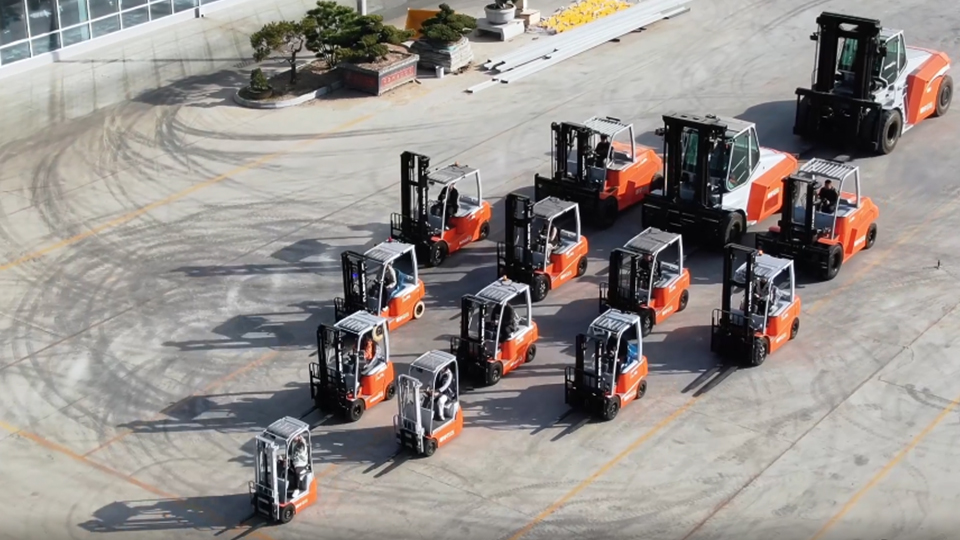
The primary factor influencing operating weight is the forklift’s load capacity. As load capacity increases, the forklift requires a heavier counterweight to offset the load and prevent tip-overs. Additionally, higher load capacities demand stronger, heavier frames, larger hydraulic systems, and reinforced masts—all of which add to the total weight. For example, a 3,000 lbs. capacity forklift weighs an average of 6,487 lbs., while an 8,000 lbs. capacity forklift weighs nearly 14,000 lbs.—a more than doubling of weight with less than tripling of load capacity.
3.2 Power Source
The type of power source (electric, propane, gasoline, diesel) has a significant impact on operating weight:
• Electric Forklifts: The battery is the heaviest component—lead-acid batteries weigh 1,500–3,000 lbs., while lithium-ion batteries are 20–30% lighter but still contribute significantly to the total weight. Electric motors are lighter than combustion engines, but the battery’s weight often makes electric forklifts heavier than similarly sized propane models.
• IC Forklifts: Diesel engines are the heaviest (1,000–2,500 lbs.), followed by gasoline and propane engines (500–800 lbs.). Fuel tanks add additional weight—diesel tanks (15–50 gallons) add 100–350 lbs. when full, while propane tanks add 35–69 lbs. when full.
3.3 Counterweight Design
The counterweight is a critical component of counterbalance forklifts, designed to offset the weight of the load. It is typically made of cast iron or steel and accounts for 20–40% of the forklift’s total operating weight. For example, a 5,000 lbs. capacity forklift has a counterweight weighing 2,500–3,000 lbs.—nearly a third of its total operating weight. Heavier counterweights are required for forklifts used in uneven terrain or for lifting loads with irregular centers of gravity.
3.4 Mast Height and Design
The mast (the vertical component that lifts the load) also influences operating weight. Taller masts require additional structural support to maintain stability at height, adding weight to the forklift. A 2-stage mast (standard height) adds minimal weight, while a 3-stage mast adds 300–500 lbs., and a 4-stage mast adds 600–800 lbs. Telescopic masts (used in telehandlers) are the heaviest due to their complex hydraulic systems and reinforced design.
3.5 Frame and Construction Materials
Forklifts are built with heavy-duty steel components to withstand the rigors of industrial use. The frame, forks, and mast are made of high-strength steel, which adds to the total weight. Rough-terrain forklifts and heavy-duty models have thicker, reinforced frames to handle uneven surfaces and heavy loads, further increasing their operating weight.
3.6 Attachments (Optional)
While attachments are not included in the standard operating weight, they significantly increase the forklift’s gross operating weight. Common attachments and their weights include: side shifters (100–300 lbs.), fork positioners (200–500 lbs.), paper roll clamps (500–1,000 lbs.), and bale clamps (300–700 lbs.). When using attachments, operators must account for this additional weight to ensure stability and compliance with floor strength requirements.
4. Why Standard Operating Weight Matters: Practical Implications
Understanding a forklift’s standard operating weight is not just a technical detail—it has real-world implications for safety, compliance, and operational efficiency. Below are the key reasons this specification is critical:
4.1 Safety and Stability
The most important reason to know the standard operating weight is to ensure the forklift remains stable during operation. As mentioned earlier, forklifts rely on their own weight to offset the load—if the operating weight is too low for the load capacity, the forklift will tip over. OSHA reports that tip-overs are the leading cause of forklift-related fatalities, and many of these accidents occur due to operators misunderstanding the relationship between operating weight and load capacity. Additionally, knowing the operating weight helps operators avoid overloading the forklift, which can damage the frame, hydraulic system, and other critical components.
4.2 Floor and Structure Compatibility
Warehouses, factories, and multi-story facilities have specific floor strength limits. The forklift’s gross operating weight (standard operating weight + attachments + operator) must not exceed these limits, as overloading floors can cause cracks, collapses, and serious accidents. For example, a standard 3.0-ton electric forklift with an operator and side shifter has a gross operating weight of ~8,500 lbs.—facility managers must ensure floors are rated for at least this weight, especially in mezzanines and upper levels.
4.3 Transport and Logistics
When transporting forklifts (e.g., via truck, trailer, or container), knowing the standard operating weight is essential to ensure compliance with weight limits for roads, bridges, and transport vehicles. Overloading a transport vehicle can result in fines, damage to the vehicle, and safety hazards. For example, a 5.0-ton diesel forklift (20,000 lbs. operating weight) requires a trailer rated for at least 25,000 lbs. to account for additional weight from tie-downs and other equipment.
4.4 Regulatory Compliance
OSHA, ISO, and other regulatory bodies require manufacturers to display the standard operating weight on the forklift’s data plate, and operators must comply with this specification. Failure to do so can result in fines, penalties, and legal liability in the event of an accident. Additionally, some regions have specific regulations regarding forklift weight in certain environments (e.g., indoor facilities, residential areas), making it critical to verify the operating weight before use.
4.5 Procurement and选型
When purchasing or renting a forklift, the standard operating weight must be matched to the intended application. For example, a small warehouse with weak floors would require a lightweight electric forklift (3,000–6,000 lbs. operating weight), while a construction site would need a heavy-duty diesel or rough-terrain forklift (15,000+ lbs. operating weight). Choosing a forklift with the wrong operating weight can lead to inefficiency, safety risks, and increased maintenance costs.
5. How to Verify a Forklift’s Standard Operating Weight
There are two reliable methods to verify a forklift’s standard operating weight—always prioritize these over estimates, as weight can vary between models and configurations:
5.1 Check the Manufacturer’s Data Plate
The data plate (nameplate) is the most accurate source of information and is typically located on the forklift’s frame, near the operator’s seat, or on the mast. It displays the standard operating weight, load capacity, load center, model number, serial number, and other critical specifications. Operators should check this plate before every use to confirm the weight and ensure compliance with safety standards. If the data plate is missing or illegible, contact the manufacturer or a certified service provider to obtain a replacement.
5.2 Consult the Manufacturer’s Manual or Website
If the data plate is unavailable, the forklift’s owner’s manual or the manufacturer’s website will provide the standard operating weight for the specific model and configuration. Most manufacturers (e.g., Toyota, Linde, Hyster) have online databases where users can search by model number to find detailed specifications. For older or obsolete models, contact the manufacturer’s customer service for assistance.
5.3 Avoid Estimates
Estimating a forklift’s operating weight is risky, as even small variations can lead to safety violations or equipment damage. For example, assuming a 5,000 lbs. capacity forklift weighs 8,000 lbs. when it actually weighs 9,000 lbs. could result in overloading a floor or transport vehicle. Always use the data plate or manufacturer’s specifications for accurate weight information.
6. Common Misconceptions and Pitfalls to Avoid
Even with clear definitions and guidelines, there are common misconceptions about forklift standard operating weight that can lead to safety risks. Below are the most frequent pitfalls and how to avoid them:
6.1 Assuming All Forklifts of the Same Load Capacity Have the Same Operating Weight
Forklifts with the same load capacity can have different operating weights depending on the manufacturer, power source, and configuration. For example, a 3.0-ton electric forklift may weigh 7,800 lbs., while a 3.0-ton propane forklift from a different manufacturer may weigh 8,500 lbs. Always check the data plate for the specific model.
6.2 Ignoring the Weight of Attachments
Attachments add significant weight to the forklift, but many operators forget to account for this when calculating gross operating weight. For example, adding a side shifter and fork positioner to a 3.0-ton electric forklift can increase its gross operating weight by 500–800 lbs., which may exceed floor strength limits.
6.3 Confusing Operating Weight with Load Capacity
This is the most dangerous misconception—operators who believe a forklift’s operating weight is the same as its load capacity may attempt to lift loads that exceed the forklift’s stability limits, leading to tip-overs. Always remember: operating weight = forklift’s own weight; load capacity = maximum weight the forklift can lift.
6.4 Overlooking the Impact of Battery Weight in Electric Forklifts
Electric forklift batteries are extremely heavy, and their weight can vary based on type (lead-acid vs. lithium-ion) and capacity. A lead-acid battery can add 2,000+ lbs. to the forklift’s weight, which affects stability, floor compatibility, and transport requirements.
7. Conclusion
The standard operating weight of a forklift is a critical technical specification that influences safety, stability, compliance, and operational efficiency. Contrary to common misconception, there is no single “standard” weight—instead, operating weight varies based on the forklift’s type, load capacity, power source, and design. From small electric warehouse forklifts (3,000 lbs.) to heavy-duty port forklifts (140,000+ lbs.), each model’s operating weight is carefully engineered to ensure it can safely offset the loads it is designed to lift.
For professionals working with forklifts, the key takeaways are clear: always verify the standard operating weight using the data plate or manufacturer’s specifications, distinguish between operating weight and load capacity, account for the weight of attachments and operators, and ensure the forklift’s weight is compatible with the operating environment (floor strength, transport vehicles). By following these guidelines, you can prevent accidents, ensure compliance with 2026 industry standards, and optimize the performance of your forklift fleet.
In summary, the standard operating weight of a forklift is not just a number—it is a fundamental safety parameter that protects operators, co-workers, equipment, and facilities. Taking the time to understand and verify this specification is an essential part of responsible forklift operation and management.
Name: selena
Mobile:+86-13176910558
Tel:+86-0535-2090977
Whatsapp:8613181602336
Email:vip@mingyuforklift.com
Add:Xiaqiu Town, Laizhou, Yantai City, Shandong Province, China
