
vip@mingyuforklift.com
+86-0535-2090977

The Comprehensive Guide to Forklift Certification Renewal: Compliance, Safety, and Technical Standards
In the world of material handling, a forklift is more than just a tool; it is a high-capacity machine that requires precise operator control. Because the operational environment of a warehouse or timber factory is dynamic, certification is not a "one-and-done" achievement.
Whether you are a safety manager or an individual operator, understanding the technicalities of forklift certification renewal (often referred to as "re-certification" or "refresher training") is critical for maintaining OSHA compliance and workplace safety.
1. The Regulatory Framework: Why Renew?
In the United States, the Occupational Safety and Health Administration (OSHA) governs forklift operation under standard 29 CFR 1910.178. Unlike a standard driver's license, forklift certification is employer-specific and must be validated periodically.
The Three-Year Rule
OSHA requires that every powered industrial truck (PIT) operator be evaluated at least once every three years. This evaluation ensures that the operator still possesses the physical skills and theoretical knowledge to handle the equipment safely.
Triggers for Immediate Re-certification
You do not always wait three years. Refresher training is legally mandated if:
The operator is involved in an accident or a "near-miss" incident.
The operator is observed operating the vehicle in an unsafe manner.
The operator is assigned to a different type of forklift (e.g., moving from a sit-down electric to a stand-up reach truck).
Workplace conditions change significantly (e.g., new racking systems or narrower aisles).
2. The Technical Components of Renewal
A valid renewal isn't just a signature on a card; it consists of a two-part pedagogical approach: Formal Instruction and Practical Evaluation.
Part I: Formal Instruction (Theoretical)
The theoretical portion can be delivered via classroom lectures, videos, or online modules. It must cover:
Truck-Related Topics: Engine mechanics, load capacity (the "Center of Gravity" and the "Stability Triangle"), and battery/fueling maintenance.
Workplace-Related Topics: Surface conditions, pedestrian traffic, and hazardous locations (like ramps or loading docks).
Part II: Practical Evaluation (Hands-On)
This is the most critical technical phase. A qualified trainer must observe the operator performing actual tasks. The evaluation checklist typically includes:
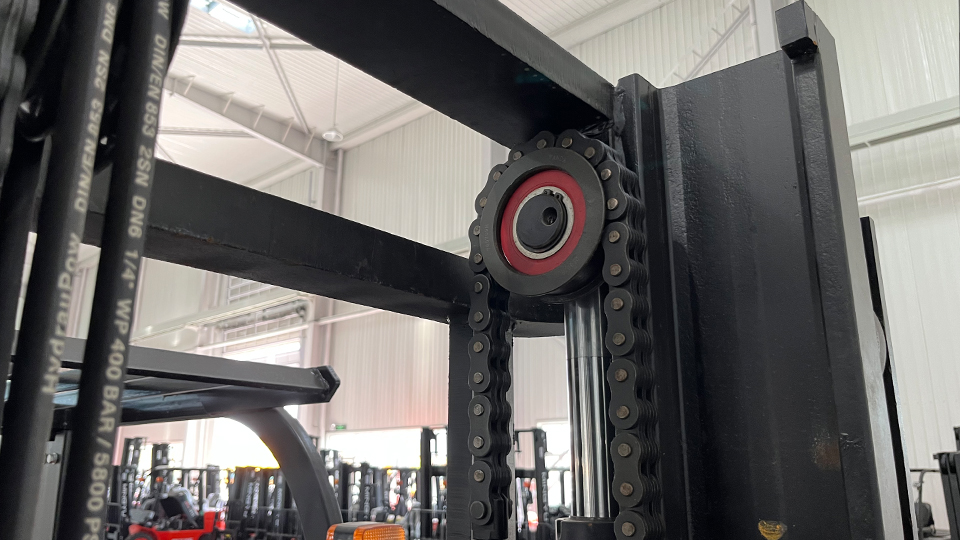
Pre-Operational Inspection: Checking hydraulic hoses, tire pressure, mast chains, and fluid levels.
Load Handling: Picking up, traveling with, and tiering loads at various heights.
Maneuvering: Navigating tight turns and reversing using mirrors and sound signals.
3. The Physics of Operation: Refresher Core Concepts
During renewal, operators must demonstrate a technical grasp of the Stability Triangle.
Technical Note: A forklift’s stability is maintained by keeping the Center of Gravity (CG) within the triangle formed by the front two tires and the center of the rear axle. As a load is lifted, the CG moves forward and upward.
If an operator cannot explain how the Load Center (the distance from the face of the forks to the load's center of gravity) affects the lift capacity, they fail the technical portion of the renewal.
4. Documentation and Record-Keeping
To be compliant, the renewal records must be meticulously maintained. A "Certification of Training" must include:
The name of the operator.
The date of the training and the date of the evaluation.
The name of the person performing the training/evaluation.
The specific model/type of forklift the operator is cleared to use.
|
Requirement |
Description |
Frequency |
|
Performance Evaluation |
Live observation of driving skills |
Every 3 years |
|
Written Exam |
Tests knowledge of OSHA 1910.178 |
Recommended with Eval |
|
Daily Logs |
Pre-shift mechanical inspection |
Every shift |
5. Modernizing the Renewal Process
Many companies are moving toward Telematics and Virtual Reality (VR) for renewals. Telematics systems can track "impact events" in real-time. If an operator hits a rack, the system automatically flags them for immediate refresher training, removing the guesswork from safety management.
6. Steps to Renew Your Certification
Review the Manual: Brush up on the specific load-rating plate of your machine.
Conduct a Mock Inspection: Practice the "Circle Check" to ensure no mechanical flaws are missed.
Schedule the Evaluation: Ensure the evaluator is "Qualified"—meaning they have the knowledge, training, and experience to train others.
Update the Wallet Card: Once passed, ensure your employer issues an updated certificate or card.
Summary
Renewing forklift certification is not just a bureaucratic hurdle; it is a technical audit of an operator's ability to handle multi-ton machinery safely. By focusing on the Stability Triangle, Pre-shift Inspections, and OSHA-compliant documentation, facilities can significantly reduce the risk of catastrophic failure.
Name: selena
Mobile:+86-13176910558
Tel:+86-0535-2090977
Whatsapp:8613181602336
Email:vip@mingyuforklift.com
Add:Xiaqiu Town, Laizhou, Yantai City, Shandong Province, China
