
vip@mingyuforklift.com
+86-0535-2090977

Executive Summary
Stand-up forklifts, also known as stand-on or reach trucks, have become essential equipment in modern warehouse operations due to their compact design and superior maneuverability in narrow aisles. However, their unique operational characteristics—including a higher center of gravity, open operator compartment design, and distinct control systems—create specific safety challenges that demand rigorous procedural adherence. This technical analysis examines the critical safety protocols operators must follow when operating stand-up forklifts, with particular emphasis on pre-operation inspections, stability management, and emergency response procedures that differentiate these machines from conventional sit-down models.
Understanding Stand-Up Forklift Design Characteristics
Before examining specific safety procedures, it is essential to understand the structural characteristics that influence stand-up forklift safety protocols. Stand-up forklifts position the operator perpendicular to the direction of travel, standing in a compartment that typically features a back guard but open sides . This design facilitates frequent mounting and dismounting and enables operators to change travel direction with simple head turns rather than torso twisting, reducing ergonomic strain during high-frequency picking operations .
However, these ergonomic advantages introduce safety complexities. The stand-up configuration creates a higher center of gravity compared to sit-down models, making the equipment more susceptible to tipping when fully extended . Unlike sit-down forklifts where operators remain secured by seat belts within a protective cage during tip-over events, stand-up forklift operators must execute specific emergency egress procedures—stepping backward off the truck—to avoid injury .
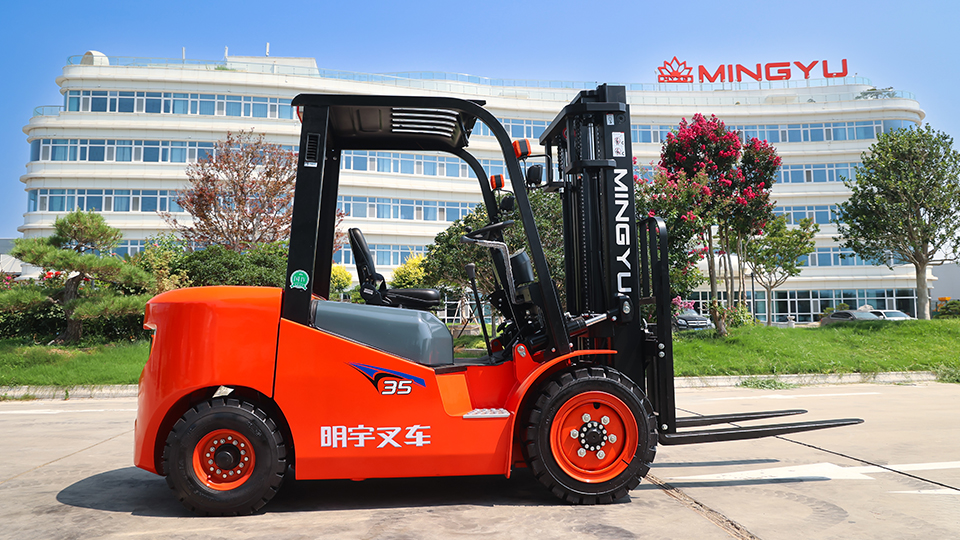
The control systems also differ fundamentally from sit-down models. Rather than automotive-style steering wheels and foot pedals, stand-up forklifts typically utilize a steering tiller combined with an integrated control handle incorporating travel and hydraulic functions . These joystick-based controls require distinct operational techniques and extended training periods for proficiency .
Pre-Operation Inspection Protocols
Visual and Structural Assessment
Every shift must begin with a systematic pre-operation inspection following OSHA's 29 CFR 1910.178(l) requirements. The inspection protocol for stand-up forklifts must address both universal forklift components and equipment-specific elements.
Operator Compartment Integrity: Verify the back guard's structural integrity, ensuring all mounting bolts are secure and the guard shows no signs of deformation or damage. The deadman pedal or presence-sensing control must function correctly—when released, the truck should immediately cease travel . Test the operator presence system by standing up from the operating position; the truck should cut power or prevent movement .
Control System Verification: Test all joystick functions for smooth operation without sticking or unexpected response. The steering tiller must return to center automatically when released. Verify that hydraulic controls for mast lift, tilt, and auxiliary functions (such as side shift) respond proportionally to input .
Mast and Fork Assembly: Inspect the mast channels for lubrication and wear. Check fork heel thickness for deformation—wear exceeding 10% of original thickness mandates replacement. Verify fork locking pins engage securely and the carriage moves smoothly through its vertical range .
Operational Systems Testing
With the truck powered, conduct functional tests before entering active work zones:
Brake System Evaluation: Test service brakes by applying them while slowly accelerating in neutral—the truck should not move. Then drive forward at low speed and apply brakes; the truck should stop promptly without directional pull . Test the parking brake on an incline to ensure it prevents rolling.
Hydraulic Function Assessment: Raise and lower forks through the full range without load, observing for smooth operation without jerking or drift. Conduct a drift test by raising forks to mid-height and releasing controls—forks should maintain position without dropping . Listen for unusual hydraulic pump noise indicating potential system issues.
Stability and Steering Check: Test steering response through full lock positions left and right, checking for excessive play or binding. Verify the stability monitoring system (if equipped) illuminates warning indicators appropriately .
Stability Triangle Management
The stability triangle concept is fundamental to safe forklift operation, but stand-up forklifts require particular attention due to their design characteristics. The stability triangle is formed by drawing lines between the two front load wheels and the pivot point of the rear steer axle . The combined center of gravity of the truck and load must remain within this triangle to prevent tip-over.
Load Center Considerations
Stand-up forklifts typically have lower capacity ranges than sit-down models, rarely exceeding 5,500 pounds . However, capacity ratings assume specific load centers—typically 24 inches from the back of the forks. The actual safe capacity decreases as the load center moves forward according to the formula: Actual Capacity = (Rated Load Center / Actual Load Center) × Rated Capacity .
Critical Operational Protocol: Never exceed the capacity plate specifications. Even loads within the rated weight limit can cause instability if the load center is extended forward or if the load is unevenly distributed . Stand-up forklifts' higher center of gravity makes them particularly vulnerable to forward tip-over when handling loads at maximum extension .
Dynamic Stability Factors
Several operational behaviors can shift the center of gravity outside the stability triangle:
Elevated Travel: Never travel with the load raised. As the forks elevate, the center of gravity shifts upward and forward, effectively transforming the stability triangle into a narrower pyramid . The higher the load, the further outside the triangle the center of gravity moves, dramatically increasing tip-over risk.
Sudden Maneuvers: Abrupt braking, acceleration, or turning creates dynamic forces that can momentarily shift the center of gravity beyond the stability triangle's boundaries . Stand-up forklifts require smooth, gradual control inputs to maintain stability.
Ramp Operations: Operating on slopes changes the effective geometry of the stability triangle. When traveling on ramps, always keep the load uphill to maintain stability . Avoid turning on ramps whenever possible, as the combined effects of grade and centrifugal force significantly increase tip-over risk.
Safe Operating Procedures
Mounting and Dismounting
The stand-up forklift's design facilitates rapid entry and exit, but proper technique is essential:
Three-Point Contact: Always maintain three points of contact when entering or exiting the compartment—two hands and one foot, or two feet and one hand . Use the provided grab handles and step pads; never grip the steering tiller or control joystick for support, as this can cause unintended movement.
Controlled Entry: Face the compartment when mounting. Step onto the floor plate with one foot while grasping the overhead support with both hands, then bring the second foot into position. Never jump on or off the forklift .
Travel Protocols
Speed Management: Adjust speed to match environmental conditions. Maximum travel speed should not exceed walking pace (approximately 3-4 mph) in areas with pedestrian traffic or narrow aisles . Reduce speed further on wet or uneven surfaces .
Directional Changes: The perpendicular operator position enables efficient direction changes, but operators must still come to a complete stop before reversing direction. The simple head-turn capability of stand-up forklifts reduces neck and back strain, but operators must verify clearances in both directions before moving .
Visibility Management: When loads obstruct forward visibility, travel in reverse while maintaining a clear line of sight. Stand-up forklifts offer superior rear visibility compared to sit-down models due to the operator's position, but spotters may be required in high-traffic areas .
Load Handling Procedures
Approach and Positioning: Square the forklift to the load before lifting. Position the forks at the correct width for the pallet, ensuring full fork insertion before lifting. The fork tips should extend completely through the pallet but not protrude excessively on the far side .
Lifting Protocol: Raise the load smoothly without jerking. Maintain the mast in a vertical position during lifting—tilting should only occur after the load is clear of the stack. Keep the load low—approximately 4-6 inches above the floor—during travel .
Stacking Operations: When placing loads at height, approach the rack squarely and raise the load to the correct level before reaching the rack face. Never adjust load height while positioned at the rack—back away, adjust, and re-approach if necessary.
Emergency Procedures
Tip-Over Response
The most critical safety distinction between stand-up and sit-down forklifts involves tip-over response. Unlike sit-down operators who must remain seated and brace themselves, stand-up operators must execute immediate egress:
Immediate Action: If the truck begins to tip, do not attempt to jump clear in a direction other than backward. Step off the rear of the truck while maintaining grip on the overhead guard for stability. Attempting to jump sideways or forward places the operator in the path of the falling mast or overhead guard .
Post-Incident Protocol: Once clear, do not attempt to re-enter or stabilize the truck. Secure the area to prevent other personnel from approaching and report the incident immediately to supervision. Even if the truck does not fully tip over, any tip-over initiation event requires immediate equipment inspection before returning to service.
Pedestrian Encounters
Stand-up forklifts operate frequently in areas with pedestrian traffic due to their warehouse optimization design. When pedestrians are present:
Right of Way: Always yield right of way to pedestrians. Stop the truck and sound the horn to alert pedestrians of your presence. Never pass pedestrians closely at speed .
Blind Corners: Approach all intersections and blind corners with extreme caution. Sound the horn before entering and be prepared to stop. Consider the installation of convex mirrors at blind intersections to improve visibility .
Environmental Safety Considerations
Surface Conditions
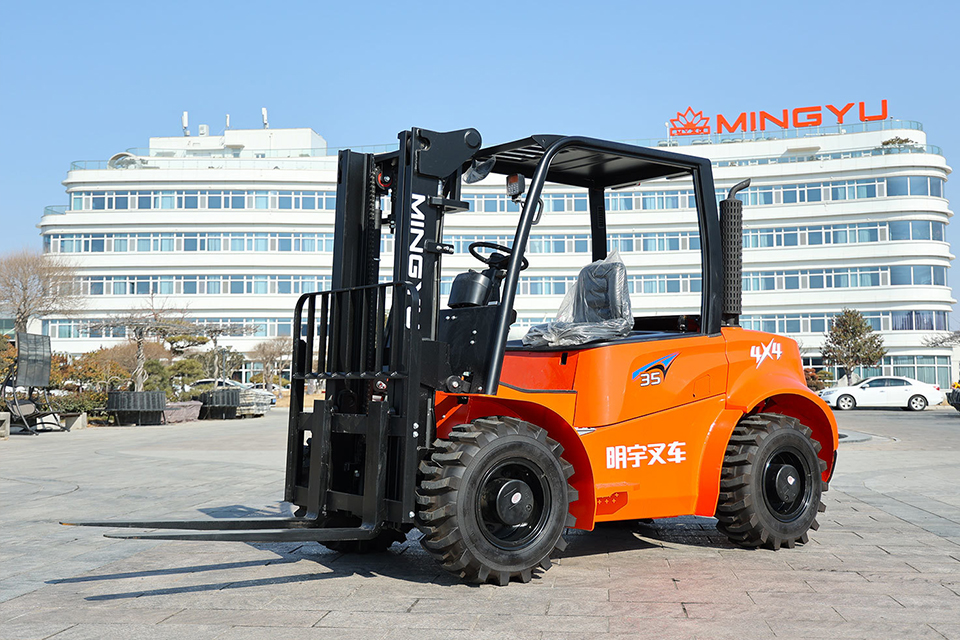
Stand-up forklifts are designed exclusively for indoor operation on smooth, level surfaces . Their cushion tires and higher center of gravity make them unsuitable for outdoor use or rough terrain. Operators must:
Avoid wet or slippery surfaces; when unavoidable, reduce speed by 50% and increase following distances
Never drive over scattered debris or obstacles
Maintain adequate clearance between the mast, overhead guard, and door frames or ceiling fixtures
Aisle Clearance
While stand-up forklifts excel in narrow aisles, operators must maintain awareness of the extended mast height when raised. Ensure adequate vertical clearance before raising loads, and never position the truck where the raised mast could contact overhead structures, sprinklers, or electrical fixtures.
Training and Competency Requirements
OSHA mandates that stand-up forklift operators receive specific training distinct from sit-down certification . Training programs must address:
Equipment-Specific Hazards: The unique stability characteristics, control systems, and emergency egress procedures of stand-up forklifts require dedicated instruction. Generic forklift training is insufficient .
Hands-On Evaluation: Operators must demonstrate competency in actual stand-up forklift operation, including pre-operation inspection, load handling, and simulated emergency response, under qualified supervision .
Refresher Training: Operators must undergo refresher training every three years, or sooner if involved in accidents, observed operating unsafely, or assigned to significantly different equipment .
Maintenance and Reporting
Daily Reporting
Complete pre-operation inspection checklists must be maintained and submitted to supervision. Any defects identified during inspection require immediate tagging and removal of the equipment from service until repairs are completed .
Defect Response
When mechanical issues are identified—unusual noises, hydraulic leaks, brake fade, or control malfunctions—operators must immediately cease operation and report the defect. Never operate equipment with compromised safety systems .
Conclusion
Stand-up forklifts offer significant operational advantages in warehouse environments, but these benefits come with distinct safety obligations. The open operator compartment design, higher center of gravity, and unique emergency egress requirements demand rigorous adherence to specialized safety protocols. Successful safety management requires comprehensive operator training specific to stand-up equipment, disciplined pre-operation inspection routines, and unwavering attention to stability triangle management during all operations. Organizations that integrate these technical safety procedures into their operational culture will maximize both productivity and operator safety while maintaining full regulatory compliance.
Name: selena
Mobile:+86-13176910558
Tel:+86-0535-2090977
Whatsapp:8613181602336
Email:vip@mingyuforklift.com
Add:Xiaqiu Town, Laizhou, Yantai City, Shandong Province, China