
vip@mingyuforklift.com
+86-0535-2090977

Diesel forklifts remain the dominant choice for heavy-duty outdoor material handling, construction sites, ports, and lumber yards where raw torque, extended runtime, and independence from charging infrastructure are non-negotiable. Yet beneath their rugged reliability lies a persistent operational expense that demands rigorous financial planning: diesel fuel consumption. Understanding the typical diesel cost for running a forklift is not merely about knowing the price per gallon at the pump—it requires a deep dive into consumption rates, capacity-class variations, duty cycle impacts, regional fuel price volatility, and the engineering factors that determine how efficiently each liter of diesel is converted into productive work. This article provides a comprehensive technical analysis of diesel forklift fuel costs in 2026, equipping fleet managers and operations directors with the data needed to budget accurately, optimize consumption, and evaluate alternatives.
Fuel Consumption Fundamentals: How Much Diesel Does a Forklift Actually Use?
The starting point for any diesel cost analysis is establishing realistic fuel consumption rates. Unlike passenger vehicles with standardized EPA ratings, forklift fuel consumption is highly variable and depends on capacity class, load profile, terrain, and operator behavior. Industry data compiled in 2026 provides a clear framework for estimating consumption across the spectrum of diesel forklift applications .
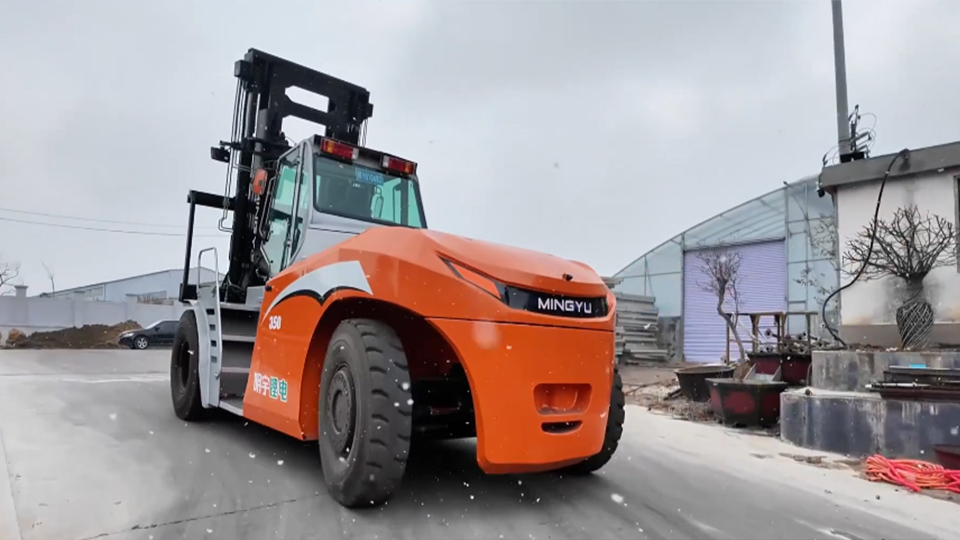
Consumption by Capacity Class
Diesel forklift fuel consumption scales directly with lifting capacity, engine displacement, and the physical work demanded of the machine. The following table summarizes typical consumption ranges by capacity class under standard warehouse and yard operating conditions :
表格
Capacity Class Typical Fuel Consumption Operational Context
Small (1.5–2.5 ton) 2.0–3.8 L/h (0.5–1.0 gal/h) Light warehouse work, retail environments
Medium (3–3.5 ton) 2.5–3.9 L/h (0.7–1.0 gal/h) General warehouse, manufacturing, mixed indoor/outdoor
Mid-Heavy (5–7 ton) 4.5–8.0 L/h (1.2–2.1 gal/h) Steel yards, timber operations, block handling
Heavy-Duty (10+ ton) 10–15+ L/h (2.6–4.0+ gal/h) Ports, heavy manufacturing, mining applications
For the most commonly deployed class—the 3-ton diesel forklift serving as the backbone of mixed-use operations—industry benchmarks converge around 2.5 to 3.9 liters per hour, with 3.2 L/h frequently cited as a realistic planning baseline under standard duty cycles . This consumption rate assumes a VDI 60 duty cycle, a standardized test measuring fuel burn over 60 intensive cycles in one hour. Real-world consumption typically exceeds this benchmark by 15% to 25% due to site-specific factors such as congestion, slopes, and idle time that standardized tests cannot fully replicate .
From an energy perspective, diesel fuel carries approximately 36 MJ per liter (roughly 9,900 Wh/L). With typical diesel engines converting about 45% of that energy into useful mechanical work, each liter burned delivers approximately 4,455 Wh of usable energy at the crankshaft. This high energy density is why diesel forklifts excel in applications requiring sustained heavy lifting and long operating shifts .
Translating Consumption to Cost: The 2026 Diesel Price Environment
Fuel consumption rates are only half the equation. The other half is the price of diesel, which in 2026 has reached historically elevated levels in many markets and exhibits significant regional variation.
Regional Diesel Price Benchmarks
Diesel prices in 2026 reflect a complex interplay of crude oil markets, refining capacity, taxation, and geopolitical factors. Key regional benchmarks include :
表格
Region Diesel Price (2026) Notes
Australia $3.29/L ($12.45/gal) Among highest recorded, driven by carbon pricing and transport costs
United States $4.20/gal ($1.11/L) Industrial average; varies significantly by state
South Florida $3.40–$4.20/gal Regional variation based on supplier contracts
Global Average $1.00–$1.50/L Developing markets; subsidized pricing in some regions
At the Australian benchmark of $3.29 per liter—a figure representing some of the highest diesel prices globally—a single 2-ton diesel forklift operating 2,000 hours annually at 2.0 to 2.5 L/h consumes 4,000 to 5,000 liters of diesel, translating to $13,160 to $16,450 in fuel costs alone per year . This figure excludes all maintenance, insurance, and capital costs, illustrating how fuel can dominate the operating budget in high-price markets.
In the United States, where diesel averages approximately $4.20 per gallon, a 3-ton diesel forklift consuming 2.8 gallons per hour (industry average for loaded/unloaded mixed duty) and operating 2,000 hours annually burns 5,600 gallons, costing $23,520 per year in fuel alone . This American benchmark, while lower on a per-liter basis than Australia, still represents a substantial operational expenditure that compounds rapidly across multi-unit fleets.
The Hourly Cost Framework
For budgeting and fleet management, converting consumption rates into hourly fuel costs provides the most actionable metric. Based on 2026 fuel prices and consumption data :
表格
Forklift Class Consumption (L/h) Cost/hr @ $1.20/L Cost/hr @ $3.29/L Cost/hr @ $4.20/gal
Small (2 ton) 2.0–2.5 $2.40–$3.00 $6.58–$8.23 $3.50–$4.38
Medium (3 ton) 2.5–3.9 $3.00–$4.68 $8.23–$12.83 $4.38–$6.83
Mid-Heavy (5–7 ton) 4.5–8.0 $5.40–$9.60 $14.81–$26.32 $7.88–$14.00
Heavy (10+ ton) 10–15 $12.00–$18.00 $32.90–$49.35 $17.50–$26.25
These hourly costs reveal why diesel forklift fuel expenses represent such a significant line item. A medium-duty forklift in a high-price market like Australia costs over $12 per hour in fuel alone—before accounting for operator wages, maintenance, insurance, or capital depreciation.
Annual Diesel Cost Projections: From Single Units to Fleets
To fully appreciate the scale of diesel expenditure, it is instructive to model annual costs across different operational scenarios. The following projections assume standard single-shift operations of 250 days per year, with 8 hours of productive runtime per day (2,000 annual hours) .
Single-Unit Annual Diesel Costs
表格
Scenario Forklift Consumption Annual Fuel Cost
Light warehouse (Australia) 2-ton diesel 2.0 L/h × 2,000 h = 4,000 L $13,160 @ $3.29/L
General warehouse (USA) 3-ton diesel 2.8 gal/h × 2,000 h = 5,600 gal $23,520 @ $4.20/gal
Heavy industrial (Global avg) 5-ton diesel 6.0 L/h × 2,000 h = 12,000 L $12,000–$18,000 @ $1.00–$1.50/L
Port operations (High intensity) 10-ton diesel 12 L/h × 2,000 h = 24,000 L $78,960 @ $3.29/L
These figures demonstrate that diesel fuel costs for a single medium-duty forklift in a high-price market can exceed $20,000 annually—comparable to or exceeding the annual salary of a forklift operator in many regions. For heavy-duty applications in expensive fuel markets, annual diesel costs can approach six figures per unit.
Fleet-Scale Impact
The economics of diesel forklift fleets become staggering when scaled. A 2026 case study analyzing the transition of a 30-unit fleet from diesel to electric forklifts revealed annual diesel fuel costs of $705,600 for the fleet (30 units × 2,800 gallons × $4.20/gal), with total operating costs including maintenance reaching $825,000 to $915,000 per year . This case study—representative of a mid-sized manufacturing or distribution operation—illustrates why diesel fuel has become the primary driver of forklift operating cost inflation and the leading justification for fleet electrification initiatives.
Engineering Factors That Drive Fuel Consumption Variability
Understanding why two seemingly identical diesel forklifts can exhibit dramatically different fuel costs requires examining the engineering and operational variables that influence consumption.
Load Weight and Duty Cycle Intensity
Load weight is the single most significant factor affecting fuel consumption. Operating at or near maximum rated capacity can increase fuel usage by 20% to 40% compared to handling lighter loads, as the engine must generate substantially more torque for lifting, transporting, and accelerating . Frequent lifting cycles, high vertical travel distances, and rapid acceleration/deceleration all compound this effect. A forklift handling 2,000 kg loads continuously will burn significantly more fuel than the same machine moving 1,000 kg pallets intermittently.
Terrain and Operating Environment
Operating conditions dramatically alter consumption. Smooth, level concrete surfaces minimize rolling resistance and allow the engine to operate in efficient zones. Conversely, rough terrain, loose gravel, mud, or soft ground can increase fuel consumption by 30% to 50% as the engine works harder to maintain traction and overcome surface resistance . Steep inclines demand sustained high torque output, while extreme temperatures—both hot and cold—reduce combustion efficiency and increase fuel burn during warm-up and cooling phases.
Operator Behavior and Idle Time
Operator behavior represents one of the most controllable yet frequently overlooked variables. Aggressive acceleration, sudden braking, sharp turns, and excessive idling all increase fuel consumption without contributing to productive output. Industry best practice recommends shutting down the engine if idle time exceeds three to five minutes; modern telematics systems can track and enforce these policies . A poorly trained operator can easily increase a forklift's fuel consumption by 15% to 25% compared to a skilled, efficiency-conscious counterpart.
Maintenance Condition
A well-maintained diesel forklift operates at peak efficiency, while neglected maintenance cascades into higher fuel costs. Clogged air filters can increase consumption by 10% to 15% by restricting airflow and forcing the engine to run rich. Worn injectors, contaminated fuel, degraded engine oil, and underinflated tires all incrementally increase fuel burn . Regular preventive maintenance—including filter changes, injector cleaning, tire pressure checks, and engine tuning—is not merely a reliability investment but a direct fuel cost control measure.
Right-Sizing and Equipment Selection
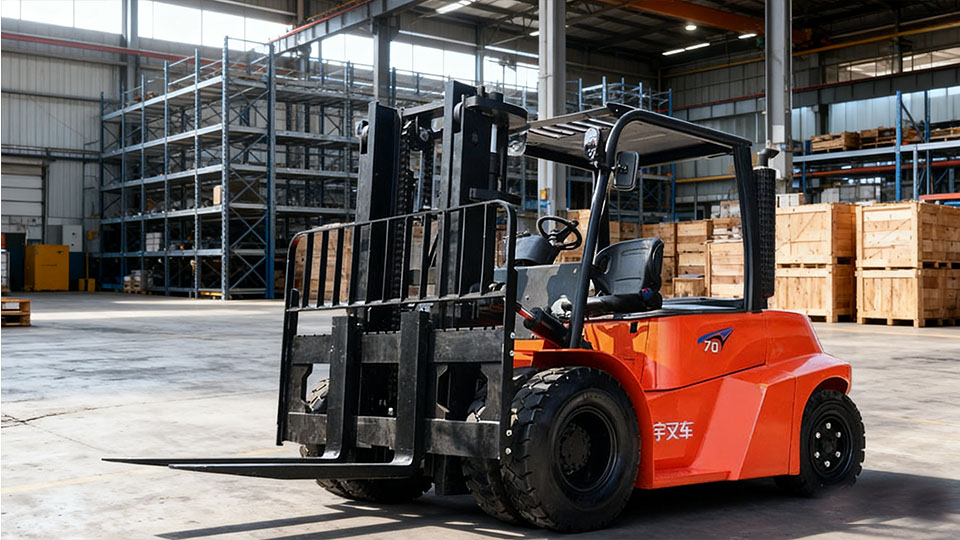
Oversizing forklifts for typical loads is a common and costly mistake. A 5-ton diesel forklift handling 1,500 kg loads burns fuel at the 5-ton rate while doing 3-ton work. Right-sizing—matching forklift capacity to 80% to 90% of typical lifts—can reduce fuel consumption by 0.5 to 1.0 L/h on a 3-ton to 5-ton machine, translating to annual savings of 1,000 to 2,000 liters per unit . For fleets, this optimization can yield six-figure annual savings.
Tank Capacity and Refueling Logistics
Practical fuel cost management extends beyond consumption rates to refueling logistics. Diesel forklift fuel tanks typically range from 16 to 35 gallons (60 to 130 liters) depending on manufacturer and model class . A 20-gallon tank on a medium-duty forklift consuming 2.0 to 2.5 gallons per hour provides 8 to 10 hours of runtime—sufficient for a standard shift but requiring daily refueling in multi-shift operations.
Tank capacity directly impacts operational planning and labor costs. Frequent refueling interrupts productive work, requires dedicated fuel storage infrastructure, and introduces spill containment and safety compliance obligations. In contrast, electric forklifts with lithium-ion batteries supporting opportunity charging can operate continuously across shifts without the refueling downtime inherent to diesel operations.
Comparative Context: Diesel vs. Alternative Power Sources
To fully evaluate diesel forklift fuel costs, they must be placed in the context of alternative power sources. The 2026 operating cost landscape reveals a stark divergence :
表格
Power Source Hourly Energy Cost Annual Cost (2,000 hrs) Key Considerations
Diesel (3-ton, USA) $3.50–$5.00/hr $7,000–$10,000 High torque, outdoor capability, emissions
Diesel (3-ton, Australia) $8.23–$12.83/hr $16,460–$25,660 Carbon pricing, transport costs inflate prices
Propane (LPG) $3.00–$4.00/hr $6,000–$8,000 Indoor/outdoor versatility, cleaner than diesel
Electric (Li-ion) $1.50–$2.50/hr $3,000–$5,000 Zero emissions, lowest operating cost, charging infrastructure required
The electric forklift advantage is overwhelming on an energy-cost basis. A 2-ton lithium-ion electric forklift operating 250 days annually at 2,000 hours costs approximately $2,000 to $4,000 in electricity—compared to $13,000 to $16,500 for an equivalent diesel unit in high-price markets . Even in lower-price U.S. markets, the diesel electric differential remains approximately $20,000 per unit annually when maintenance is included .
This cost differential explains the accelerating fleet electrification trend. The 30-unit fleet case study referenced earlier demonstrated that transitioning from diesel to electric forklifts yielded $735,000 in annual savings—approximately $24,500 per unit—primarily driven by the elimination of diesel fuel expenditure .
Strategies for Optimizing Diesel Forklift Fuel Costs
For operations where diesel forklifts remain necessary—outdoor heavy-duty applications, remote sites without electrical infrastructure, or specialized attachments incompatible with electric power—several strategies can materially reduce fuel costs.
Implement Telematics and Fuel Monitoring
Modern forklift telematics systems provide real-time data on fuel consumption, idle time, operator behavior, and maintenance alerts. By logging fuel against operating hours and reviewing trends by truck and shift, fleet managers can identify inefficiencies, enforce idle reduction policies, and target training interventions .
Invest in Operator Training
Fuel-efficient driving techniques—smooth acceleration, gradual braking, optimized travel routes, and minimal idle time—can reduce consumption by 10% to 20%. Training programs should emphasize that fuel efficiency and productivity are not mutually exclusive; in fact, smoother operation often reduces cycle times while lowering fuel burn.
Maintain Rigorous Preventive Maintenance Schedules
Adhering to manufacturer maintenance intervals for air filters, fuel filters, oil changes, injector service, and tire pressure checks ensures the engine operates at design efficiency. A poorly maintained forklift can consume 15% to 25% more fuel than an identically tasked, well-maintained unit .
Optimize Site Layout and Travel Paths
Minimizing travel distances through strategic placement of materials, staging areas, and loading docks reduces the total work the engine must perform. Every meter of unnecessary travel consumes fuel with zero productive return.
Consider Fuel Hedging and Bulk Purchasing
For large fleets in volatile fuel markets, bulk diesel purchasing agreements and fuel hedging strategies can stabilize costs. Volume discounts, fixed-price contracts, and fuel card programs with major suppliers can reduce per-gallon costs by 5% to 15% compared to retail pump prices.
Conclusion
The typical diesel cost for running a forklift in 2026 is not a single figure but a range determined by capacity class, regional fuel prices, duty cycle intensity, maintenance discipline, and operator skill. For the most common 3-ton class operating in developed markets, annual diesel fuel costs typically fall between $13,000 and $25,000 per unit for single-shift operations—figures that escalate dramatically for heavy-duty applications and high-price fuel environments.
What is clear from the 2026 data is that diesel fuel has become the dominant operating cost for internal combustion forklift fleets, often exceeding the combined cost of maintenance, insurance, and depreciation. The 70% to 80% energy cost advantage of electric forklifts, combined with their dramatically lower maintenance requirements, has created an economic imperative for electrification that transcends environmental considerations alone .
For operations committed to diesel power—whether due to application requirements, infrastructure constraints, or capital limitations—the path to cost control lies in rigorous consumption monitoring, operator training, preventive maintenance, and right-sizing equipment to actual loads. Treating liters per hour as a controlled key performance indicator rather than an uncontrollable variable is the first step toward sustainable diesel forklift economics. In an era of elevated and volatile fuel prices, the organizations that master diesel cost management will be those that survive and thrive in the competitive landscape of material handling.
Name: selena
Mobile:+86-13176910558
Tel:+86-0535-2090977
Whatsapp:8613181602336
Email:vip@mingyuforklift.com
Add:Xiaqiu Town, Laizhou, Yantai City, Shandong Province, China