
vip@mingyuforklift.com
+86-0535-2090977

Introduction
Forklift certification remains one of the most critical credentials in the logistics, manufacturing, and construction sectors. With OSHA's 2026 enforcement environment intensifying through targeted National Emphasis Programs and penalty structures reaching $16,550 per serious violation, understanding where and how to obtain proper certification has never been more important. This technical guide examines the complete landscape of forklift testing and certification options available locally, analyzing the regulatory framework, training modalities, and strategic considerations for both individual operators and employers seeking compliance.
The Occupational Safety and Health Administration (OSHA) governs forklift operations under 29 CFR 1910.178, which mandates that no employee may operate a powered industrial truck without completing formal instruction, practical training, and a performance evaluation. Unlike commercial driver's licenses, OSHA does not issue forklift "licenses" directly; rather, certification is employer-based and requires documentation of competency. This distinction fundamentally shapes where and how testing occurs.
Understanding the Regulatory Framework
Before identifying specific testing locations, operators must understand the regulatory architecture governing certification. OSHA's Powered Industrial Trucks Standard establishes three non-negotiable components: formal instruction covering truck-related and workplace-related topics, hands-on training under direct supervision, and a final evaluation of operator performance in the actual work environment or a simulated equivalent.
The 2026 regulatory landscape introduces additional complexity. OSHA's Warehousing National Emphasis Program (CPL 03-00-026) authorizes unannounced inspections at facilities with elevated injury rates through mid-2026, while the Heat NEP extends through April 2026, covering indoor warehouse operations when heat indices reach 80°F. These programs mean certification documentation must be immediately available and digitally auditable, as inspectors will request training records during comprehensive evaluations.
Crucially, certification is not a one-time event. OSHA requires recertification every three years, or immediately following accidents, near-misses, observed unsafe operation, or assignment to new equipment types. This temporal dimension affects where operators seek testing, as proximity and accessibility become recurring concerns rather than singular logistical challenges.
Local Certification Pathways: A Technical Analysis
Employer-Sponsored In-House Programs
The most direct pathway to certification occurs through employer-sponsored training conducted at the workplace. Under OSHA's framework, employers bear ultimate responsibility for ensuring operator competency, making in-house programs the gold standard for compliance alignment.
Employers utilizing this model typically designate qualified internal trainers who possess both operational expertise and instructional capability. These trainers conduct classroom instruction using company-specific materials, followed by hands-on training on the exact equipment the operator will use. The practical evaluation occurs in the actual work environment, incorporating facility-specific hazards such as narrow aisles, loading dock configurations, and pedestrian traffic patterns.
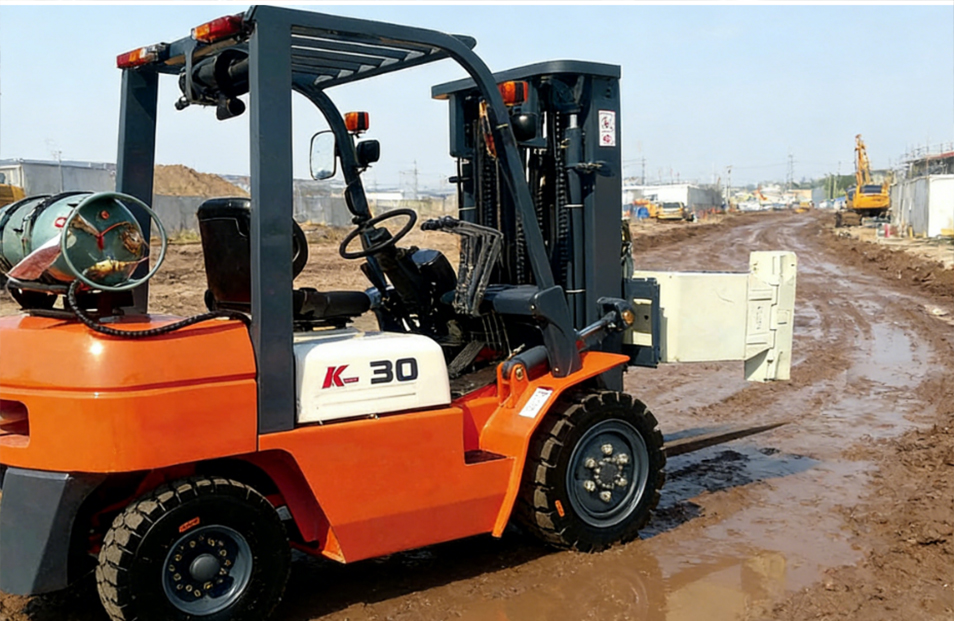
The technical advantage of in-house certification lies in its contextual precision. Operators are evaluated on the specific forklift classes deployed by the employer—whether Class I electric motor rider trucks, Class IV internal combustion cushion tire trucks, or Class V pneumatic tire units. This type-specific training is mandatory; certification for one class does not transfer to another under OSHA requirements.
For operators seeking employment, this pathway presents a paradox: certification is required to operate, yet employment is typically needed to access employer-sponsored training. This structural challenge drives demand for third-party providers that can deliver certification independently of specific employment relationships.
Third-Party Training Centers and Technical Schools
Commercial training centers represent the most accessible option for unemployed individuals, career changers, or employers without internal training infrastructure. These facilities operate as specialized educational institutions, offering standardized curricula that satisfy OSHA's formal instruction requirement while providing hands-on practice using their equipment fleets.
Geographic distribution of these centers varies significantly by region. Metropolitan areas generally host multiple providers, while rural locations may require travel to regional hubs. The Construction Machinery Technical Training Centre model exemplifies this approach, offering counterbalance and reach truck courses with structured timetables, examination protocols, and certificates valid for defined periods. Such centers typically maintain dedicated practical training areas simulating warehouse environments, complete with racking systems, loading docks, and obstacle courses for maneuvering assessment.
When evaluating third-party providers, technical due diligence is essential. Prospective operators should verify that the curriculum covers both truck-related topics (operating instructions, warnings, precautions, differences between vehicle types, controls and instrumentation, engine operation, steering and maneuvering, visibility, fork and attachment adaptation, vehicle capacity and stability, vehicle inspection and maintenance, refueling and battery charging) and workplace-related topics (surface conditions, load composition, load handling stability, pedestrian traffic, narrow aisles, hazardous locations, ramps and grades, closed environments, and other unique conditions).
The certification issued by third-party providers typically satisfies the formal instruction component, but OSHA mandates that the final performance evaluation be conducted by the employer using their specific equipment. This creates a two-stage process: third-party training provides the foundational certificate, while employer evaluation completes the compliance chain.
Online Certification Platforms
The digital transformation of safety training has produced a robust ecosystem of online forklift certification providers. These platforms deliver the formal instruction component through asynchronous learning modules, typically requiring one to two hours for completion. Upon passing the online assessment, participants receive downloadable certificates and wallet cards providing proof of training completion.
Cost structures for online certification range from $49 to $79 per operator, significantly below in-person alternatives that often reach several hundred dollars when accounting for instructor fees, facility costs, and travel time. The scheduling flexibility—24/7 availability across multiple devices—addresses the logistical constraints faced by shift workers and distributed workforces.
However, online certification presents a critical technical limitation: it cannot satisfy OSHA's hands-on training or practical evaluation requirements. The digital format inherently excludes physical operation of equipment, meaning employers must still conduct on-site practical training and performance evaluation before an operator is fully certified. Online providers address this gap by offering employer evaluation forms and checklists, but the employer remains responsible for the physical testing component.
For individuals asking "where can I test locally," online platforms offer a hybrid solution: the cognitive assessment occurs remotely, while the driving test must be arranged through an employer or supplemental hands-on training provider. This model works effectively for currently employed workers whose employers can provide the practical evaluation, but presents challenges for job seekers who lack access to equipment for the hands-on component.
Community Colleges and Workforce Development Centers
Public educational institutions increasingly serve as local certification hubs, particularly through workforce development initiatives funded by state and federal employment programs. These centers combine the structured environment of third-party providers with the accessibility and affordability of public education.
Technical and community colleges typically offer comprehensive forklift operator programs spanning one to two days, integrating classroom instruction with supervised practical training on varied equipment types. These programs often maintain partnerships with local employers, creating pipeline arrangements where graduates receive priority consideration for open positions. The institutional credibility of accredited colleges provides additional verification of training quality, though OSHA compliance ultimately depends on the specific curriculum content rather than institutional prestige.
Workforce development centers, often operated through county or state departments of labor, may provide subsidized or free training for qualifying individuals, particularly those receiving unemployment benefits or participating in reemployment programs. These centers represent the most economically accessible pathway for eligible operators, though availability is constrained by funding cycles and geographic service areas.
Equipment Manufacturers and Dealerships
Major forklift manufacturers and their dealer networks frequently offer operator training as a value-added service, particularly for customers purchasing or leasing equipment fleets. These programs leverage technical expertise specific to the manufacturer's product line, providing deep instruction on proprietary control systems, maintenance requirements, and operational characteristics.
Manufacturer training typically occurs at dealer facilities, customer sites, or regional training centers. The technical specificity of these programs offers advantages for operators working with specialized equipment—such as reach trucks, order pickers, or rough-terrain forklifts—where generic training may inadequately address unique operational characteristics. However, the brand-specific focus may limit transferability if operators subsequently work with different equipment manufacturers.
For employers establishing new operations or expanding fleets, manufacturer-provided training represents a convenient bundled solution, ensuring operators are certified on the exact equipment deployed. Individual operators may access these programs independently, though pricing and availability vary by dealer network and market positioning.
The Practical Evaluation: Where the Driving Test Actually Occurs
Regardless of where formal instruction is obtained, the forklift "driving test" in the colloquial sense—the practical evaluation of operational competency—must occur in a physical environment with actual equipment. OSHA explicitly requires that this evaluation be conducted by a person with the knowledge, training, and experience to train and evaluate operators, typically meaning a qualified supervisor or designated trainer.
The evaluation environment must replicate or constitute the actual workplace where the operator will work. This includes navigating the specific aisle widths, surface conditions, ramp configurations, and load types characteristic of the facility. The evaluator assesses pre-operation inspection procedures, startup and shutdown sequences, maneuvering precision, load handling technique, stacking operations, and adherence to safety protocols including horn usage, speed limits, and pedestrian awareness.
For operators completing third-party or online training, arranging the practical evaluation requires coordination with a prospective or current employer. Some training centers offer supplemental practical evaluation sessions using their facilities, but these must be explicitly designed to simulate workplace conditions and may not fully satisfy OSHA's intent if they diverge significantly from the operator's eventual work environment.
Geographic Accessibility and Strategic Selection
The question of "where locally" depends fundamentally on the operator's location, employment status, and equipment specialization. Urban operators typically enjoy multiple options within reasonable commuting distance, while rural operators may need to travel to regional training hubs or rely on employer-sponsored mobile training units.
Selection criteria should prioritize:
Regulatory Alignment: Verify that the provider's curriculum explicitly maps to 29 CFR 1910.178 requirements, covering both truck-related and workplace-related topics comprehensively.
Equipment Type Coverage: Confirm that training includes the specific forklift classes relevant to the operator's intended work. Counterbalance, reach truck, pallet jack, and rough-terrain certifications represent distinct credentials.
Documentation Quality: In the 2026 enforcement environment, digital, auditable records are essential. Providers offering digital certificates, automated renewal tracking, and centralized record management facilitate compliance during OSHA inspections.
Employer Recognition: For job seekers, research whether local employers recognize and accept certificates from specific providers. Some employers maintain preferred provider relationships or require supplemental evaluation regardless of external certification source.
Cost-Benefit Analysis: While online programs offer cost advantages for the formal instruction component, the total cost must include any supplemental hands-on training needed to complete the practical evaluation requirement.
Emerging Trends: Digital Compliance and Automation
The 2026 regulatory environment is reshaping certification logistics through digital transformation. OSHA's emphasis on auditable documentation has driven adoption of learning management systems that track training completion, expiration dates, and evaluation records in centralized digital repositories. Providers integrating with these systems offer compliance advantages over paper-based certificate programs.
Additionally, the emergence of automated guided vehicles (AGVs) and autonomous mobile robots (AMRs) is creating new certification categories. OSHA's proposed incorporation of ANSI/ITSDF B56.5 standards for driverless industrial vehicles means operators managing mixed fleets of human-operated and autonomous equipment may require additional training on human-machine interaction protocols, geofencing systems, and emergency override procedures.
Conclusion
The landscape of forklift testing and certification in 2026 offers multiple local pathways, each with distinct technical characteristics and compliance implications. Employer-sponsored programs provide the most integrated solution for current employees, while third-party training centers, online platforms, community colleges, and manufacturer programs serve diverse needs for independent operators and employers without internal training capacity.
The critical technical insight is that "getting certified" is not a single event but a multi-component process: formal instruction can occur through various providers and modalities, but the practical evaluation must be conducted physically using relevant equipment under qualified supervision. Operators asking where to test locally should first clarify their employment status, target equipment types, and geographic constraints, then select the pathway that optimizes regulatory compliance, cost efficiency, and accessibility.
As OSHA's enforcement mechanisms intensify through National Emphasis Programs and penalty structures, the quality and documentability of certification become as important as the certification itself. The most strategically valuable certification is one that not only satisfies regulatory requirements but also produces digital records capable of withstanding unannounced inspection scrutiny in the evolving 2026 compliance landscape.
Name: selena
Mobile:+86-13176910558
Tel:+86-0535-2090977
Whatsapp:8613181602336
Email:vip@mingyuforklift.com
Add:Xiaqiu Town, Laizhou, Yantai City, Shandong Province, China
