
vip@mingyuforklift.com
+86-0535-2090977

The material handling industry has undergone a profound transformation over the past century, shifting from labor-intensive manual processes to mechanized operations dominated by powered industrial equipment. At the forefront of this evolution stands the forklift, a machine that has fundamentally redefined what is possible in warehouse, manufacturing, and distribution environments. While manual material handling methods persist in certain niche applications, the superiority of forklifts has been established across virtually every measurable dimension of operational performance. This article provides a comprehensive technical analysis of the factors that make forklifts superior to manual alternatives, examining productivity metrics, safety outcomes, economic efficiency, operational capabilities, and the strategic advantages that mechanized handling delivers in contemporary industrial settings.
Productivity and Throughput Advantages
The most immediately apparent superiority of forklifts over manual methods manifests in productivity metrics. A trained forklift operator can move 20 to 30 pallets per hour in standard warehouse applications, with high-performance models and optimized operations achieving even greater throughput. In contrast, workers using manual pallet jacks or hand trucks typically handle 5 to 10 pallets per hour under comparable conditions, with performance declining significantly as distances increase or vertical movement becomes necessary. This productivity differential of 200 to 400 percent represents a fundamental operational advantage that manual methods cannot overcome through additional labor deployment alone.
The throughput advantage becomes more pronounced when vertical storage access is required. Manual handling is essentially constrained to ground-level operations; workers cannot safely lift pallets weighing thousands of pounds to heights of 20 feet or more. Forklifts routinely access elevated racking systems, enabling warehouses to utilize vertical space that would remain dormant under manual operations. A facility using reach trucks or turret trucks in narrow-aisle configurations can achieve storage densities 40 to 60 percent higher than ground-level alternatives. This vertical utilization effectively multiplies warehouse capacity without expanding the physical footprint, an advantage that manual methods cannot replicate regardless of labor investment.
Speed and consistency further distinguish forklift operations from manual handling. Forklifts maintain steady travel speeds of 5 to 12 miles per hour depending on load and environment, covering large warehouse distances in minutes. Manual transport over equivalent distances requires substantially more time, with worker fatigue progressively reducing speed and accuracy. The consistency of mechanized performance ensures predictable throughput that supports reliable scheduling and customer commitment. Manual operations, by contrast, exhibit significant variability based on individual worker capacity, physical condition, and fatigue levels, complicating operational planning and service level management.
Load Capacity and Handling Range
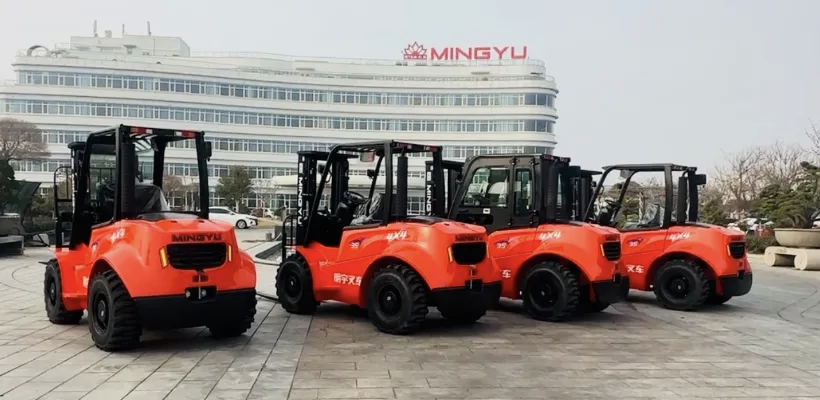
The physical limitations of human strength establish absolute boundaries on manual material handling capabilities. An average worker can safely lift and carry approximately 50 pounds repeatedly, with maximum single-lift capacity rarely exceeding 100 pounds even for trained individuals. Standard warehouse pallets typically weigh 1,500 to 3,000 pounds when loaded, far exceeding manual handling limits. Forklifts routinely manage loads ranging from 3,000 to over 50,000 pounds depending on model configuration, with specialized heavy-duty units handling even greater masses.
This capacity differential eliminates manual methods from consideration for the majority of industrial material handling tasks. A warehouse receiving inbound freight consisting of standard 2,500-pound pallets has no viable manual alternative for moving these loads from trailers to storage locations. The physical impossibility of manual handling at these weights makes forklift utilization not merely superior but mandatory for operational feasibility. Even when loads fall within theoretical manual capacity, the ergonomic risks and injury potential of repeated heavy lifting establish practical limits well below maximum individual capability.
Handling range—the combination of weights, sizes, and configurations that equipment can manage—further favors forklifts. Manual methods accommodate relatively uniform, compact loads that workers can grip and balance. Forklifts, through diverse attachment systems, handle irregular shapes, oversized dimensions, and specialized configurations including drums, coils, bales, and bulk containers. Side shifters, rotators, clamps, and multiple load handlers expand the operational envelope beyond anything manual methods could address. This versatility enables single equipment platforms to serve diverse material handling requirements, whereas manual operations would require customized approaches for each load type.
Safety and Injury Prevention
The safety superiority of forklifts over manual handling represents one of the most compelling arguments for mechanization. Manual material handling consistently ranks among the leading causes of occupational injuries, with the Bureau of Labor Statistics reporting that musculoskeletal disorders related to lifting, carrying, and pushing account for approximately 30 percent of all workplace injuries requiring days away from work. Back injuries, shoulder strains, and repetitive stress disorders resulting from manual handling generate substantial direct costs through workers' compensation claims and medical expenses, alongside indirect costs from lost productivity, replacement training, and morale impacts.
Forklifts eliminate the direct physical strain that causes these injuries, transferring mechanical loads from human musculoskeletal systems to engineered equipment designed specifically for such stresses. The ergonomic design of modern forklift operator compartments further protects worker health, with adjustable seating, suspension systems, climate control, and minimized vibration exposure reducing operator fatigue and long-term physical impact. While forklift operations present distinct safety considerations including tip-over risks and pedestrian collisions, these hazards are systematically addressable through training, engineering controls, and safety technologies. The injury profile of forklift operations, when properly managed, is substantially more favorable than that of intensive manual handling.
Statistical evidence supports this safety superiority. Organizations transitioning from manual to forklift-assisted handling typically report 50 to 70 percent reductions in material handling-related injuries. The predictability and controllability of mechanized operations enable systematic hazard identification and mitigation in ways that variable human performance does not permit. Safety technologies integrated into modern forklifts—including stability control systems, automatic speed reduction, collision avoidance sensors, and pedestrian detection—further enhance the safety margin over manual alternatives where such protective systems are impractical.
Economic Efficiency and Cost Structure
Economic analysis consistently demonstrates the cost superiority of forklift operations over manual handling at scale. While forklift acquisition and maintenance represent significant capital and operational expenditures, the productivity advantages generate labor cost savings that typically achieve return on investment within 12 to 24 months for moderate-volume operations. For high-volume facilities, the payback period may be substantially shorter. The economic model favors mechanization because labor costs scale roughly linearly with volume—handling twice the volume requires approximately twice the labor—whereas forklift costs exhibit greater fixed-cost characteristics, with incremental volume increases requiring proportionally smaller equipment additions.
Total cost of ownership calculations must account for factors beyond direct operational expenses. Manual handling incurs hidden costs including higher injury rates and associated workers' compensation premiums, greater absenteeism and turnover due to physical job demands, reduced accuracy and higher error rates, and limited scalability that constrains business growth. Forklift operations, by contrast, offer predictable cost structures, lower injury-related expenses, higher employee retention in operator positions, and capacity for volume expansion without proportional cost increases. When these comprehensive cost factors are incorporated, the economic advantage of forklifts over manual methods becomes overwhelming for operations above minimal scale.
Facility cost considerations reinforce the economic case. The vertical storage enabled by forklifts reduces the warehouse footprint required for given inventory volumes, lowering real estate costs, property taxes, utilities, and maintenance expenses. A facility achieving 50 percent greater storage density through vertical racking and reach trucks effectively halves the occupancy cost per unit of inventory. Manual operations constrained to ground-level storage would require substantially larger facilities to maintain equivalent inventory, with the associated cost penalties. This space efficiency advantage compounds the direct operational savings from mechanized handling.
Precision, Accuracy, and Damage Reduction
Forklift operations deliver superior precision in load positioning compared to manual handling. Hydraulic control systems enable operators to raise, lower, and position loads with inch-level accuracy, critical for safe placement in elevated racking systems and precise alignment with conveyor interfaces or staging areas. Manual handling, particularly at height or in confined spaces, cannot achieve comparable positioning accuracy, resulting in higher rates of product damage, racking damage, and operational errors.
Product damage reduction represents a significant, often underappreciated advantage of forklift utilization. Improper manual handling—dropping, dragging, or uneven lifting—damages goods and packaging, generating waste, customer dissatisfaction, and replacement costs. Forklifts, with their stable load platforms and controlled movement, substantially reduce handling-related damage. In industries with fragile or high-value products, including electronics, pharmaceuticals, and specialty foods, the damage prevention value of mechanized handling can exceed the direct productivity benefits.
Inventory accuracy benefits from the integration of forklifts with information systems. Forklift-mounted terminals enable real-time scanning and data capture during put-away, picking, and replenishment operations, maintaining accurate inventory records without separate administrative steps. Manual operations relying on paper documentation or post-transaction data entry introduce delays and error opportunities that degrade inventory accuracy. The superior information integration of forklift operations supports the inventory visibility that modern supply chain management requires.
Operational Scalability and Flexibility
Business growth and operational scaling present fundamentally different challenges for manual versus forklift-based operations. Expanding manual handling capacity requires proportional labor force expansion, with associated recruitment, training, and management overhead. The physical demands of manual handling constrain the labor pool to individuals capable of sustained heavy physical work, potentially limiting availability in tight labor markets. Forklift-based operations, by contrast, scale primarily through equipment addition and operator training, with existing supervisory and management infrastructure accommodating expanded capacity more readily.
Operational flexibility—the ability to adapt to volume fluctuations, product mix changes, and operational reconfigurations—similarly favors forklift operations. Fleet size and composition can be adjusted in response to seasonal demands or business growth with lead times measured in weeks. Manual workforce adjustments require longer recruitment and training cycles, with less flexibility to reduce capacity during downturns without incurring severance and morale costs. The capital equipment model of forklift operations aligns cost structures more closely with operational requirements, whereas manual operations face greater friction in scaling both upward and downward.
Multi-shift and extended operations further demonstrate forklift superiority. Forklifts operate effectively across multiple shifts with routine maintenance, while manual handling performance degrades substantially over extended periods due to fatigue. The consistency of mechanized output across operating hours supports 24/7 operations that would be unsustainable with manual labor. For industries requiring continuous operations, including food distribution, pharmaceutical supply, and critical manufacturing, the fatigue-independent performance of forklifts is operationally essential.
Environmental and Ergonomic Considerations
Modern sustainability objectives increasingly influence material handling decisions, and forklifts offer environmental advantages that manual methods cannot match. Electric forklift fleets eliminate direct emissions in indoor environments, contributing to air quality management and corporate sustainability goals. The space efficiency of vertical storage enabled by forklifts reduces facility footprints, with associated reductions in construction materials, land use, and energy consumption for heating, cooling, and lighting. While manual operations might appear environmentally benign due to absence of fuel consumption, the larger facilities and greater transportation requirements they necessitate generate substantial indirect environmental impacts.
Ergonomics—the science of designing work environments for human well-being and performance—strongly favors mechanized handling. Manual material handling involves awkward postures, repetitive motions, forceful exertions, and contact stresses that violate ergonomic principles and generate cumulative trauma disorders. Forklift operations, properly designed, position workers in supported seating with controls within ergonomic reach, minimizing physical strain. The ergonomic superiority of forklift operations supports both immediate safety and long-term worker health, contributing to workforce stability and operational continuity.
Technological Integration and Future Readiness
The trajectory of industrial technology increasingly favors equipment-based operations over manual methods. Warehouse management systems, automated storage and retrieval systems, and supply chain visibility platforms assume the availability of mechanized handling equipment that can integrate with digital controls. Forklifts have evolved to accommodate this integration, with onboard computers, barcode scanners, RFID readers, and telematics systems enabling real-time data exchange and operational optimization. Manual operations, by their nature, resist such integration, creating information gaps that constrain operational sophistication.
The emergence of automation and autonomous mobile robots represents an evolutionary path from conventional forklifts rather than a replacement paradigm. Automated guided vehicles and autonomous forklifts build upon the mechanical foundations of traditional equipment, adding sensor systems and artificial intelligence for unmanned operation. This technological continuity ensures that investment in forklift infrastructure and operator expertise remains relevant as automation advances. Manual operations offer no comparable migration path toward automated handling, representing technological dead ends in the progression toward increasingly sophisticated material handling.
Conclusion
The superiority of forklifts over manual material handling methods is established across every dimension of operational performance. Productivity advantages of 200 to 400 percent, load handling capabilities that exceed human physical limits by orders of magnitude, substantial safety improvements with 50 to 70 percent injury reduction, compelling economic returns through labor cost savings and space efficiency, superior precision and damage reduction, operational scalability and flexibility, environmental benefits through reduced facility footprints, ergonomic protection of worker health, and readiness for technological integration all combine to make forklifts the unequivocally superior choice for industrial material handling.
The question is no longer whether forklifts outperform manual methods—they demonstrably do in every measurable respect. Rather, the relevant consideration is identifying the limited niche applications where manual handling remains viable, typically involving very low volumes, extremely confined spaces inaccessible to equipment, or products that cannot tolerate mechanized contact. For the overwhelming majority of logistics and manufacturing operations, forklifts have become not merely superior but essential, with manual alternatives representing either temporary expedients or historical anachronisms. As operational requirements continue to intensify in response to e-commerce growth, globalization, and customer expectations for speed and accuracy, the performance gap between mechanized and manual handling will only widen, further cementing the dominant position of forklifts in modern material handling.
Name: selena
Mobile:+86-13176910558
Tel:+86-0535-2090977
Whatsapp:8613181602336
Email:vip@mingyuforklift.com
Add:Xiaqiu Town, Laizhou, Yantai City, Shandong Province, China
